

The longer you occupy space here on Earth, the greater the tendency to just assume that because you learned something and have known it for years — perhaps decades — that other people have that same knowledge.
After all, way back around 1995 when the World Wide Web was called Al Gore’s “Information Superhighway,” those who were trying to convince every household in America to purchase a home computer made statements to the effect that the internet was going to usher in an era of enlightenment such as the world had never seen. These Silicon Valley folks predicted that the next generation was going to be the most intelligent and well-informed in human history. I’ll leave it to you to be the judge of that wildly optimistic prediction.
How Often Should I Change My Carry Ammo?
As to how often you should change out the ammunition that you’re carrying in your concealed carry or personal defense handgun, there’s no “right” answer that’s set in stone. However, when I was a police officer and required to re-qualify annually, we would shoot the qual course with our duty ammunition.
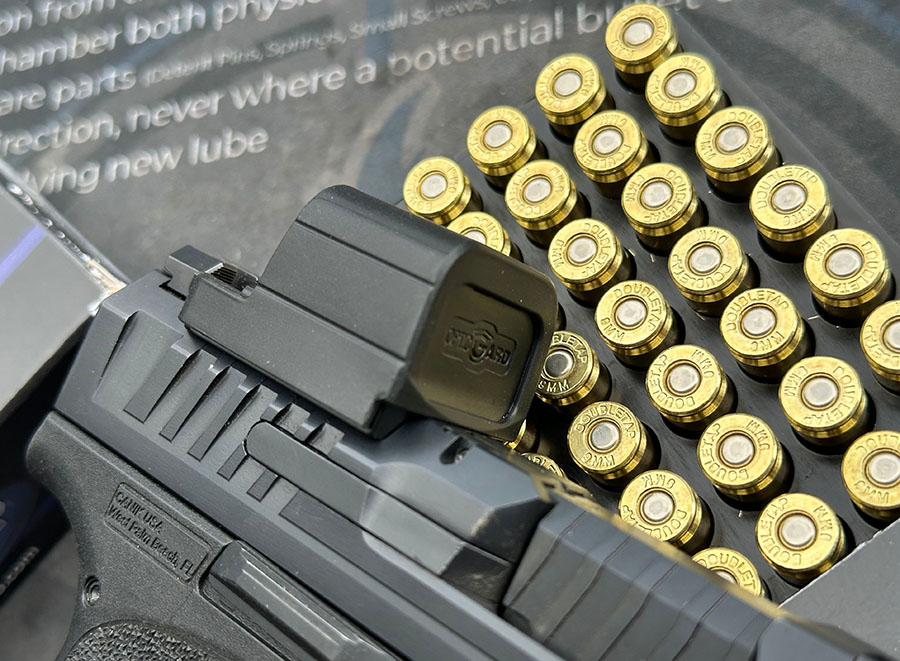
Back then the course required 48 shots from our duty pistols. Just about everyone then was carrying some kind of semi-auto and carried that many — or close to it — rounds on their person. Guys with .40 S&W pistols would generally have a 46-round count and dudes with 9mm pistols would have 52 rounds.
When the testing was over, our department armorer would pass out fresh duty ammunition for everyone. Naturally, if you used your handgun in the line of duty any time during the year, the department would replenish it as necessary.
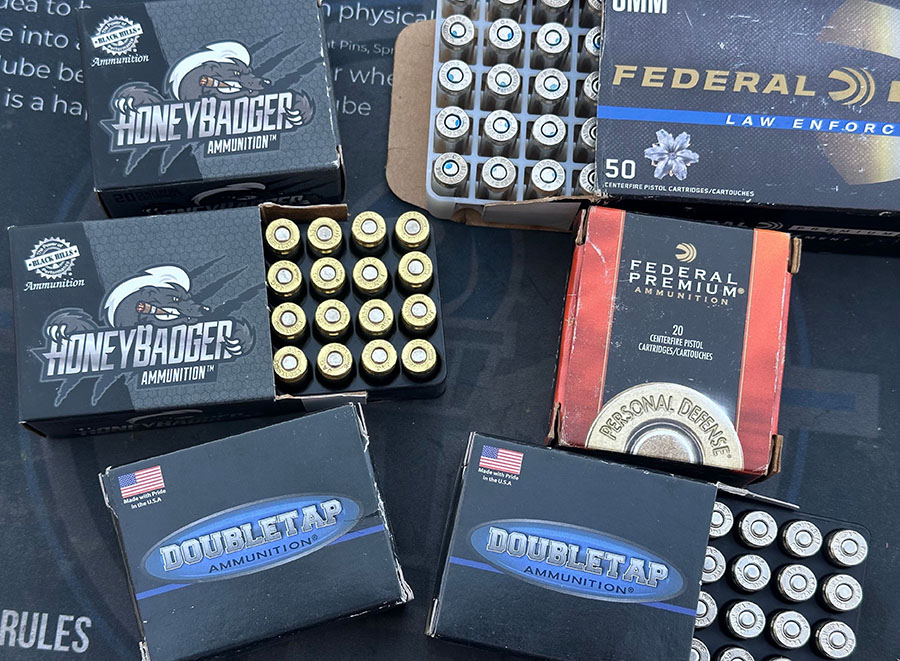
For the citizen gun carrier or even those who just keep a pistol loaded and ready at home, my advice is that on or around your birthday each year, treat yourself to a fresh box or two of the good stuff. Don’t be cheap. You’re literally betting your life and the lives of your family on that ammunition functioning as it should.
Exceptions to the Birthday Rule
We generally treat our self-defense guns like we treat our bodies. If it’s hot outside we keep ourselves cool. If it’s cold outside, we keep ourselves warm. So it goes for self-defense guns. If you’re storing self-defense guns in your car or truck, unattended, you’re screwing up.
However, certain conditions can degrade the life of your ammunition. Exposure to high humidity and salt air are two that come immediately to mind. Florida people, you need to inspect your ammunition more than once a year. Ditto for those in coastal Mississippi. Sweat or just the natural oil from your hands can lead to brass corrosion. There’s a reason why most, but not all of the major handgun ammunition makers offer their premium duty ammo in nickel casings.
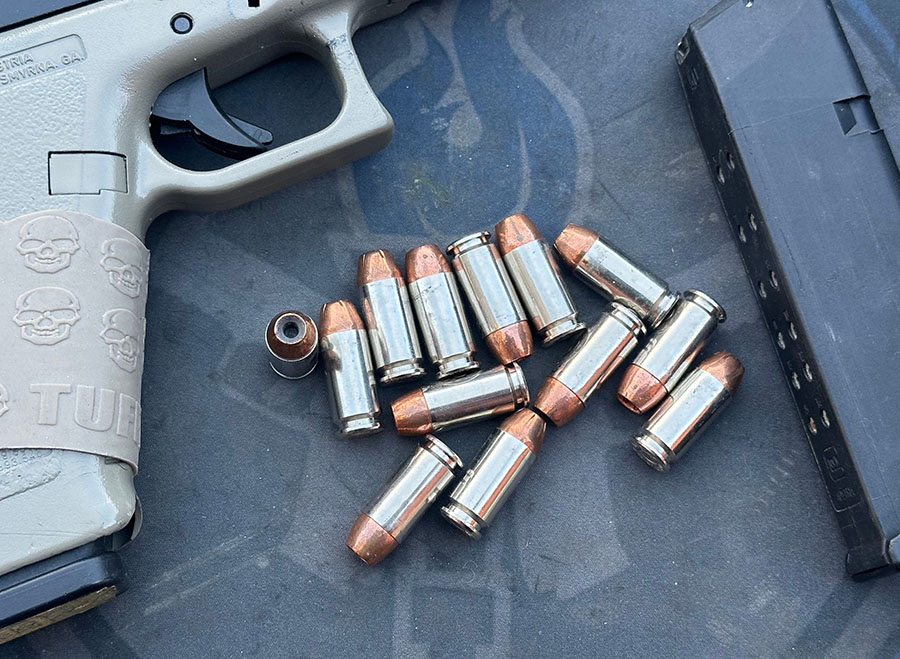
Side Note: Why do some companies load their duty ammunition in genuine brass casings? I have it on good authority that 100 percent brass cases are a bit stronger than nickel-coated cases. When loading high-velocity or +P loads, many makers will opt for the strength of brass.
If your handgun ever goes swimming, either on purpose or accidentally, the ammo isn’t going to die instantly. Premium ammunition has sealed primers. Nonetheless, after you disassemble your pistol, dry it off, clean and lubricate it, that’s a good time to shoot that ammunition and replace it.
Clean Hands and Extra Magazines for Training
I’m not telling you to wear surgical gloves when you load your self-defense ammunition in your magazines, but you should at least have clean hands. If your hands are black from gun oil, take the time to wash them or put on a fresh pair of blue shop gloves.
Humans are all different and some folks have “saltier” hands than others. Some folks sweat more than others. Regardless, the more you handle your duty ammunition, the more likely it is to get sweat or skin oil on it.
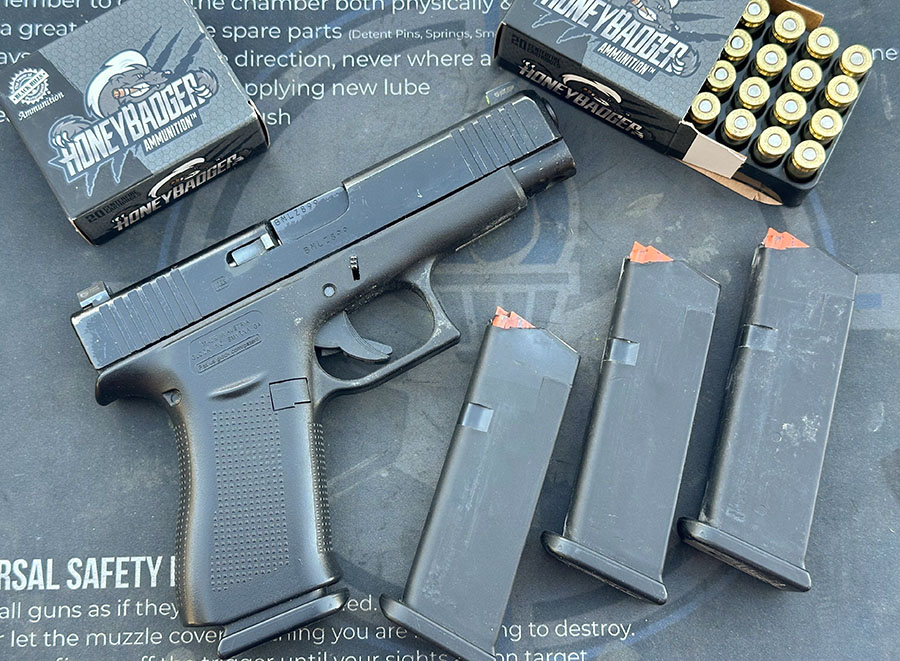
But, I need to take out my good ammo so I can shoot practice ammo. Folks, unless you are shooting a Bren Ten or some Gucci race gun, spare, factory-spec magazines are not that expensive. You should have enough magazines in your kit so as not to need to constantly download and reload your duty ammunition.
The Round in the Chamber and First Shot Stoppages
Back during the bad old days when cops were being issued .40 S&W pistols, my good friend, Ken Hackathorn, made public a very real problem; first shot stoppages. During both actual gunfights and in training, it was all too frequent for the first shot out of an officer’s duty pistol to cause a failure to eject, feed, or a true double-feed stoppage.
This issue occurred regardless of the make and model of the handgun or the ammunition maker. The only true constant was that the majority of the agencies were issuing .40 S&W pistols to their people because that’s what everyone thought you were supposed to do thanks to the FBI.
Ken did considerable research and found that officers were in the habit of going off duty and clearing their pistols. They would eject the unfired duty round and stick it back on the top of the stack in a magazine, only to be re-chambered the next time they dressed for work. Hackathorn reported that after so many times being re-chambered, the bullet would begin ever so slightly to be compressed into the case (known as setback). Folks who reload ammunition understand the overpressure issues that occur when a bullet is seated too deeply in a case.
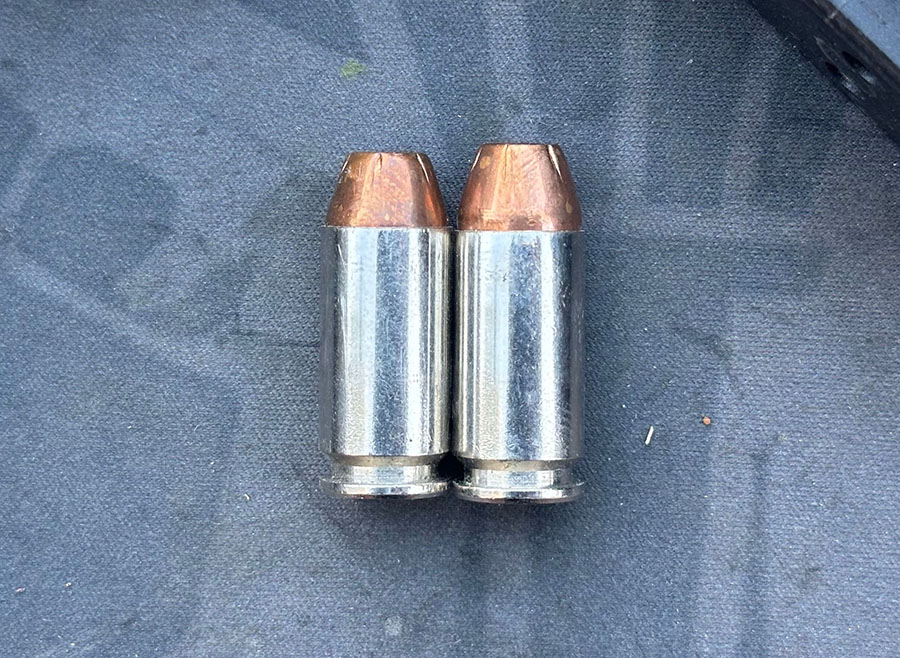
The culprits for these first shot stoppages were cartridges that had been repeatedly re-chambered and had the bullets compressed, causing an overpressure situation. This wasn’t just a .40 S&W issue. Guys who carried .45 ACP duty guns had the same problem with re-chambered rounds.
Regarding this potential problem, the 9x19mm cartridge, due to its shape and design, tends to be more forgiving. However, ejecting and re-chambering a round over and over is a recipe for a first-shot stoppage. I can’t speak for you, but I’d rather not begin my gunfight with a stoppage, particularly a double-feed.
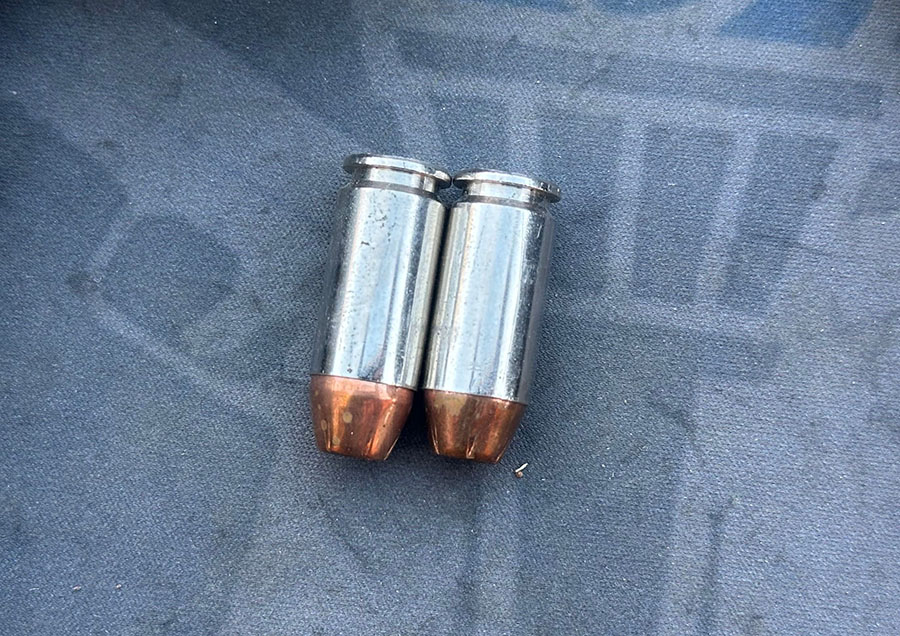
One of the best ways to prevent that is to just load your gun properly…and leave it loaded. That cartridge will sit ever so patiently in the chamber waiting for its turn to fire. As for taking your pistol to the training range, you could keep a partial box of duty ammunition in your ammo can. Remove the duty ammo magazine, load up a mag full of training ammo and allow the first shot to be the lone duty round. When you are all done, just pluck a single duty round out of the box and insert the fresh one into the chamber.
The cost is only a single defensive round per range training session. If you follow that procedure you’ll never have to worry about the re-chambering issue.
Paul G. Markel is a combat decorated United States Marine veteran. He is also the founder of Student the Gun University and has been teaching Small Arms & Tactics to military personnel, police officers, and citizens for over three decades.
“These Silicon Valley folks predicted that the next generation was going to be the most intelligent and well-informed in human history.”
Wow! They were really bad at predicting the future.
😂
I use up my loaded carry mags ammo on the range, and reload with fresh ammo for carry. I go to the range often enough that this gets done at least every few weeks, plus I rotate magazines for EDC so its never the same mag loaded today that was loaded yesterday. I carry six 17 round mags usually now, one in gun and five on body.
Benefits of using the same magazines for carry and practice:
The springs get unloaded and flexed a few times
If a foreign object has intruded or the tube has been dented, causing a feed malfunction like the follower hanging up, it will be found on the range, not when it matters
When the carry rounds are randomly re-inserted back into the magazine, the bullet setback effects are spread through the batch
I shoot all my EDC rounds once a year and replace them with new rounds. This year when I shot I had two exotic self defense rounds mixed in with standard self defense rounds. As I was shooting my HK these two “high tech” self defense rounds would not feed. What a perfect time to find this out on the range not in a life or death incident. Those two rounds had been in my magazine for months. Fortunately I only had one box of that stuff and got rid of it immediately