

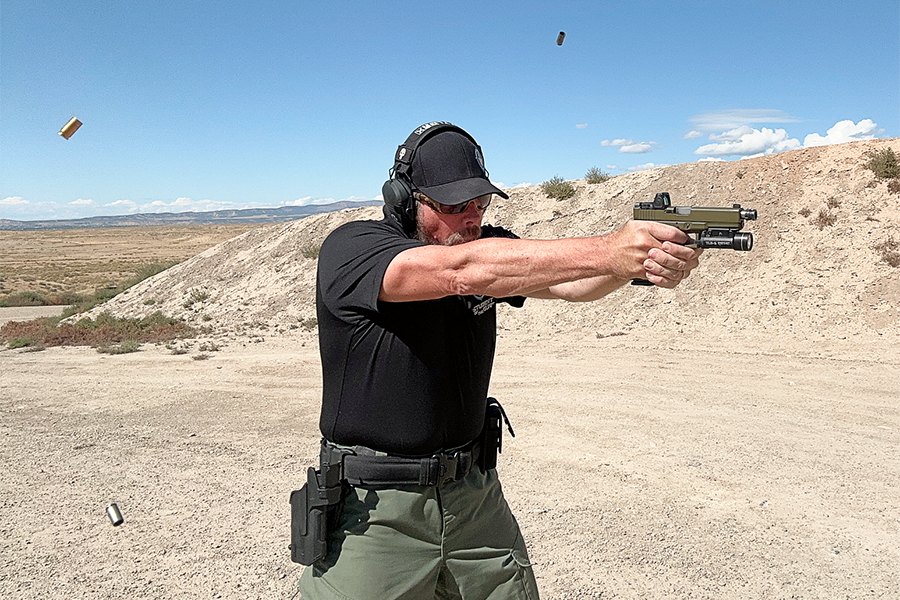
Most of my non-fiction work has been centered around armed citizens and how those people can be most effective and efficient with firearms. Given that, we need to accept and appreciate the fact that firearms and accessories are just tools. They don’t impart skill or ability. It’s the person holding the gun who is the operating system. It’s that reality that inspired me to write a book dealing with being strong and fit.
Since the release of “A Pipe Hitter’s Guide to Strength & Wellness” this year, we have had numerous inquiries and questions regarding strength training goals, particularly those that are practical and realistic.
Such questions are not uncommon and are to be expected given the state of the world and the information overload that we get each day via the internet and social media. The glut of “content” produced with the end goal of gaining clicks or follows is rarely informative and generally too short to provide any true educational value. Therefore, it’s not a surprise that many people who are genuinely interested in becoming stronger and more fit are confused about what is realistic and practical.
Strength ≠ Bodybuilding
One of the biggest sources of confusion is the formalized competition of “bodybuilding.” Far too many novices or neophytes are led to believe that the goal is to look like the greased men and women strutting onto a stage with spray tans wearing speedos or bikinis. Yes, those people spend a lot of time in the gym working on their muscles. However, what they do is a competition…a sport, if you will. You don’t need to look like that in order to be a healthy, strong person.
When you see those people on the stage wearing in their skimpy swimwear, you need to understand that they’re extremely dehydrated at that moment. This dehydration can be done naturally, but often it’s increased with the use of diuretic drugs. Too much of that can lead to death, as we witnessed at Arnold Sports Festival in Columbus, Ohio in 2025. The point of this is that the bodybuilders don’t walk around in their daily lives looking like they do during that brief period when they’re on stage for a competition.
Your Number One Competitor is You
When you’re in junior high or high school, the natural tendency is to compare yourself to others. There’s a natural pecking order that humans tend to conform to, particularly in their youth. However, you should age out of such thinking and learn to focus on your own achievements and successes.
While most high school athletes are on a relatively even playing field as they’re all within a couple years of each other, that situation changes dramatically when you grow up and get older. If you are a 48-year-old man in a strength training gym, comparing your progress to that of a 21-year-old man who likely has double the testosterone you do is silly and rather pointless.
We need to track our own progress and let others do the same. As my friend, Matt Reynolds, advised me many years ago, “Get a small paper notebook and keep it in your gym bag to track your progress.” That little notebook tells a big story. If you’re diligent in your training, you might be amazed to go back months or years and look at how you have progressed.
How Strong Should You Be?
We all struggle with what I like to call the “lazy demon” or “lazy you.” Lazy You says, “Well, I think I’m doing okay, I mean, I don’t want to get too bulky.” The lazy demon creeps up on your shoulder after a short time and whispers, “You’re stronger than you were when you started, why should you make yourself suffer?”
There’s a reason why billions of dollars are made by commercial charlatans who promise fantastic results with very little effort. Humans, through their default nature, want to be comfortable and everything to be convenient. Nature and reality, nonetheless, dictate that we don’t improve by being comfortable. Brain function improves through challenges. Muscles become stronger as a result of stress.
Given all of the above, I have been formulating an answer to the questions we’ve been getting that center around what are practical and realistic goals for strength training. Many experts in the field will throw out hard numbers, such as “You need to bench 225,” or “You need to squat four plates.” Four plates is gym talk for four 45-pound plates on each side of the bar for a total of 405 pounds (the bar itself weighs 45 pounds).
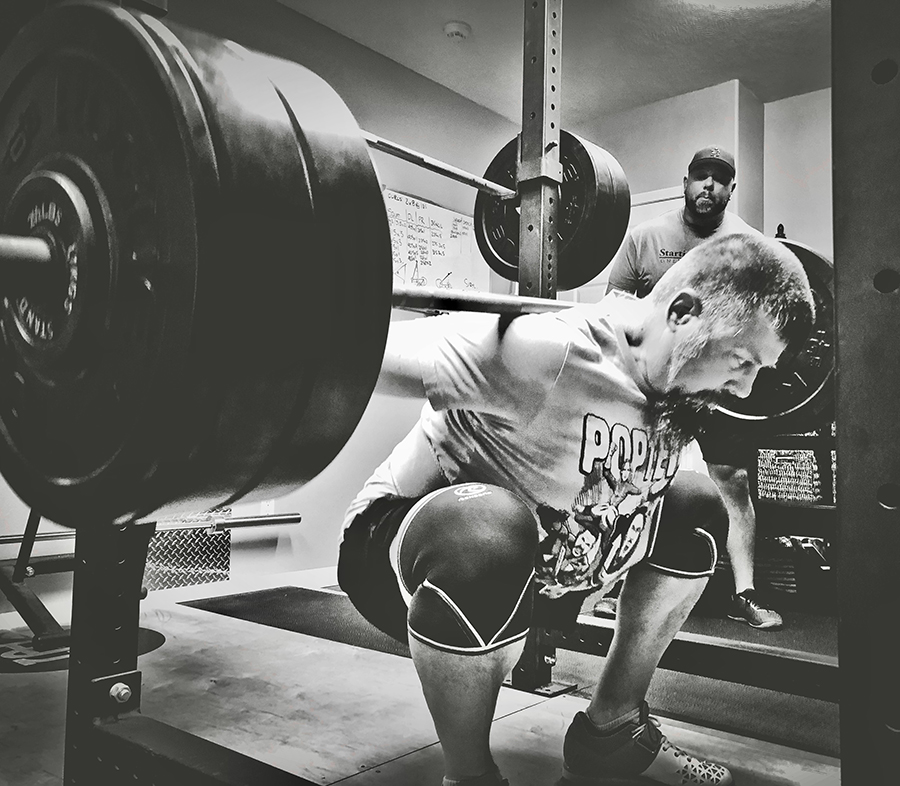
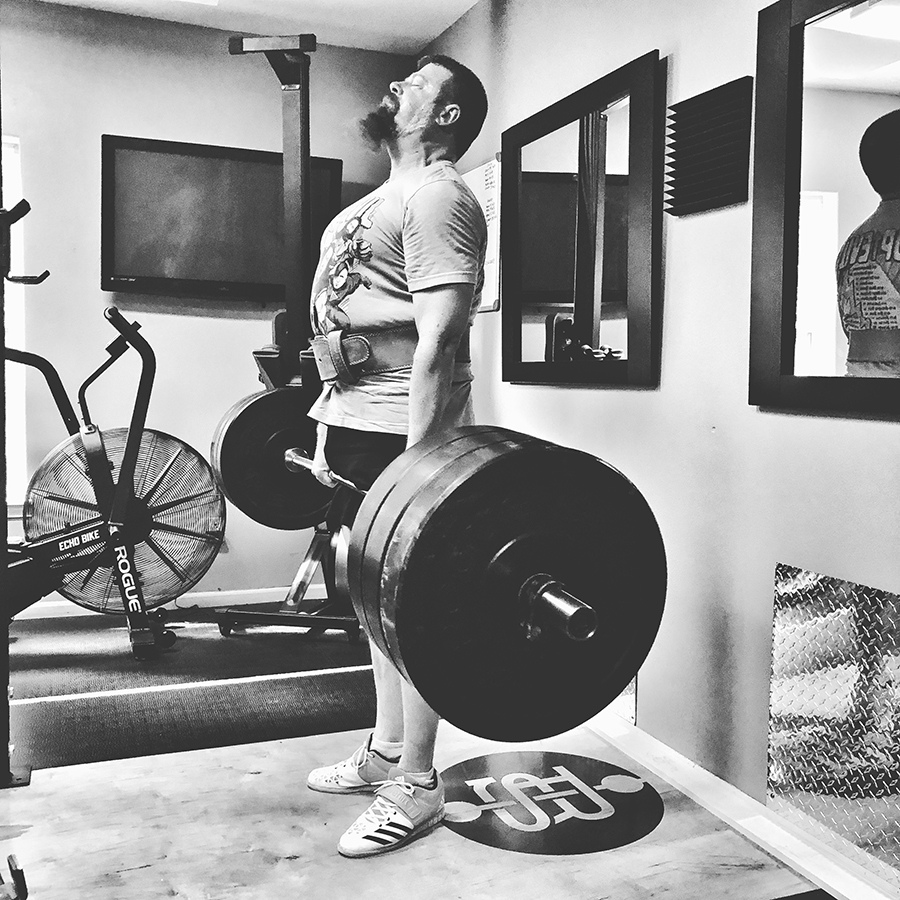
So, I’ve come up with an answer not the answer to practical and realistic goals for all ages. Our focus will be the Four Core Lifts with a standard 45-pound olympic barbell: overhead press, bench press, squat (to depth) and deadlift (real deadlifts not that sumo crap).
First, go to an accurate scale and weigh yourself. Now with your body weight recorded, you can factor your goals. We use your body weight as a way to discourage comparison to others. Remember, it’s the person in the mirror that you are trying to improve each day.
For the press, your goal is half your BW for five correct repetitions in a row or “X5”. For the bench, your goal is ¾ BW x five reps. For the squat, your goal is BW x five reps. Finally, for the deadlift, your goal is 1.25 BW x five reps.
Parting Shots
I fully understand that other programs will have other goals or hard weight numbers. It should be obvious to that if you’re carrying around a significant amount of body fat, that the number on the scale is going to make the aforementioned goals that much more difficult. All of that is true and, you know what? That’s an issue for which you need to find a solution. I never promised you a rose garden and no one ever said life was supposed to be easy.
Nicolas Orr is the nom de plume for a civilized barbarian, a savage gentleman with thirty-plus years of operational and combat experience in the United States and overseas. The author has carried a gun during innumerable assignments worldwide as a member of the United States military, as a military contractor, and executive protection agent. Though this is a work of fiction, the circumstances are based upon three decades of real world experience.
I have tried a few times in my life to increase my strength. For reasons that I cannot begin to possibly fathom, I never increase my strength.
I often wondered if a period in my teenage years was indicating something: I consumed at least 5,000 calories every day (a fair amount of it being protein in a protein powder “weight gain” formula) for nearly three months while working out and I did not gain one single pound nor did I increase in strength. How is that even possible? I tried two more times with the same results so I have given up on strength training.
90 year olds recovering from surgery can gain strength.
Unless you have some serious biological neuromuscular defect you can gain strength.
Also, size does not equal strength. Plenty of strong ectomorphs out there.
Consistent progressive overload at 80% of your max. Unless you’re a corpse or sick you’ll get stronger and those numbers will go up.
Starting strength for six months to a year then 5/3/1 for the rest of your life. You can’t not get stronger.
This is “a work of fiction”? Did someone just copy and paste the author’s bio to the end of this article?
Great standards for the core four. The benefits of fitness cannot be overstated… and as always get jacked stay strapped