

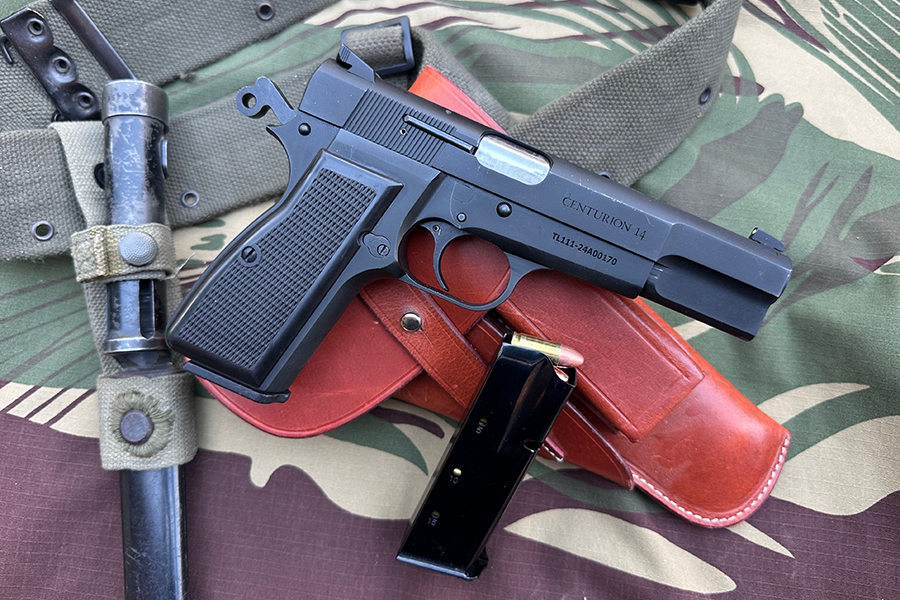
It’s easy to view the Cold War through the lens of United States history, but we must remember that the Proxy Wars of that era took place all over the world and the USA was not always involved, at least not directly. The weapons used in the various conflicts were dependent upon the parent state or states involved. For instance, if one of the hostile parties was the United Kingdom, one their colonies or a former colony, then the arms used would reflect this.
When it comes to the 9x19mm P-35, AKA the Browning Hi-Power, if the UK or their allies were involved in the conflict, the P-35 pistols could certainly be found on the battlefield. This was particularly true during the Rhodesian Bush War.
P-35 History
It’s not my desire to bore the seasoned reader, but some redundancy of information is required. The Hi-Power pistol, although they attached John Browning’s name to it, wasn’t completed until years after the man himself had departed this world in 1926. Yes, it’s true that while John Moses had come up with the basic design for what was to become an updated 9x19mm version of the M1911A1, it was Dieudonné Saive the genius arms maker for Fabrique Nationale who eventually completed the work on the Hi-Power pistol. Saive’s most famous design, aside from the Hi-Power, was the FN FAL rifle.
John Browning had a long collaborative partnership with Fabrique Nationale, so having that company complete the Hi-Power pistol made perfect sense. FN naturally expected the Hi-Power pistol to be adopted by military and police units. Though France declined, Great Britain and Canada embraced the P-35. While the USA clung to the .45 caliber M1911A1, many of our allies went for the then-new 9mm pistols.
As you likely know — or many of you don’t because you went to public school during the last 25 years — the late 1930s were a pretty shaky time in Europe. In May of 1940, Nazi Germany invaded Belgium and took control of the FN arms facility. The Allies moved FN Herstal weapon manufacturing to the John Inglis and Co. facilities in Canada.
The Nazis, of course, built guns for themselves in Belgium until the end of the war. Pistols with Nazi German markings, made in FN’s Belgium plant during the occupation are treasured collector’s items to this day.
Browning used to make true P-35 style Hi-Power pistols, but has since discontinued production. Interestingly, FN has recently modernized the P-35 design under the name “High Power.” All told, between Browning, FN, Inglis, and other licensed makers, there have been more than 1.5 million P-35 Hi-Power pistols manufactured throughout the world. The recently imported Hi-Power clones from Turkey have kept those numbers climbing.
P-35 Hi-Power Design
While the M1911A1 might be viewed as the daddy — or grandaddy — of the P-35, there are as many differences as similarities. Yes, both pistols are single action semi-autos. Both have the manual thumb-safety, magazine release button, and slide lock in the same locations. Both have exposed hammers that have alternated from a spur design to the “combat” design with the hole. Both were originally made with all steel frames and slides.
The P-35 Hi-Power, however, uses a staggered dual-column magazine that held 13 rounds as standard, though 15-round mags are standard today. The P-35 didn’t use a linked barrel as the 1911 did and also did away with the 1911’s barrel bushing and recoil spring plug setup.
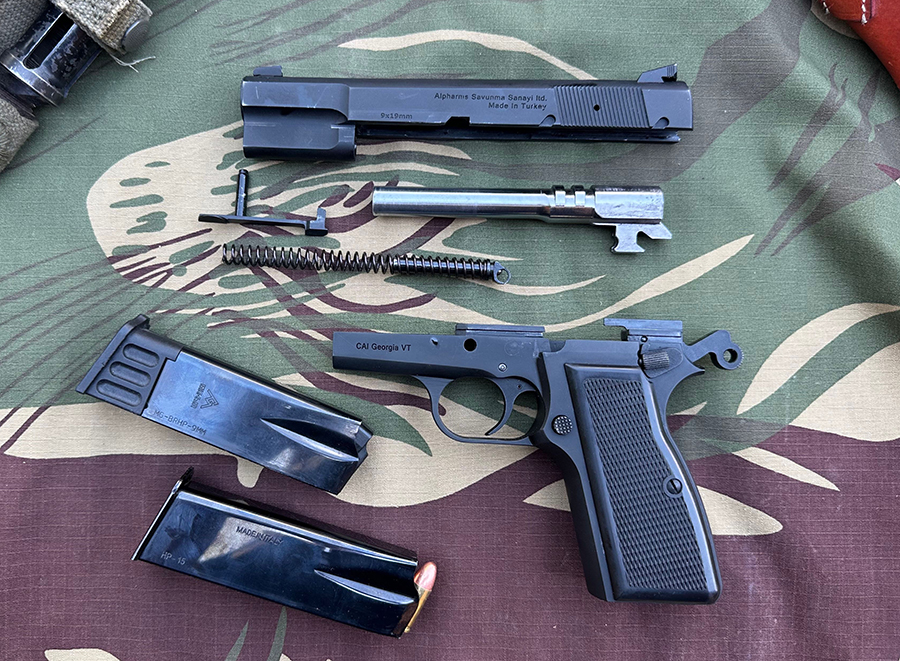
The P-35 is actually far easier for the end user to strip down for cleaning. Also, the P-35 did away with the 1911’s grip safety while adding a magazine disconnect. Also, from a mechanical standpoint, the P-35 uses an external extractor while the 1911 extractor is internal. In fact, when John Browning began work in 1923 on what would become the P-35, he had to make it different from the M1911A1 because the patent rights to that pistol had been sold to Colt’s Manufacturing.
Let’s consider the addition of that magazine disconnect safety feature for a moment. The original specs for the P-35 design came from France and their required specifications for a new military service pistol. In the French military’s specs for the “Grande Rendement” (French for “high efficiency”), or alternatively Grande Puissance (literally “high power”), the French military required that . . .
- The gun must be compact.
- The magazine had to have a capacity of at least 10 rounds.
- The gun had to have a magazine disconnect device, an external hammer, and safety catch.
- The gun had to be robust and simple to disassemble and reassemble.
- The gun needed to be capable of killing a man at 50 meters (55 yards).
The choice to include a magazine disconnect safety has been a point of contention for shooters and gun culture folks for 90 years now. If you want to be pissed about the mag disconnect, you can blame the French. Ironically, after all that, the French, being the French, ultimately decided not to adopt the FN P-35 Hi-Power.
In addition to adding one more potential failure point, the magazine disconnect safety degrades the trigger press or trigger feel. The trigger feels heavy or seems to drag depending on who you talk to. Back when competition shooters used souped-up Hi-Powers, the first thing their gunsmith did was remove the mag safety. Also, magazines won’t drop free (either empty or full) due to the disconnect safety and must be pulled out with the support hand. In 1935 these issues might have been acceptable, but in today’s world they’re almost universally seen as drawbacks.
To be fair, until the modern day, standard military practice was to require troops to carry their pistols with the chamber empty, hammer-down, and a magazine inserted while the guns rode in their holsters. It wasn’t until the adoption of the M9 by the US military’s and the G17 by NATO allies that the aforementioned thought process was re-evaluated and troops began to carry pistols with rounds chambered as standard practice.
The magazine disconnect aside, the P-35 proved in trials to be a reliable and accurate pistol. The fact that it held what was essentially twice the number of rounds as any other handgun at that time didn’t hurt either. I know we are all jaded today by 17-round mags, but imagine a world where most every pistol held seven or eight rounds and then you get one that holds 13 plus 1. In later years, the SAS would famously load their P-35 pistols with 20-round magazines.
Depending on the manufacturer, the P-35 had various sight designs. Some had adjustable tangent rear sights with adjustments out to 500 meters. No seriously. Grips were hardwood or polymer. As mentioned previously, the hammer design varied. Also, the finish could be blued, parkerized, or even stainless on newer models. Over the span of its life, the Hi-Power has also been chambered in 7.62x21mm and .40 S&W, but the 9x19mm Parabellum has always been the primary load.
Range Time
I wish that I owned an original FN P-35 Hi Power pistol, but such is not the case. My first genuine experience with the design was about 30 years ago when I purchased an Argentine licensed FMAP P-35 at a gun show for $200. I shot that gun for years and then sold it. I can attest to the original assertion regarding the mag disconnect “ruining” the trigger pull.
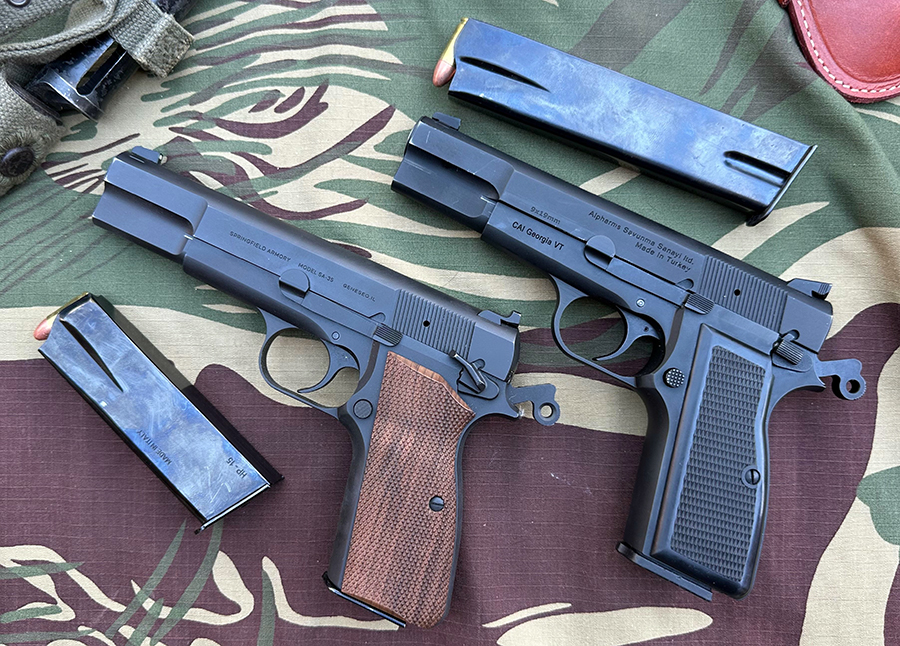
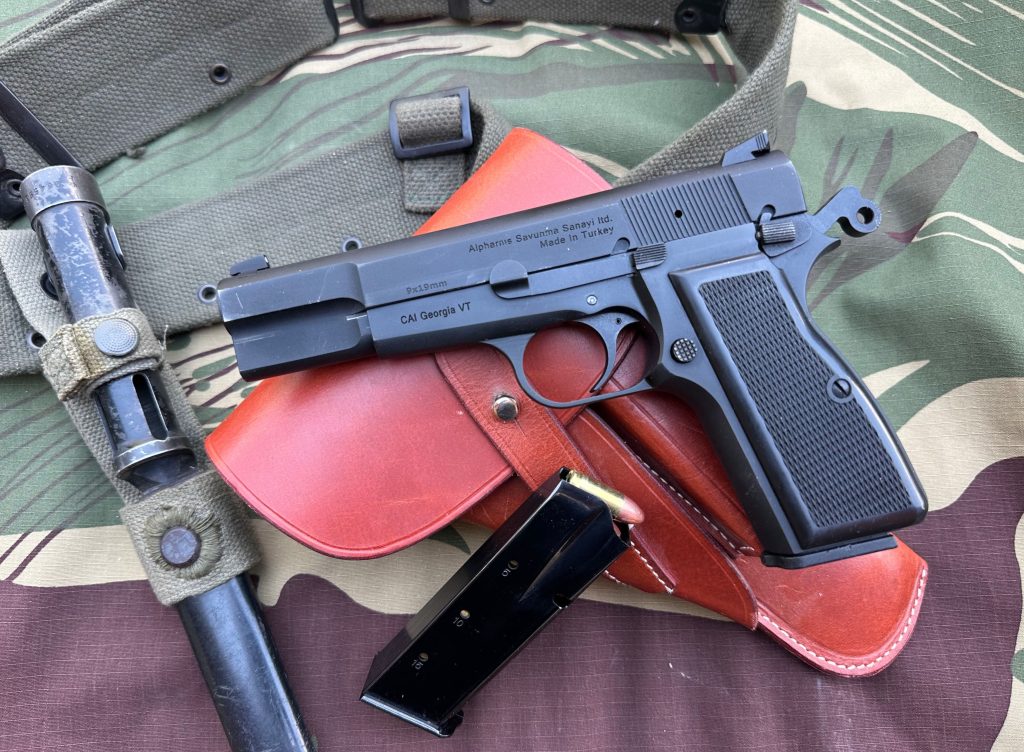
Fast forward to today. There are numerous P-35 Hi Power copies available, many from Turkey. I have the Centurion 14 or C14 from Century Arms, a very faithful P-35 clone and the newish SA-35 pistol from Springfield Armory.
The C14 offers the advantage of an authentic, original feel. It has the mag disconnect and that small safety catch. However, with the C14, I can honestly say that the trigger press isn’t that bad. It is way better than my old FMAP P-35 I owned. The SA-35 did away with the disconnect, has a larger manual safety with a discernable on/off “click,” and comes with a 15-round magazine (as does the C14).
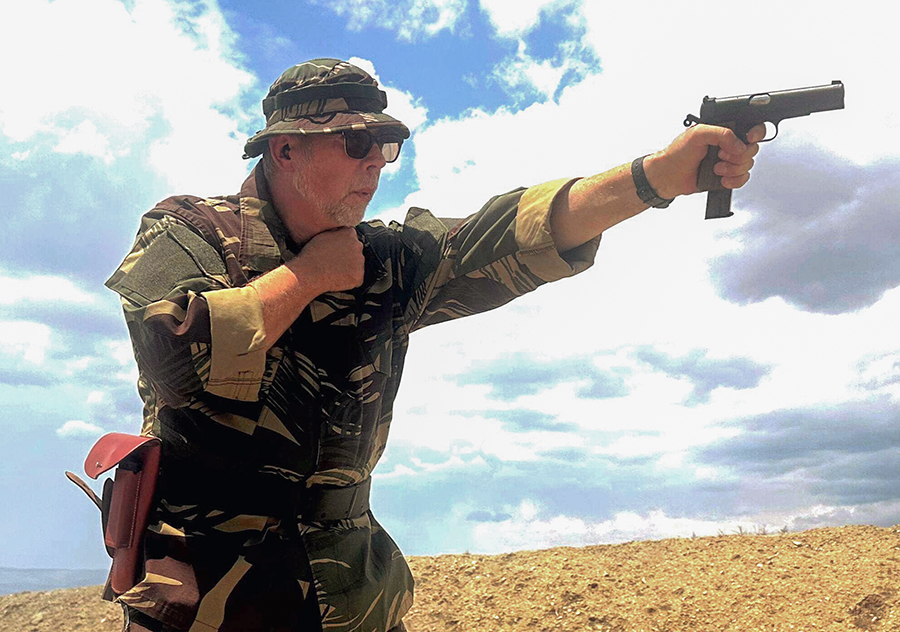
One silver lining that came out of the dark clouds of the Clinton Era gun ban was the fact that Mec-Gar produced 10-round Hi Power magazines with a spring-loaded baseplate to overcome the drag of the magazine disconnect safety, thus allowing them to drop-free. When I purchased my FMAP P-35 in the mid-1990s, I acquired several of these.
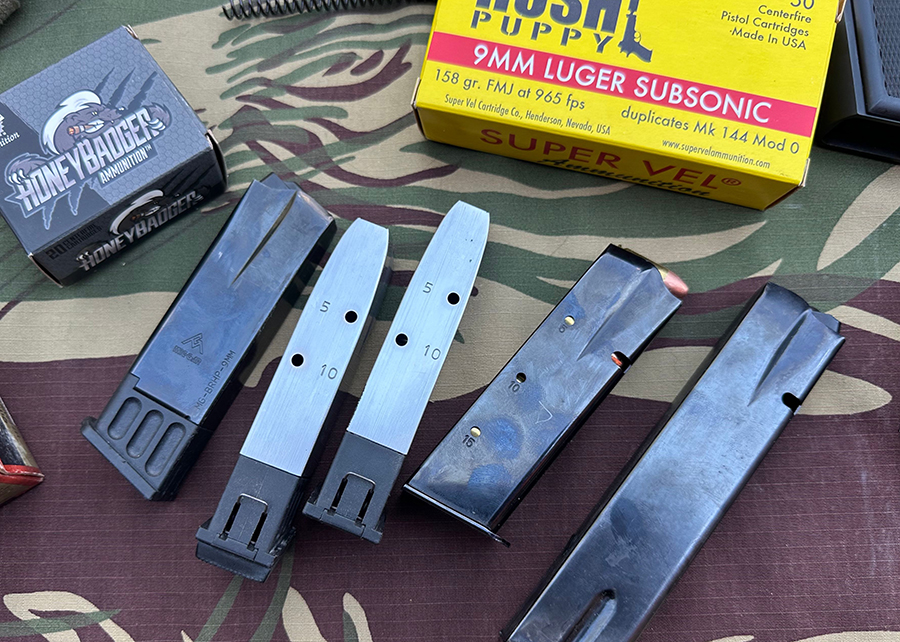
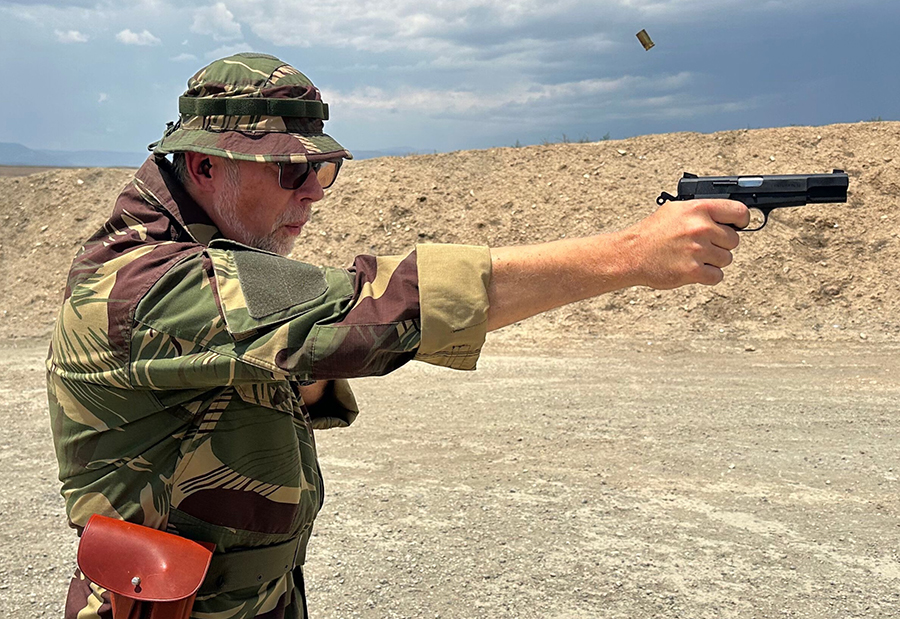
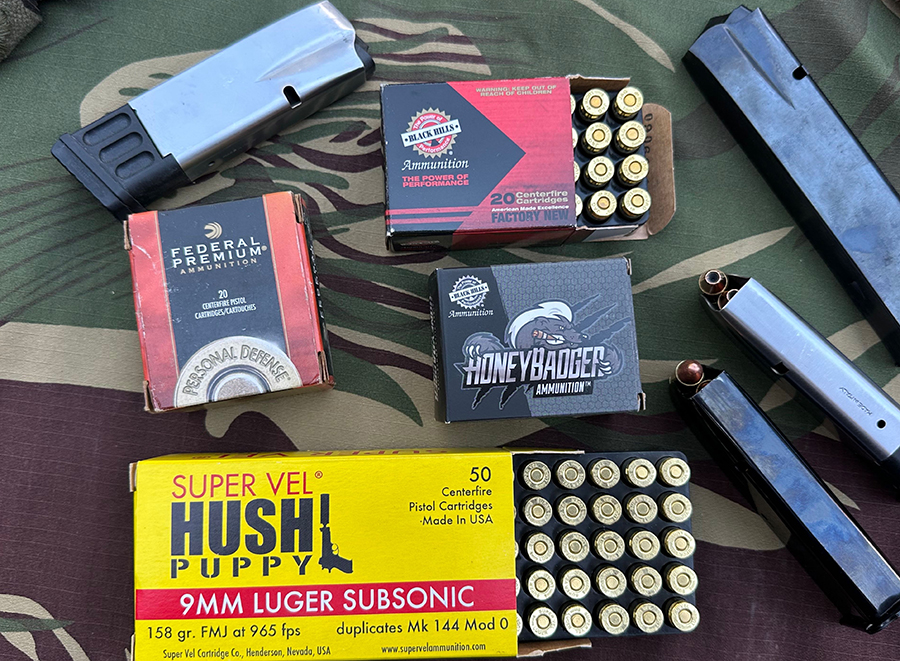
Due to the dimensional differences between the .45 ACP cartridge and the 9mm Parabellum, where MILSPEC M1911A1s would not reliably cycle hollow-point ammunition, the MILSPEC P-35 indeed will. For my range time I fired a variety of FMJ, as well as traditional 115 and 124 grain JHP ammo from Black Hills, Federal and Super Vel ammunition.
Parting Thoughts
While Americans love to pine for the glory days of the good old 1911 .45, most of our Cold War allies were taking the P-35 into the field. Notable users included the British Special Air Service and Special Boat Service. The Rhodesian Light Infantry did more than just carry them, they used them. The SBS kept the P-35 in duty until as recently as 2013 when they finally transitioned over to the G17.
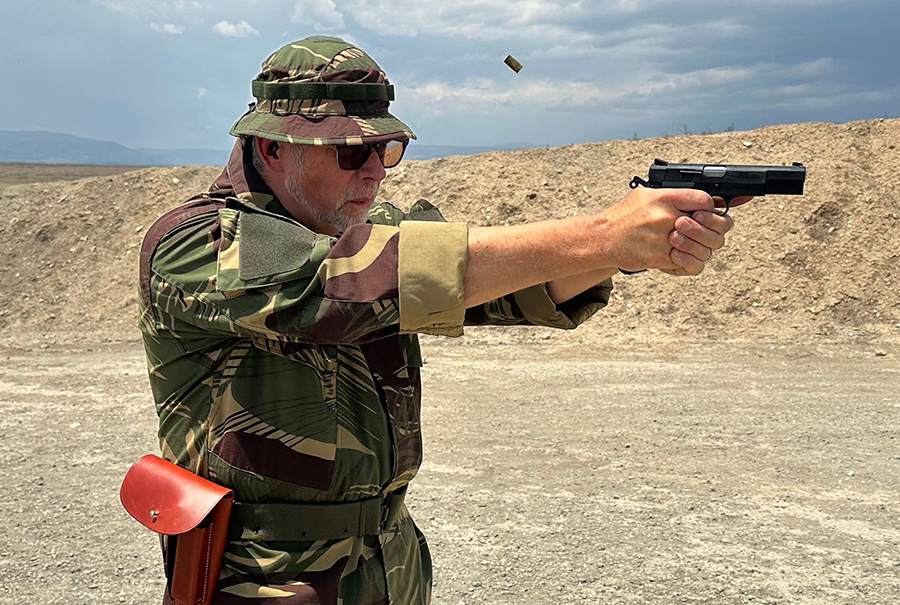
Though John Browning didn’t live to see his brainchild become reality, his spirit can be rightfully proud. When it comes to Cold War era handguns for the allied NATO forces, either one of two Browning designs rode in the holsters of the majority of troopers the world over.
Specifications: P-35 (Browning Hi-Power) 9mm Pistol
Caliber 9x19mm NATO
Action Semi-automatic, Single-action
Capacity 13 (others)
Barrel Length 4.65 inches
Overall Length 7.8 inches
Weight (empty) 32 ounces
$409 for Centurion 14 (P-35 Clone)
$799 for Springfield SA-35
Paul G. Markel is a combat decorated United States Marine veteran. He is also the founder of Student the Gun University and has been teaching Small Arms & Tactics to military personnel, police officers, and citizens for over three decades.
Give me the Hi-Power or a Hi-Power clone over the Colt 1911-type any day, every day….. why? …. because it’s a Hi-Power and for one doesn’t have that damn useless grip safety. Let all the 1911 fanbois flame(r) away.while I stick with the Hi-Power design and it’s Star BM & PD clones.
Oh course the limpwristed cucumber sandwich and tea crowd went with the Glocky 17 …. they’re G-H–E-Y, GHEY, both the gun and the Brits.