
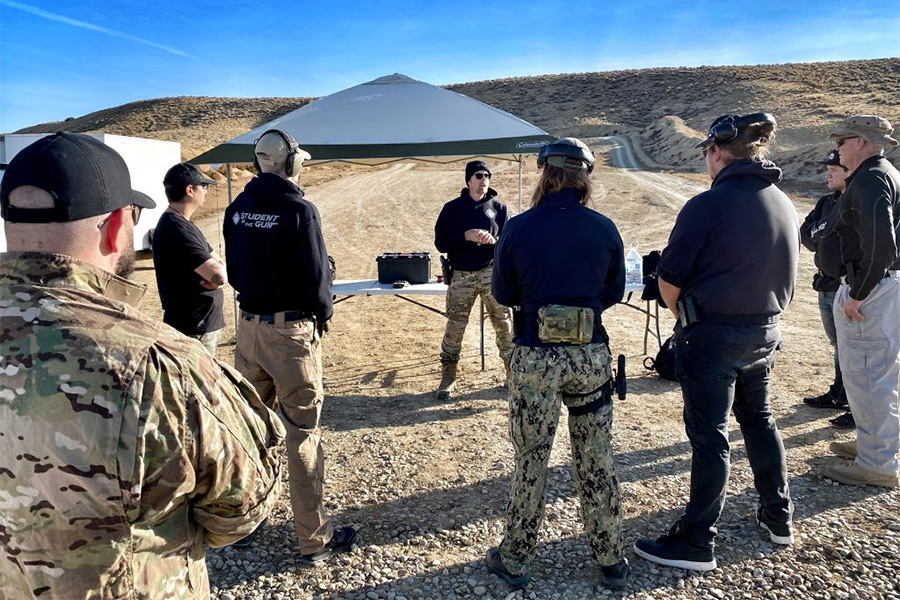
Somewhere between fifteen and twenty years ago, I was enrolled in a traumatic medical training course. As is typical, the evening of the first day of the class, I found myself lying in bed replaying the day’s training in my head. When I got to one of the lessons, I had to stop myself when I realized that the instructor had demonstrated both the correct way to perform as well as the incorrect way.
The problem was, that topic was brand new to me and I couldn’t remember which of the ways he showed us was the right way and which was wrong. Having no experience in that particular area, I lacked the ability to discern between the two.
By that time in my life, I had gone through numerous instructor development and certification courses. I had even attended a community college program specifically geared toward preparing the students to deliver platform instruction as well as coaching people in physical skills.
One of the many lessons that I had picked up in my instructor training was. ‘Don’t tell students what you don’t want them to do. Instead, just tell them what you want them to do.’ Another lesson was similar; ‘We focus on do. not on don’t. If you find yourself expressing your thoughts from the negative aspect, such as don’t hold the gun like that, re-think how you say it, such as, hold the gun this way.
Don’t Tell Me What You Don’t Want Me to Do
A few days ago, a friend sent me a picture of a poster that was designed to show novice shooters how to line up the sights on a handgun. On the poster was a single image that showed the correct way and there were four images that showed the incorrect way to line up sights. So, what you had in that one example was eighty percent of the visual information delivered to a novice shooter being the wrong way and only twenty percent being the right way.
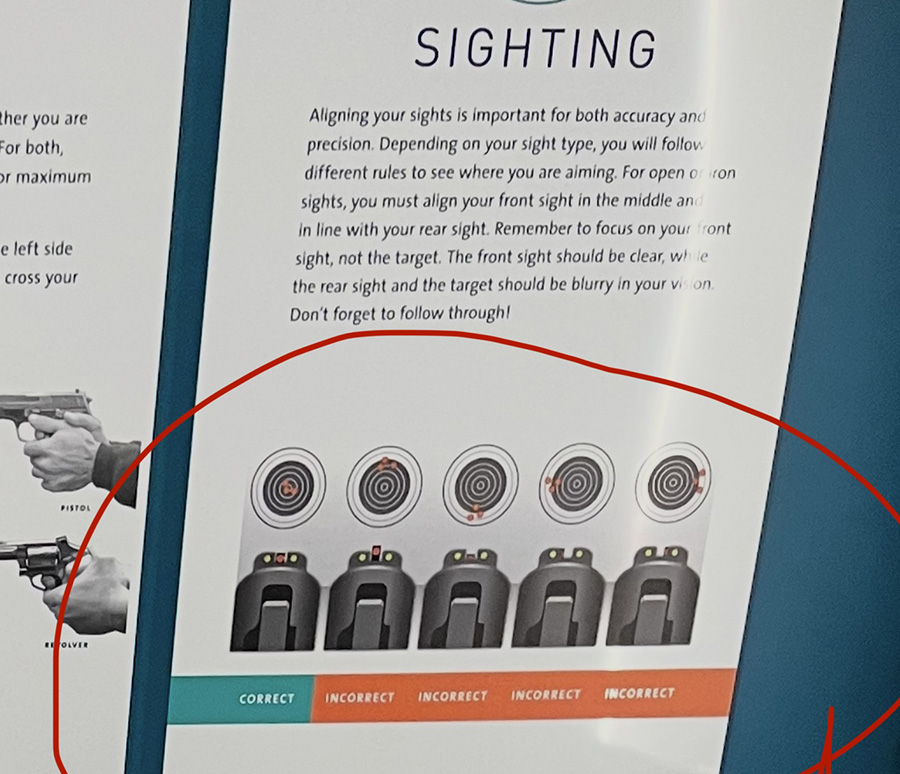
I’m sure many of you have seen similar posters on the walls of your favorite gun range. While these might have been made by well-meaning people, they are terrible visual learning aids. Imagine, if you will, the examples of how to write the letters of the alphabet on the walls of your kindergarten or first grade classroom. Now imagine if those posters had the correct way to write the letter “A” and four incorrect ways to do it.
Come on, Paul, that would be stupid. All you would do is confuse the kids.
Yes, thanks for making my point for me. Now consider a guitar teacher. You bought your first guitar and paid for your first lesson. After showing you how you tune your guitar, your teacher shows you how to place your fingers on the fret board to play a G-chord. Then, before you can even practice it, your teacher says, “But don’t play the G-chord like this,” and shows you a completely different way of putting your fingers on the strings.
Again, you are thinking, That would be stupid, you wouldn’t show someone how NOT to play the chord, you would just show them the right way and leave it at that.
If you wouldn’t make a poster showing the wrong way to write letters and you wouldn’t demonstrate the wrong way to play a G-chord because that’s silly and will only confuse the student, then why in the heck do gun people engage in such behavior all the time?
Administrative vs Tactical
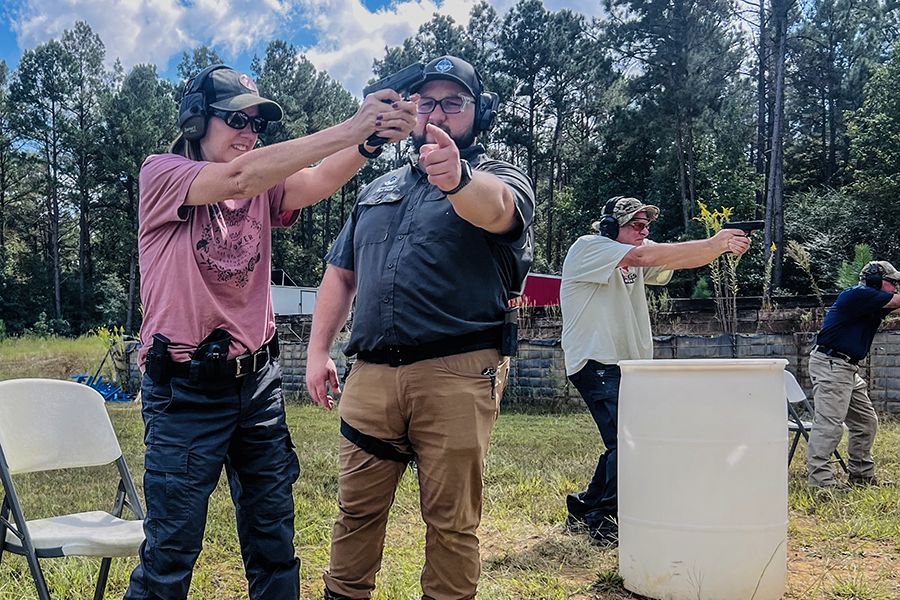
One of my many annoyances with those persons who claim to teach self-defense or tactical shooting is the use of the term “administrative” and demonstrating motions and techniques that they, by their own admission, will state aren’t used for fighting. From one side of their mouths, these folks will spout, “We train like we fight,” (obligatory chest-thump included). Then, out of the other side of their mouths they’ll say, “This is how we administratively load our guns.” Later they show “tactical loading,” “hasty loading” and/or “emergency loading” procedures.
If a student runs out of ammo in the middle of a shooting drill and begins to go through all of the kabuki dance ridiculousness of the “administrative loading” procedure, the coach yells, “No, do an emergency reload!” My question would be, if you don’t want the student to perform an action when they’re under stress, why do you teach them that action and worse, give their brain three separate options to sort through?
In a situation where the gun is hungry and needs more bullets, wouldn’t it be more efficient to teach a neophyte student one way to load ammunition and have them simply master that one way and use it every time they need to feed the empty gun?
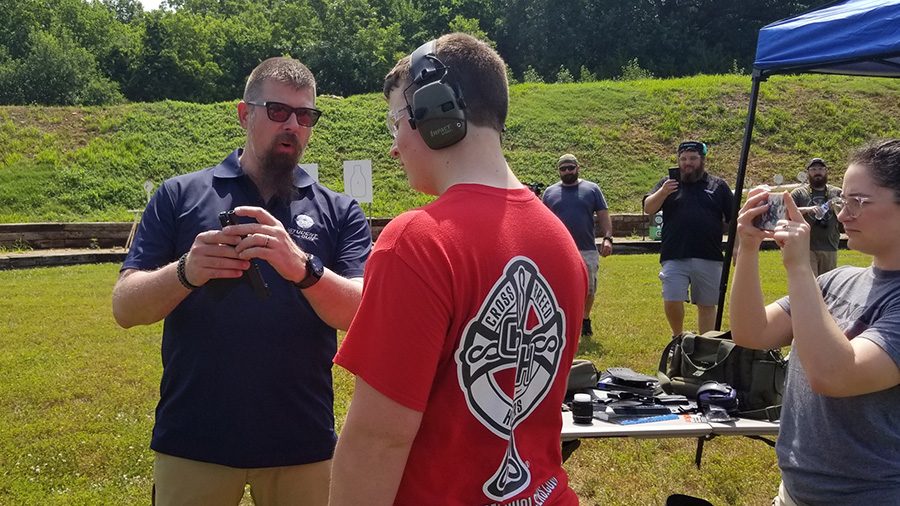
Ditto the masturbatorial exercise of the press check. Pseudo-trainers force students to press check their guns during administrative loading and then, during the mid-drill empty gun scenario, when the student jams a new magazine in the gun and pauses to press check, the coach yells, “No, we don’t press check a hasty reload!”
Again, why are you teaching a student to do something that they shouldn’t do in a real fight? Isn’t that just purposeful confusion built-in to the training? Didn’t you say, “We train like we fight?” Or did you mean we only train like we fight sometimes?
Going back to how to line up the sights, rather than show or even discuss the incorrect way to line up sights on a handgun, wouldn’t it be more productive to simply tell the shooter, “When the pistol is extended out in your hands, look through the rear sight to your front sight and put your clear focus on the front sight.” We know that humans, minus legitimate damage or impairment to their eyes, have what’s called a center fixation bias. If you put your focus on the front sight, your built-in and unconscious center fixation bias will line the front sight up exactly as it should be in the rear sight notch, ditto iron sights on rifles. There is no need to try and center it or even think about how you could do it wrong. Just allow the student to do it right and move on.
On the subject of range posters. How many of you have seen the How to Grip Your Pistol poster that has one image of the correct or preferred grip and then two or three images of the wrong or incorrect grip? Would it not be of greater benefit to the neophyte to just show the image of the correct way to hold the pistol and leave it at that?
Moral of the Story
One of my favorite quotes about training comes from a doctor and it has nothing to do with guns. I found the quote from Dr. Jeffery Guy, MD MSc EMT-P in the PHTLS (Prehospital Trauma Life Support) Manual; “Repetition of error is not experience.”
What that simple quote means is that just because you have been doing something for a long time does not mean it’s either correct or the best way to do it. Just because there are a thousand posters showing the wrong way to do something doesn’t make them right. Just because we have been demonstrating how not to do things to our students or, just as bad, teaching them superfluous or extraneous movements does not mean that is the best way to teach a new shooter or even an experienced one.
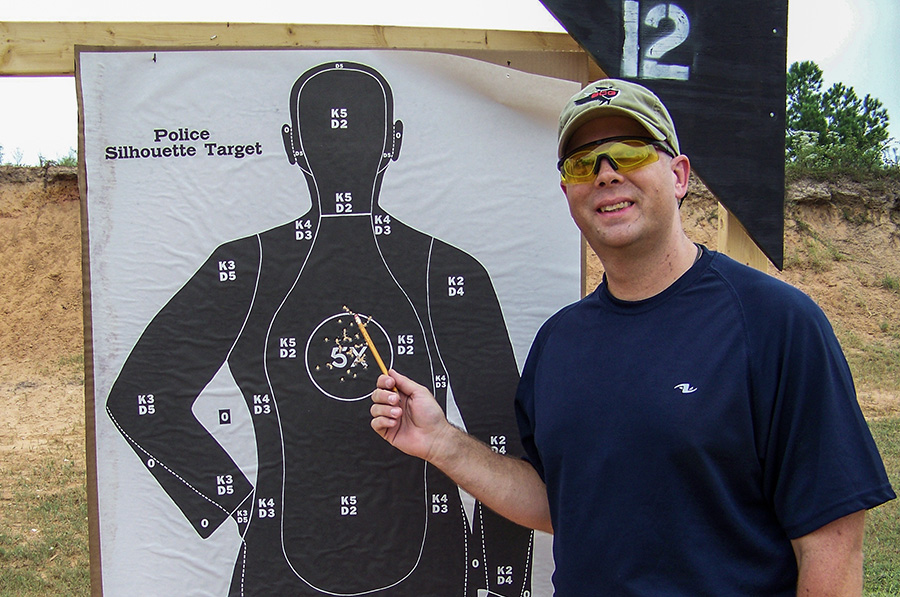
In his Book of Five Rings, Miyamoto Musashi states in the final chapter, “If you know something, you know something. If you do not know something, it does not exist in your world. In the universe, no-thing-ness is not a thing that is true and not a thing that is not true.” If a student doesn’t know how to do something wrong or incorrectly, it doesn’t exist in his world. What benefit is there for the student for you to introduce the incorrect or wrong way to their world?
Paul G. Markel is a combat decorated United States Marine veteran. He is also the founder of Student the Gun University and has been teaching Small Arms & Tactics to military personnel, police officers, and citizens for over three decades.