

Prediction time: in a year or two we’ll look back on pistol boosters and wonder what the heck we were thinking. They will have become very much the exception, not the norm.
A pistol booster (AKA “Nielsen Device” AKA “piston” AKA “muzzle booster”) is a spring-loaded mounting system used to attach a silencer to a semi-automatic pistol with a tilting barrel unlocking system (and some other systems with a moving barrel). Without a booster, most of these types of pistols will not cycle with the weight and/or mass of a suppressor attached to the end of the barrel.
The booster effectively achieves the separation of the mass of the suppressor from the barrel by putting a spring in-between the two. When the pistol fires, the barrel rapidly moves rearward, pulling the piston out of the booster housing and compressing the spring inside of it. This allows the barrel and slide to cycle rearward without the inertia of the suppressor hindering the barrel’s progress; the reason why most pistols won’t function if the silencer is attached in a fixed manner to the barrel. The spring then resets the piston for the next shot.
It sounds great, it usually works reliably, but it sucks. Pistols do NOT shoot the same with a booster-equipped suppressor attached . . .
- The recoil impulse is all weird; it does this double ca-thunk-a-thunk thing making follow-up shots more difficult.
- It tends to spit bits of unburned powder and gas back toward the shooter’s face.
- It can cause baffle strikes as, when the piston is extended, the silencer tends to wobble. If you fire faster than the piston is able to run or get unlucky with a piston that doesn’t slide back into the booster housing properly on just one shot — which DOES happen! — you’re going to have bullets hitting baffles.
- Boosters often also cause pistols to cycle harder than they were designed to, beating up slides, slide stops, locking blocks, etc. and launching your empty cases into low earth orbit.
So! . . . fast-forward to the modern era and there are a few 9mm silencers on the market that run on nearly every pistol without the use of a booster at all. Thanks to modern manufacturing, lightweight materials like titanium, and a growing understanding among shooters that the real goal is checking that “is it hearing safe?” box rather than the “is it Hollywood quiet?” box, we have some awesome, booster-free options.
As a rule of thumb, it the can weighs less than 4.5 ounces in ready-to-shoot configuration, it will probably run on your semi-auto pistol. With a lightweight, boosterless suppressor like this the only difference compared to firing unsuppressed is in the complete lack of concussion and the sub-140 dB noise levels. Your pistol shoots, moves, and performs exactly as it does unsuppressed. No weird recoil, no baffle strikes even on your GLOCK 18 machine gun, no annoying blowback (or, at least, significantly less than with a booster).
Thanks to “3D printing” (DMLS / additive manufacturing), laser welding, CNC machining, and a shift in understanding of what’s important, I believe we’ll look back on pistol boosters with at least some level of disgust and embarrassment.
Heck, there are a few silencers on the market that are only heavy enough to require a booster because of the weight of their booster. It’s still such a knee-jerk assumption that a pistol silencer needs a booster that these companies never even considered otherwise. Install a lightweight fixed mount in those cans and they’d run like a top. Embarrassing.
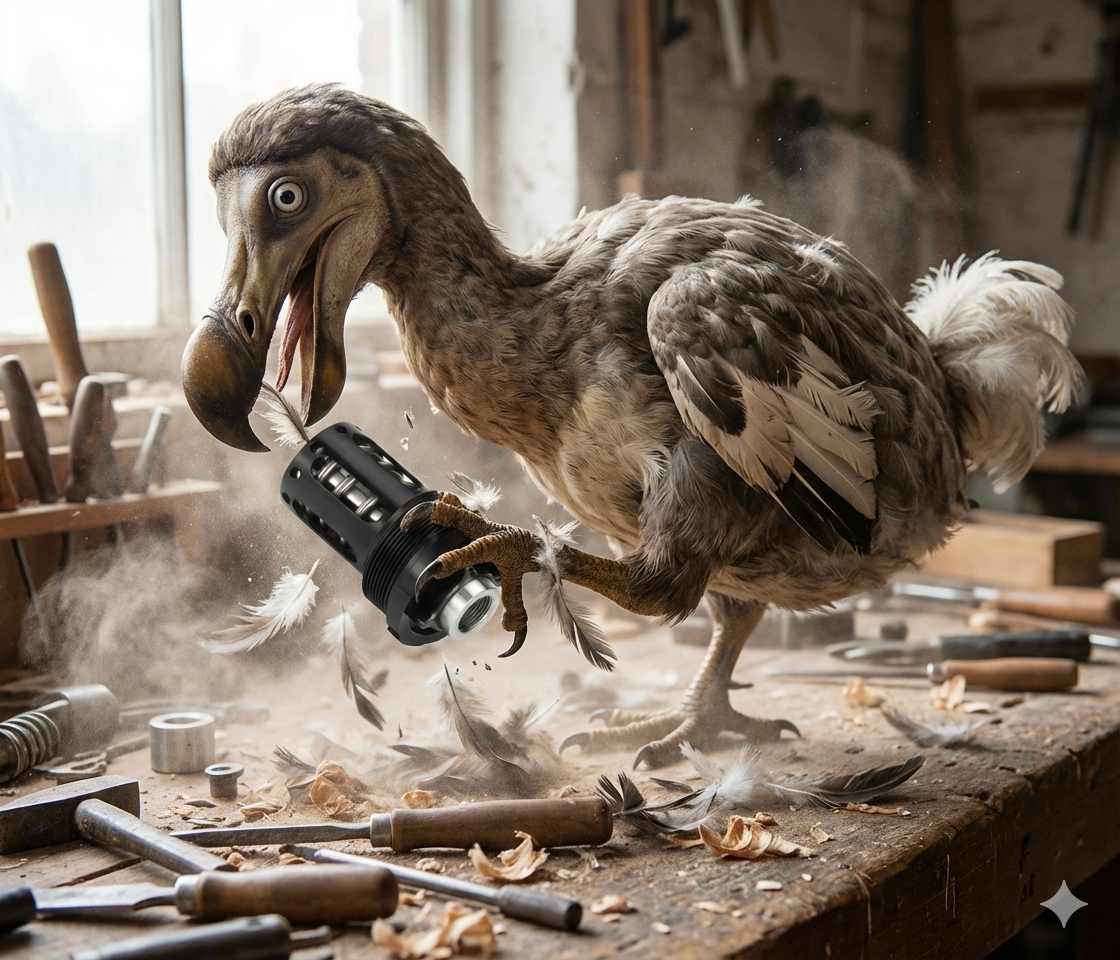
So there ya go, that’s my prediction. Give it a year or so and boosters will be going the way of the dodo.
Check out the video embedded at top for my review of the AB Suppressor F-4, my favorite 9mm suppressor and the first one that I shot boosterless.
Does the Walther CCP (which is gas operated rather than standard Browning action) have even less need for a booster?
No pistol with a fixed barrel like the CCP requires a booster. Since the barrel is fixed to the frame the weight of the suppressor on the end of it has no effect to the cycling of the gun.
That said, gas delayed blowback pistols (CCP and HK P7) and straight blowback pistols tend to blow gas and bits of powder back at the shooter’s face and are often louder because of high pressure gases coming out of the ejection port area, whereas a Browning-style system provides a longer delay to allow the bullet and gases to exit the muzzle before the action unlocks and the case is extracted, so by the time the mouth of the case is out of the chamber the gas pressure in the barrel is effectively gone. I know HK P7s end up pretty seriously over-gassed when suppressed so the slide cycles super hard, there’s blowback at the shooter, and it’s loud. Might do well with a modern, high-flow/low backpressure suppressor design though options are limited among 9mm cans for that (that design style is more common among suppressors designed for semi-auto rifles).
The CCP has a barrel fixed to the frame, so like a PPK it can theoretically use a direct thread attachment. However, I’ve never seen a threaded CCP, and assume it would require pressing in a new custom barrel. As the takedown requires tilting the slide off the front of the barrel, I’m not sure that would work so well.
Arrested for Wearing Body Armor in Public (but it’s not illegal). (note: in left winger – karen heaven apparently)
(video producer – The Civil Rights Lawyer) “This guy got arrested at a Christmas parade in Florida for wearing a body armor vest concealed under his shirt. The problem is, that wasn’t illegal. I saw this in the news, with cops taking a victory lap and Karens rejoicing about it, so I put in a request for the footage, and just got it. And it’s worse than I even thought it would be. Lawful conduct does not become illegal just because police officers – or Karens – are afraid of something. My rights don’t end where your fear of some perfectly legal object begins.”
https://www.youtube.com/watch?v=jksTInkpT7U
.40 cal,
Qualified immunity, and sovereign immunity, need to go away, and toot de suite. Stupid, initially judge-made (but later incorporated into legislation by idiot ‘lawmakers’) doctrines that have long-since outlived any marginal utility they might have had.
Nope. Not true. I have a Banish 9k 9mm pistol suppressor. 2.7 ounces. Does it work on any of my suppressor ready pistols. No. I’m not talking about cheap handguns, but quality made guns. 2 different S&W MP9s and a Canik Mete SFX. Failure to fully expel the fired cartridge of sub sonic ammo, regular pressure 115 & 124 grain round nose ammo and 115grain JHP ammo. The only ammo that doesn’t have a problem is 124 grain NATO 9mm. Higher pressure and higher noise factor. I haven’t determined whether the springs are too stiff or if the can is just not up to the job.
There’s something wonky with that suppressor. A few reviews mention that it doesn’t cycle a lot of pistols without screwing with spring weights, and I don’t know why. I’m absolutely not a Silencer Central fan (the opposite, in fact) but have no personal experience with that model. On top of that, the M&P9 is a terrible suppressor host and won’t run with most booster-equipped suppressors either. I had one out of four suppressors that would run on the last two M&P9s that were in for review (though I actually did not test either the JK 105 or the AB F-4, which I’ll have to fix here soon).
So…there are exceptions and intricacies to all of this, but generally speaking what I’ve written above is going to be correct for most setups!
Now, how about for .45ACP. Like 1911, Sig, or G21.
Gonna be the same but I suspect the weight limit for the suppressor will be a little different (higher). Not sure anyone has made a light-enough .45 cal suppressor yet, but it’ll happen. Shooting a pistol with an extra 10 ounces and 10 inches on the muzzle ain’t cool.