
Just when it seemed the firearm business’s current slowdown was about to deepen, thanks to the traditional and very annual real summer slump, Congress and the President may have just handed the industry a swift kick in the sales butt. Maybe….
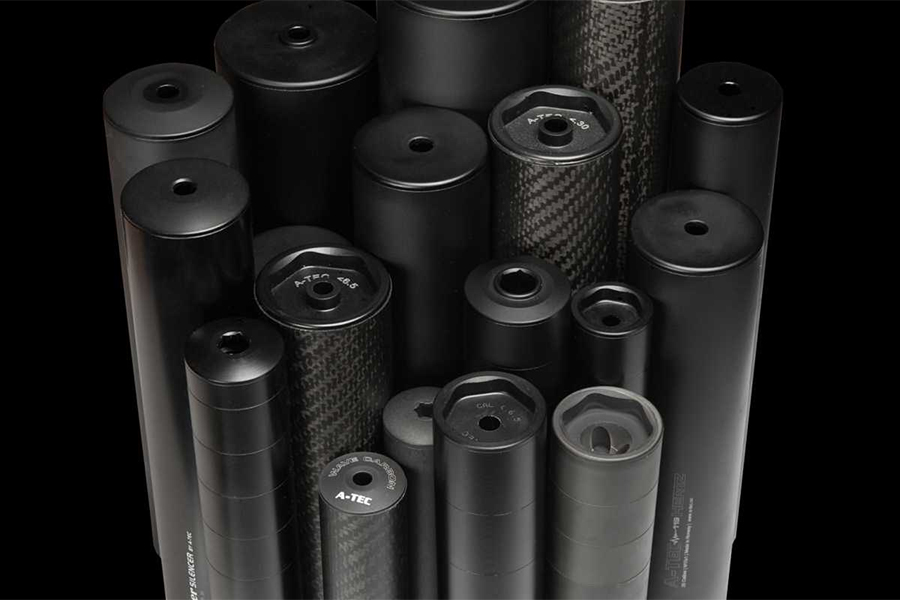
On Friday, President Trump signed the One Big Beautiful Bill. As you surely know by now, the giant reconciliation bill included the revocation of the $200 NFA tax stamp on short-barreled firearms and suppressors. That’s a big win.
Due to the language in the bill, however, the $200 tax stamp remains in effect until January 1 of 2026. So, the tax man will still cometh for now, and we all know he has zero chill when collecting his pound of flesh.
Six Months of Uncertainty
With that $200 tax stamp still in place until January, how will consumers react and what will that mean for suppressor companies trying to sell to a market reluctant to pay a tax they know will go away away six months from now? Early yesterday, I spoke with Joe Kurtenbach at Silencer Central about the market next six months and what it could mean for the suppressor segment of the industry.
Right now Silencer Central is running its free tax stamp promotion, which will continue through July 31, 2025. It’s been a popular promotion and moves a lot of cans, not just for Silencer Central and its BANISH brand, but also for its partner companies.

Kurtenbach explained that the free tax stamp promotion is seeing tremendous response from consumers and is indicative of the continued growth in both interest in and demand for suppressors. In many cases it represents a 20% to 30% discount on the price of a suppressor.
And the timing—intended to boost summer sales—just happened to coincide with the industry’s push for removal of both the $200 tax and the elimination of regulation under the National Firearms Act as the House and Senate took up theOne Big Beautiful Bill.
While the NFA deregulation language didn’t make it through the process, the elimination of the $200 tax is a huge win in and of itself and cause for celebration. It will also be a matter of concern for suppressor makers between now and January 1.
You can’t repeal the laws of economics. Buyers who know the total cost of a silencer they want will drop significantly in six months are going to hold onto their cash until then.
Kurtenbach told me that Silencer Central is “committed to bridging the gap” and is in discussions with its partners (other suppressor manufacturers) to bring them on board to potentially extend their free tax stamp promotion through the end of 2025.
That’s no small undertaking. The government will still get its $200 per can and someone will have to pay it. That means Silencer Central and other major companies that have sufficient resources and margins can afford to ‘eat’ that tax for consumers.
That’s not ideal, but it will address the ravenous consumer demand for another six months, thus bringing in buyers who would otherwise sit on the sidelines waiting for 2026. The promotion will also apply to companies such as Brownells that are ‘Delivered by Silencer Central’ partners.
Looking back at the last time the Hearing Protection Act was allegedly supposed to pass after Trump won his first election in 2016, the suppressor industry took it on the chin as consumers held back, waiting for the promise of tax-free suppressors. Now that it’s a reality, these next six months will be painful for brands that aren’t in a position to follow Silencer Central’s lead. Only time will tell exactly how painful the next six months will be.
Fight, Win, Then Fight Some More
When the ‘All or Nothing’ fight to kill both the tax and NFA regulation failed and devolved into the ‘Not All But Certainly Something’ win, a new fight was immediately announced.
Realizing that getting rid of NFA regulation of suppressors and short-barreled firearms may never happen through the legislative process where 60 votes are virtually nonexistent in the Senate, the battle has pivoted to the courts.
The Second Amendment Foundation, Firearms Policy Coalition, National Rifle Association and American Suppressor Association released a joint statement announcing their intention to file a new lawsuit challenging the constitutionality of the NFA in Federal Court.
Meanwhile, Gun Owners of America, Gun Owners Foundation, Palmetto State Armory, Silencer Shop, SilencerCo and others filed their own lawsuit challenging the constitutionality of the National Firearms Act now that it can no longer be defended as a tax.
In other words it’s now “Avengers assemble” as we head towards what will likely be the Supreme Court. Thanks to the last several years of legal challenges and victories by orgs like SAF, FPC, GOA and others, the industry now finds itself in a strong position to make the argument it’s time consign the NFA to the dustbin of history.
While some are still busy futilely shaking their fists in the air, railing against the Senate Parliamentarian that shot down the original language that would have eliminated both the tax and NFA regulation in the Senate version of the O3B, that was then and this is now.
Today, the battlefield is in the federal courts, and it’s a battlefield we’re all very familiar with. Stay tuned.
Well, I’m looking forward in 6 months to experimenting with different can designs, as screwing one design up won’t cost me 200 clams.
For a first one, I’m thinking about a black pipe .22lr can packed with stainless turnings, wet with dilute cable pull gel…
We know perfectly well the lawsuit over this $0 tax will result in the lowered rate, rather than the registration, being struck down.
And we know that ‘perfectly well’ why?
Its a rate set by congress, its not unconstitutional for congress to set a $0 tax (remove a tax, same thing) – its only questionable by the courts if the tax set by congress is unconstitutional.
The Founder’s had a healthy fear of the power to tax. In fact the ‘first government’ of the Unites States of America (via the Articles of Confederation) contained no power in the national government to levy any kind of tax. If taxes were to be levied they would be by the states, and the national government would then request each state to voluntarily give its fair share to the National government. But during the revolutionary war we had a war to fight and the inability of Congress to raise the necessary funds was one reason we almost lost the war for independence as the states were not giving their share as they were suppose to do.
The Founders felt so strongly about the need to control government officials in their desire to get more money by taxing they put the following restrictions on the taxing power right into the Constitution:
Article I, Section 2:
“Direct taxes shall be apportioned among the several states … according to their respective numbers.”
Article I, Section 9:
“No capitation [tax of so much per person regardless of circumstances] or other direct tax shall be laid except in proportion to the census or other enumeration herein before directed to be taken.”
With these limitations in mind, the Founders felt confident future generations would be spared the oppression of tax collectors who would invade one’s privacy and confiscate property. But then came the the Sixteenth Amendment, this destroyed these ‘safe guards’ with this…
“The Congress shall have power to lay and collect taxes on incomes, from whatever source derived, without apportionment among the several states, and without regard to any census or enumeration.”
As a result, Congress has used this unlimited taxing power to impose all kinds of taxes on the American people on whatever basis they chose – income, wealth, inheritance, and even choices they make concerning what they buy or don’t buy. And SCOTUS has ruled it doesn’t even have to be uniform; it can be graduated and even discriminatory and it can be what ever congress passes. The Supreme Court has used the authority of the Sixteenth Amendment to give unlimited power to Congress to tax and regulate the people for any reason and in nearly everything.
Not only does Congress have this power to levy taxes, but the Supreme Court has allowed the government to acquire several fringe benefits by ‘regulating’ some of the subject matter selected for taxation by taxation. One of these ‘subject matter’ things was certain firearms, but to do this in order to collect a tax it had to be a tax law or under a tax law. Thus the NFA was created and intended by congress as a tax law, the registration is for tax accounting purposes (which is why you get a tax stamp) and not actually firearms registration.
“And we know that ‘perfectly well’ why?”
Because the courts never miss a chance a to F over the 2A. Where have YOU been for the last 90+ years?
You mean the precedents already set during the last years…you missed those?
Basically; In the 1930’s, the Supreme Court only narrowly upheld the NFA solely as a tax statute – not as a firearms regulatory law. In Sonzinsky v. United States (1937), the Court ruled the NFA was (basically only) permissible under Congress’s TAXING power. Others over time touched on it, but basically in all cases SCOTUS has made clear that the NFA survives only as a tax law [as it was originally created an intended by congress]. With a tax of $0, the constitutional justification for the law collapses and the ‘registration’ goes away.
I can’t, maybe, see the Trump DOJ fighting all that hard in court to preserve something Trump said he was going to get rid of, and got thrown out of the BBB because the Democrats fought the BBB all the way.
Not having to register the suppressor would be more of an incentive to buy one.
So what is the position of the NRA???
There name has not even been spoken.
And it seems no one wants to ask about hand grenades. So I will ask.
What about hand grenade ownership???
The problem with the “gun community” in the 21st century, is many don’t really believe in the concept of responsibility. When they say they believe in freedom.
And the general public has a very difficult time supporting glock switch ownership. The “gun community” certainly doesn’t support their ownership.
The liberty we have in the USA has only existed this long, because there has been an unspoken requirement for self control.
And that is going away. As the police stand down and do nothing. When rioters smash and burn cities to the ground.
When you don’t support the police. And you also don’t support civilians like Joe Horn. Who shot two illegal alien criminals.
The end result is you get the military acting as local law enforcement. And that is happening right now.
There are more criminals on the streets because of open borders. And because the Libertarians Liberals and leftists wanted the jails emptied in 2020.
Huh … what?
Chris self control IS all but gone in most big lib controlled cities. Unless/until that changes things will only get worse.
They didn’t have it this bad 150+ years ago because jails and prisons weren’t a money making business like they are now.
You didn’t get a life sentence you got a rope.
I’m in the gun community and I support grenade ownership. I support Glock switches and would buy a Glock just to put a switch on it.
I buy one when they drop the registration!
ECONOMIST MARK ANTHONY TRAINA says “JUST WAIT”, the exorbitant price of SUPPRESSORS and/or SILENCERS; which ever term you choose to use will eventually collapse. As the demand for SILENCERS increases more and more armory outlets will begin to move into the market. In addition to all the DOMESTIC PRODUCERS, CHINA/TURKEY/JAPAN have been sitting on the sidelines for years waiting for this market to explode. obviously, COMPETITION will drive the prices for SILENCERS down within a very short period of time. SILENCERS are not difficult nor costly to produce. In fact, OUTLAWS all-across the entire WORLD have been producing them with OIL FILTERS, PVC PIPE, CARDBOARD, COTTON, LEATHER and DUCTTAPE for over a CENTURY!
CASE-IN-POINT: It was not very long ago that a 75″ TELEVISION would set you back a few THOUSAND DOLLARS and now you can pick them up at WALMART or BEST BUY for a few HUNDRED DOLLARS! So, with all that being said, “JUST WAIT”!