

Technology has simplified many complex activities, but the “democratization” comes with a tradeoff: the loss of what were formerly baseline skills. Fewer and fewer people can read a paper map or navigate without an electronic device to do the work for them.
When you’re out in the field, those “old-time” skills have real value. And I’m never going to advocate losing those abilities. But modernization is happening, and even if some advances may represent a loss of certain basic skills, most of the changes are for the better, despite not everyone agreeing.
From my chair, I can’t see any convincing argument against better ammunition, better guns, better optics or simplified technology. Especially if those advancements contribute to more humane harvests and fewer wounded or lost animals, all while encouraging young people to get into hunting and shooting.

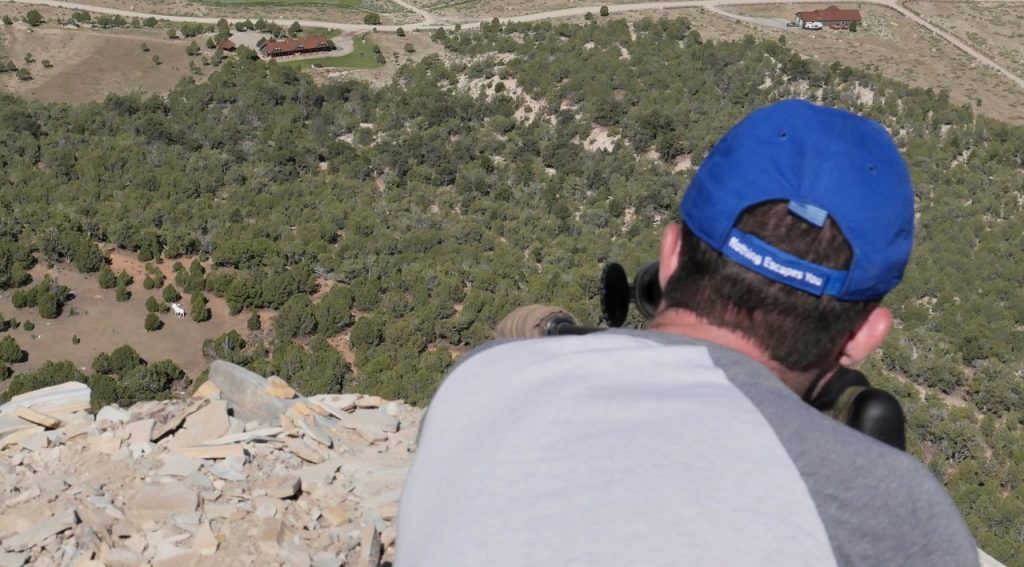
That’s the mindset I brought to Colorado’s Branded Rock Canyon when I was invited to see the latest technology for hunting and shooting offered by Steiner. After their :predator Showcase” event, I’m convinced their newest technology can help even seasoned hunters have a more successful hunt, especially in difficult or unfamiliar terrain.
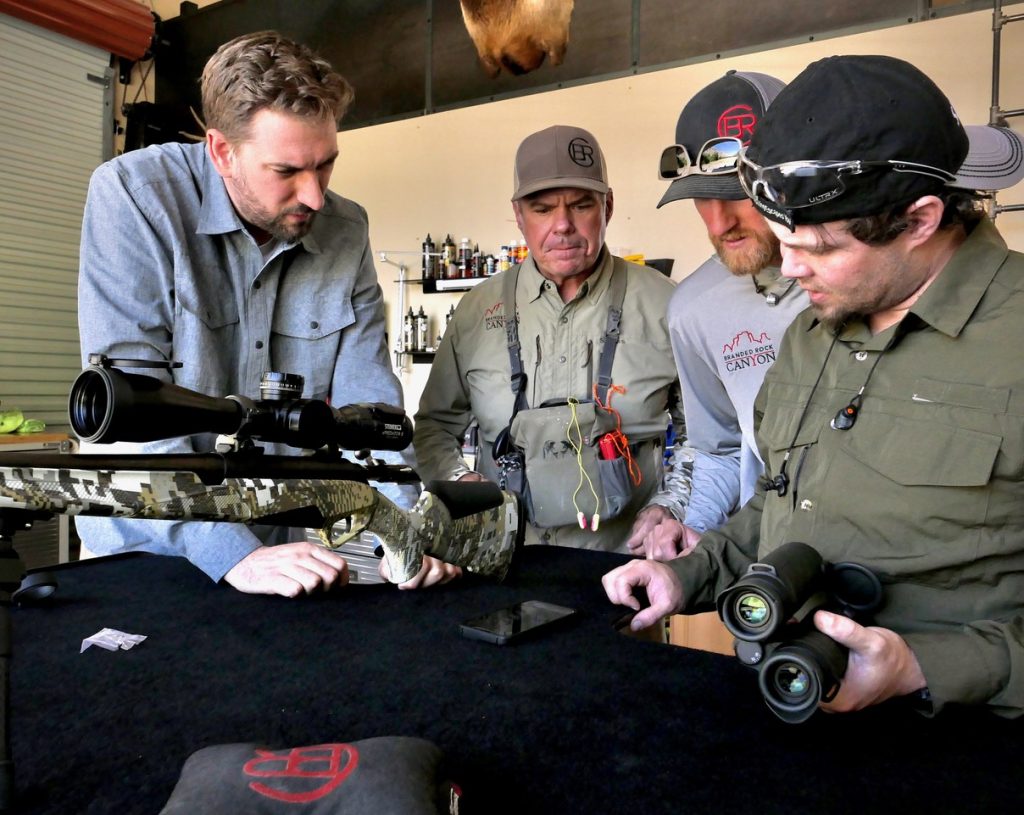
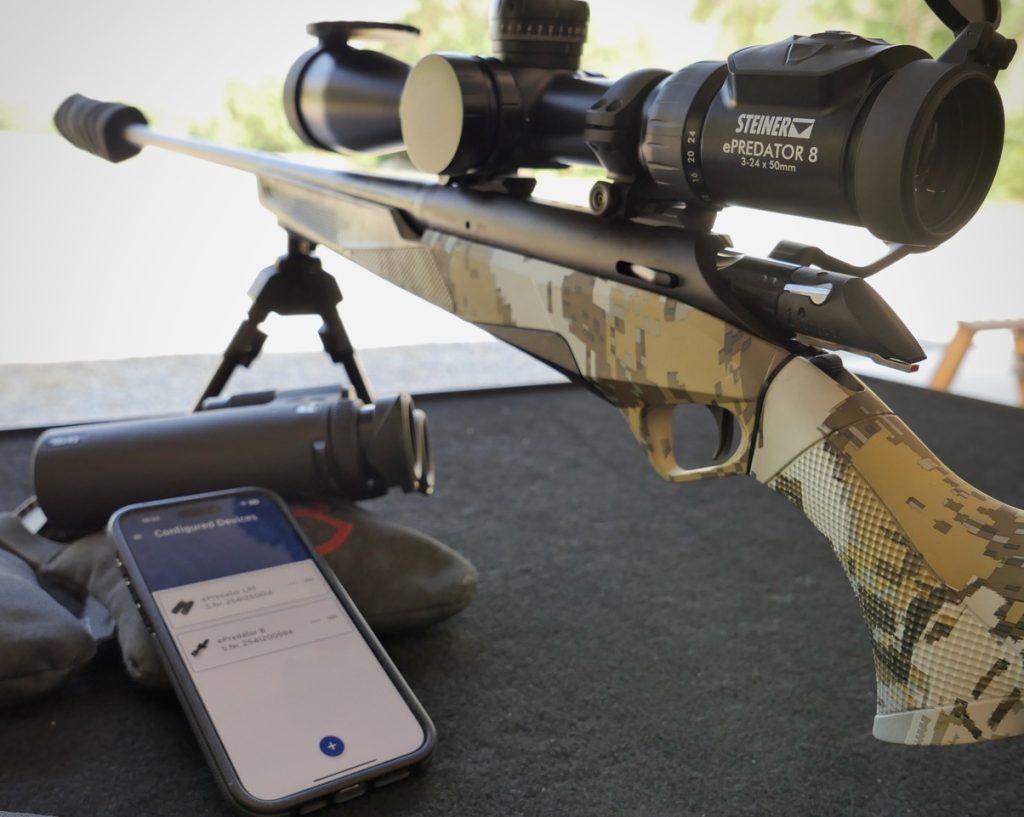
We began with an introduction and brief on the gear we’d be using: Steiner’s ePredator 10×42 LRF (rangefinder) binoculars, ePredator 8 riflescope (3-24x50mm) and the Steiner Connect 2 app. Combined (via Bluetooth or cell), these devices read a majority of the mystical/mathematical and atmospheric variables of long-distance shooting, giving shooters real-time ballistic information in yards.
The rangefinding binoculars communicate with the riflescope to literally deliver the shooting solutions in a heads up display. That display enables the shooter to simply dial in the distance of their shots without having to perform any complicated mathematical calculations.
Those calculations have confounded me for years. Using the Steiner system, hitting targets (targets, not animals) at distances I’d normally struggle with was almost reduced to lather, rinse, repeat simplicity.
A formerly complicated set of steps was reduced to a simple, repeatable, process. Range (with the binos). Set the riflescope to the adjustments indicated in the scope, Put the adjusted red dot on the target and…squeeze. No holdover. No guessing.
As always, no flinching, jerking or slapping of triggers allowed. Great technology can’t overcome bad technique.
When I stayed inside the envelope for the ePredator 8 riflescope (elevation adjustments on the turret maxed out at 1,000 yards), hits were far more frequent than misses. Hits from 350 to 900 yards were simple using the ingenious system. If I followed my steady-breathe-squeeze discipline, they were easily repeatable.
That doesn’t mean the system’s foolproof. At one point, I kept dialing in exact distances and missing by feet, not inches. That’s when I realized one absolute requirement for the system: you need to read and follow directions exactly.
There are two zero adjustments that must be done on the riflescope. I’d only adjusted one — the mechanical zero on the turret. If you don’t calibrate the digital zero as well, 528 yards might as well be 528 miles. You are not going to hit your target.
Follow the steps correctly and you’ll wind up with a system that takes most of the complicated computational elements out of distance shooting. But it doesn’t mean that you can buy one or both of these range-finding tools (they work independently as well as meshed together) and immediately head out for long-distance hunting.
Hitting a static target on a range is one thing. Hunting a living, moving animal is another thing entirely, especially when you factor in unfamiliar terrain and potentially complicated shooting conditions.
On the range, if you miss, you correct and shoot again. If you wound an animal, you need to be prepared to quickly reengage or start the process of recovering the animal. Leaving any animal, wounded or dead, isn’t an option. Being able to shoot further doesn’t reduce the need for tracking skills. If anything, it magnifies them.
Concerns over hunters outshooting their recovery abilities may be one rationale some state game and fish agencies used to ban the use of technology, especially when it comes to optics that include rangefinding devices.
Banning new tools or technologies is a longstanding tactic used by many agencies. Rather than blanket bans on equipment, I suggest they focus more on developing hunting competency and embracing advances that make it easier for beginners to acquire necessary skills.
Modern integrated hunting systems like this from Steiner (there are others) deserve more than passing consideration from F&G departments. They have the potential to make all hunters better, while simultaneously encouraging more people to give hunting a try.
Steiner’s system, when linked to their app, can help you find your downed game. Especially helpful in the longer distances of the west. Mountainous terrain isn’t just bigger, it’s more confounding. Distances on ranges can appear deceivingly simple. In rugged terrain, three-hundred yard distances in a straight line can mean hunters must navigate hundreds of yards of elevation changes before reaching their animal.
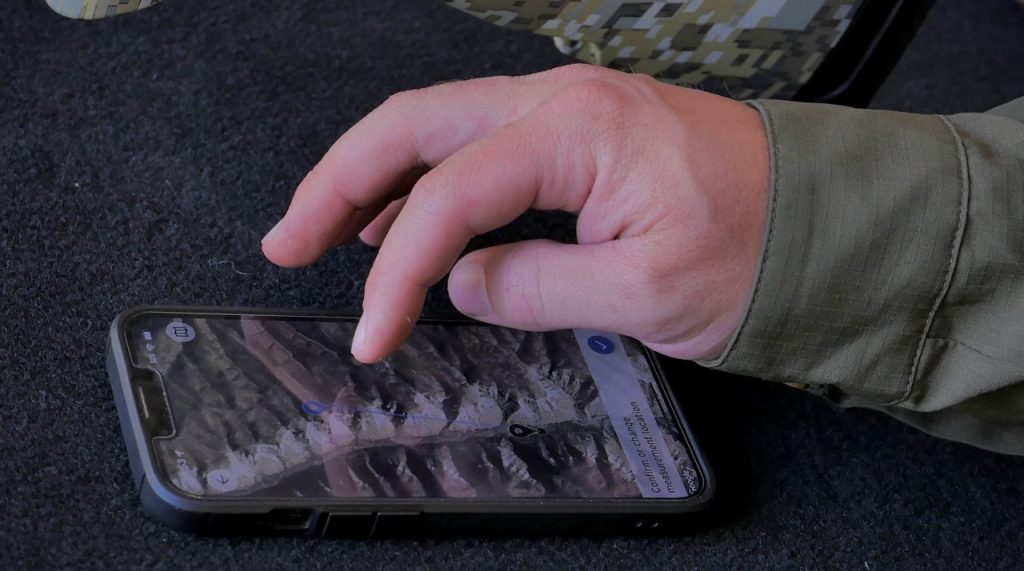
Hunters using the Steiner Connect2 App have the ability to enter their shooting location on Google maps (Steiner’s Jordan Egli says OnX integration is coming in the near future). When a shot is fired, the Connect App uses that starting point and its integrated compass to give you the point-of-impact spot on the map. The map program will then guide you to the location.
If you’ve done your part as a marksman, the harvested animal should be there, or reasonably close by. If the animal was wounded, it gives you a reasonable place from which to start tracking.
All of that connected technology can make hunting unfamiliar terrain easier, but no gear removes the obligation of the hunter to know their limitations and operate within them.
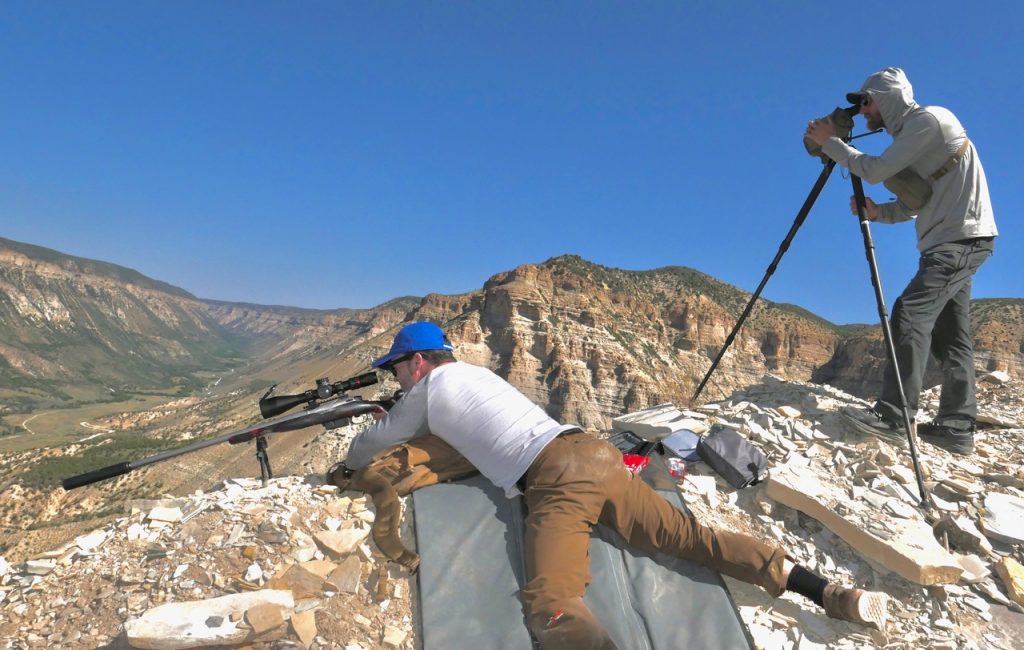
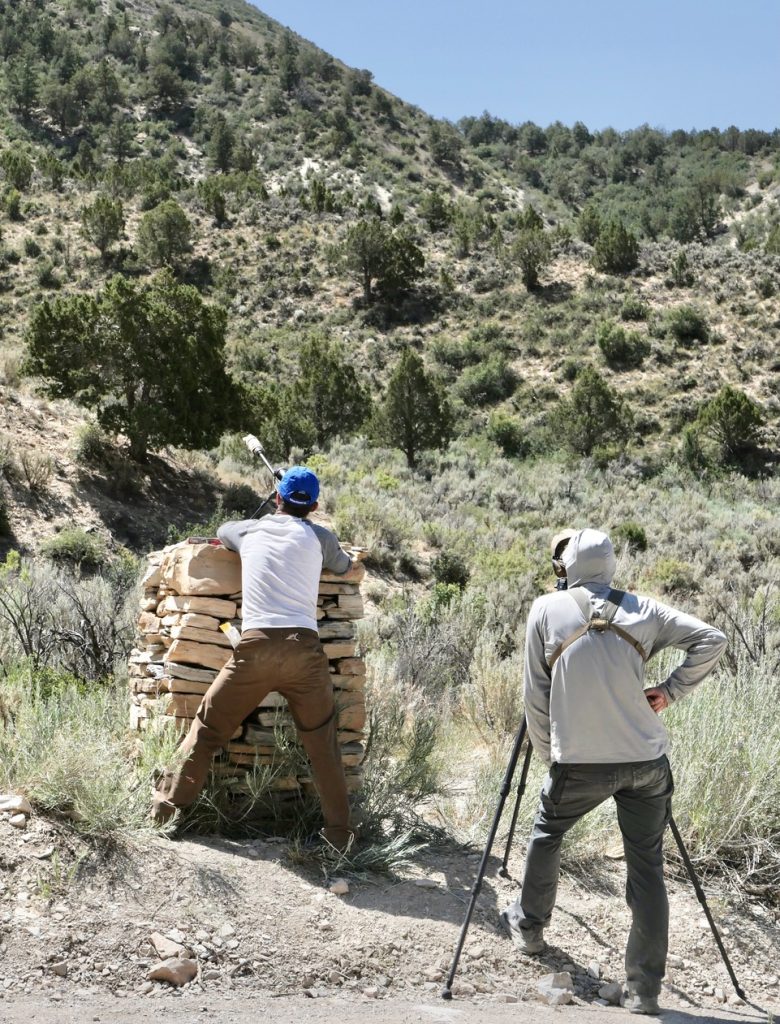
Using the integrated Steiner system, each of us repeatedly hit vital zones of targets at distances I would never have considered when hunting. They included severe up and down shooting angles. Those were automatically factored in and corrected inside the system. That makes shooting at greater distances easier, but doesn’t eliminate the need for knowledge or experience. No system can calculate and correct for the most challenging long distance variable: winds.
Reading wind takes practice because wind plays a big factor in accuracy from muzzle to target. Having accurate distance information makes the estimation process simpler. Having tried the Steiner system, I wouldn’t want to be without it going forward.
The total package isn’t inexpensive, running north of $4,000. But the top-to-bottom kit of binoculars and scope isn’t mandatory. Both the rangefinding binoculars and riflescope are sold as standalone products. The binoculars are capable of measuring distances far beyond the intended maximum range of the riflescope (1,000 yards). The riflescope is primarily intended for hunters, not long-range shooters.
The better shooters in our small group hit a “yeti” target at 1776 yards (the “patriot mile”) but those rounds were essentially coached into the target with the help of Branded Rock’s excellent guides. I never connected, but that was due to my diminished skills. The better shooters hit the target using “my” rifle.
This isn’t intended to be a full review of the Steiner’s new system. That will require mounting it on my personal rifle and actually hunting with it. But it’s certainly something I’m looking forward to using.
And as always, we’ll keep you posted.