

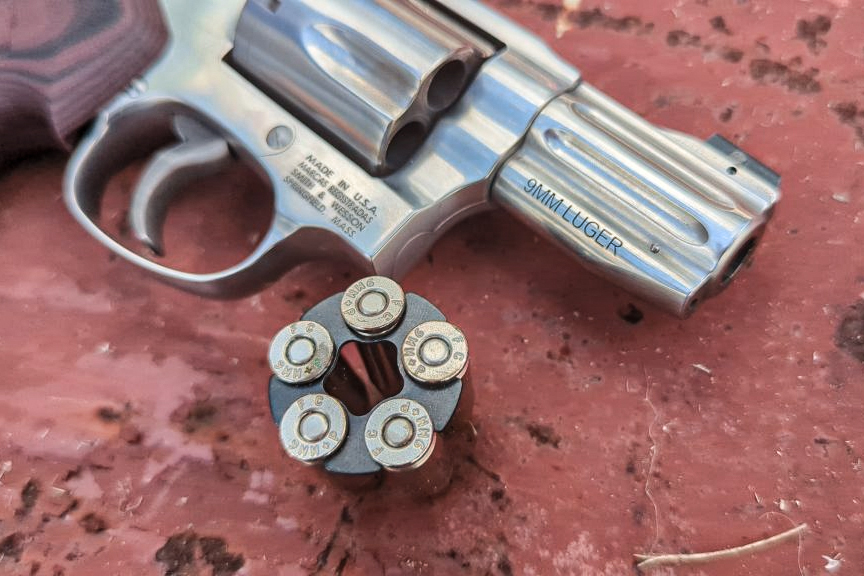
There has been a recent uptick in the popularity of 9mm revolvers. I just got my hands on Smith & Wesson’s latest, the revamped 940, which is a Davidson’s exclusive. It got me thinking about 9mm revolvers in general, their upsides, downsides, and everything involved with them.
A decade or so ago, I bought my first 9mm wheel gun, a Ruger LCR. I was teaching basic pistol classes and didn’t have a double-action revolver. That gave me the perfect excuse to buy a new gun. It’s still one of my favorite revolvers and it’s my bathroom gun, but that’s another story for a different time.
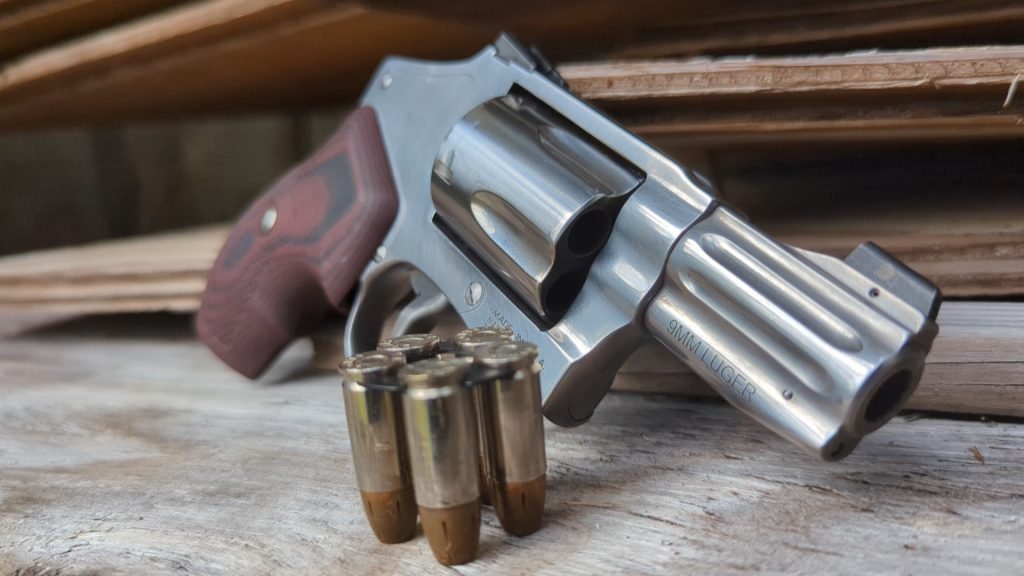
I learned a lot about 9mm revolvers with that LCR. In the year of our Lord 2025, there are quite a few 9mm revolvers out there. We have the LCR and the aforementioned 940, but also the 949, the Charter Arms Double Dog, the Taurus 692, the Diamondback SDR, and likely others that I’m forgetting. Revolvers have made a real comeback, so it makes sense that 9mm would be getting some love.
The Need for Moon Clips
With most 9mm revolvers, you’ll need something called moon clips. The word “need” might be overstated. You can shoot most of these guns without moon clips, but you’ll have a hard time extracting and ejecting cases. The 9mm lacks a pronounced rim like a .38 or .357 round, and while it can headspace on the case mouth, the ejection rod doesn’t work without a moon clip.
Moon clips were invented by Joseph Wesson of Smith & Wesson. They were designed in 1917 for the S&W 1917 revolver. That .45 ACP revolver was created to help supplement M1911s during World War I. S&W shared the moon clip design with Colt for free so they could do the same with their M1917 revolver.
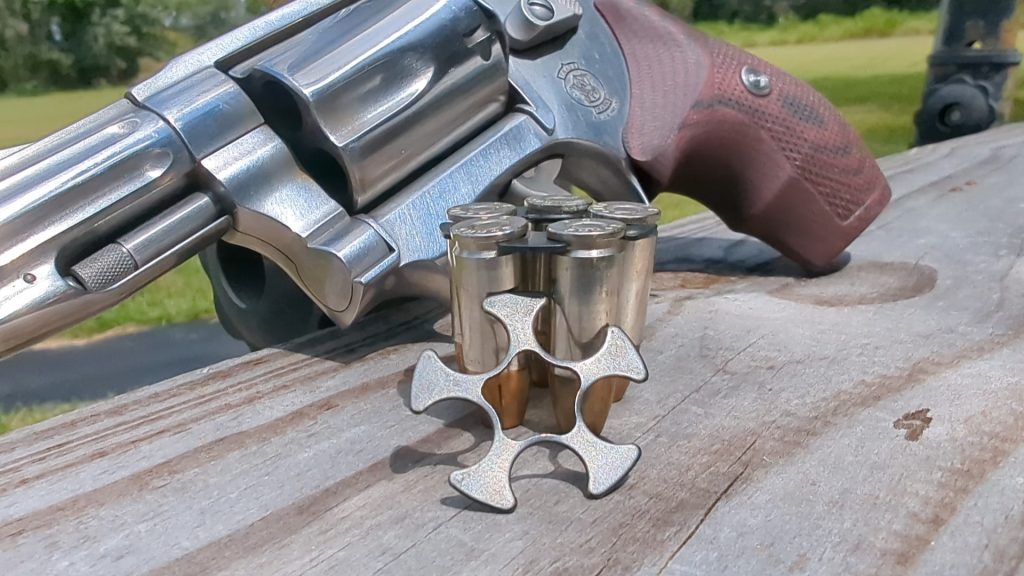
Moon clips can also act as pseudo speed loaders and are popular with competition revolvers, even when using a traditional revolver cartridge. They can also be annoying. You have to load and unload moon clips, and unloading them is an easy way to bend or twist them.
There’s a tool to make this easier, and it’s a must-have if you’re a moon clip enthusiast. Some moon clips are better than others, but I’ve bent and broken quite a few with my LCR. They tend to be cheap, but not as cheap as you’d think a small piece of metal should be.
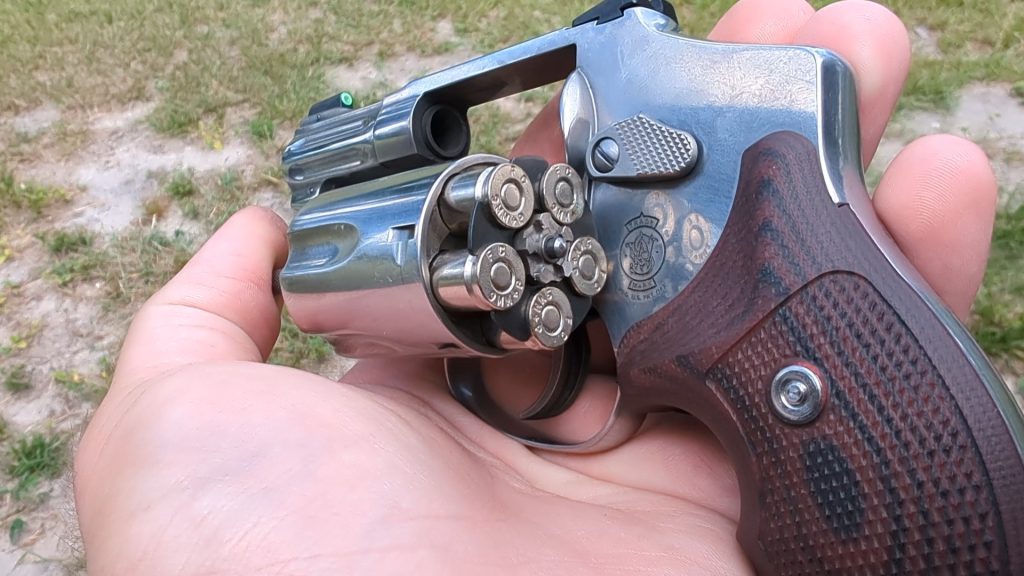
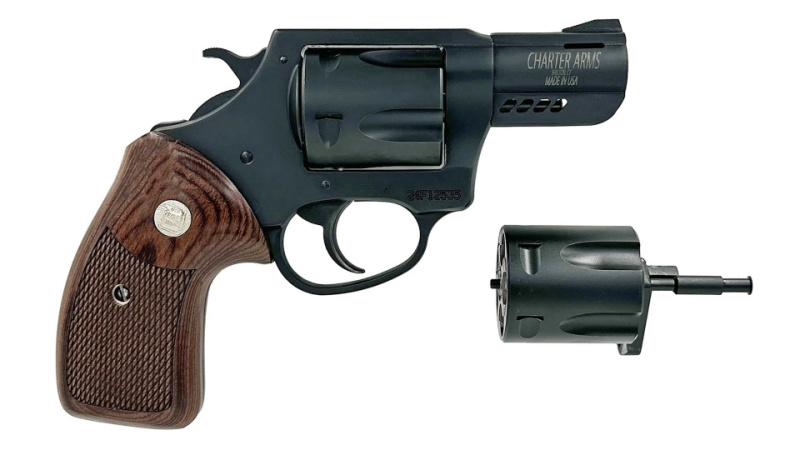
Charter Arms and the Double Dog use a patented extractor/ejector design that ditches the need for moon clips. That’s neat and certainly something unique to Charter Arms that bears mentioning.
Benefits
I firmly believe that .32 H&R Magnum is the best snub-nose cartridge on the market, but that’s a view held in a vacuum. The .32 H&R Magnum round is expensive and hard to find at times. In contrast, .38 Special is great, as is .357 Magnum, but they’re pricier, at least compared to 9mm. Ubiquitous 9mm is usually priced somewhere between .38 Special and .357 Magnum.
Most of the time, you’ll see companies use their .357 frames to chamber 9mm. The little 9mm is adequate for self-defense, even from a snub-nose barrel. As revolvers get bigger, the 9mm still makes sense for self-protection. It can’t do “bear gun” things like the .357 Magnum, but that’s a very niche use case.
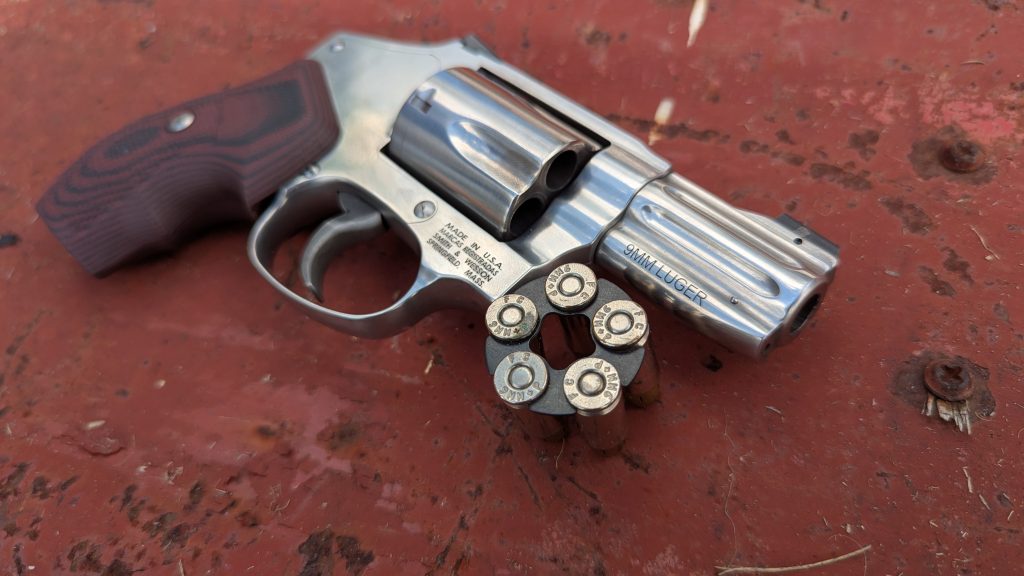
Nine millimeter ammo is absurdly cheap and there are tons of different types available from defensive ammo to range rounds to plinking fodder. If you’re new to revolvers and are someone like me who grew up shooting 9mm pistols, it only makes sense to look at 9mm revolvers.
Recoil is mild, not all that different from .38 Special in most cases. Obviously, some hotter 9mm loads will change that. And 9mm revolvers have identical capacities to .38/.357 revolvers, so it’s an easy side-by-side comparison.
Downsides
There are some downsides to revolvers chambered in 9mm. Some of the cheapest 9mm loads are steel-cased. That doesn’t always work well in revolvers. The cartridges tend to expand making it hard to eject them. Most of the time, you can expect to break a moon clip or two.
The other downside — the biggest one — comes from something called crimp jump. When a revolver is fired, G-forces are imparted onto the rounds in the cylinder and they move back and forth hard and fast. Traditional revolver cartridges, like .38 Special have large crimps to prevent this.
Nine millimeter rounds aren’t crimped in the same manner because they’re most commonly used in semi-autos, which don’t impart the same G-forces. When a 9mm round jumps the crimp, it creeps forward from the case. Best case, you lose a round entirely. Worst case, the projectile gets stuck between the cylinder and the frame and jams your revolver.
This doesn’t always occur and it’s not common, but it can happen. The lighter the revolver and the hotter the round, the more likely it is to occur. Shooting 124-grain +P rounds through my 17-ounce LCR will occasionally create rounds that jump the crimp, maybe one out of 100. I couldn’t get it to happen to get a picture for this article.
Shooting those same 9mm rounds through the 23-ounce Model 940 resulted in zero problems at all. The added weight helps, and as guns get bigger, like the Taurus 692, it becomes less and less of an issue.
Best Bet (In My Opinion)
I love my Ruger LCR and I’m falling in love with the 940, too, but I’m aware of the problems and willing to deal with them. If my mom came and asked me about 9mm revolvers, I’d steer her elsewhere. If you don’t want to take the time to test your ammo to find out if a round will jump the crimp, or if you don’t want to deal with moon clips, there are other options.
The best bet, in my opinion, would be to use one of the latest dual-caliber revolvers. These guns have interchangeable cylinders that allow you to shoot 9mm and .38/.357 Magnum. The Taurus 692 and the Charter Arms Double Dog are examples of that type of revolver.
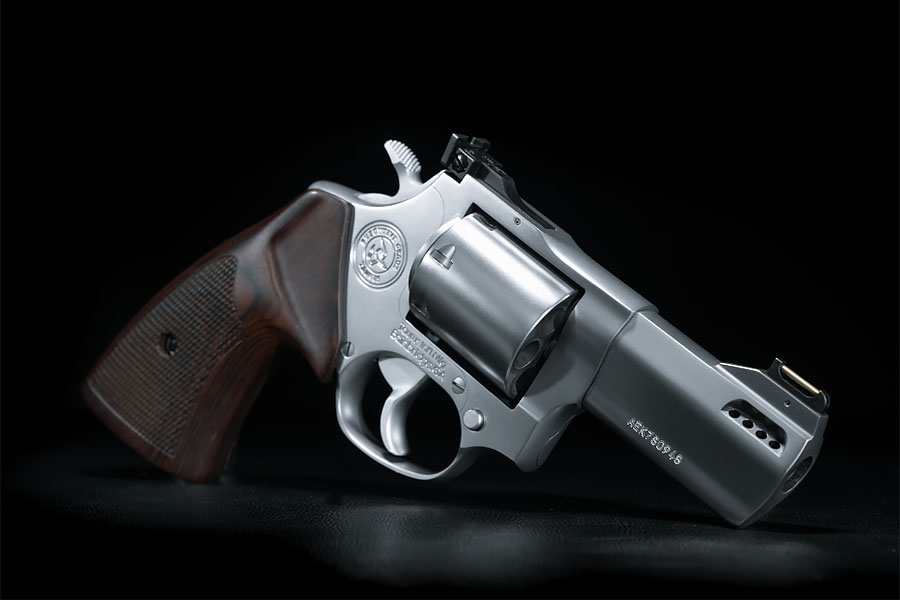
You can use 9mm to practice at the range with cheap, readily available ammo, but swap the cylinder to .38 Special or .357 Magnum for carry and self-defense. That way you won’t have to worry about crimp jump when you really need your gun. Just remember the barrels are .357 and 9mm rounds are .355, so the 9mm might not have the best accuracy.
Not that I’m a good enough shot to notice, but it’s worth mentioning. I’m hoping the swappable cylinder design will take off a bit more. I’d like to see more options in various sizes. Until then, the S&W 940 and I are going to be best friends.
“Nine millimeter ammo is absurdly cheap and there are tons of different types available…”
.22lr is absurdly cheap compared to over $0.20 per round…
I have an airweight 442 in .38. I’ve had crimp jump resulting in a fouled up revolver. +P loads did it. I only run standard pressure through that gun now.
It’s worth noting that the caption “You can shoot the gun without the moon clips, but ejection isn’t all that easy” is true for some 9mm revolvers, but not for the new run of 940s. Those headspace on the clip itself, not on the case mouth, and 9mm rounds will drop well below the rear face of the cylinder.
Enjoyed the article, Travis. Since you already have the Ruger and Smith, how about seeing if you can talk Charter and Taurus into lending theirs and doing a head-to-head?
Thank you!
That’s one of the new 940s and it headspaces on the case mouth. I’ve shot it without clips and it works fine
Good article, Travis. I often feel alone in my appreciation of 9mm revolvings, as possum used to call them.
I carry Sig 124 V-Crowns in my LCR, and I found that I would need to send a particular cartridge more than twice around the wheel before reliably seeing any crimp jump, and then it isn’t enough to cause a problem. I do fire it at that point, because one more time around probably would cause a problem. Remington 124 FMJ will often have 5 out of 10 creep a bit before 2 full trips around. They’re all different, probably even from lot to lot. If I’m trying a new brand or load, I buy enough to play with before shooting in earnest.
Something to maybe ask Santa about, at the next Shot show, is 9mm ammo that has a stab crimp, specifically for revolvers. May be enough of these guns out there for at least a niche market, and more are sold every day. Some of the 7.62 Tok ammo I have has a stab crimp.
Since ammo cost is a real concern. The 22LR with the modern “Punch” design. Having 8 or 10 in a revolver cylinder makes it I think an effective threat stopper.
Train to put 8 or 10 shots into the upper torso and you will stop the threat.
Chris T in KY,
Note that virtually all–as in over 98% of–opportunistic violent attackers (e.g. pretty much every attacker except for stalkers, spree killers, and terrorists) will immediately break off their attack if their victim produces a firearm and starts shooting, regardless of the caliber. In that sense a revolver with a 9-round cylinder chambered in .22 LR will save your bacon pretty much every time (assuming that your attacker is NOT a stalker, spree killer, or terrorist).