

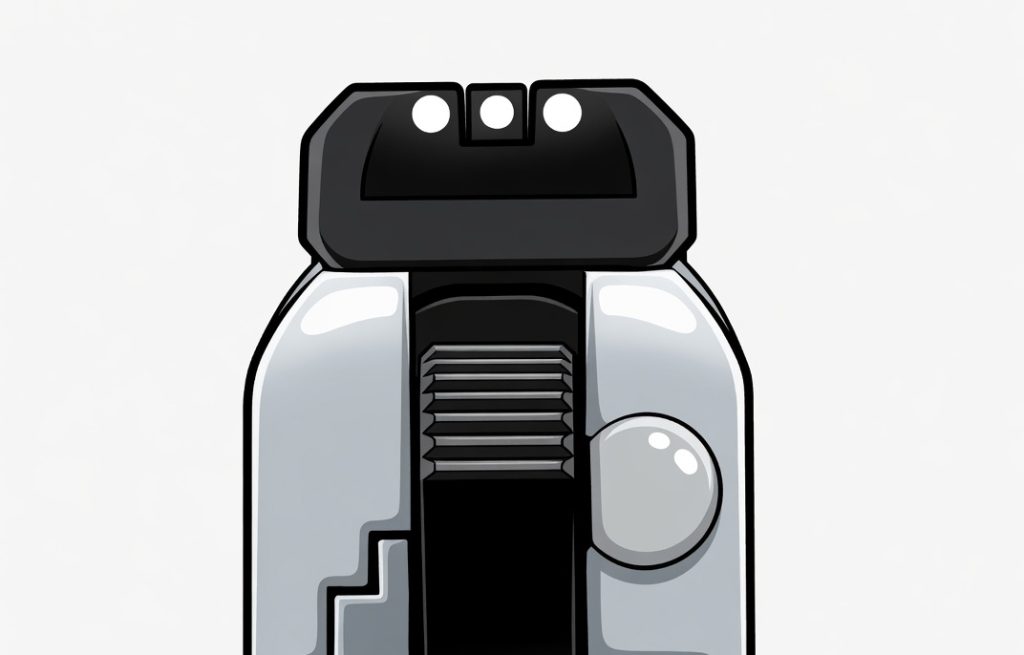
Having seen what I saw this morning, or perhaps more aptly, read what I read in the caption of a photograph of an online gun review, I can no longer in good conscience remain quiet. So, here is the setup. I was browsing an online firearms magazine website and came across a review of an M1911A1 pistol. The pistol in question was a newly manufactured replica of the classic or “OG” M1911A1 pistol of old. Of the many photographs included in the article, there was one of the pistol from the rear. The caption read “You won’t find three-dot sights on a period 1911, but it’s a smart addition for carry.”
I’m not here to pick a fight with the author, but I could not just let that stand, primarily because that sentiment is far too prevalent and it needs to stop. No, three-dot sights ARE NOT a smart addition for a carry pistol. As a matter of fact, they are a stupid choice for any handgun, carry or not.
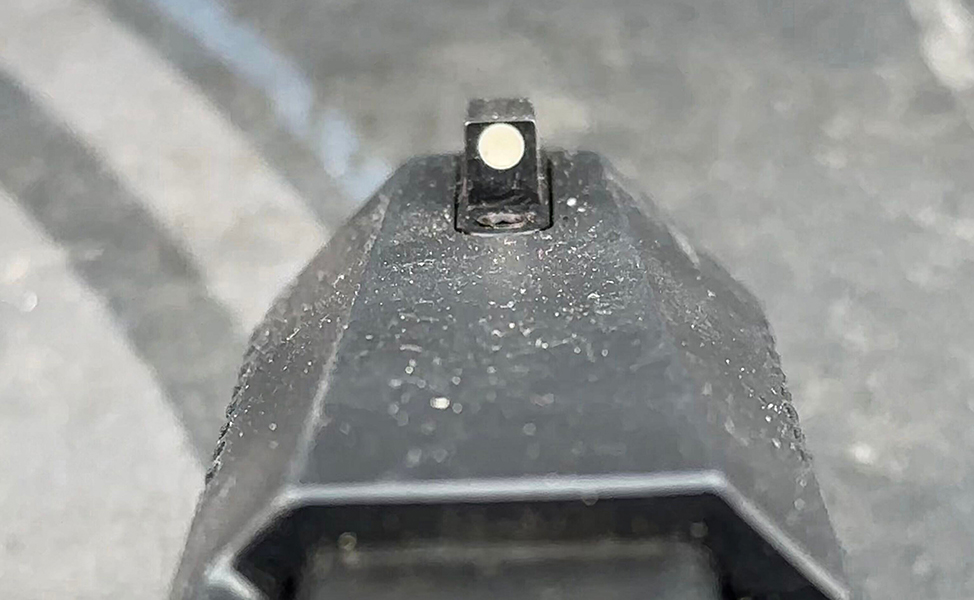
Scientific Proof not Feelings
“But I like three-dot sights.” you just said. Okay, that’s cool. You might like Oreo cookies, but that does change the fact that they are filled with unhealthy ingredients.
I suppose that having a discussion about iron sights in the year 2026 might seen as like discussing manual transmission cars. Just about every new pistol coming off of the production line now is optics-ready and the American gun community has been convinced that adding an optic to their gun makes it more accurate.
Nonetheless, the article to which I referred at the outset wasn’t ten years old, it was from last month. So a discussion of traditional or “iron sights” would still be worth the time it takes to pen 1500 words or so.
The first thing we need to establish is why there are sights on a handgun in the first place. If you said, “they make the gun more accurate” you’ll need to try again. From a technical standpoint, the pistol or revolver is unaware of the sights affixed to the top portion of it. If you put a pistol into a Ransom Rest and test fire it both with and without sights on the slide, the results would be the same.
The sights are for the benefit of the shooter. In order to hit the target, the muzzle needs to be indexed directly over the place you want the bullet to hit. The problem is that you can’t see the muzzle when you point the gun at the target. So, about five hundred years ago, a gunsmith figured that putting a little tab of metal sticking up directly over the muzzle would help the shooter better alight the bore on the target. For the last five centuries, sight designs and materials have advanced and regressed, but the purpose of sights has remained constant…to align the shooter’s eye with the bore of the gun.
Human Vision
If the sights on the gun are there to align the shooter’s eye to the bore of the gun, not make the gun more accurate, should such sights not be designed to work with our eyes? If you do not believe that the sights should be designed to work with our natural human vision, as opposed to against it, you can stop reading now.
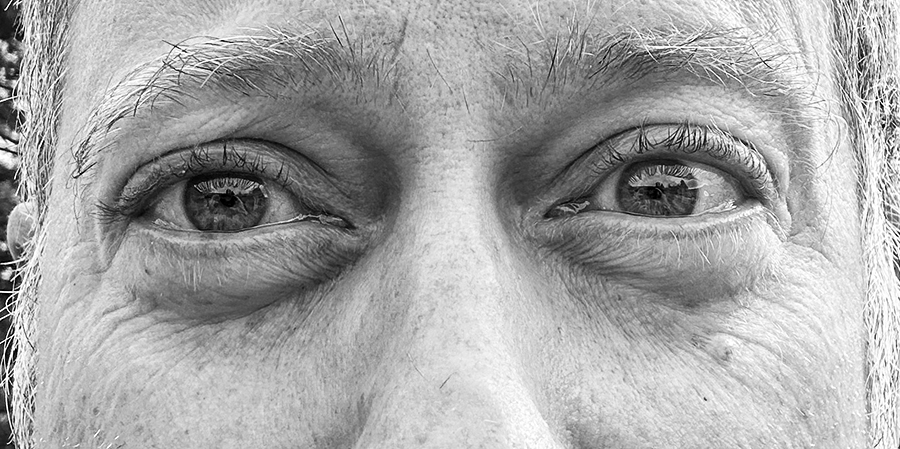
Step one: human vision; regardless of nearsightedness or farsightedness, corrected with Rx glasses or 20/20, has benefits and limitations. Human eyes have a small high-resolution zone. Only the fovea centralis (the center of the retina) provides sharp, high-detail vision. This area covers only about 1 to 2 degrees of the visual field, roughly the size of a thumbnail at arm’s length and we can only focus at one distance or depth-of-field at a time.
Yes, you can shift your focus rapidly from near to far and back again, but you can still only focus clearly at one distance at a time. When using traditional sights, front and rear, you have three objects of attention in your field of view: the rear sight, the front sight, and the target. Five hundred years of experience have affirmed that precision fire from a firearm results from a clear focus on the front sight…not the rear, and not the target. So, for precise, accurate shot placement, front sight focus is required.
We also know that the fixation or focus of our human vision is drawn to movement and light or objects that reflect more light than their surroundings. That is why we can notice movement even when using our peripheral, non-focused vision. A bright, safety green vest on a road worker is reflecting far more light than his surroundings, that is why the vest stands out and we notice it even if we don’t happen to be focusing on him.
The paint or tritium or colored plastic that we put on our traditional sights is designed to draw our visual attention and help us locate it rapidly as well as focus on it when the gun is held out in front of our face. Which sight is physically closer to our eyes? The rear sight. And so, when we put double the amount of paint, colored plastic or tritium in the rear sight as we do the front, the natural tendency for our human vision is to focus on the rear sight. But that’s not the one that’s most important, is it?
Step Two: human vision has a center fixation bias (or central fixation bias). This is a well-documented tendency for humans to initially and more frequently fixate near the center of a scene or image rather than its periphery. This behavior is remarkably robust, occurring even when important image features or objects are located in the periphery.
This center fixation bias in our vision is what forces us to “line up” or center the object of our focus in our overall vision. As we discussed in a recent article regarding don’t tell me what not to do, there is no need to tell students how to line up or center the front sight in the rear sight. If a person looks through – not at – their front sight and puts their focus on it, our center fixation bias will take care of the rest.
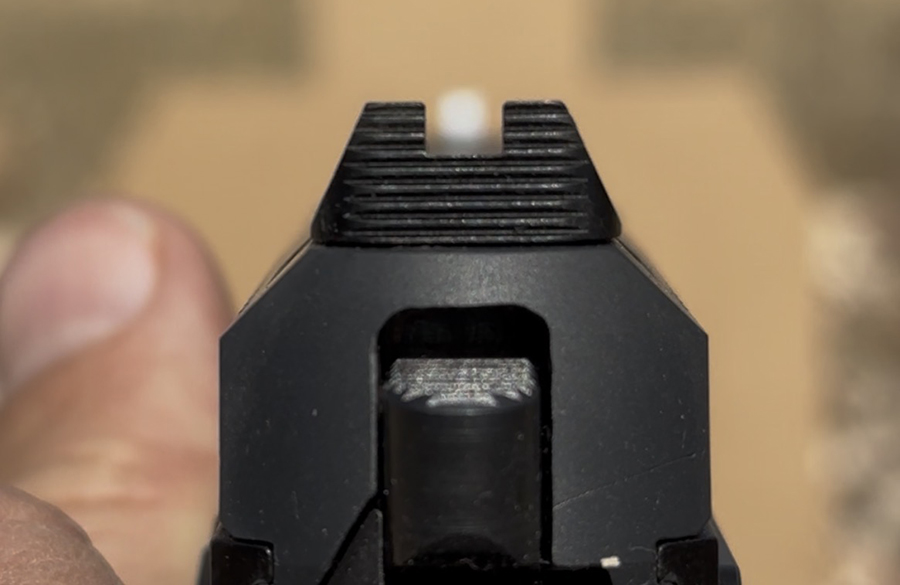
If you’re trying to line up three dots, rear and front, the only way to do so is to shift focus from front to rear and back to the front again. Now you’re fighting against your center fixation bias as well as your natural tendency to focus on the object that’s reflecting light. If the rear sight is reflecting or giving off, as in the case of tritium, more light, your eyes must struggle to ignore that. None of this sounds like a situation where we are working with the natural tendency of our human vision.
Paper is Two-Dimensional
People who attempt to promote 3-dot sights do so by showing us posters or pictures or black and white images of the three dots all lined up. The immediate fallacy is that paper and posters are two-dimensional. The pistol that you’re holding in your hand is three-dimensional. The sights aren’t on the same plane, or depth, if you will, and therefore you can never focus on both the front and rear simultaneously.
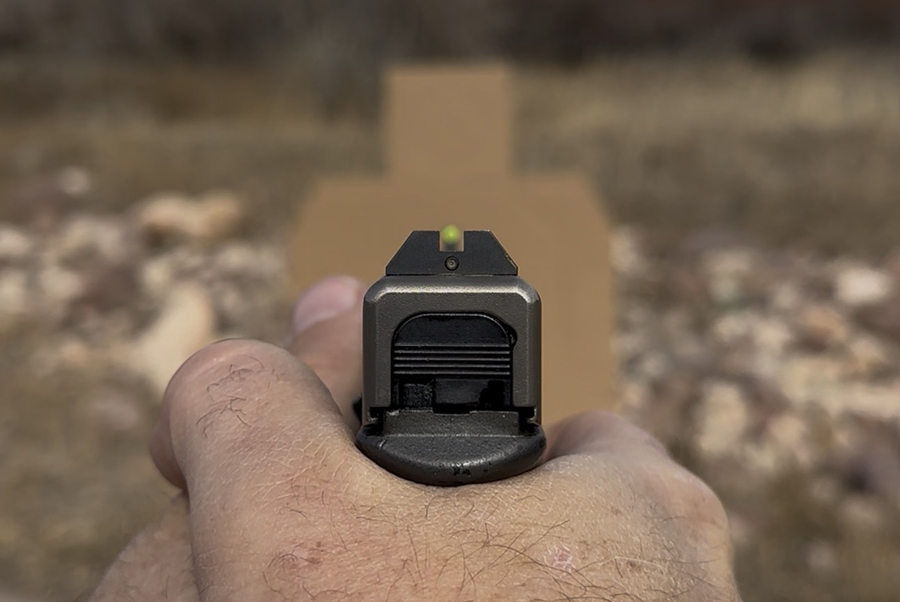
If that is true — and we know it is — why in the name of sweet Buddha on a rubber raft do we keep promoting 3-dot sights?
Do the people who make these sights not understand how human vision works? Do those who buy them not understand how human vision works? Or are they simply ignorant and can’t be bothered to care or think about it?
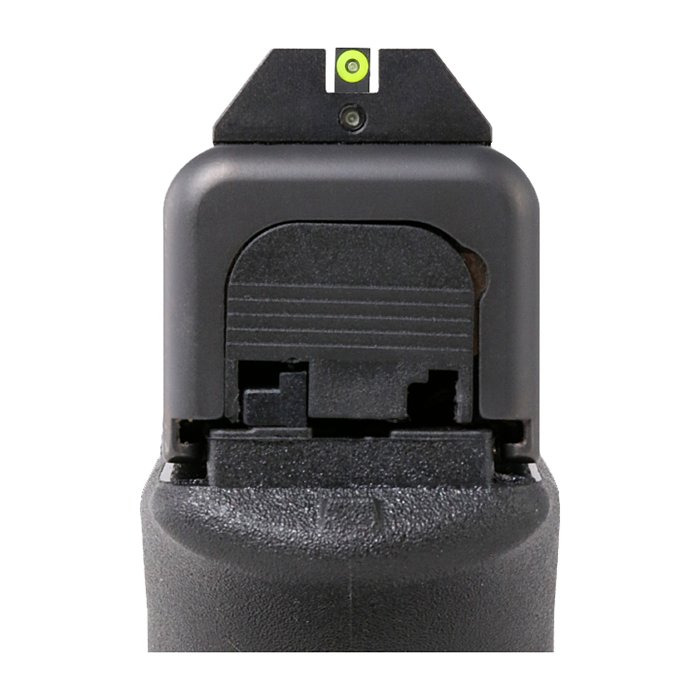
Do the people making and buying 3-dot sights not understand that the front sight is the most important and critical for shot placement? Do they not understand that the front sight is located directly over the muzzle for a very deliberate reason, one that humans figured out five hundred years ago?
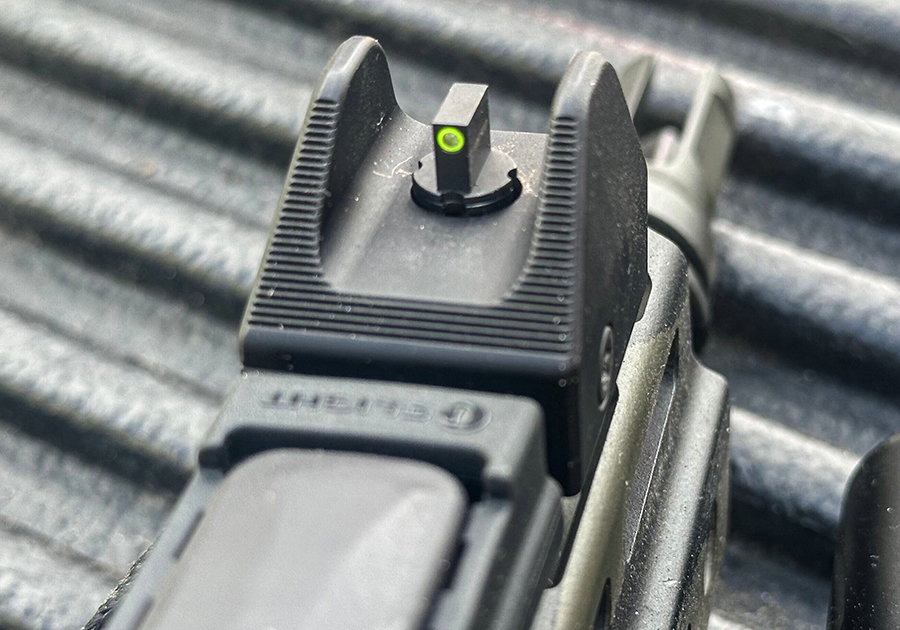
And so, dear reader, no, 3-dot sights are not a smart addition to a carry gun. If we care to examine the science of sight and how human vision works, we can clearly see that they’re one of the most ignorant additions to handguns we have ever come up with.
Paul G. Markel is a combat decorated United States Marine veteran. He is also the founder of Student the Gun University and has been teaching Small Arms & Tactics to military personnel, police officers, and citizens for over three decades.
Oreo cookies? That’s your comparison? Bro, steak is unhealthy if that’s all you eat, so are carrots and tomatoes and apples and shrimp. Oreos are no more unhealthy than any of those. If that’s your baseline, go over to the organic section and pay twice as much.
I prefer Stavenhagen style sights. A bar and a dot.
Much quicker for me to acquire, line-up, and the re-acquire.
I don’t mind (and shoot well) the sights on my SR9 and SR9c.
The rear dots are much smaller and easier to align without drawing my focus.
My favorite Glock sights are the strike sights with a narrow fiber-optic blade (I just use solid white).
For the 43 and 48, I prefer Heine “Straight Eights”.
I do think it’s a little over-the-top to say three dots are “stupid”.
I can use pretty much any sight and do pretty well.
Standard Glock sights are roundly hated but if you cant hit the target with them, you probably just can’t shoot well.
The main problem with the SR9/c sights is that the notch in the rear is too narrow. This can make accurate long shots more difficult. Making the rear sights smaller and less bright works for me.
I’ve tried shooting both styles (blacked out rear and smaller rear tritium dots) in low light situations. I can shoot faster and more accurately with the three dot setup. A blacked out rear sight with plenty of light works great, but we can’t always choose the lighting situation.
I know people hate the standard Glock sights, and they are cheap, but they work for me.
I disagree with your premise that “the natural tendency for our human vision is to focus on the rear sight.” For handgun shooters that have learned to immediately and automatically focus on the front sight, white dots (or outline) on the rear sight becomes no more than slighly blurred reference points to frame the front sight.
As the late, legendary Jim Cirillo answered, when asked how he became so adept at accurate pistol shooting under fire, “My front sight has 11 striations.”
“I disagree with your premise that ‘the natural tendency for our human vision is to focus on the rear sight.’ For handgun shooters that have learned to immediately and automatically focus on the front sight, white dots (or outline) on the rear sight becomes no more than slightly blurred reference points to frame the front sight. ”
OK, I’ll try to explain this simply and briefly: Its true that “the natural tendency for our human vision is to focus on the rear sight” – FIRST if even a micro-second that you just never notice. This is because, basically, when aligning our eyes with an object in relation to our sense of 3D space, a ‘protrusion’ (the rear sight) closest to us in 3D space around us our brain naturally tells us to focus on the closest ‘protrusion’ thing first. This is part of a natural process called ‘accommodation’ (combined with our sense of 3D space for body/hand/eye coordination), where the eye’s lens changes shape to focus light directly on the retina. Learning not to do that, learning to immediately and automatically focus on the front sight is a learned reflex not a natural reflex, and its not as immediate or automatic as you think. After your learn that, believe it or not your eyes still, for a very brief maybe micro-second maybe without you even realizing it, will still at first focus on the (rear sight) closest ‘object’ (protrusion) which is the rear sight in order to carry our the automatic natural process called ‘accommodation’. On the other hand, if the first ‘object’ (protrusion) in your field of vision is the front sight then you will focus on that first for the ‘accommodation’ process – UNTIL – your rear sight come into view then the ‘accommodation’ process will for a brief time (maybe a micro second at most, you will not even notice it) focus on that instead of the front sight.
Another writer with the delusional idea that he knows what he is talking about … despite the fact the “science” he is referencing is completely inaccurate.
Seriously, SNW really needs to start screening this crap before publishing it.
I dunno if it’s just me, but I’d be more bothered by the lack of light on either side of that front sight, than by the rear dots. I know that isn’t the illustration you referenced, but you did select it.
This has to be the most stupid article I have ever read on this website. Just ragebait and strawman arguments for clicks.
Well, good thing my vision went to %^&* as I got older and had to go to a Holosight. None of these issues bother me anymore!
Using varifocal eyeglasses complicates this further. For me to focus on my front sight with my glasses on, I have to tilt my head back to look through the lower part of my eyeglasses. For that reason, at least two instructors have suggested I get a dot optic sight instead, and I have done so. The resulting benefit is that I can focus both eyes on the target, and still see my green dot also properly in focus. That has significantly improved the accuracy of my shots, and also eases racking my slide.
The author might even be right.
But he’s arrogant and condescending. That hurts his argument.
Serious question: Without a visual reference on the rear sight, how are you supposed to line up the sights properly for elevation? And a pure black rear sight is not really that visible – especially in a dark range (all indoor ranges are dark to some degree) or on a dark street. That’s what 3-dot sights are trying to fix.
GWB, I have wondered the same thing about shotguns since they only have the front bead sight. Yet at 83 and poor vision ignoring, for the most part, the rear sight does not seem to present any problems plus getting on target and staying on target are not issues.
Have you seriously never shot a handgun anywhere other than a brightly lit range? having a three-dot, tritium night sight setup as a godsend in a dark stage. So the same would apply having to shoot in a semi-lit house.
wow.
um, i just line up the tops under the target. if that don’t hit, it’s adjustment time.
this is true dots or no.