

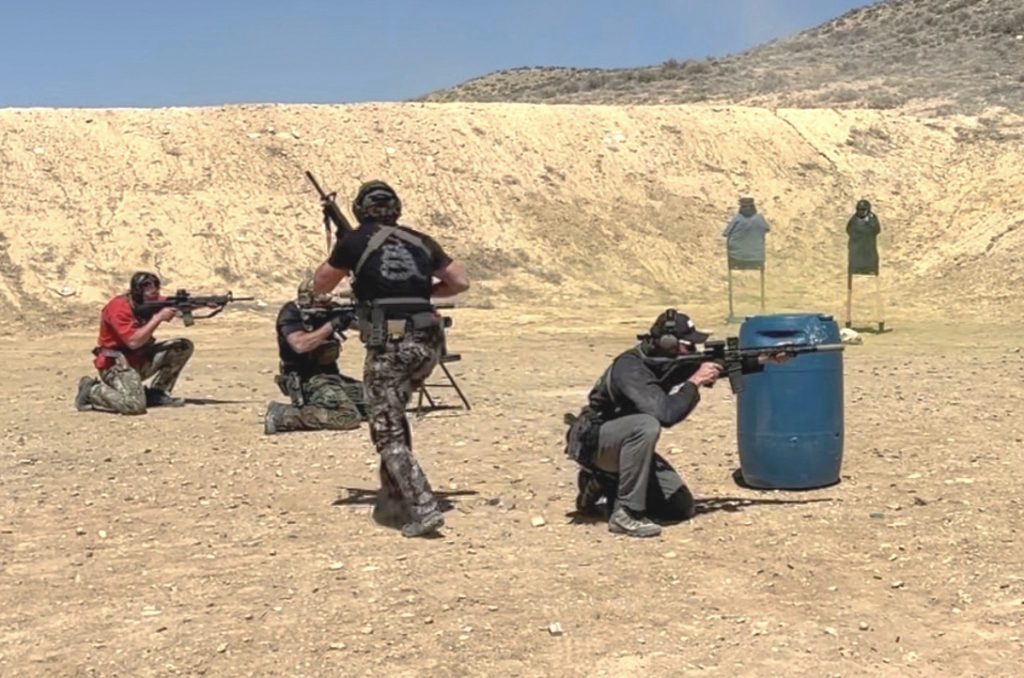
“That’s cool and all, but I’m not a Marine. I’m not on a team. If something goes down, it’s just going to be me.” Such was the statement from a person I was recently talking to when the subject of team training came up. And as to his assertion that he’d be on his own if something goes down, I will acquiesce that in normal, day-to-day life, that’s likely to be true.
Nonetheless, let’s consider all of the historical examples of civil disorder and natural disasters which required people to go outside and deal with problems that couldn’t be ignored. I could tick off myriad natural and manmade disasters where the good people of the community were forced to either address the predators or fall victim to them.
The aftermath of hurricanes, earthquakes, wildfires, or any storm that takes out the electrical and/or cell towers can, and too often does, result in lawless behavior by a certain element of society. Then you have the deliberate manmade disasters inspired by the ARTR (any reason to riot) mentality that is far too prevalent in urban centers. We also have those who profit from stoking violence and sowing the seeds of tension and violence.
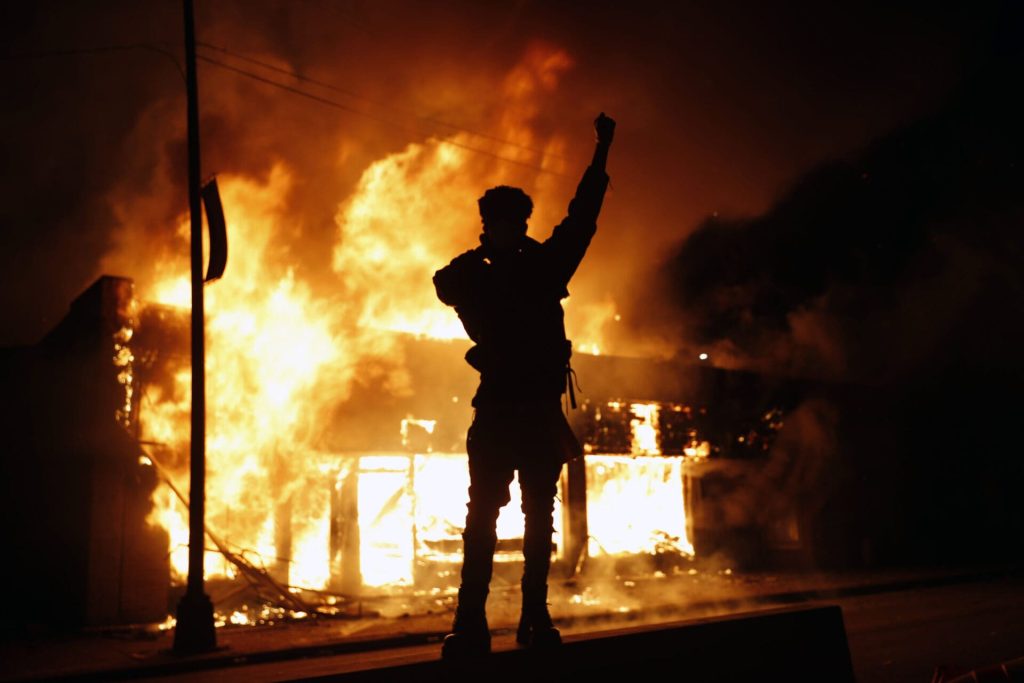
In addition to homegrown threats, we must acknowledge that foreign-born terrorists and terrorist sympathizers have made it into our nation. Even our government has been forced to admit that a real threat to the homeland from such persons is real. Their targets aren’t just government personnel, but innocent civilians, too.
A Few Guys who Like to Shoot Guns
For decades I’ve heard the same story in one form or another. When the topic of rioting and looting comes up or preparation for disasters, men can be heard to say; “Well, I’ve talked with Gary down the block and Dick who lives across the street. We’re all gun guys. If those (fill in the blank) ever come around and try something, we’ll take care of them.”
Several years ago I read “A Pipe Hitters Guide to Crushing the Coming Societal Breakdown” by Nicholas Orr. In that book, Mr. Orr puts forward a scenario based on the idea that a group of “gun guys” will answer the call and take “care of business.” The excerpt from the book is reprinted here with the author’s permission.
Realistic Scenario
The downtown area of your city is burning and all of the law enforcement assets in your city and county are dealing with the rioting. You can call 9-1-1, but no one is going to come. Your neighborhood is five miles from where the main problem is occurring. You and your neighbors grab your guns and decide that you need to stay outside and provide security. You don’t have a specific plan but you all walk around in the same general area. Seeing you should make the other neighbors feel better.
After a few hours of rioting and looting downtown, a group of thugs decide to hit the suburbs. Unbeknownst to you, about twenty of them pile into cars and head for your community. They have already smashed a car through the front of a pawn shop and stolen all of the guns they could carry.
Your neighbor, Bob, is at the end of the cul-de-sac near the main intersection, you can see him but he’s probably 50 yards or so from the others in your group who are milling around front yards and talking to the various neighbors who are on their porches. Bob sees a few cars coming, he’s carrying his rifle so he feels confident to step into the street and raise his hand for them to stop. The first car slows as do the three others behind it. Now the rest of your armed neighbors start walking in Bob’s direction.
Bob moves toward the driver’s side of the lead car and when he is within ten feet of it a hand comes out of the window with a pistol. The driver fires a half-dozen rounds at him. You see Bob collapse to the ground. You raise your rifle to fire at the first car and it accelerates past Bob. As you are taking aim at the lead car your armed neighbor, Steve, runs between you and the car. You hold your fire to keep from hitting him.
Across the street you see Jim, another armed neighbor. Jim is running as fast as he can towards his house at the end of the street. Hands with guns appear from all of the car windows and the occupants begin firing wildly in all directions. The women and kids who were outside are screaming and running for cover. You get back on target and shoot the driver of the lead car. You are pretty sure you hit him. All four cars stop and the thugs inside bail out in all directions. You fire at one of them who looks like he has a shotgun. He goes down, but his friends are moving in all directions.
You spot Steve. He is on one knee in the middle of the street taking aim with his rifle at a thug carrying a pistol. Steve gets off a shot, but two other thugs are hiding behind their car and they fire at him. Steve goes down with a round though his right leg. If you run to help him you will be exposed. Bob is deathly still on the ground and Jim is nowhere to be seen.
Four Individuals Aren’t a Team
What Orr points out in his book, and what I agree with, is that three or four neighbors who own guns and like to shoot don’t necessarily equate to a team. What you have are three or four individuals who have three or four ideas of how things should be handled and what they think should be done in an emergency. In a crisis, these men won’t act or work together as a team, they’ll be acting as four individuals, each doing whatever they think they should do.
Even going to the range and shooting at the same time doesn’t equate to team work or team building. Standing next to a guy while you both shoot at targets might be an enjoyable recreational experience, but it does not build team cohesion.
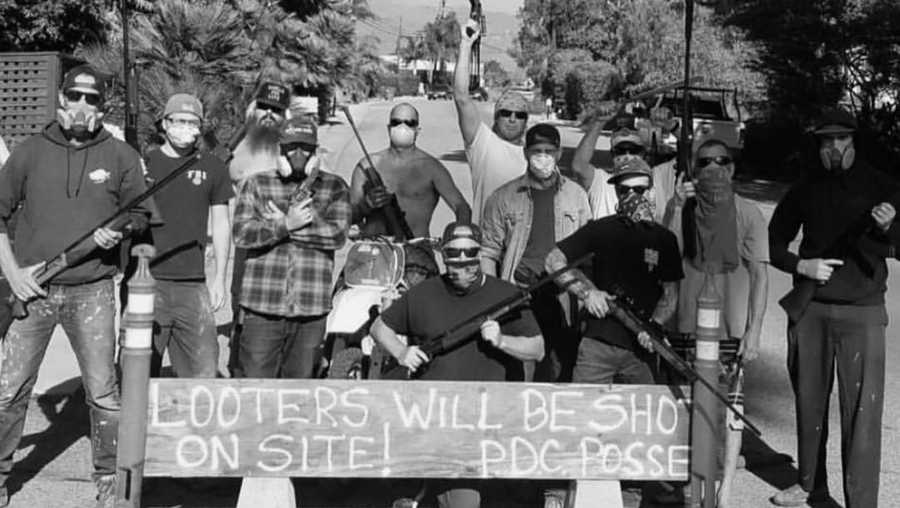
Also, let’s address the elephant in the room. How many of you have a friend who loves to talk about guns and tell you about the newest addition to his collection? Let’s call him “Jim.” Well, Jim went to the range with you once and you discovered that while Jim is a nice guy, Jim isn’t someone you want standing behind you with a loaded gun in his hands.
Folks, during a crisis, a person who lacks skill and ability doesn’t magically become skilled and capable. If you would not want Jim standing behind you with a loaded gun on the shooting range, what happens when there’s an actual threat to the community and Jim is walking around wives and kids with a loaded gun?
There are millions and millions of AR-15-style rifles in the hands of American citizens and a good percentage of those who own them will tell you that they do so for protection or just in case. How many of those people have even trained to use those rifles off of the shooting bench and around other people?
Shoot, Move, Communicate
Martial Application of the Rifle is not just about marksmanship, it is about understanding how to employ a modern self-loading rifle and think with a gun in your hands IE: make the correct decision and shoot what needs to be shot while not shooting what should not be shot.
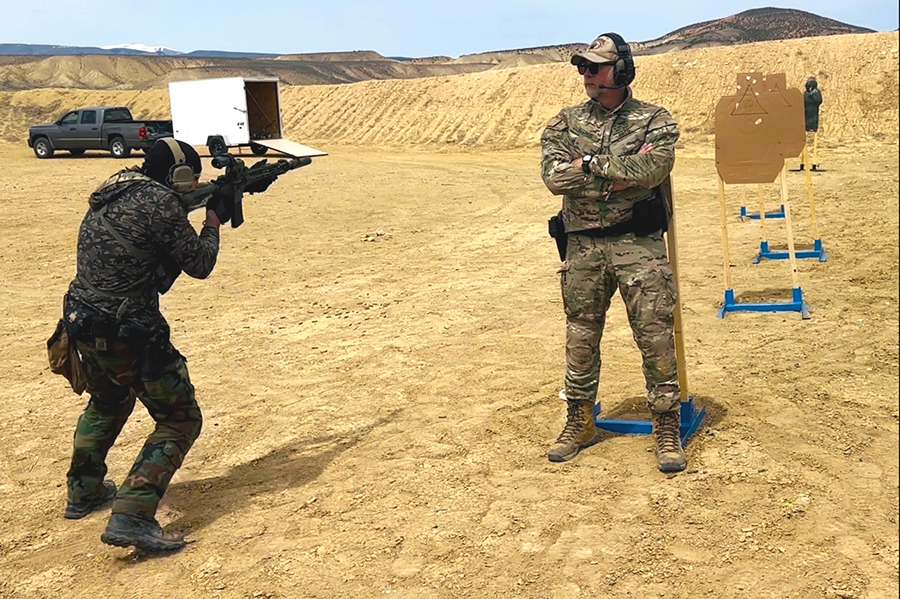
The mantra for military team training is Shoot, Move, Communicate. What we see in most rifle training courses is a heavy emphasis on the shoot part, and little to no emphasis on the move and communicate parts.
Following the rules of moving from simple to complex or nature’s rule of crawl, walk, run, students move from simple target engagement and drills designed to help them learn how to run their rifles to the more complex.
Students need to be given challenging exercises that require them to think with a gun in their hands. Should the muzzle be up, down, or down range? A great question is, when we’re no longer on the square range, where exactly is the down range area? A simple answer is, wherever the threat happens to be is the down range area, but you don’t get to decide. The threat decides that.
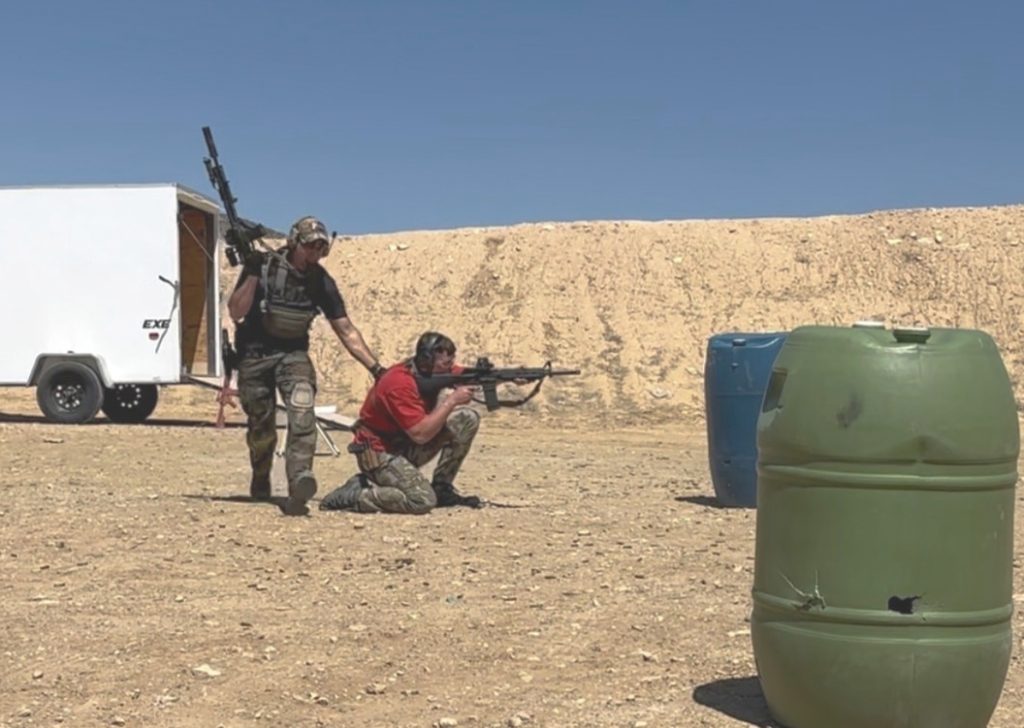
How do we properly use cover? Not all cover can be used while standing. Sometimes we need to kneel or even go prone to use cover. When was the last time you were on the ground shooting from an awkward position?
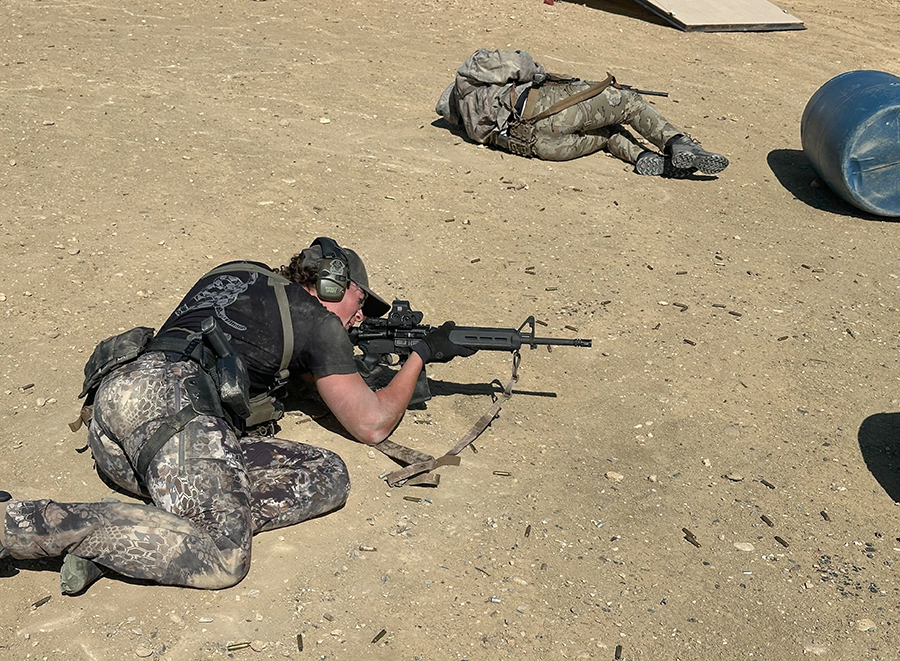
Additionally, how do you move and communicate with other good guys who also have guns and are shooting? What tactics do we use to ensure that we point our rifles at the bad guys and not at other good guys and innocent persons?
None of these drills and exercises are particularly difficult. However, they require training and practice. Remember, during a crisis we don’t magically rise to the occasion, we default to the level of training that we have mastered.
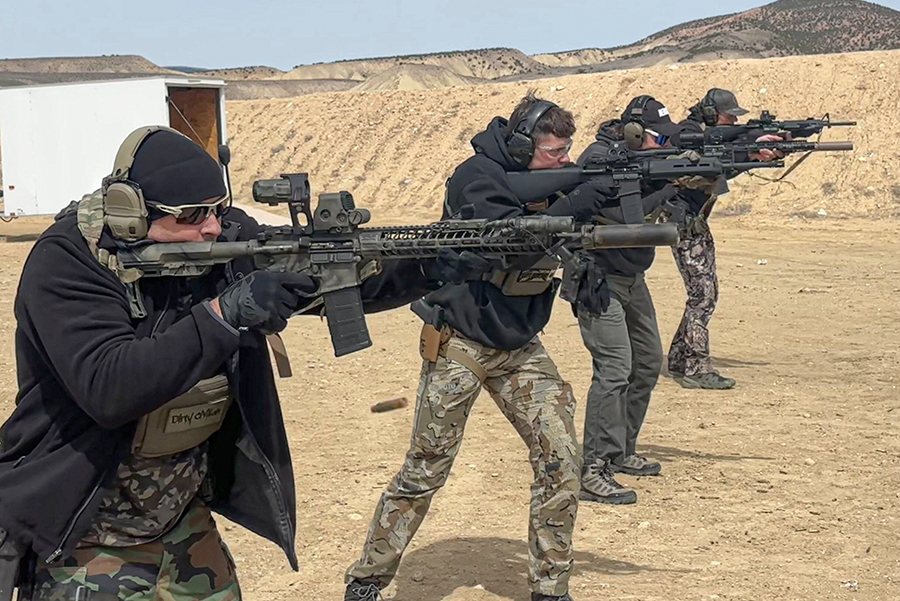
If what you have mastered is sitting at the bench, then that’s the skill you will possess and all the rest will be made up on the fly. That’s a good recipe for disaster.
We don’t want to believe that our neighborhood and community could be subjected to out of control violence and looting. Nonetheless, refusing to consider that potential reality doesn’t provide genuine protection when society’s predators come to call.
Paul G. Markel is a combat decorated United States Marine veteran. He is also the founder of Student the Gun University and has been teaching Small Arms & Tactics to military personnel, police officers, and citizens for over three decades.
When I started taking action oriented classes that covered things like reacting to contact, peeling from contact and dealing with casualties all as a team all I wanted was more, more and MORE.
So much awesome fun. I wish I could afford to do it every week.