
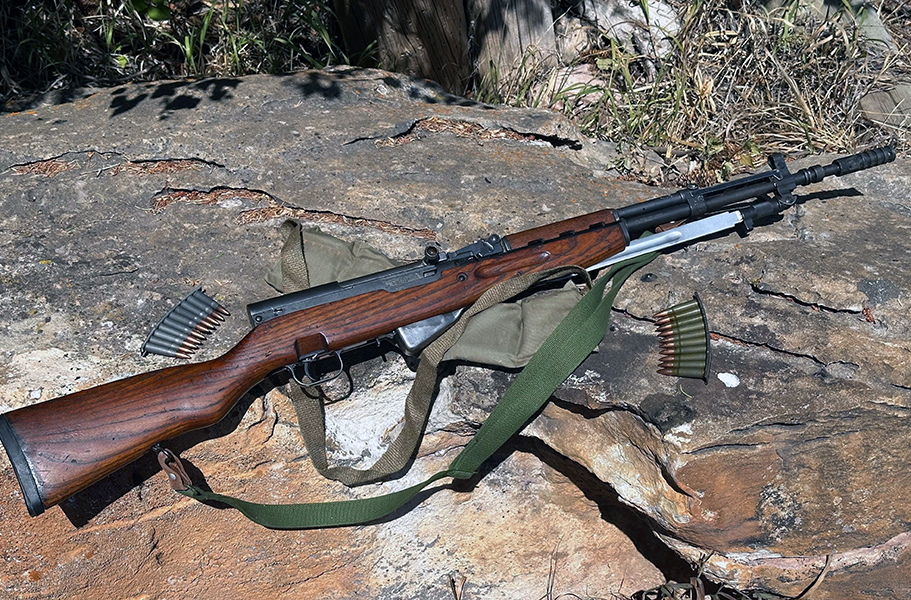
The designer of the SKS rifle, Sergei Gavrilovich Simonov, went to work on the design during WWII, but most readers will remember that the war was over before they could put it into full production. Nevertheless, as mentioned in our review of the AKM, the Soviet Union wasn’t about to find themselves in the position they were in during WWII where they had more soldiers than they had guns to issue them. During the post-war era, the Soviets wanted as many easy-to-build, reliable, and relatively inexpensive rifles as they could make.
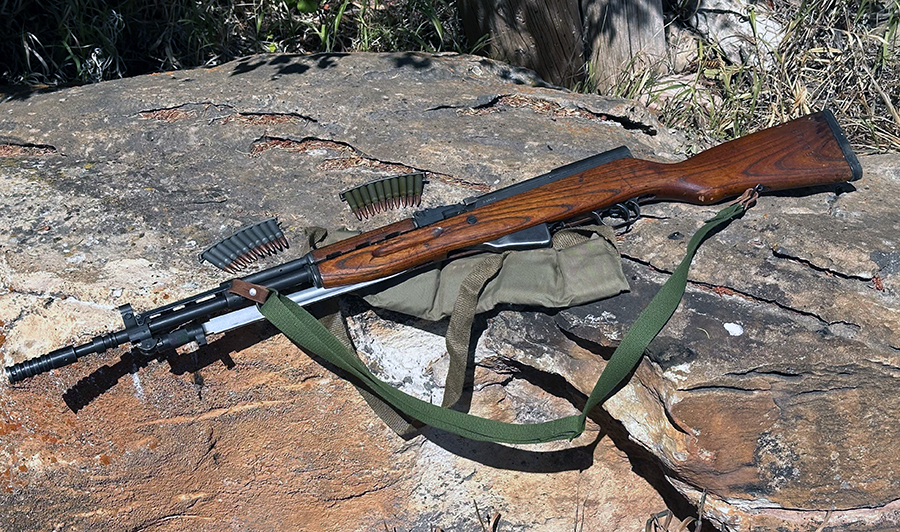
The SKS — some call it a carbine — was a semi-automatic, gas piston-operated rifle with a fixed 10-round magazine that was top-fed through the open bolt with cartridges loaded on a stripper clip or singly. When you consider that the main battle rifle for the USSR during WWII was the Mosin-Nagant, a 5-shot bolt-action rifle that was 48.5 inches long, an SKS that held twice the ammo and was only 40 inches long seemed like a dramatic improvement.
We can only speculate as to whether Sergei Simonov and Mikhail Kalashnikov were pals, friendly rivals, or arch enemies. Over the years, there have been stories told that indicated all three. Regardless, both Simonov and Kalashnikov worked on their most important contributions to Mother Russia at the same time.
The original SKS, built with steel and hardwood with a folding bayonet attached, was approved by the USSR and put into full production for the Red Army in 1949. Considering the fact that the AK-47 was already in the works, one might question the decision, but the SKS passed the Army’s trials and produce it, they did.
The M43 7.62x39mm Cartridge
We don’t really need to have a chicken-or-egg conversation about the 7.62x39mm versus the SKS or AKM. Called the M43 due to the fact that it was designed in 1943, that cartridge was the one that led the USSR out of the WWII era into the Cold War as far as main battle rifles were concerned.
While various designs exist, the M43 in standard configuration uses a 122 grain (or 123g) FMJ projectile and is described as a rimless bottlenecked intermediate cartridge. The average velocity is right at 2400 feet per second.
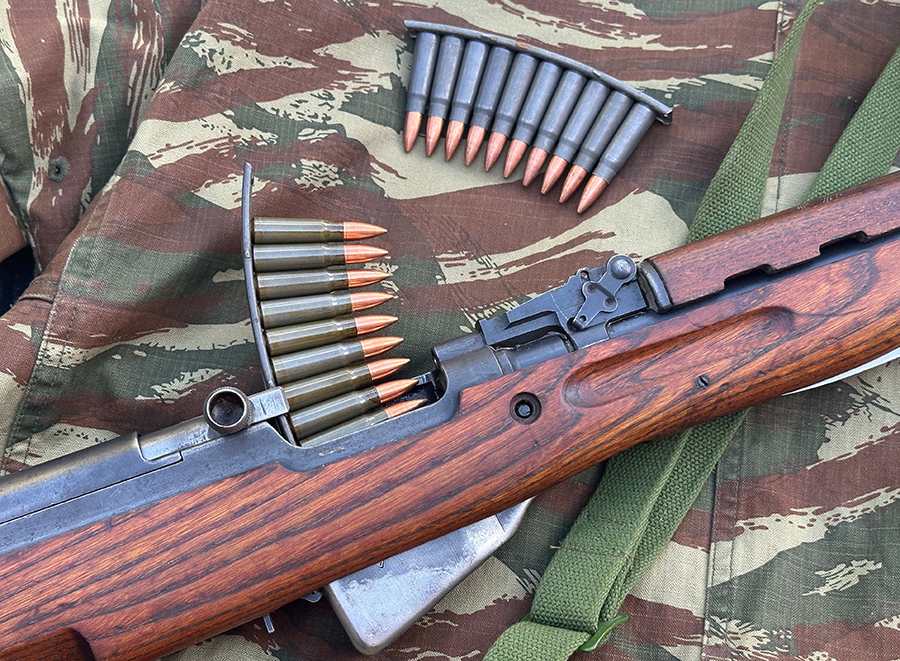
Using a lacquered steel casing, the cartridge case was made with a slight taper. This taper (akin to the 7.62x54R) turned out to be a work of genius when it came to semi-automatic and fully automatic arms regarding reliability. Strong accusations have been made that the Soviets simply copied the 7.92×33mm Kurz cartridges that were captured from German soldiers carrying the Sturmgewehr 44 rifles. Considering the two, there seems to be a lot of truth to that assertion.
However, as history will show, the 7.92x33mm round faded while the 7.62x39mm took center stage worldwide. Even today, new model rifles are built around this cartridge and it is still going strong.
The Legacy
While the Soviet Union only produced the SKS officially from 1949 to 1958, when the AKM took over, that was not the end of the Simonov rifle. The Soviets weren’t screwing around for those nine years and they produced millions of SKS rifles.
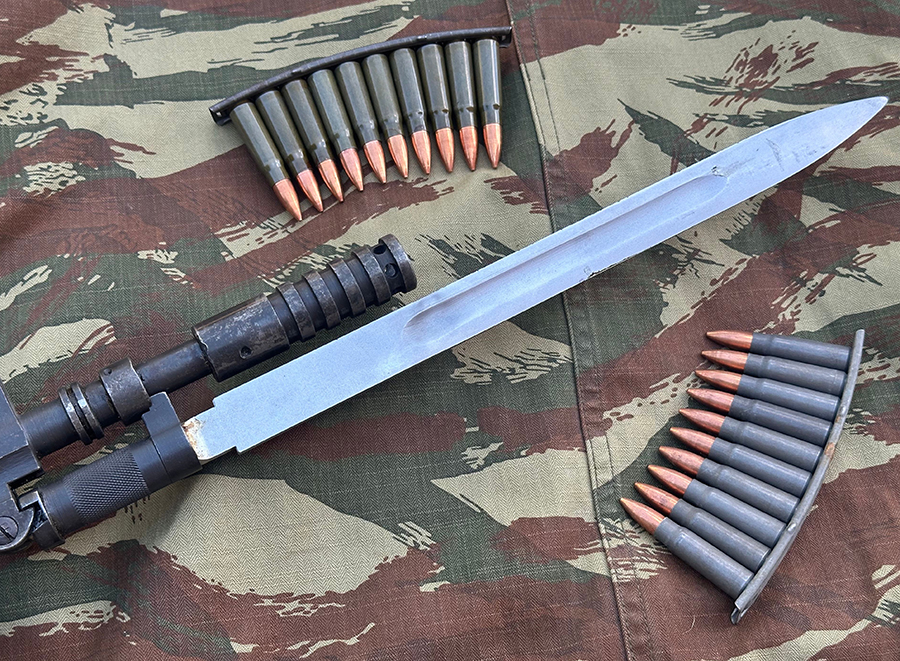
Following the common theme, Russia licensed the manufacture of SKS rifles to all of its Warsaw Pact allies as well as Communist China. Romania, Poland, Albania, Yugoslavia, and East Germany all jumped on the band wagon and built SKS variants with slight modifications. One of the most notable being the folding bayonets. One of the distinguishing features on the Chi-Com Type 56 SKS guns was the use of a “spike” style bayonet versus a “blade” style found on the Soviet versions.
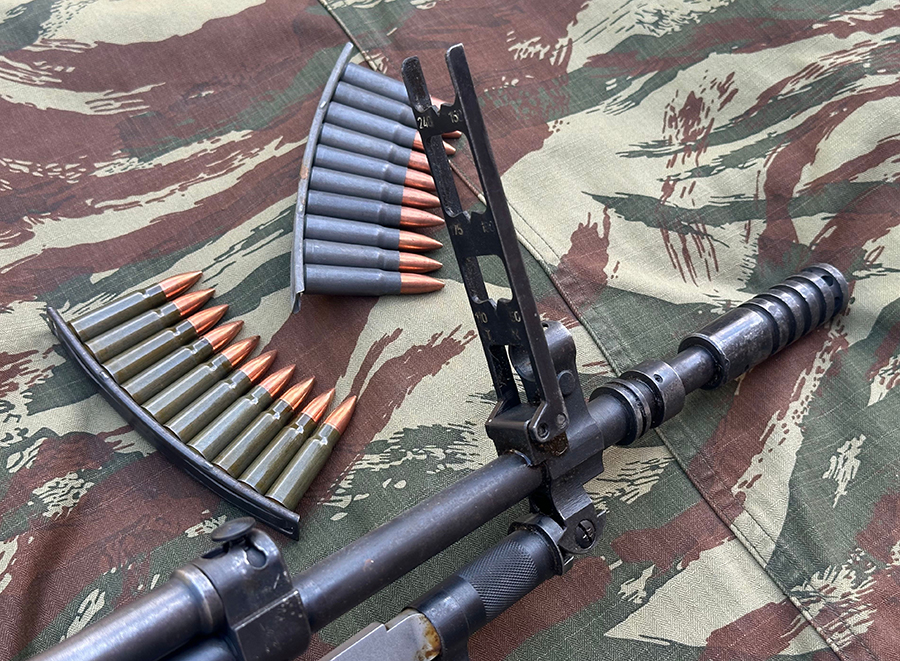
The Yugoslav version, produced in 1961 in the Zastava plant was called the M59/66 PAP. The Yugos put an extra long muzzle brake on theirs to accommodate rifle-launched grenades and that model also had a “ladder” sight for use with said grenades. Also, the gas system on the 59/66 has two settings: On and Off. The “Off” setting was used when a blank cartridge was loaded to launch a grenade in order to use 100 percent of the expanding gas to drive the high explosive projectile.
Rifle Launched Grenades?
Let’s pause for a moment to consider the objects known as “rifle launched grenades”. Using a blank NOT LIVE cartridge to shoot a high-explosive grenade was one of those ideas that looked good on paper and even seemed practical on the sterile training range. Rifle launched grenades were used by the United States and many other countries during WWII and beyond.
The basic principle was for the soldier in combat to swap out live ammunition for a special blank cartridge then slip the rocket-shaped projectile down over the muzzle device. The expanding gas launched the grenade. Again, in theory and on the sterile military testing ranges, this idea seemed valid.
However, think about the fog of war and the stress that a soldier is going through during active combat. What are the chances that a stressed or confused trooper might put a live cartridge in by mistake and fire it into a high-explosive grenade two and half feet from his face?
Also, even under ideal circumstances, you are asking the soldier to stop, retrieve the rifle grenade from a pouch, swap live ammo for a blank, slip the grenade over the muzzle, and in the case of the 59/66 shut off the gas, then shoot it. All this while taking incoming fire from the enemy. Yes, from a tactical standpoint, in the offense, a soldier could set up his rifle to fire a grenade for use in the opening salvo of an attack or during an ambush. Nonetheless there were better ways to skin that cat being developed.
Even though the rifle launched grenade concept carried over into the Cold War era, the improvement of hand thrown grenades and dedicated grenade launchers; such as the M79, the M203, and the Russian GP-25 and its successors, not to mention the deadly RPG-7, saw the end of the practical use of the rifle launched grenade.
Rebels, Insurgents, and Terrorists
After the AK-47/AKM became the standard issue for front line troops, the SKS was relegated to support units, auxiliary and reserve troops and to rebels or insurgents. When both the Soviet Union and Communist China sought to spread their “People’s Revolution”, shipping containers filled with SKS rifles were transported to countries in Asia and Africa in order to arm the “revolutionaries”.
During the opening stages of the Vietnam conflict, the most common rifle found in the hands of the Viet Cong was the SKS. SKS rifles were also used by communist rebels and terrorists in Rhodesia, Ethiopia, Angola, Algeria, Afghanistan, and Cambodia to name just a few.
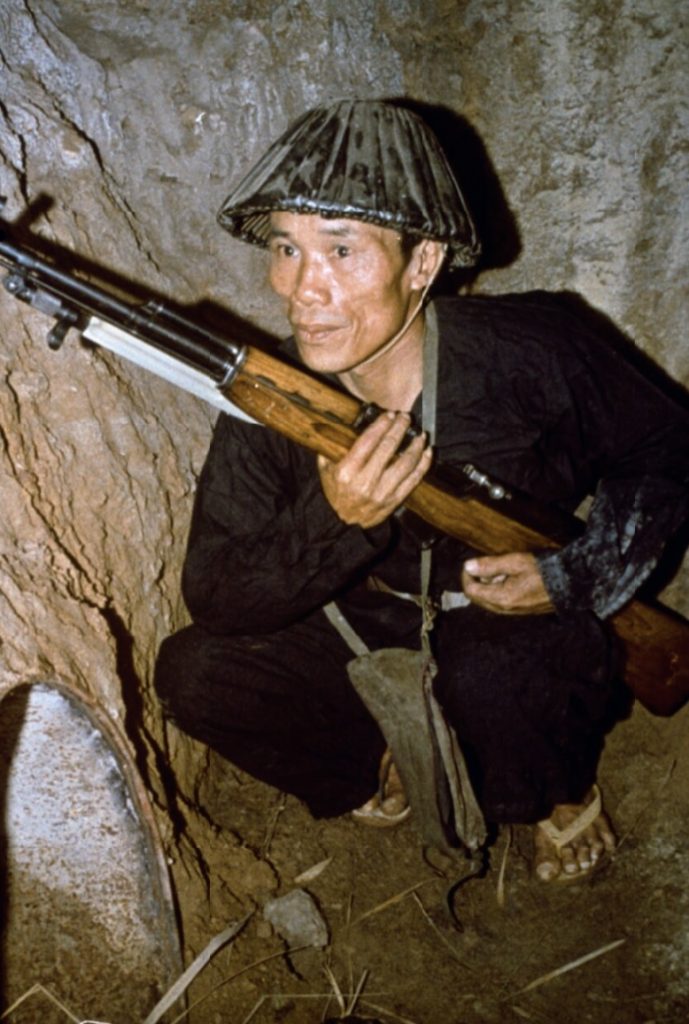
If you think about it, the SKS was essentially a perfect peasant/insurgent rifle. When the political commissars from either the USSR or China arrived in a village to rally the people toward socialist revolution, all they had to do was hand the new volunteer insurgents an SKS rifle and a bandolier of ammunition. They didn’t need to worry about issuing multiple magazines or load-bearing gear, although special SKS ammunition carriers did exist. The bayonets were affixed to the rifles so there was little worry that the peasants would use them for digging, trade them for cigarettes or just lose them. The fixed magazine design ensured that as long as they had ammunition, the peasant rebels would be able to load the guns, no fear of losing magazines in battle.
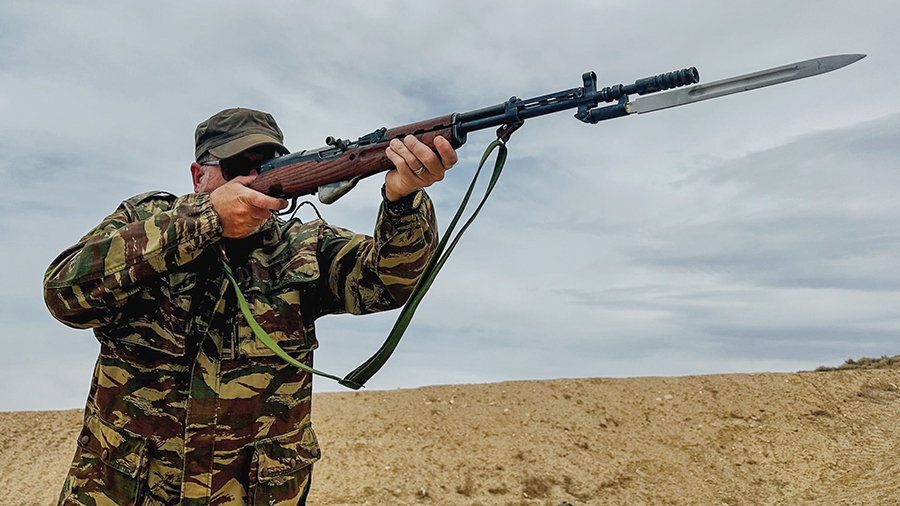
Also, in a pinch, if ammunition was in short supply, your insurgent troops could be issued enough rounds to fill the magazine and when empty, thanks to the bayonet, the SKS was still lethal. Close quarters bayonet charges did not go out of style with the muzzleloader. Jungle fighting was quite the in your face affair.
No, the SKS was not the fighting tool that the AKM was, but arming 50 peasant soldiers with SKS rifles produced an instant fighting force. Also, the manual of arms was simple. Even illiterate peasants could be taught in one day how to load the SKS, point it and fire at the evil imperialists, capitalists or the tyrant government they were attempting to topple.
Additionally, given that the rebels could only fire ten rounds, in semi-automatic mode, ensured that they could not just flip the selector to full auto, point in the general direction, and waste ammo as was common with untrained troops who were given full-auto guns. Ammunition conservation was built into the SKS.
Moreover, most rebel attacks were hit-and-run type ambushes. The Military Advisers could teach their troops to fire all ten rounds at the enemy and then, when the gun was dry, beat feet and get away before the army could organize a counterattack. History has shown that such tactics worked well during the innumerable revolutions and insurgencies.
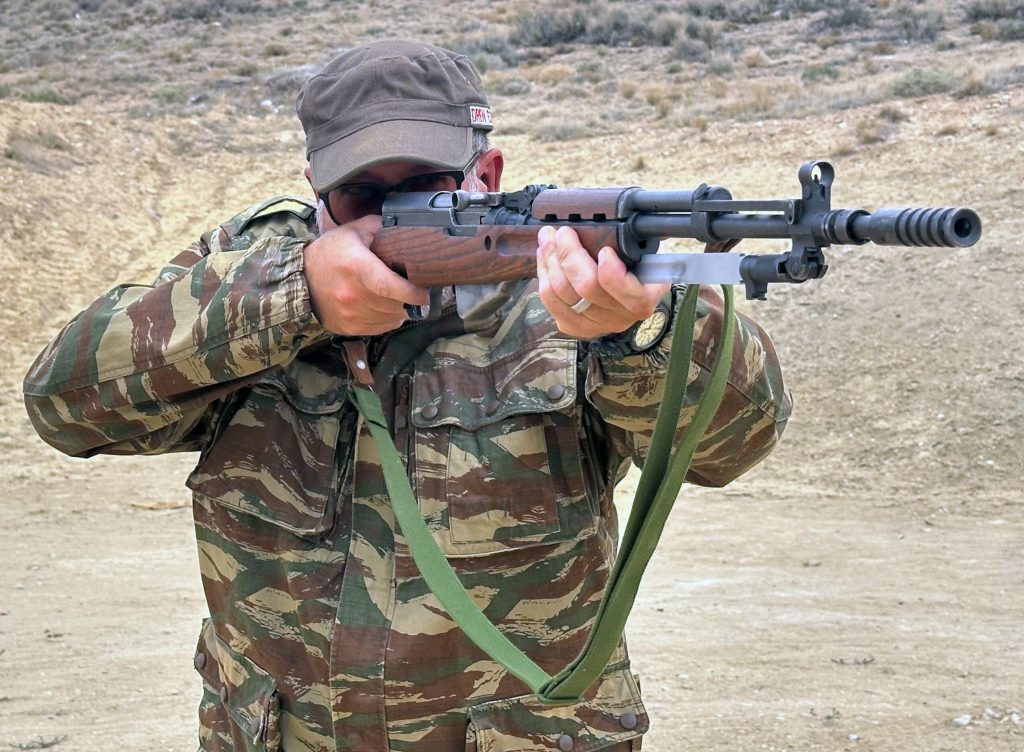
Also, the SKS became a starter or beginners gun for the rebel troops. Those volunteers who proved themselves in battle and demonstrated that they could be trained in more complex military tactics would be later rewarded with the privilege of carrying an AKM rifle. Rather than waste a valuable AKM rifle on an illiterate peasant who might drop it and run at the first sign of trouble, the SKS was given to the untested or new volunteers.
Despite the fact that the SKS rifle was only the preferred weapon of the Red Army for a relatively short time, it did have a serious impact during the era we call the Cold War, particularly during the proxy wars fought all over the globe.
Specifications: SKS M59/66 Rifle
Caliber: 7.62x39mm
Action: Gas piston semi-auto
Capacity: 10 rounds
Furniture: Hardwood (others)
Barrel Length: 20.5 inches
Overall Length: 40.2 inches
Weight: 8.5 lbs empty
Paul G. Markel is a combat decorated United States Marine veteran. He is also the founder of Student the Gun University and has been teaching Small Arms & Tactics to military personnel, police officers, and citizens for over three decades.
I have several SKS’s. Four of them are Russian, the others are China and a few commercial versions.
The Russian ones I picked up years ago for $52.00 each. They are still in the original grease and wrapping and crate they had the day they were packed at the factory that supplied the Soviet military.
When the Soviet Union started to collapse all these SKS’s started appearing on the market and were being imported by import companies who buy up ‘surplus’ of all types of stuff for sale in various markets. One such importer here in the U.S. had imported a bunch of these and had orders for them from various retail firearm outlets. But the problem was not all of those who placed orders actually took possession of the rifles by paying the importer for them. This left some of these sitting in various importers warehouses, and eventually they would sell them off.
A friend of mine was into finding businesses that were going out of business then buying their remaining good stuff at really cheap prices because the business just wanted to get rid of it. He told me about this importer company that was going out of business and their list had some genuine factory packed Russian rifles listed and asked me if I wanted to go take a look with him and I did. To my surprise they were the SKS rifles still in the original factory crate with original factory grease and wrappings just as they were supplied to the soviet military, but there were only four in the crate. I bought all four for $52.00 each and they told me I could take the crate too, that was the last of them they had having sold off all the others already.
So, today that crate with those rifles in it still packed in the original factory grease and wrappings with the soviet era hammer and sickle stamp on the crate sit stored away as a piece of history. I’ve never had the heart to disturb their ‘pristine’ condition by trying to clean them off to make then serviceable and really never will ’cause I like them for the historic value.
“While the Soviet Union only produced the SKS officially from 1949 to 1958…”
Yes, well, but officially in a way they did continue manufacturing after 1958 into 1961 by supplying the materials to China. China manufactured the Russian model SKS that Russia had been producing using only materials supplied by Russia. But the Sino-Soviet split had happened and China could not get Russian parts any longer so in 1961 China started using parts made in China and from 1961 on-wards the China SKS was completely made of all China made parts and fully Chinese built. The China SKS before 1961 were actually Soviet Sino Guns and exactly the same as those made in Russia. The way you tell the Soviet Sino SKS from the ones completely made in China is the ones completely made in China with all China parts staring in 1961 is behind the serial number (which was moved to a different spot) there are Chinese ideograph markings and they indicate the rifle was built completely with china manufacture parts from 1961 on-wards and they have various meanings.
The two main importers of the Chinese military surplus model SKS that China dumped on the market were, when China started dumping them: China Jin An, an importer that was in the Southfield suburb of Detroit and an importer called Import Arms Company (IACO) in Sacramento, California. From there they spread across the country to various FFL’s or private individuals and a bunch of them were stolen in shipment, one of which ended up in the hands of Ryan Routh who tried to assassinate President Trump when he was campaigning for his current term.
Routh’s former employee Tina Cooper arranged for the rifle. Cooper was also assisted by Ronnie Oxendine (who was Cooper’s current boss at the time), who had crossed paths with Routh professionally over the years, and Oxendine was the one who actually obtained the gun and gave it to Routh on Cooper’s behalf. Routh told Oxendine that he would remove the serial number from the gun so it could not be traced to Oxendine. Routh paid $350 to Oxendine for the rifle, and he paid $100 to Cooper for arranging the deal.
Routh originally wanted a .50 caliber rifle and Cooper told him that the .50-caliber was not available at the moment through Oxendine, but that she could possibly get it elsewhere. So Routh told her by text ‘Go shopping for me’ and Copper said she would.
But evidently Routh was not able to get a .50 cal and ended up with the SKS he used in his assassination attempt.
I had a Russian refurb. That thing was like new in the box and it only cost me 99 bucks when even in CA they were listed as curios and relics. No waiting period. Just one page of paper work and out the Cow Palace door I went with it. I prefer the sks to the ak.
One of my big gun regrets is trading it off for another shotgun.
I grew up shooting my Dad’s Chinese SKS. Good cheap fun. Still is. I’m glad steel ammo is still cheap and plentiful.
Plus, the sights are easy to use and good to practice with. Yes an AK is more fun but the SKS is a classic.
me likey.