

First things first, for those who have never been involved in traditional martial arts training. A green belt is a ranking and has nothing to do with environmentalism or saving the planet from global warming, cooling, or whatever. Yes, I’m sure that some of you out there will opine that the colored belt ranking system is a result of the Americanization of pure Asian martial arts. I also know that Mr. Miyagi was a “canvas-belt” from JC Penney.
Regardless, I was first introduced to the term “Green Belt Syndrome” approximately forty years ago by my Tae Kwon Do instructor. At the time, the green belt ranking was considered a mid-level with white, yellow, orange, and blue all coming first. And yes, I understand that not every martial arts school or program ranks in the same order. Try and stick with me though.
The Origin of Green Belt Syndrome
As it was explained to me, back in the late 70s to mid 80s, martial arts instructors started using the term Green Belt Syndrome to describe a marked drop off they would see in their students around that rank. The first drop outs were normally among the white belt (beginner) ranks. After attending only a few classes, the students would either be disappointed that they hadn’t magically become Chuck Norris or Bruce Lee in a whole month or they’d realized it was going to be hard and take real effort. Either way, they gave up and stopped coming to class.
Instructors found that if students would commit and make training a habit, they would keep most of them for a year or two as they gained skill and ability and progressed through the lower ranks. However, at least when I was involved, by the time a student reached the green belt level, they’d have, on average, two years or perhaps a bit more training and experience.
These green belts could now perform the kicks and punches and other movements that had seemed nearly impossible back when they were beginners. They’d start sparring with the upper ranks and begin to hold their own. When they’d spar with the lower ranks they could easily dominate them. However, these green belt folks also soon realized that progressing to the upper ranks — brown and black belts — required much more dedication and effort than the lower ranks did. Here’s where not all, but many fell off.
You see, those in the mid-rank classes of the green belt have gotten to a skill level that only a couple years before they could not even fathom and became overly impressed by what they’d achieved. After all, they’re kicking over their heads and breaking boards like masters. They also came to realize that they know more about martial arts than their co-workers or peers. In most cases, the green belt becomes the pseudo-expert in their friend or peer group.
So impressed were they with what they’d achieved that it was difficult, if not impossible for them to comprehend that the effort in sweat and pain needed to attain a higher ranking belt was worth the investment in time. They had more skill than they’d imagined having. They considered themselves to be true “ass-kickers” and then they’d drop out of training.
Modern Gun Carrier Green Belts
Recently, I was on the telephone with a small arms and tactics training colleague who’s about fifteen years my junior. We were discussing the tendency of those in the gun culture who have taken a couple of classes or started competing in local matches to hold themselves out as firearms training experts. I commented to my friend that this was equivalent to Green Belt Syndrome. He’d never heard that term, so I explained and realized that I needed to write this article.
When it comes to the American gun community there are several subsets. The first are those who have never had any formal training, but someone — dad, grandad, uncle, etc. — “showed them how to shoot.” The “showed them how” part could be as rudimentary as how to put ammunition in the gun and pull the trigger so that it goes bang. As often as not, the person showing them how never had any formalized training either. This group usually can’t comprehend the value of attending a formalized training course.
The next subset is a bit better, but now much. They live in a state that requires the peasants to first seek approval and consent from the .gov to exercise their Second Amendment rights. These folks attend the mandatory training program and after they have successfully received a piece of paper bearing the Seal of the Bureaucracy, they consider themselves good. They’ve checked off the “firearms training” box and now they know all that they need to know to carry a gun and fight off the faceless goblins who may one day appear.
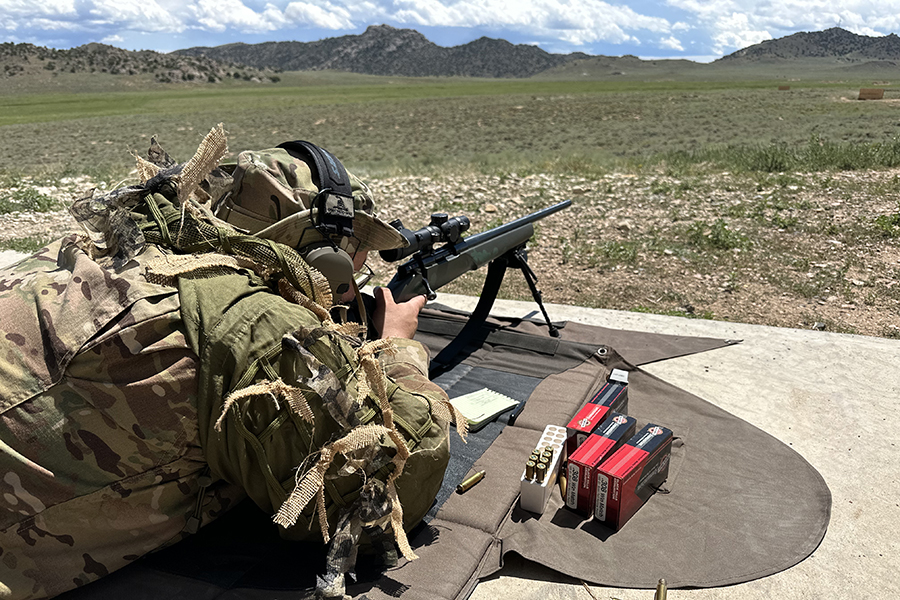
As for the next subset, we have those who have made an effort to become a part of the gun culture. They booked a seat in a formalized training program, generally a two-day course. If they’ve chosen wisely, at the end of the two days, they are now able to demonstrate more skill with a handgun than they ever thought they could. Also, if they were challenged and inspired, a decent percentage of these folks might book another course and maybe even a third.
By the time they have taken three two-day classes, they’re feeling rather froggy. The person they were before they ever took training seems foreign to them. They now know the lingo, their shot groups are tight and their abilities are far beyond that of where they were when they first began.
Just like the martial arts green belts discussed earlier, these folks become the pseudo-experts in their friend or peer group. After all, they’ve taken more training than any of their work friends or relatives. People now come to them with questions about gun-related topics. Just as the green belts, these folks become rather impressed with themselves which becomes rapidly apparent in online forums and chat groups. These gun culture green belts start pontificating and even going so far as to critique instructors with twenty, thirty, even forty years experience.
A percentage of these gun culture green belts start competing in local shooting matches and eventually reach mid to upper ranking. Now they are even more impressed with themselves and they cannot imagine that there is any reason for them to waste time attending any more training classes.
In my book, “How to Shoot Better than a Navy Seal” I describe the journey up the mountain path. Many will start climbing and as soon as the it becomes difficult, they turn around and go back down. Others will keep going and reach a plateau that allows them to see more than any of those who turned around and quit. The view from the plateau is something that they never imagined and they’re truly impressed with themselves for getting that far. They could continue, but it’s steep and difficult and they figure, why should they? The view certainly couldn’t be that much better, and besides, they have made it higher than most people ever do.
Ah, but you see, the first plateau isn’t where mastery is found. True mastery requires much more effort than that. For instance, in the traditional martial arts, those on the outside consider that the black belt ranking is the level of mastery. However, those who are on the inside understand that reaching the level of black belt actually is where one becomes a true or legitimate student of the art. That’s not the finish line, it’s the real starting point. A true student of the gun understands that you’re a beginner once, but you should be a student for life.
Human Nature
Of course, the Green Belt Syndrome does not just apply to martial arts or the gun culture. If you think about it, now that you have a term to describe the behavior, you can see it in nearly every field of endeavor. I will admit that about two years after I started taking professional strength training, I was stronger than I ever imagined being. Each time I would go to the gym, my coach would program training that was even heavier than the last session. The weights were heavy and the workouts were hard.
A demon crawled up on my shoulder and whispered, “You’re stronger than you ever imagined. You’re strong enough now. You don’t have to keep working so hard.” Fortunately, I told that demon to go forth and fornicate himself. What I didn’t realize at the time, but what materialized by my pressing on, was both a physical and a mental transformation. That transformation was instrumental in saving my life.
If you pay attention and open your eyes, you can see Green Belt Syndrome both in yourself and in others. Have you ever known someone who wanted to learn an instrument and after they got pretty good stopped because advancing beyond that level was hard? There are a lot of folks who can play songs on a guitar. There are very few who reach a level of mastery and can create their own songs. Why? Because achieving that mastery is difficult and requires a lot of effort.
Forcing yourself to continuously engage in what we call voluntary hardship is difficult. Much of this can be blamed on a culture of weakness that values convenience, comfort, and ease over difficulty, sweat, and pain. Throw in the human ego, where people become overly impressed by their own achievements, and the path to mastery becomes even more narrow and steep.
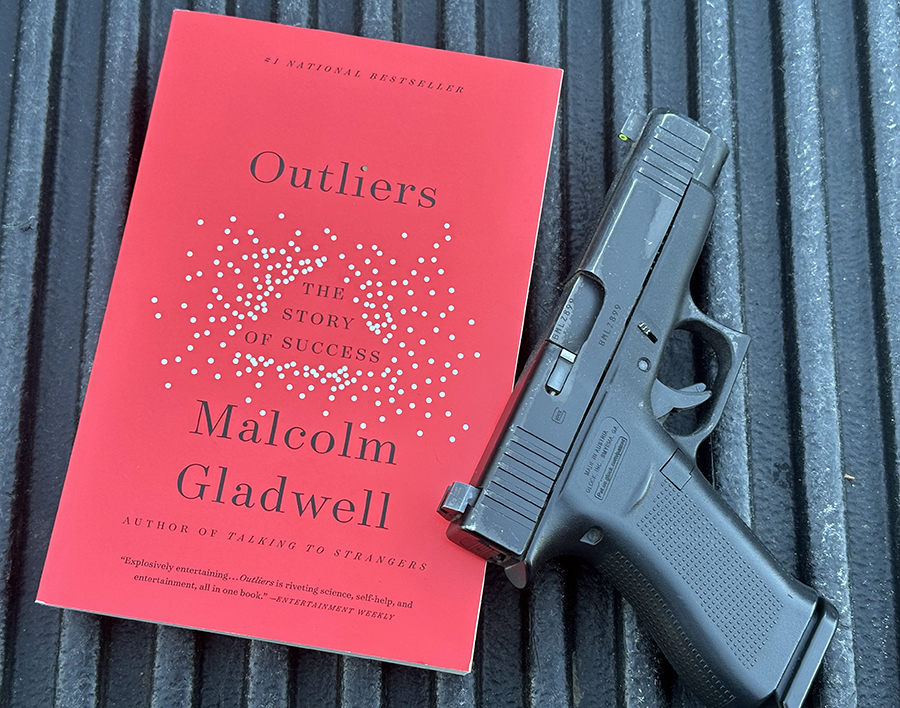
The good news is that you don’t have to be satisfied with a green belt ranking. You have the opportunity to park your ego and reach heights that you couldn’t imagine. In the end, it’s all up to you. Lastly, if you’re truly inspired to excel and remain on the path to mastery, we suggest that you read “The Outliers” by Malcom Gladwell and consider the concept of 10,000 hours.
Paul G. Markel is a combat decorated United States Marine veteran. He is also the founder of Student the Gun University and has been teaching Small Arms & Tactics to military personnel, police officers, and citizens for over three decades.
The Forgotten Law That Explains the Second Amendment. [The Tory Act of 1776].
ht* tps://www.youtube.com/watch?v=rR4AY6ddBN8
10,00 repetitions makes one a beginner. How many can legitimately say they have fired 10,000 rounds that are of training consequence?
I haven’t. 3-5000 while in the military. A few thousand before that just screwing around with friends.
20-30,000 just making holes in paper.
Maybe 6000 rounds in ‘real’ training. I know enough to be dangerous (ignorance). I also know that I don’t know what I don’t know (not ignorance).
A two day class is about 1000 rounds. That’s a lot of classes, and time.
Something can be learned in every class. Even if it is what not to do.