If you have been following our discussion here for any amount of time you will know that we very much endorse strength training for overall health benefits as well as being better able to fight and win if you’re ever called upon to do so. Remember, the gun doesn’t win the fight, you do. You’re the operating system.
“Strong people are harder to kill than weak people, and more useful in general.” – Mark Rippetoe
We have also made strong suggestions regarding how to improve your physical coordination and subsequent cognitive abilities by engaging in non-shooting activities. Last year we shared an article that dealt with that very subject.
We Warm Up…We Don’t Stretch Out
Most adults who exercise or train in the gym are doing so based upon the experience that they got in junior high or high school. Their sports coaches had them all go through elaborate and extensive stretching routines with the stated goal of “warming up” to prevent injury. And so, when they are 36 years older (or more) and decide that they need to get back in the gym and get in shape, these folks go back to the stretching routines they learned in school.
One of the first principles that you learn when you undergo professional strength training is that we warm up for the lift. We don’t stretch out. I’m certain that this contradicts what most of you have been led to believe. Therefore, I’ll allow Mark Rippetoe to address that subject. He wrote an article addressing stretching some ten years ago.
The objectively evaluated experience of coaches or lifters, that 30 minutes of stretching before a barbell workout is anything other than a detrimental waste of time. We have demonstrated for the past 10 years that a below-parallel squat is not dependent on flexibility, but rather correct positioning of the stance, knees, and back angle. The bottom position stretch I mentioned is not really a stretch in the sense that the Mobility People use the term, but a practice of the position to be assumed at the bottom before you start squatting.
Mobility Training
Understanding that we don’t need to stretch out our arms and legs like an olympic sprinter or a ballerina prior to our strength training, is there training or exercises that help us keep our joints loose and to maintain good range of motion? The answer is yes, and we call this mobility training.
If you put the aforementioned term into your favorite search engine, you’ll come up with more routines and exercises than you can imagine or possibly do in a year. Given such an information overload, a person might be overwhelmed. What we know of human behavior is that information overload tends to hinder the end user rather than help them.
When I was fifteen years younger, my mobility training included jiu jitsu and a variety of mixed martial arts training routines. The Earth has made many trips around the sun since I earned by black belt in Shingitai jiu jitsu and you won’t find me on the mats rolling as I once did. However, in addition to my programmed strength training regime, I still needed to do some mobility training.
Guns and Swords
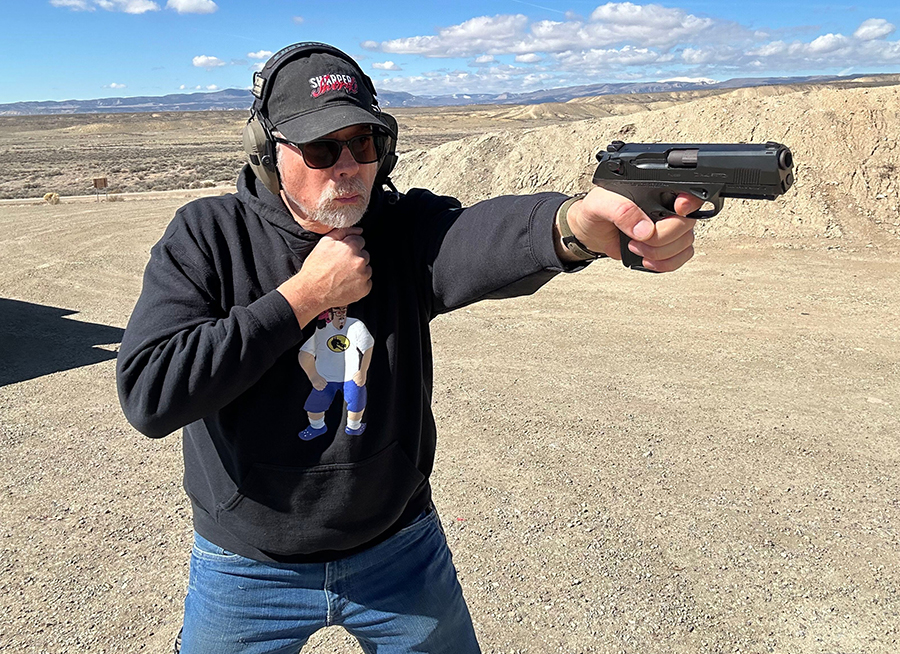
It goes without saying that maintaining proficiency with arms is a top priority in my life. You don’t need to take blue or red dummy guns into your local fitness center to engage in exercises that will both benefit you from a physical standpoint as well as to build coordination and improve brain health through better cognitive ability.
It was during a detailed examination of the importance of practicing with your off, non-dominant or support hand, that I read up on research linking physical coordination to improved brain function and the ability to problem-solve, as well as for the brain to process information rapidly and properly. We know that shooting practice using only your dominant hand and then only your non-dominant hand improves your overall performance.
My quest was to find a mobility training routine that would provide a serious workout for keeping my joints loose, maintaining my range of motion, forcing me to work on physical coordination, and, as an added benefit, one that has its roots in martial practice. What I came up with might not be the way, but it definitely is a way of checking off all of the aforementioned boxes.
Going back to 2010 when the Starz channel released the “Spartacus” television show, I was good friends with the marketing director for Cold Steel. My pal told me that in addition to their very sharp, steel Gladius machetes, they were introducing an all-polymer Gladius Trainer.
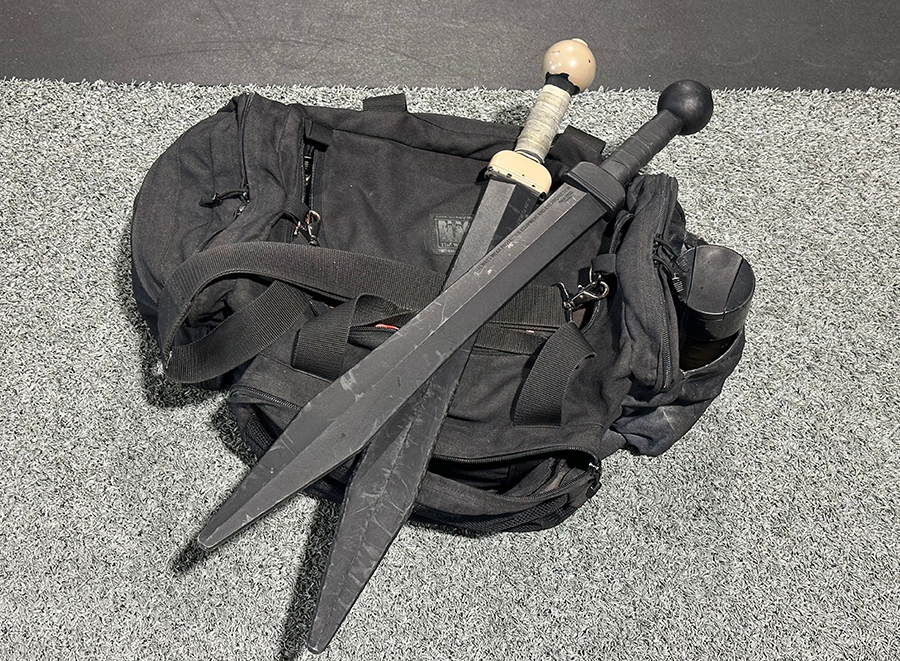
The trainers were used by the martial arts technical advisor who taught the Spartacus actors how to sword fight. I jumped on those trainers like a fat kid on a donut and haven’t looked back.
Gladiator Routine
We now have a gladiator training routine that pairs like peas and carrots with our strength training regime. My strength training mentor, Matt Reynolds, fully endorsed the practice, with the caveat that it be conducted AFTER strength training, not before or rather than. The problem or misconception that many folks have is that mobility training is a substitute for the genuine voluntary hardship of resistance training, it is not. True strength training is Simple, Hard, Effective. It cannot be effective if it is not hard and it must be simple, not complicated, to be sustainable. As Matt likes to remind us, “Strength makes everything better.”
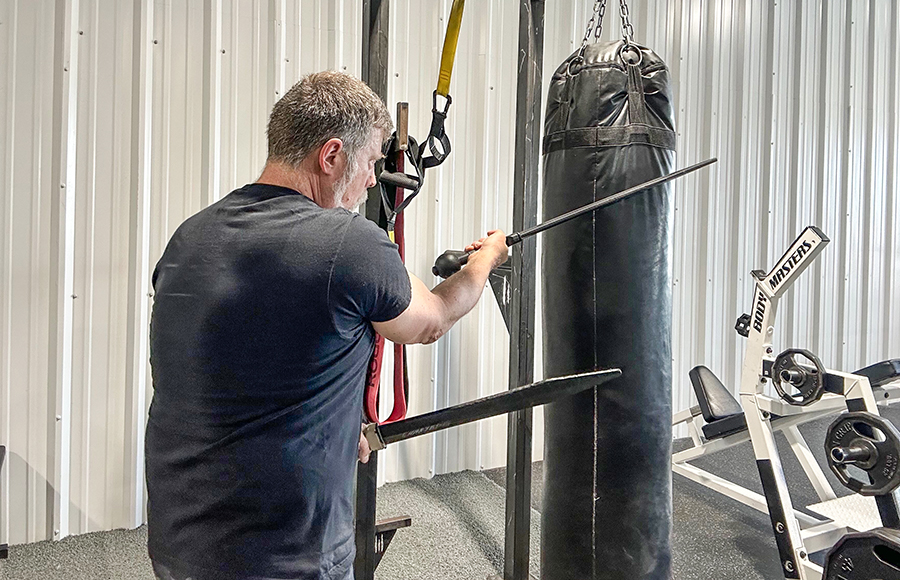
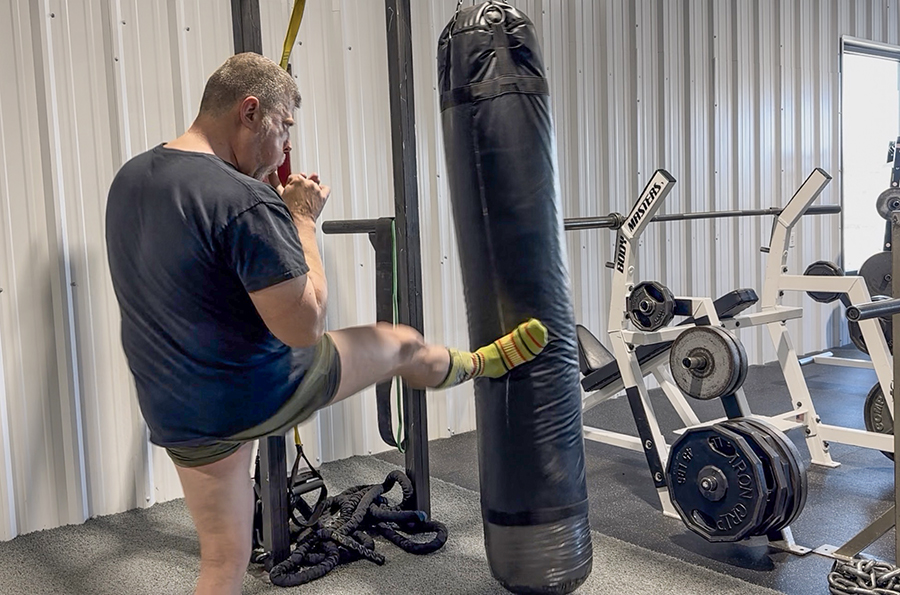
Using our Gladius trainers, we work on keeping our joints loose and develop coordination and good balance. Just about every good gym has one or more heavy bags and even those who do not have the water-filled punching bags in their “cardio-karate” studios.
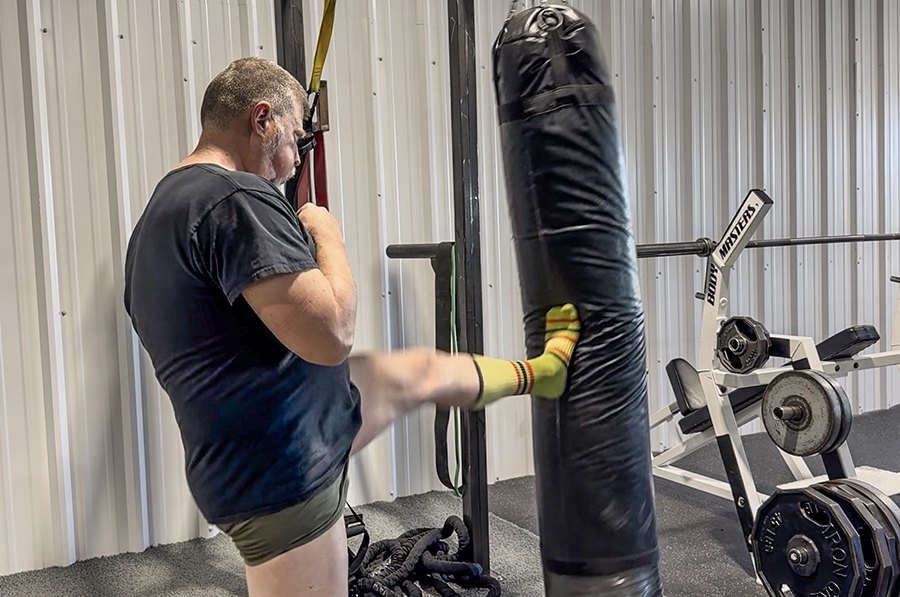
Making use of the heavy bags, we keep our bottom half loose and limber by practicing front kicks and stomp kicks. This also improves our balance and overall physical coordination.
You can begin with a single Gladius trainer and switch it from your right hand to your left. If you never force yourself to perform with your non-dominant hand, you will likely feel awkward. That’s fine.
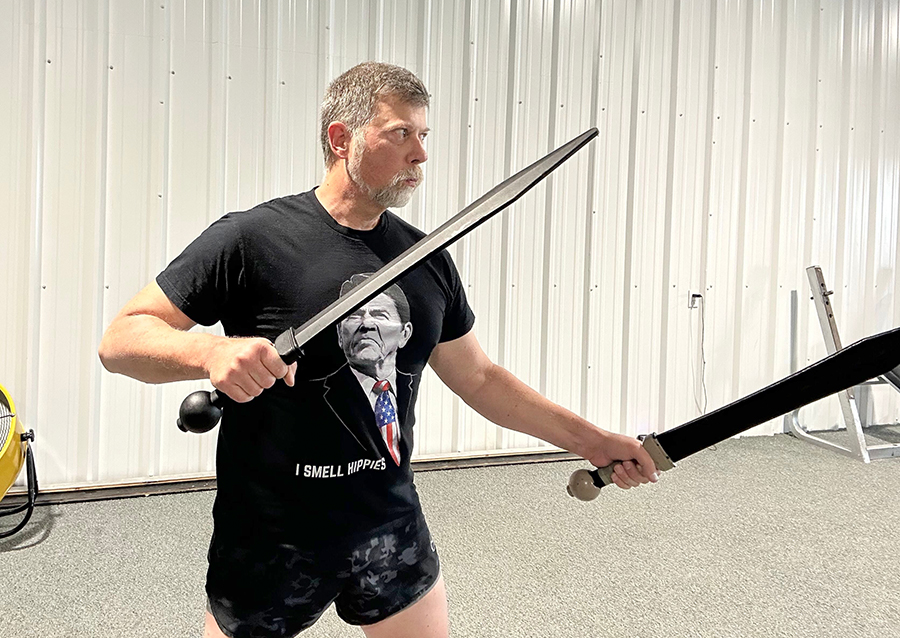
With dedicated effort, your off-hand will soon catch up with your dominant hand. Eventually, you will want to pick up a second trainer so that you can simply work with both hands at the same time. Through purposeful endeavor on your part, you will soon be like Gannicus, the gladiator who dual-wielded the gladius, at least in the Spartacus series.
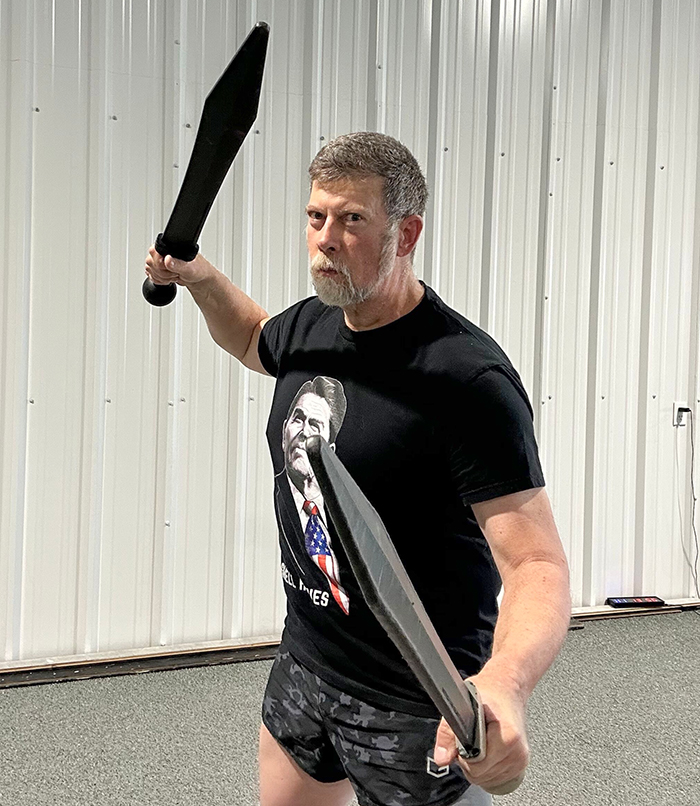
The sum total of benefits should be obvious; take the strength you have gained, pair that with balance, physical coordination, and a practical and realistic program that improves range of motion. Strength and physical coordination with the addition of better cognitive ability cannot help but improve your overall ability to employ a firearm. Shouldn’t that be our goal?
Paul G. Markel is a combat decorated United States Marine veteran. He is also the founder of Student the Gun University and has been teaching Small Arms & Tactics to military personnel, police officers, and citizens for over three decades.
My EDC knife is a Cold Steel Air Lite Tanto Point. Been very happy with it. But I’m probably not going to be buying swords from them.