

Recently there was an SNW post regarding the danger of putting aftermarket parts into guns where the parts might fit, but aren’t designed to work in certain “compatible” models. Specifically, the case highlighted was a striker-fired pistol with an aftermarket trigger installed. The result was an “uncommanded discharge.”
I read the review and watched the video from the embedded link and the first thing that came to my mind was a question. Why was it necessary to replace the factory trigger on a modern striker-fired pistol? Yes, you’re an American and you can do what you want with your property. However, like a hot dog sundae, just because you can do something doesn’t mean you should.
What’s a “Bad Trigger”?
Coincidentally, before the aforementioned post was published, I had put a word-meme on socialist media stating “Unpopular Opinion: You don’t need a new trigger. You need more training.” While many appreciated the sentiment, many more did not and expressed their hurt feelings to the sound of sad violins playing in the background.
Having been at this since long before the modern striker-fired pistol was a thing, I believe that I have some basis for comparison. Let’s stick with handgun triggers and leave rifles and shotguns for another day, shall we?
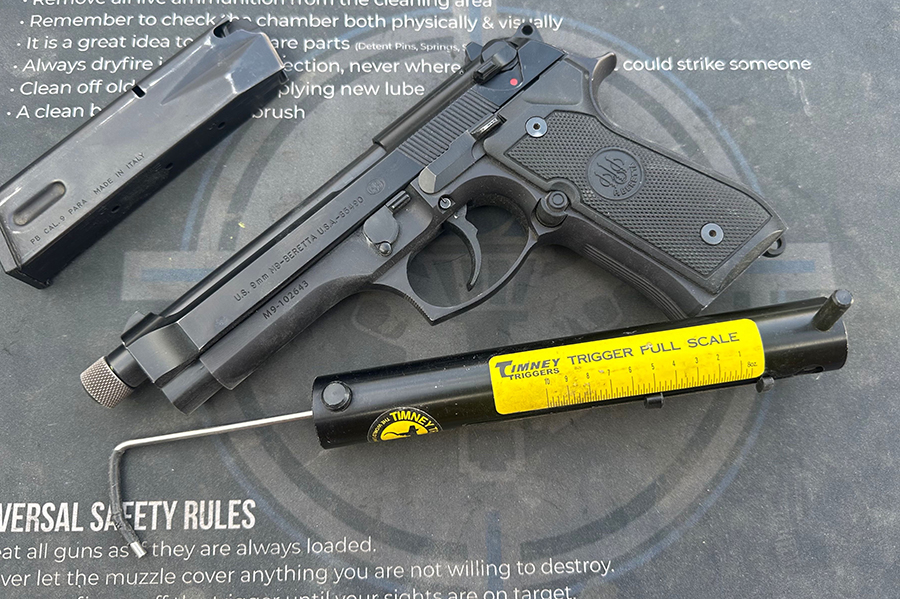
Handgun technology is constantly evolving. Consider that one hundred years ago, the US Army adopted the A1 version of the M1911, a single-action, semi-automatic pistol. At that time it hadn’t been all that long since the Colt 1873 Single Action Army revolver was the standard. When I became a Marine in 1987, the Corps was still issuing single-action M911A1 pistols. A couple years into my service, we received our allotment of the new M9 Beretta 9mm with a DA/SA trigger and had to learn to master both the long and short trigger presses.
The milspec standard for the trigger press weight on the M9 was 7.5 to 16.5 pounds for the double action and 4 to 6.5 pounds for the single action press. The average DA trigger press weight for the M9 is said to be around 12.5 pounds. By comparison, the GLOCK 17 factory press is 26 Newtons or approximately 5.8 pounds.
In 2025, the majority of the handguns purchased and carried for the expressed purpose of personal defense are some type of polymer-framed, striker-fired design. In our training courses, we have found that around 95 percent of our students arrive with some type of PFSF handgun.
The average factory press weights from maker to maker for such handguns tend to be between 5 and 6 pounds. Back in the old days when DA/SA pistols were the norm, the DA press was typically 10 to 12 pounds and the follow-up SA press was around 4 to 5 pounds. If you compare where we were then to where we are now, a 5-pound trigger on a PFSF pistol is not “too heavy” by any realistic standard.
While we have considered true pull weight — that which can be measured by a trigger-pull gauge — something that can’t be measured by a scale is “trigger feel.” When it comes to triggers, we like to use descriptors such as ‘crisp’ and ‘smooth’ or ‘crunchy,’ ‘gritty’ or even ‘mushy.’ Naturally, crisp and smooth are positive attributes while crunchy, gritty and mushy are negatives.
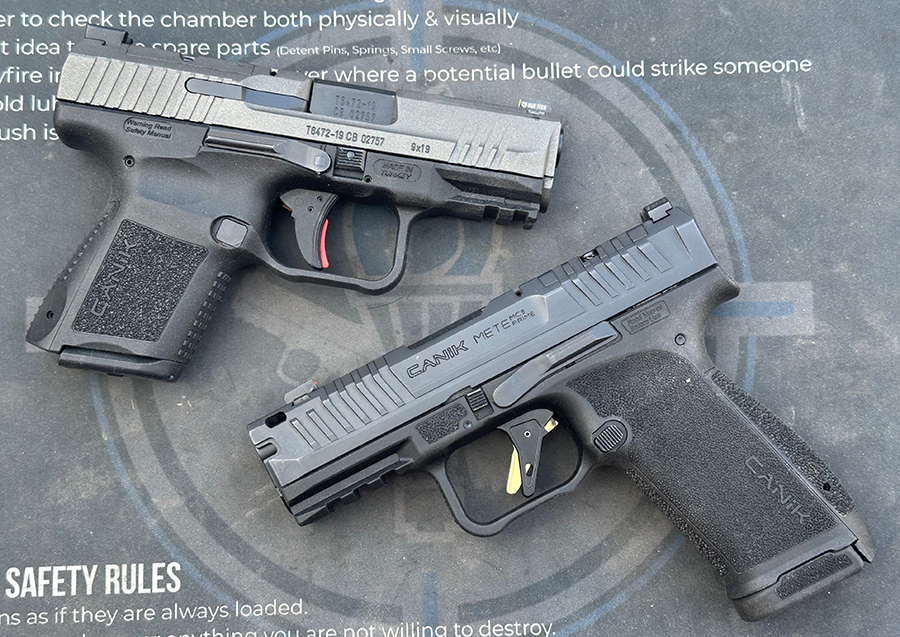
Fifty years ago, if a manufacturer hired someone to assemble handguns, that person had to be trained to fit all the parts together. The gunsmith at the workbench took the gun parts and tested their fit, filing or polishing them as necessary. That all changed with the mass production processes that go into making polymer-framed striker-fired pistols.
If you own one, the parts that make up your trigger assembly aren’t polished or meticulously fitted together by a master gunsmith. Instead, what you have is a person trained to take the parts out of the bins on the workbench and put them together in the correct manner. There is no hand-fitting, filing or polishing going on.
When you purchase a brand new PFSF handgun and think “the trigger feels rough,” it does. The pieces that make up the trigger assembly haven’t been used and given the opportunity to mesh together so as to function as a unit. Truth be told, it’s the feel of the trigger as much or more so than the actual weight that people tend to focus on.
Shooter’s ROI: 500-Round Trigger Job
Anyone who has taken an introduction to business course recognizes the term ROI, short-hand for return on investment. We normally think of an investment as money, but an investment can also be measured as time allotted to a project.
Thanks to our modern psychological predisposition to having everything fast, easy, and convenient, when gun owners purchase a new PFSF pistol and don’t like the feel of the trigger, for many of them, their first instinct is to fix the trigger by replacing it, not to shoot it.
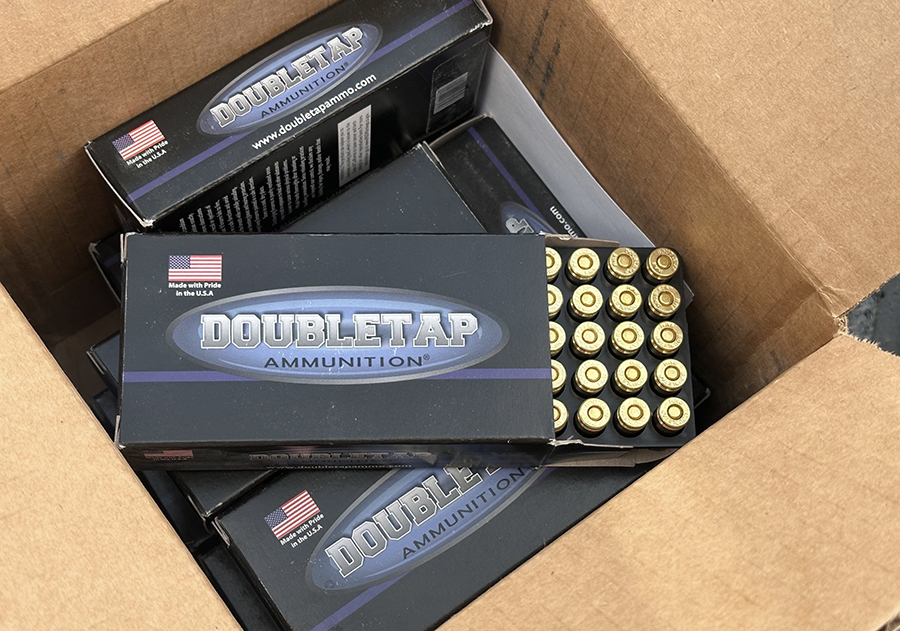
I did some research and found that aftermarket trigger systems for GLOCK pistols fall in the $100 to $160 price range. Additionally, I’ve been paying attention to the price of 9mm training ammunition and the current bulk price is averaging between 20¢ and 25¢ per round these days. If you averaged that to 22.5¢ a shot, for five hundred rounds of 9mm you’d pay around $112. Even at 25¢ a shot that’s $125 for five hundred rounds.
Let’s get back to return on investment. Instead of spending $125 on an aftermarket trigger for your new PFSF, I’d recommend that you purchase five hundred rounds of 9mm training ammunition for the same price. Now, take your invested money and time and execute five hundred trigger presses in as perfect a manner as you are capable.
I should caveat all of the above by stating that if you have never invested in professional firearms training (local shooting matches don’t count) buying a new trigger is a ridiculous waste of money. It’s not possible to purchase your way around training. We go to training to learn how and what to practice. Then we go home and practice what we’ve been taught.
Experience
My first epiphany regarding how shooting the gun actually improved the trigger feel happened some thirty years ago with a GLOCK Gen2 pistol. I hadn’t really noticed the change until a friend let me shoot his brand new GLOCK. That was when it occurred to me how much smoother the trigger on my gun, which had well over a thousand rounds fired through it, felt to me.
Years later, I picked up a then-new Smith & Wesson M&P 9mm. That pistol was the first generation of that particular gun and, while it functioned just fine, there was no discernable trigger reset…you know that “click” that you both hear and feel. I described the factory trigger as “mushy.”
However, not unexpectedly, the more I fired the pistol, the better the trigger began to feel. Somewhere between five hundred and a thousand rounds, the trigger components meshed together and that traditional trigger reset feeling appeared.
My investment in time and ammunition budget accomplished multiple goals. I moved myself further down the path to mastery and the coveted 10,000 hours and I allowed the components on the gun to mesh together, all without the need to spend money on an aftermarket trigger. Also — and this is important — while the feel of the trigger had improved dramatically, the technical factory pull weight remained relatively constant.
Liability and Negligence
This leads us to one more subject that isn’t flashy or cool, but is important nonetheless: liability. If the gun in question is a range toy that’s used only for play and never for self-defense, maybe an aftermarket trigger is alright. However, if the pistol we’re talking about is a home defense or concealed carry gun, even just occasionally, deliberately altering the trigger can lead to accusations of recklessness and/or negligence in the event you should have to use that gun in a self-defense situation.
If you encounter a hostile prosecutor, they may accuse you of malice and attempt to convince a jury that the gun wasn’t deadly enough in factory configuration, so you changed it.
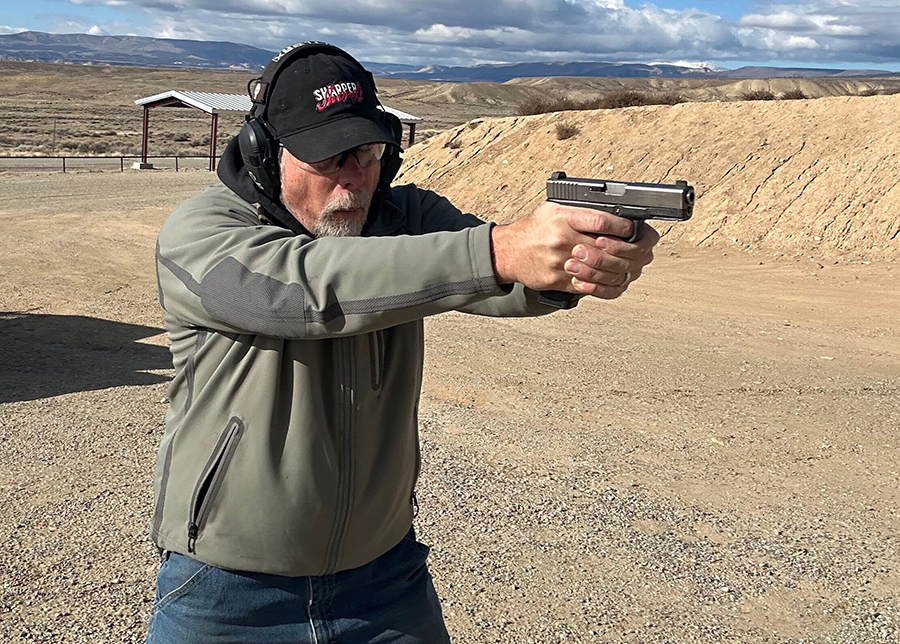
Don’t take my word for it. Massad Ayoob has written and spoken on this subject at length for better than four decades now. If your gun fires when it shouldn’t, as was the case in the story mentioned at the beginning of this article, and it’s in its factory configuration, the gun maker is liable. However, if you alter the gun by replacing the factory trigger yourself, you’ve released the manufacturer from liability and assumed it all for yourself.
If you don’t care a whit about the concept of liability, recklessness, and negligence, that’s fine. Live your life like you want to live it. Regardless, you should be aware of the potential consequences of your actions.
Parting Shots
If you’re really hung up about the feel of the trigger on your PFSF pistol out of the box, there are certain brands that feel better than others. The current crop of Canik pistols have triggers that can easily be described as exceptionally good.
Regardless of manufacturer, we should consider our goals. Are you purchasing the pistol in order to train, practice, become proficient and potentially defend your life? Or are you buying it so that you can show it off in pictures on Instagram or in Youtube videos? The choice is yours.
Before you spend money on an aftermarket trigger, you might want to try the 500 round trigger job instead.
Paul G. Markel is a combat decorated United States Marine veteran. He is also the founder of Student the Gun University and has been teaching Small Arms & Tactics to military personnel, police officers, and citizens for over three decades.