

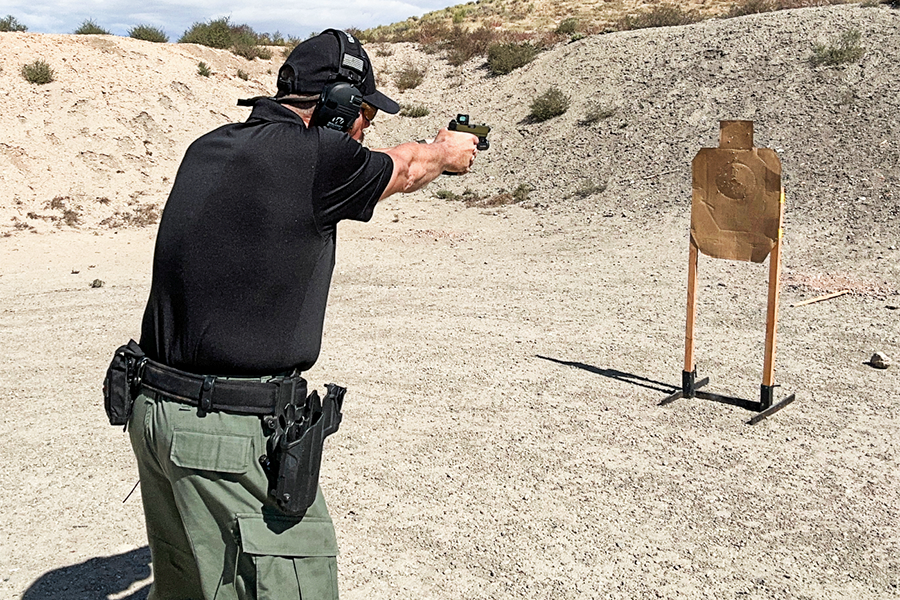
You read the title and some of you thought this was going to be an article about dry-fire. Nope. The employment of a firearm is a physical skill. However, many learned Small Arms and Tactics instructors have opined that learning to shoot, particularly a handgun, is 10 percent physical and 90 percent mental.
In order to strike your target with projectiles from your handgun you must accomplish two tasks: 1) Index the muzzle directly over your target 2) Press the trigger and cause the gun to fire without moving the muzzle off of the target. There, that was easy. You can close this article and go look at TikTok now. Well, maybe not so fast.
Skill Development: Mental and Physical
All physical skill development is a combination of both physical and mental effort. If you are fortunate and grew up with a dad who taught you how to throw and catch a baseball, hit a ball with a bat, shoot a basketball into a hoop, etc. your dad likely gave you pointers or little pieces of advice. “Look the ball into your glove.” was one cue that my dad gave me when he taught me to catch a baseball. In the shooting world, one of the favorite mantras for pistol coaches is “Front sight / Trigger Press”. Easy right, yes and no.
Many years ago, when I was teaching military personnel full-time, I was working with a young trooper who was struggling with the M9 Beretta 9mm pistol. We, the instructor cadre, used the mantra, “front sight, trigger press” with our students and while I was coaching him, I reminded him, “Remember, focus on the front sight, then press the trigger smoothly and directly to the rear.” I was watching him and every time he fired the pistol, right at the moment of ignition, he would dip the muzzle and his shots would go low. Ah, he was afraid of the recoil and he was flinching, you just said.
Recoil flinch is what I thought, but I started watching his face as the shot broke and there were no signs of what you might call the “flinch face”. Finally, I asked him, “Do you see a clear front sight?” “Yes,” he replied. “Is it still clear in your vision when the gun fires?” The young man paused and looked at me with the kind of expression that told me the wheels were turning in his head. “Um, I’m not sure, maybe.” was his eventual reply.
Folks, what I was able to determine from working with this 19 year old young man was that he was indeed looking at the front sight right up to the moment when he started pressing the trigger and then he shifted his gaze to the target. What he had not put together was that he needed to have clear front sight focus AND a smooth trigger press at the same time. As an instructor I learned a valuable lesson that day. You cannot just assume that everyone understands that the “front sight/trigger press” mantra means to do them both simultaneously. From that day forward, I started emphasizing to students that you needed to do both at the same time.
Going back to the opening of this piece, you only need to accomplish two tasks to hit the target with your bullets, getting your brain and body to work in sync with each other to accomplish those tasks can often be much more difficult than it might seem on the face of it. Afterall, we all have that friend, co-worker, cousin, etc. who has said to us, “I don’t need training with a gun. How hard can it be? You just point it and pull the trigger.”
Coordination
“Coordination” is a word that most kids are familiar with, because it is either used in a positive, complimentary fashion or it is paired with “lacks” or “needs to work on his”. Learning to ride a bicycle is likely one of the first big physical coordination tasks for kids. There is a lot going on; steering, pedaling, balancing, braking, etc. How many times has a kid started riding and they seem to be doing well then they freeze up, panic, and crash into something. Their brains and bodies are still learning to work in concert, the neuromuscular pathways are building, but have not been completed.
Coordination refers to the ability to use different parts of the body together smoothly and efficiently. In animals, which you are, we understand this as the ability of the body to carry out the commands or desires of the brain.
As a member of a corps of Small Arms & Tactics Instructors, we frequently have students arrive who honestly and accurately fit the description of motor-morons. These folks struggle to get their hands to do what their brain is asking of them. We were all motor-morons at one time. It’s just that some of us grew out of it and were assisted by parents and coaches that showed us the path toward coordination.
No, not everyone has the same innate abilities. Children of athletic parents often have it passed down in their genes. There’s a reason why Olympic athletes breed with other Olympic athletes. Don’t believe me? Look at race horses. Nonetheless, barring serious physical infirmity, you can improve your physical coordination and dramatically increase the efficient communication process between your brain and body.
3 Ways to Improve Your Coordination
It was during a detailed examination of the importance of practicing with your “off” “non-dominant” or “support” hand, that I read up on research linking physical coordination to improved brain function and the ability to problem-solve as well as for the brain to process information rapidly and properly.
Brothers and sisters, when we consider a self-defense scenario or a mortal combat situation, what is that other than Ballistic Problem Solving? Look at Special Operations Forces; Seals, SF, MarSoc, Delta, etc. those guys absolutely must become masters of rapid problem solving and information processing. They don’t get that way by sitting in college classroom writing papers, they get that way by physically challenging themselves in increasingly difficult scenarios and tasks.
Calm down, I’m not saying you need to become a Seal or Green Beret to successfully learn to shoot or survive a gunfight. However, just as muscles atrophy when you don’t use them, your coordination will diminish if you stop challenging yourself.
My task was to think of three ways that any person can work on improving their coordination. While you might have some in mind already, here is what I came up with.
Musical Instruments
For centuries, man has understood the benefits of teaching our youth to learn to play an instrument. Then, some time in the last generation, we got away from that and decided that we were smarter than our ancestors. Learning to play the recorder in elementary school was not about trying to turn kids into musicians, it was about helping them to build up their neuromuscular pathways and improve brain function and coordination.
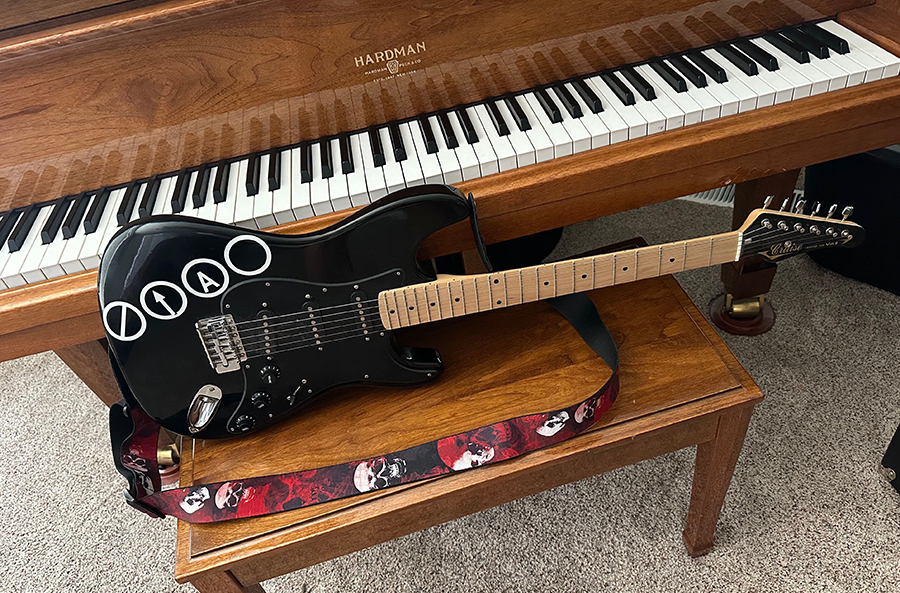
I would venture a guess that most of my readers will never make a living playing an instrument, but you know what? That doesn’t matter. Playing piano or guitar or drums, the instrument is not as important as the process, unlocks parts of your brain that often become dormant, particularly as we age and get set in our routines. One of the greatest things about learning to play an instrument is that you can do it your entire life. Black Sabbath, all the original members in the late 70s, just proved that fact.
Basketball
Sure there are a number of sports that can help you to improve your coordination. You can go out with someone and toss a football or grab a couple of gloves and play catch, but I wanted something that I could do anytime, without a partner. A couple years ago we moved to a place where the previous owners had left behind one of those portable basketball hoops. The backboard had come off, but I repaired it. I bought a new net and a basketball for $10.
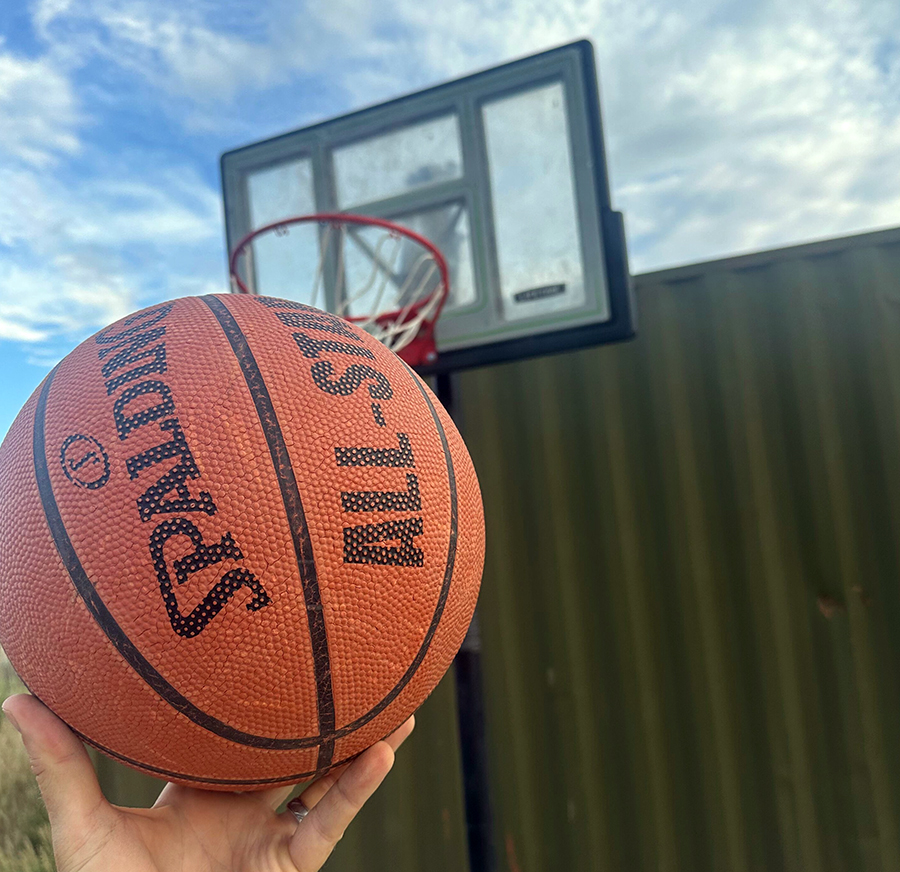
The first day out I will admit to being quite rusty. I don’t think I had dribbled a ball or shot at the hoop in over a decade, likely much longer. I’m not going to start in the NBA, though I probably could be an MVP in the WNBA if I would only “identify” as Paula. But, I kid. Don’t discount the coordination practice that comes with dribbling a ball right hand to left and back again. When shots start getting easy, move farther away from the hoop.
Skating
God has blessed me with grandchildren. Now that one of them is 5 (going on 13), my wife and I decided it would be fun to take her to the rollerskating rink that recently opened up in our town. “Are you going to skate?” my spouse inquired. Despite the fact that I had not had rollerskates on my feet since I graduated from high school, I answered in the affirmative.
When the day came I rented skates and made myself get out there. It took some effort, but I stayed upright. My granddaughter took to it like a fish to water and shook off the few slips and spills.
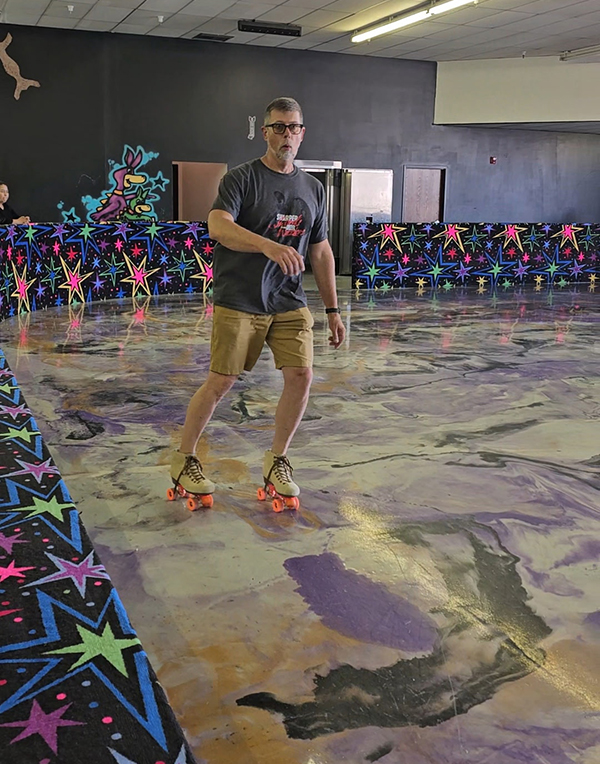
On our second outing, my little girl decided on her own that she no longer needed the PVC skating trainer and I was able to skate around the rink holding her hand. I took note of the other parents and grandparents who were sitting on benches watching their kids and grandkids. I was the only grandpa out there and that in itself was a blessing. As time passed I felt myself regaining my coordination. I even got a bit froggy and overshot my skills a couple time, but I lift heavy things and the fall did not injure my body, just a little bit of pride.
Parting Thoughts
Of course, all of the aforementioned physical skill and coordination exercises will force you to put aside your ego and that natural tendency to not engage because you might not look cool. When you force yourself to do something new; learning to play guitar, playing a sport, etc. in addition to the aforementioned benefits, you also strengthen the Anterior Mid-cingulate Cortex (aMCC) in your brain that is the part that governs will power and the will to live.
Do I need to tell you that those who have a strong aMCC, strong will power, survive self-defense scenarios and lethal attacks better than those who do not? Once more we come to the decision making process. You can decide to fall into a routine and slowly decay or you can put in the effort to continue to live while you are alive.
Paul G. Markel is a combat decorated United States Marine veteran. He is also the founder of Student the Gun University and has been teaching Small Arms & Tactics to military personnel, police officers, and citizens for over three decades.
You know what I absolutely HATE about roller skating? It is inherently unstable (the distance between skate wheels is substantially less than the length of your foot) and the floor brings you to an instant stop when you fall. So, not only does that rock hard floor tend to injure you due to its hardness, it also tends to injure you because it instantly stops your forward momentum. That is why I stick to ice skating. The blades on my ice skates are longer than my feet and the ice, while just as hard as the floor in a roller rink, is slippery which means that you slide when you do fall. Sure, landing on a hard surface hurts–and it hurts a lot less when a good bit of the momentum of your fall translates to sliding forward rather than instantly stopping on a roller rink floor.
Roller skating is dangerous for several reasons that cause your comment to vanish when you try to elaborate on them. Stick to ice skating instead to improve your coordination.