
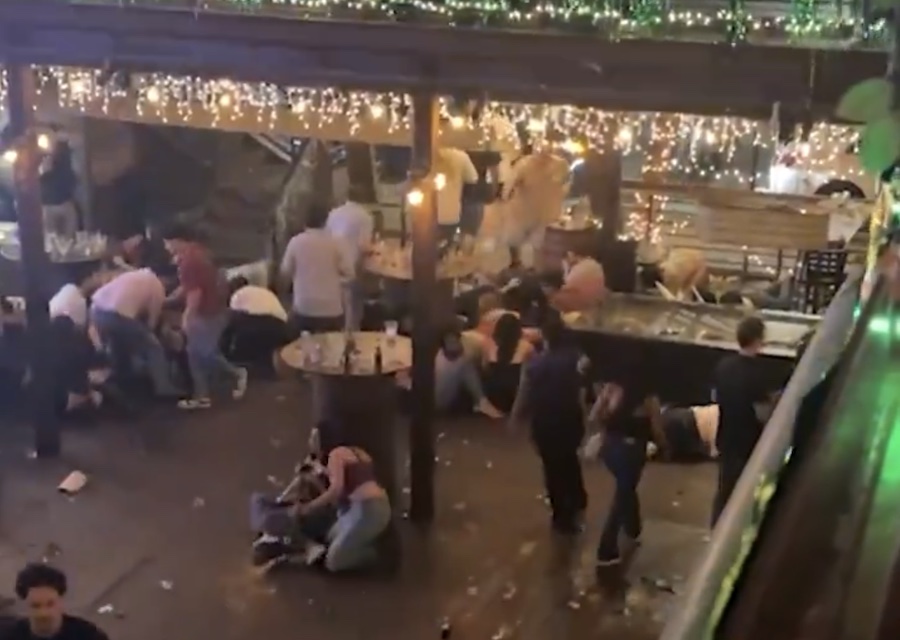
To paraphrase the late Colonel Jeff Cooper, “Owning a gun no more makes you an armed citizen than owning a guitar makes you a musician.” Not surprisingly, since the jihad attack in Austin, Texas last week and the FBI miraculously finding the courage to declare, potentially, said incident an act of terrorism, we have received a lot of phone calls and messages regarding armed self-defense.
Of the inquiries we’ve received, a common thread has been, “What is a good, entry level gun for personal defense?” Other folks want to talk about what they should be doing differently, if anything. We could address these questions one at a time or we could pen yet another article on the subject for the benefit of all. Let’s do the latter.
Buying Guns
The United States of America is unique amongst all the other nations on earth in that when people feel scared or anxious, they can leave their home, drive to a store and purchase a firearm as a way to soothe that anxious feeling. (Well, that is the case unless you are a tax slave living in a slave state run by tyrants)
Some of you just thumped your chest and said; Damn right, it’s my constitutional right to buy a gun whenever I want to! You’re absolutely correct in that assertion. However, going back to the opening statement, owning a gun does not make you a de facto “armed citizen.” More on that in a moment.
For those who have yet to commit to purchasing a dedicated fighting pistol, not a sporting gun or a .22, the good news is that you are living in a buyer’s market. Competition is high and prices are low. For instance, Canik USA has what they are calling their “One Series” which includes the METE SF and SFT models. The One Series guns are price-point handguns that come with a single magazine, tool kit, gun lock and owner’s manual. Both the SF and SFT are MSRP below $350. I have been testing, reviewing and carrying Canik pistols since 2014 and have complete confidence in them from a reliability and accuracy standpoint.
Regardless of your gunmaker preference, we recommend purchasing some type of polymer-framed, striker-fired handgun (not a SIG P320) chambered in 9x19mm. There are several reasons for this. First, this style is the most prevalent for police duty use being infinitely reliable. Secondly, the manual of arms (operation) is uncomplicated, thus facilitating a fast learning curve. Thirdly, 9x19mm ammunition in both training and duty variety is the most prevalent centerfire handgun cartridge in the United States.
Becoming an Armed Citizen
Purchasing the hardware is only the beginning, not the end. Sadly, far too many well-meaning folks buy a gun for “personal protection” and feel that they’ve checked the box. Consider the following.
What is the best way to teach a teenager to drive; purchase them a car, give them the key and just let them figure it out on their own OR provide them with Driver’s Education and then teach/coach them from the passenger seat until they are confident and capable? I would be shocked if you chose the first way.
As silly as it sounds, Americans who would never just hand over the car keys to an untrained teenager and tell them to figure it out will do exactly that when it comes to firearms. They will buy a gun and with no training or experience decide that they can just teach themselves. It’s not that professional training is unavailable, Student of the Gun University has distance learning/home study that anyone with a computer or phone can access, from anywhere, prior to residency training.
With citizenship comes responsibility. Being an armed citizen comes with responsibility as well. Firearms are lethal force tools and their use by untrained, uneducated persons can lead to deadly tragedy. Yes, actors on TV and in the movies make it look simple. Their behavior and gun handling is also poor to terrible most of the time.

An armed citizen needs not only to be proficient with the use of the tool, they must have a solid understanding of what society expects and the rules we have collectively agreed upon. You cannot threaten a person with a gun just because you are nervous or anxious or even scared, unless you can articulate that the person threatening you had the Ability, Opportunity and expressed Intent to do deadly force harm to you. We call that the Big 3 Checklist. If any of the three components are missing and you put a bullet into someone, your position changes from victim to perpetrator.
How do you learn about the Big 3 Checklist and understand what is expected of you? You have to deliberately seek out that training and education. The guy who sold you the gun at the store is not responsible for educating you.
The Four Pillars of Fighting
The Four Pillars of Fighting are Mindset, Tactics, Skill and Gear in order of most important to least. Mindset is the most important aspect as it is the critical factor in determining whether or not you do the right thing. Mindset is what makes you put on your gun before leaving the house, even though you are just running to the store quickly. Mindset is what makes you attend training even though it might not be convenient or easy.
Regarding the terrorist attack at the bar in Austin, Texas, it has been opined by some that concealed carry would not have saved any lives because in Texas they have the “51%” rule. That is, if a business does 51% or more of their business from alcohol sales, you’re forbidden to carry a firearm, even if you aren’t drinking.
Can someone explain to me like I’m five years old how the 51% rule prevented the islamic terrorist from murdering three and critically wounding many more. Around 98% of rampage killings and terrorist attacks take place in areas that are designated as “gun free zones” by either policy or law.
Part of the mindset of the armed citizen is coming to the realization that killers and terrorists don’t obey gun laws and that anyone, whether private business or political hack, who attempts to disarm you does not care about you as a person. Moreover, tyrant politicians will happily dance in your freshly spilled blood to push their citizen disarmament agenda.
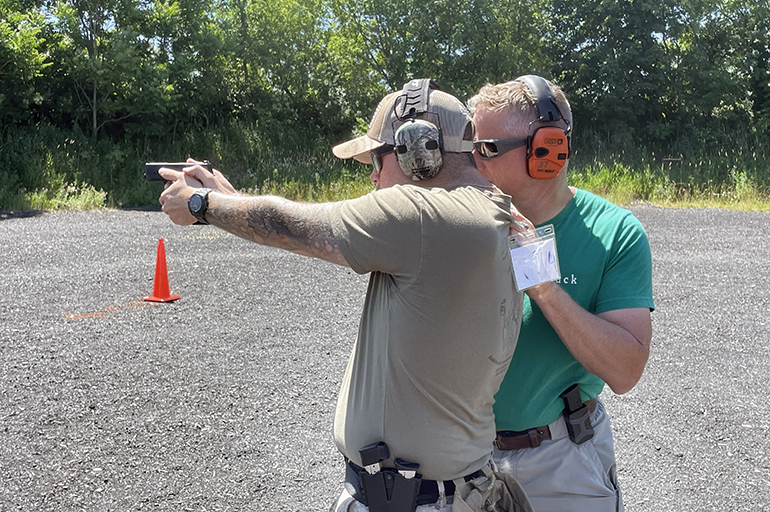
Being an armed citizen means that sometimes you will have to make the inconvenient decision to refrain from going to places that other folks want to go for fun or pleasure but require you to be disarmed. Friends or relatives might say to you, “What’s the big deal? Just leave your gun at home.” Or perhaps, “Just lock your gun in the trunk. What do you think is going to happen?”
Keep this in mind. No one who encourages you to disarm yourself is your friend. A true friend would not want you to be disarmed and helpless in the face of a terrorist monster like the one we just witnessed in Austin, Texas.
The good news is that if you are a citizen of the United States, it is not too late for you to take your place amongst the armed citizens of the nation. The choice, however, is up to you.
Paul G. Markel is a combat decorated United States Marine veteran. He is also the founder of Student the Gun University and has been teaching Small Arms & Tactics to military personnel, police officers, and citizens for over three decades.
I always cringe when people tell us that we need substantial training in order to use a firearm responsibly and effectively for self-defense. While that is true in limited scenarios, it is false in the majority of scenarios.
The most basic application of self-defense–and the most common application–involves deploying a handgun to stop a violent attacker. There are countless examples of people with no substantial training who defend themselves successfully with a handgun. How is that possible? No substantial training is necessary when one or two people attack you at close distance and you use a handgun to defend yourself: if you can point your finger (with reasonable accuracy) at someone a few feet away you can point a handgun and land shots on target (with reasonable accuracy) on an attacker a few feet away. It really is that simple. If you can point and click a computer mouse effectively, you can point and click (pull the trigger) on a handgun effectively against attackers a few feet away.
Caveat: terrorists who expect to die in the course of their attacks will typically be substantially harder to stop than general opportunistic violent attackers. Regardless, a person who has no substantial training and nothing more than an average handgun still has much greater chances of surviving the terrorist attack–or at least imparting fatal wounds to the terrorist which will drastically limit the terrorist’s body count.
Three full paragraphs to miss the point. Congratulations.
Pablo, what point did he miss?
Don’t risk your life defending anyone in a blue zone.
Even if you are successful they’ll drag your ass through legal and financial hell.
In fact, get out of blue zones while you can. They’re filled with mental patients hellbent on civilizational suicide.
If you are going to call yourself a “sheepdog”.
Then I hope you budget the $$$ for the training. The Lucky Gunner ammo YouTube channel. Has the old FBI standards from the 1950s.
Required hits at “50 to 60 yards”. With the government issued 6 shot revolver.
Are you training for that???
How about a 25 yard shot?
I’m very fortunate. There are several outdoor and indoor ranges near me with 50 yard distances. And a public range at 175 yards.