

“First of all, there is a difference between an accident and negligence.” So said John Farnam to the class of which I was a member in the summer of 1986. Mr. Farnam went on to elaborate, “At least ninety-five percent of all NDs take place when the person is fiddling with the gun. The lesson is simple, don’t fiddle with your gun.”
That lesson was delivered to we students to drive home the understanding that we were operating under “hot range” rules. All guns were expected to be loaded at all times. It was incumbent upon us to treat our guns as if they were loaded, which translated to only drawing them and handling them unless the situation absolutely required such; as in no fiddling.
Secret Service Agent ND
In spite of the fact that not one person who portrays themselves as a journalist in the United States today has a firm grasp of the English language and its usage, the Secret Service agent assigned to Jill Biden did not accidentally shoot himself. He negligently shot himself.
Yes, Virginia, words mean things. An accident is a situation that could not have been anticipated and therefore could not have been reasonably avoided. Negligence or a negligent incident results due to a lack of due care or a failure to exercise due care or disregard for a known risk.
Let’s consider how it is that a United States Secret Service agent assigned to a former first lady managed to put a round through his butt.
Like most of you, when the story was first reported and very few details were given, I knew there was more to it than simply “a Secret Service agent was handling his service weapon when it accidentally fired.” Immediate searches ruled out a self-starting SIG pistol. Unless the SS agent was breaking protocol, he was carrying a GLOCK handgun.
When news of the “accidental shooting” first broke, government spokespeople were quick to assure the public that the former first lady wasn’t present nor ever in any danger. However, few other details were provided except to say that the agent in question sustained a non-life-threatening wound and was in good condition.
Weaponlight or Flashlight on a Gun?
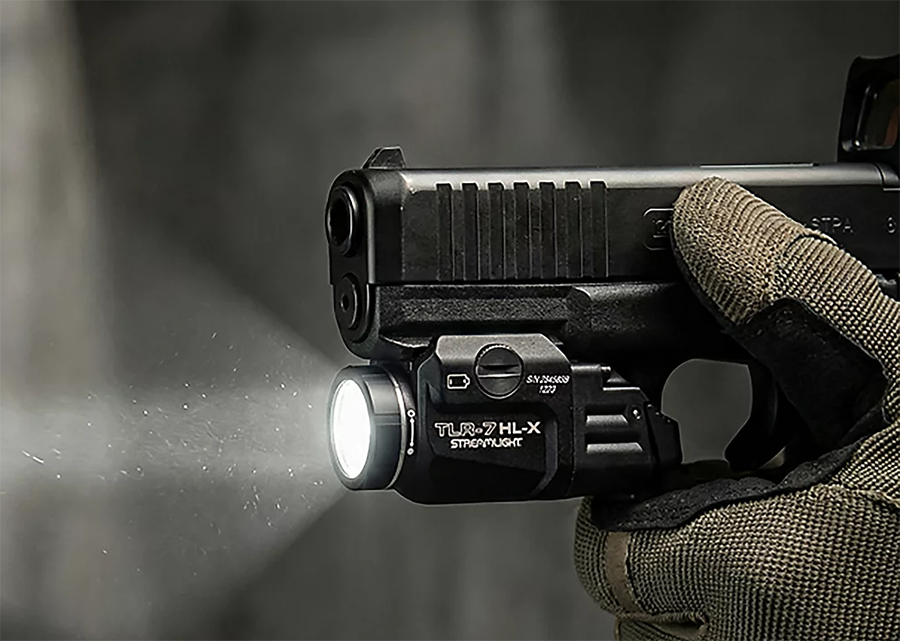
Thanks to some digging of Washington, DC reporter Susan Crabtree, details emerged that the agent in question had forgotten his mobile phone in the Secret Service SUV, ran back to retrieve it and in the process pulled out his Glock pistol so he could use the weaponlight mounted on it. When the agent hurriedly attempted to re-holster the pistol, a loud noise occurred and a 9mm bullet entered his butt.
UPDATE: Additional new details about the junior @SecretService agent who shot himself last Friday morning during a movement at the Philly airport with Jill Biden: The agent left his phone behind in the SUV while escorting Jill Biden into the airport. He rushed back to get his… https://t.co/AAxUwZkMcZ pic.twitter.com/OTkUTG8GLe
— Susan Crabtree (@susancrabtree) March 30, 2026
In typical bureaucratic fashion, a government spokesperson, when questioned about the circumstances surrounding the ND and as to whether or not the agent was using the weaponlight as a utility flashlight, didn’t deny it, but stated that they didn’t have that information. So, the government bureaucrats were playing the time-tested, “We can neither confirm nor deny” game. Marvelous.
What the spokesperson couldn’t or wouldn’t explain was why an on-duty Secret Service agent, away from his protectee and with no threat present, drew his service weapon, therefore requiring him to re-holster in a manner that led to him negligently shooting himself in the ass. That seems a bit fishy even to the casual observer.
Going back to the very beginning of this piece, as John Farnam warned against, the SS agent was fiddling with his loaded gun. If Crabtree’s report is to be believed, the agent was fiddling with a loaded service pistol because he wanted to use the weaponlight to search for his phone.
One Equals Two
Going back about fifteen years when I went through the Surefire Institute Low Light Instructors program, one important lesson was that we needed to impress upon our future students that having a weapon-mounted light DOES NOT relieve you from the obligation to carry a separate utility light. You either have a utility light on your person and a weapon-mounted light, or you have a utility light and no weaponlight. However, having just a weapon-mounted light is wrong.
Back during GWoT when weapon-mounted lights truly became popular, many chiefs of police and sheriffs were against them. Their primary objection was a fear that their patrolmen and deputies would be using their gun lights to check IDs during traffic stops. As a highly trained and experienced police officer at that time, I thought such fears were silly. Boy, was I wrong.
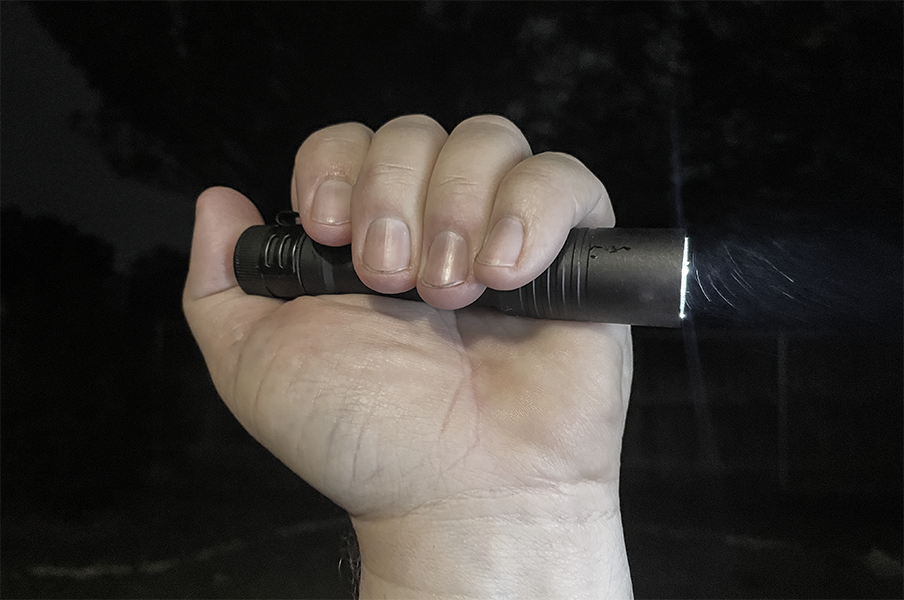
I was wrong because I assumed that police officers and sheriffs deputies would be put through a serious training program and would be professional enough to understand that a utility light was an absolute requirement, with or without a gun light on their duty pistol. It saddens me to see the modern state of policing where DEI policies and political correctness have obliterated the desire for strict martial training and tactical expertise.
But, Secret Service agents aren’t street cops, they are highly trained professionals.
We would have hoped that after the debacle on the part of the Secret Service that surrounded the failed assassination attempt of President Trump in 2024, the agency would have been purged of the incompetence and quality training and professionalism restored. Nonetheless, agencies and organizations are like massive ships. They can’t turn on a time and it takes a long time. Even if those at the top desired to right the ship that is the US Secret Service, years of slothful behavior and the poison of DEI policies can’t be altered quickly.
Am I trying to assert that a United States Secret Service agent using a weaponlight to search for a missing mobile phone is unprofessional or amateurish? Yes. yes I am.
In addition, does this incident reinforce Mr. Farnam’s assertion from forty years ago that 95% of negligent discharges happen when a person is fiddling with their gun? It definitely does
Takeaways
The lessons learned from this incident, while seemingly plain to see, are worth repeating. First, none of this would have happened if the agent in question had been taught to carry a utility light in addition to a gunlight. Ans that you weaponlight isn’t a tool for finding your phone. Secondly, it wouldn’t have happened if the no fiddling was taught and strictly enforced.
Regarding negligent discharges, the math is simple. The more you handle your gun in a non-tactical, “administrative” fashion, the higher the likelihood that the gun will fire when you didn’t intend it to. Go forward and live your life accordingly.
Paul G. Markel is a combat decorated United States Marine veteran. He is also the founder of Student the Gun University and has been teaching Small Arms & Tactics to military personnel, police officers, and citizens for over three decades.