
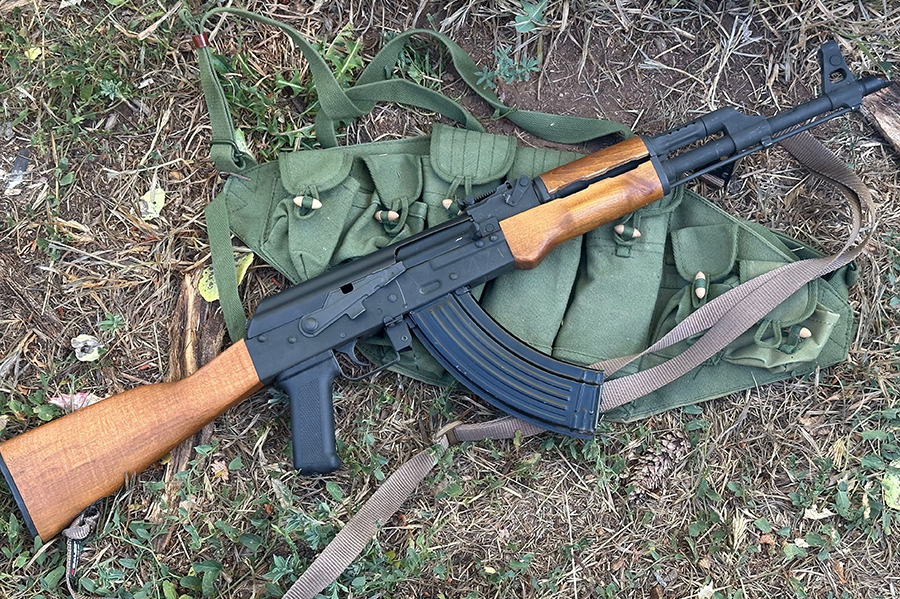
Continuing on with our series of Cold War Era guns, it is time to talk about the rifle that changed the world from behind the Iron Curtain. Yes, we will discuss the “Avtomat Kalashnivka Model 47.” Love it or hate it, this fighting rifle changed the way the Soviets (Russians) and the NATO forces viewed infantry weapons.
Post-WWII Lessons
We previously discussed the formation of NATO and the STANAG agreement that came about because of the lessons learned during World War II. Well, the Soviet Union learned some lessons, too. One big one was that they spent most of the war trying to catch up with demand for small arms by the Red Army.
Many of you may have heard or read about how during the massive drafts of men into the Red Army, they did not have enough rifles to go around. Not every soldier was initially issued a rifle. As crazy as that sounds, when I was a kid, my father worked with a man who had successfully emigrated to the United States before the Iron Curtain really clamped down.
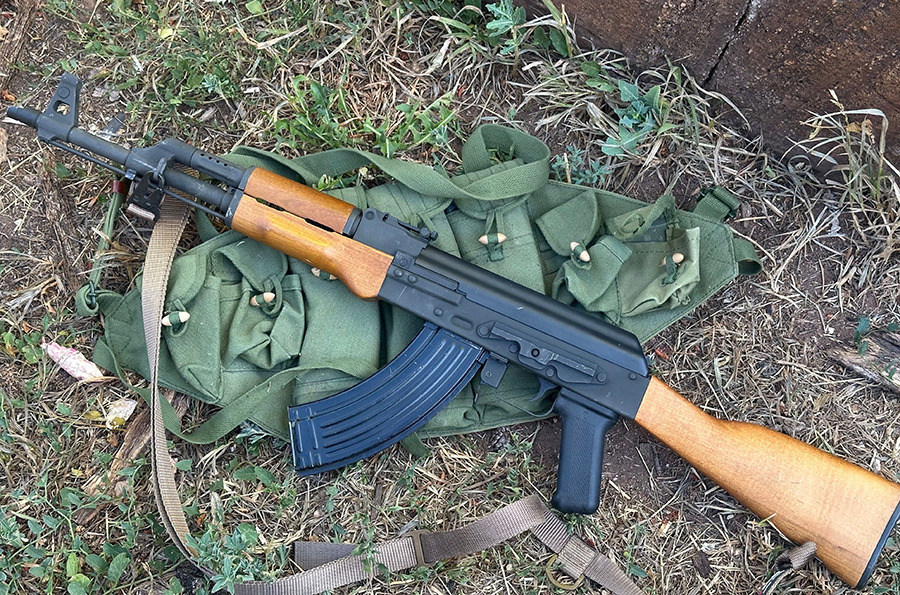
The gentleman in question related to my father how he had been drafted during WWII but wasn’t issued a rifle. He was given some 7.62x54R ammunition and told to pick up a rifle from a wounded or killed soldier when the opportunity presented itself.
During the post-WWII calm, the USSR set out to ensure that such a situation never happened again. As for what came first, the chicken or the egg, the M43 “intermediate rifle cartridge” that we all know as 7.62x39mm was developed first and designated for the Simonov rifle (SKS). The SKS was barely off the ground when Mikhail Kalashnikov and his team came up with the AK-47.
AK-47 / AKM
The story of how Kalashnikov, a WWII veteran, came up with the Avtomat Kalashnikova Model 47 design should be familiar to most readers. While Kalashnikov, so legend has it, vehemently denied taking notes from Hugo Schmeisser and his Sturmgewehr 44, there is no denying that there are similarities. The STG44 was truly the first modern “assault rifle” using a mid-sized cartridge, gas operated action and a detachable box magazine.
History has shown that the STG44 was fielded far too late in WWII to have any chance of altering the eventual outcome for the Third Reich. However, the Schmeisser design was indeed studied by all intelligent firearms manufacturers and viewed as the future for infantry rifles.
Kalashnikov and his team experimented with forged receivers and folded sheet metal receivers. While the forged receivers were viewed as stronger and of higher quality, they required machining and the amount of steel wasted during the process was rightfully viewed as wasteful…and, as history would show, unnecessary.
Keep in mind, the Soviet Union wanted millions of rifles and they had to find the most cost effective way to produce as many of them as possible. Remember, the lessons they learned from WWII. The original AK-47 was a success, but Kalashnikov made numerous improvements to the design and the new models became the AKM (Avtomat Kalashnikova Modernizirovanniy) or AK Modernized.
A stamped receiver was adopted which made the rifle lighter.
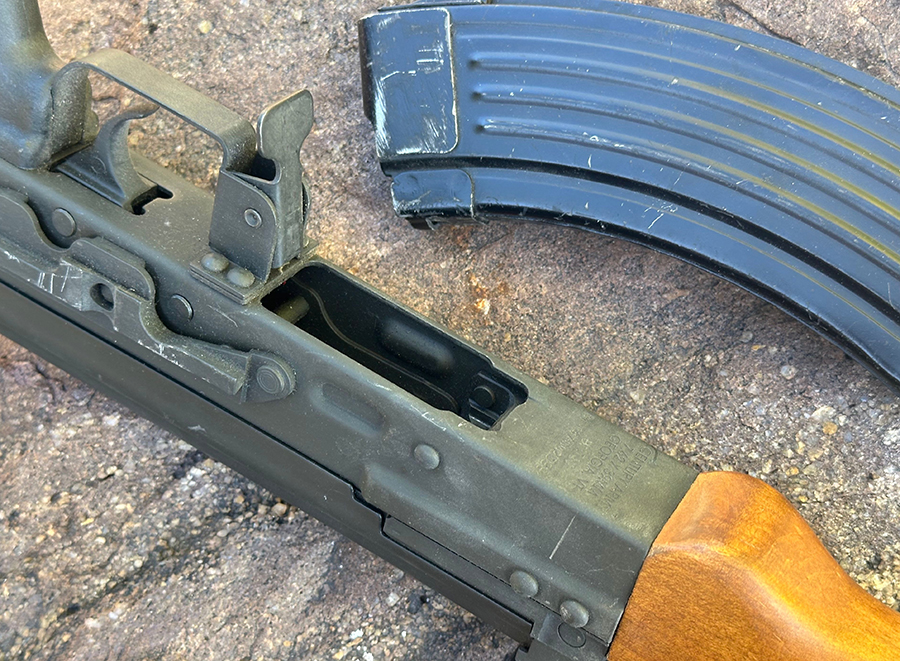
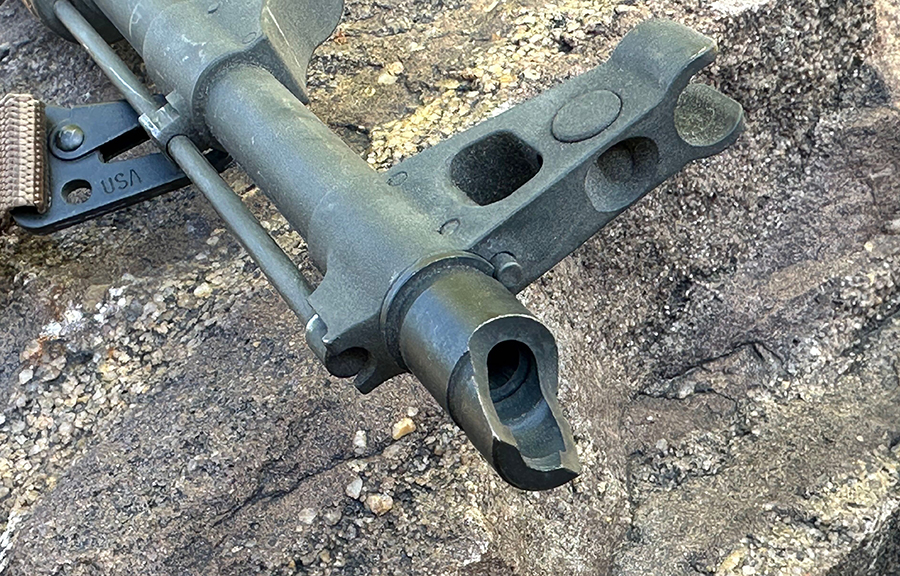
The ribs stamped into the curved 30-round magazines added strength. The slant muzzle brake was both inexpensive to produce and a solid design.
Cold War and Worldwide Proxy Wars
Of course, history has shown that the USSR wasn’t just thinking about having enough guns for Mother Russia, they needed to arm all of the Warsaw Pact countries and their allies. Soon, the license to build the AKM was given to numerous countries and they cranked out their own versions by the hundreds of thousands and then the millions. It has been reported that the USSR produced over 10 million AKM rifles with their allies, including communist China, pumping out a staggering 100 million units from 1947 until to today.
The NATO allied countries and their troops had to face foreign soldiers, rebels, and insurgents in Asia, Africa, the Middle East and even Central and South America who were armed with AKM rifles. During the early stages of the Cold War and the proxy wars, NATO troops were going into the field with 7.62x51mm NATO rifles that used 20-round magazines.
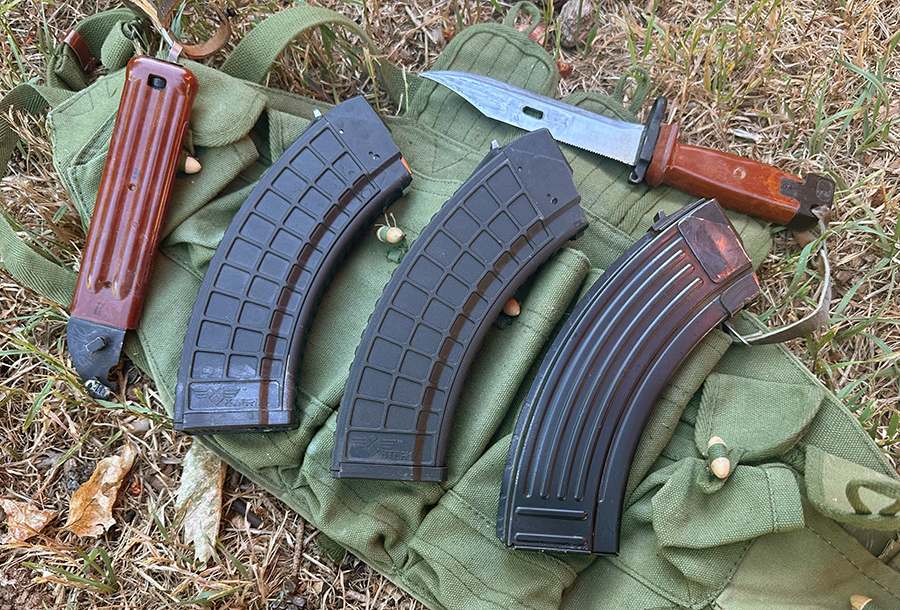
It didn’t take long before the NATO countries decided that they needed lighter rifles and lighter ammunition so that each soldier could be equipped with more rounds per pound of weight carried. One has to wonder if the AKM would have been built with a 20-round magazine, whether the AR-15 would have been viewed as such a necessity.
The various proxy wars of the Cold War era demonstrated that the AKM was indeed not just deadly, but extremely robust and reliable. Even illiterate peasants and indigenous rebels with little formal military training were able to employ them effectively.
In truth, the Rhodesian Light Infantry fought against communist insurgents and terrorists who were armed with SKS and AKM rifles for a full 15 years using the 20-round FN FAL (R1) rifles. The RLI held their own for quite a while despite the fact that NATO turned their backs on them and essentially betrayed them on the world stage.
Interestingly, US Army Special Forces during the GWoT, particularly in Afghanistan, adopted the AKM rifles and trained allied commando teams of indigenous Afghans to fight against Al-Qaeda and the Taliban with the “weapon of the enemy.”
The Modern World
While the AR-15 variant is truly the most popular rifle in the United States with an estimated 44 million units in the hands of American patriots, the AKM isn’t that far behind. While hard numbers are difficult to come by, the estimated number of AK rifles in the hands of American citizens is lowballed at 10 million.
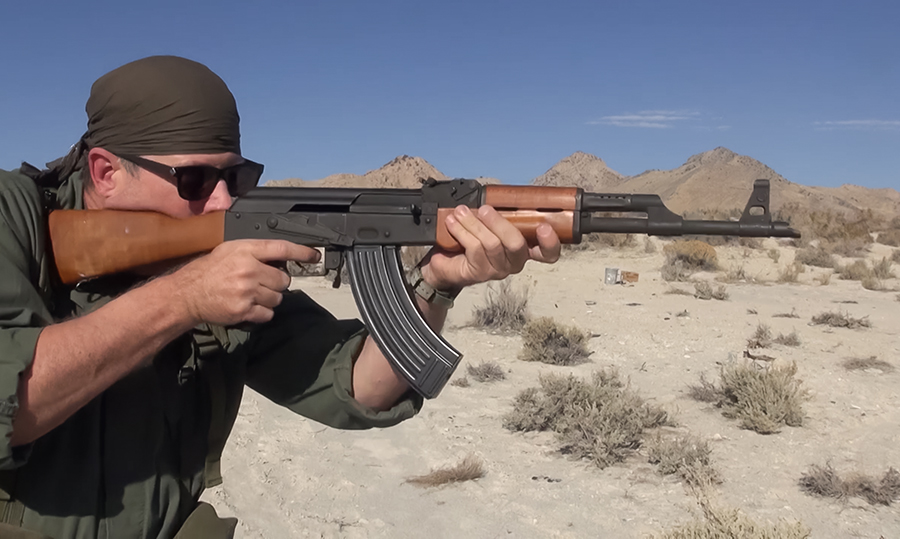
The old gun shop gossip that while “the AK might be tough, it’s not accurate” tend to be mere justification for not wanting to appreciate a truly genius design. Modern technology being what it is, there are now AK-style rifles that will indeed post 1 MOA groups. The OCCAM Defense ODS-1775 can do that using standard FMJ ball military ammo.
Modern technology has also seen the hardwood furniture and steel magazines replaced by high strength polymer versions. For example, during the last couple of months I have been running a couple of new XTech Tactical 30-round polymer mags in my AK with great success.
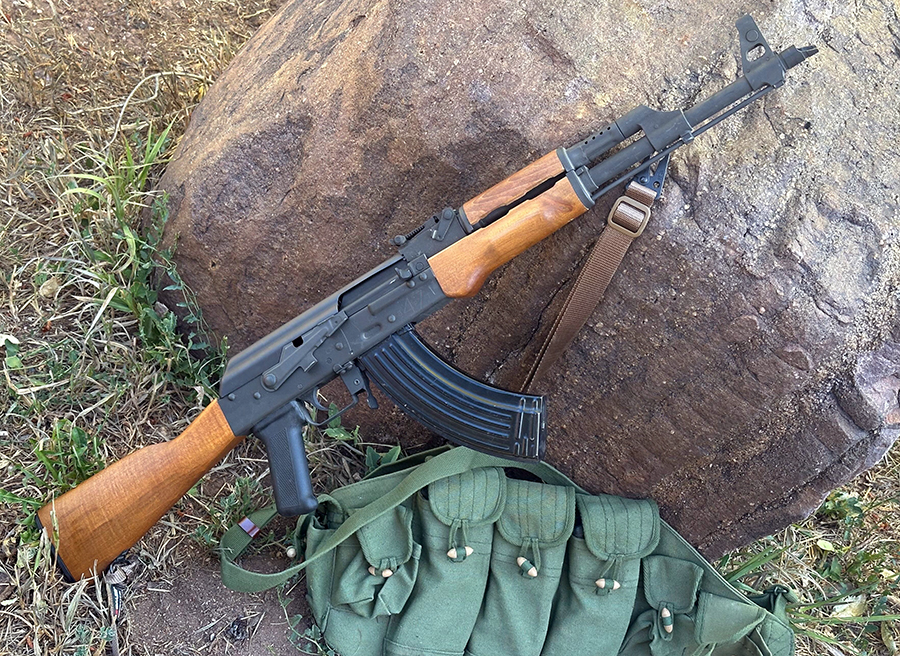
That brings us back to the undeniable truth that when it comes to the AK’s accuracy, that factor has as much to do with the hand that holds the rifle as it does the rifle itself. Love them or hate them, the AK-47 / AKM is a Cold War era gun that is here to stay.
Specifications
Caliber: 7.62x39mm
Capacity: 30 rounds (others)
Action: Gas piston
Barrel Length 16 inches
Overall Length 34 inches
Furniture: Hardwood or Polymer
Weight: 7.3 lbs
Paul G. Markel is a combat decorated United States Marine veteran. He is also the founder of Student the Gun University and has been teaching Small Arms & Tactics to military personnel, police officers, and citizens for over three decades.
Now I wanna get my AK’s out and run off to the range. Haven’t had them out in a while.
I might do that tomorrow. I was going to the range anyway to break in my FN Five-seveN, so i’ll take the AK’s along too.
stamped, chrome lined. the fegyver es gepgyar manufactured sa85 was so versatile that they named the character macgyver after it.