
In our ongoing series on optics terminology and design, we’ve discussed the differences between MILs and MOA, the distinctions between Christmas Tree and BDC reticles, and the common misnomers and misunderstandings about objective bells. Today, we’ll explore one of the more critical and often misunderstood aspects of optic design—exit pupil.
Exit Pupil
The exit pupil and its relationship to objective bell size need to be explored. The exit pupil equals the objective bell diameter divided by its magnification. So, with a 3-9×40 scope at its highest power, the exit pupil size is 4.44mm. The obvious questions are, what does that mean and why does it matter?
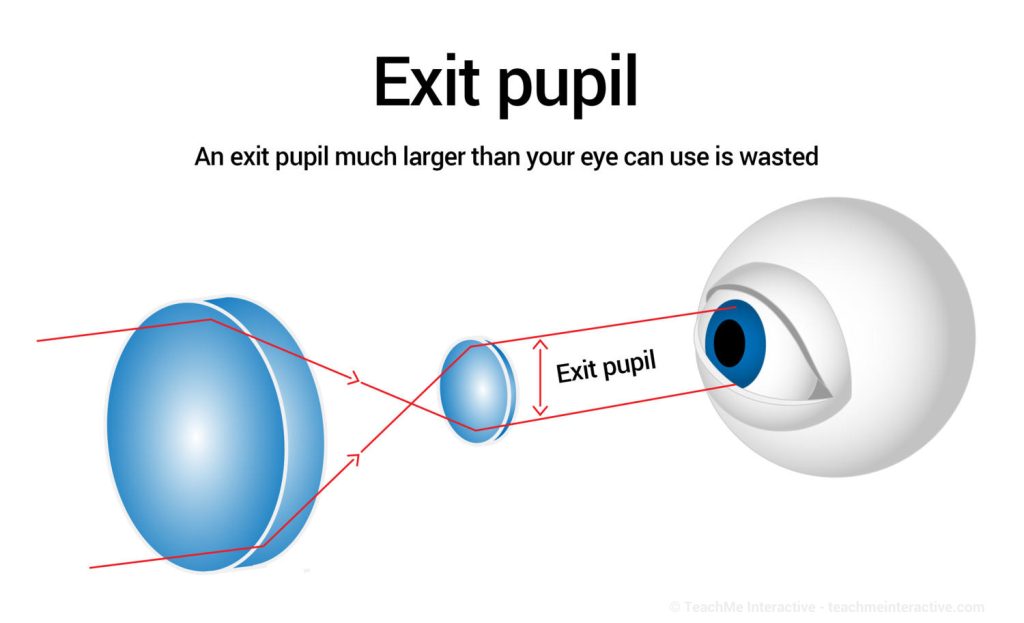
The exit pupil of a scope directly impacts the perceived brightness of an image seen by the human eye. It’s a relationship between the size of a person’s pupil and the scope.
A eye’s pupil in low light can grow from about 3mm to around 7mm. However, in the daytime, when looking through a scope to find targets hidden in shadowy vegetation, the human eye’s pupil narrows to an average of 2.5mm. The better a scope can match the pupil of the eye, the brighter and more defined an image appears.
Therefore, the larger exit pupil created by a larger objective lens won’t always create a brighter image because a human’s pupil can’t grow to match it (on a nice sunny day, for example). In this instance, the aberration caused by an objective bell may be a hindrance unless the scope has the correct lenses and coatings to address the problem.
The downside here is cost. Having a large scope with high magnification and a large objective bell that has exceptional optical clarity is expensive (generally around $2,000 or more). There’s also the matter of weight.
When it Matters
The exit pupil is most important at twilight and when shooting fast. In low light conditions, the goal is for the exit pupil to match the size of the eye’s pupil (remember, the eye’s pupil enlarges as daylight — brightness — decreases). This allows the eye to utilize all the light the scope transmits.
However, having a large objective lens isn’t always enough to offset the negatives. A scope with a moderate magnification range and objective size, combined with dialing down the magnification, can increase the exit pupil size while maintaining good optical quality and brightness. When shooting fast, like in 3-gun competitions, reducing magnification helps your eye transition smoothly from target to target. A larger exit pupil gives the human eye more leeway to focus as the shooter moves. Lower magnification means a larger exit pupil and that makes acquiring a target when shooting quicker and easier.
All that to say, generally speaking, you need to match the exit pupil to your application. Whether it’s for hunting, precision rifle, casual plinking, or tactical endeavors, aligning the optic’s exit pupil, reticle design, and magnification range all matter. There really isn’t such a thing as a “Jack-of-all-trades” optic.
Zooming Out
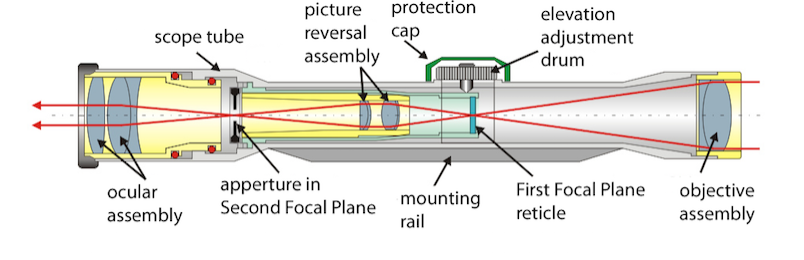
Optics can seem overwhelmingly technical at times, but understanding the fundamentals—measurement systems, reticle design, objective sizing, aberration, focal planes, and now exit pupil—gives you the power to make smarter, more confident decisions. Each of these elements affects how well a scope performs for your specific needs, and no single feature exists in a vacuum. Exit pupil, in particular, sits at the intersection of magnification, objective lens diameter, and human physiology, influencing everything from low-light performance to how quickly you can acquire a target on the move.
The more you understand how a scope works, the easier it is to choose one that matches your needs whether that’s hunting in the last ten minutes of legal light, ringing steel at 1,000 yards, stacking rounds at the range, or competing under pressure. Just like there’s no single “do-all” gun, there’s no single do-all optic. But there are good choices out there that are right for the job(s) you want to get done.