

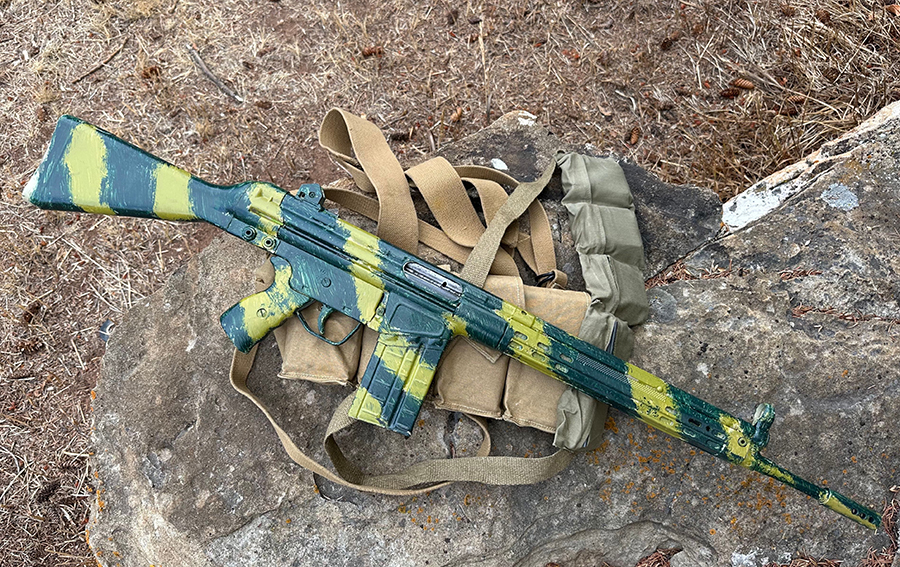
Progressing further into our examination of the Guns of the Cold War, a must-have review would be the Heckler & Koch G3, sometimes referred to as the HK 91. When it comes to 7.62 NATO battle rifles, there has been much debate as to which one was the “best” or the “most important.” I will let you decide on that.
When I sat down to pen this review, it occurred to me that my friend, Nicholas Orr, had done a tremendous job explaining the significance of the G3 in his book, “A Pipe Hitters Guide to Small Arms & Weapons”. Rather than paraphrase what Nick wrote, I reached out to him and asked for permission to reprint his section on the G3 in this article. He graciously consented.
HK G3 History
One can’t consider the history of battle rifles without discussing the Heckler & Koch G3, also known in some circles as the HK91 (semi-automatic). The West Germans very briefly accepted the Gewehr 1 version of the FN FAL. However, it was rapidly replaced by their own rifle; the G3.
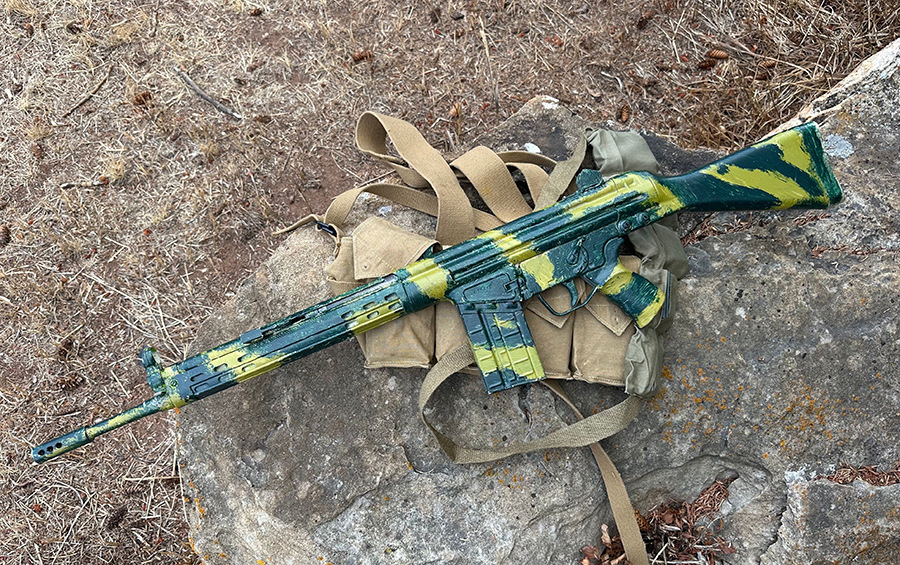
To understand the history of the G3, we need to go back to World War II and the relationship between Spain and Germany. Do you remember when Adolf Hilter invaded Spain? No? That’s because it didn’t happen.
Hitler, a WWI veteran, held some hardcore animosity toward England, France, Belgium and the other neighbors who fought against Germany during the Great War. Spain, on the other hand, declared neutrality during WWI and wasn’t antagonistic toward Germany. When WWII began, Spain, under Francisco Franco, once more declared neutrality.
Despite publicly declaring that they wouldn’t take a side in the fight between the Axis and Allies, it’s no secret that Franco was very friendly toward Hitler. Photographs of Spanish army troops during WWII bear a striking resemblance to Wehrmacht troops of the same era. The Blue Division of the Wehrmacht consisted of Spanish volunteers and they saw horrible combat on the Russian/Eastern Front. Needless to say, despite technical neutrality, Spain maintained a cozy relationship with Germany.
In 1948, CETME (Centro de Estudios Técnicos de Materiales Especiales), the official Spanish arms manufacturer, began work on the CETME rifle. The project was led by Ludwig Vorgrimler, a German engineer. What they produced was a roller-delayed, blowback action battle rifle that ended up being chambered in 7.62x51mm NATO. (The original caliber was 7.92x41mm)
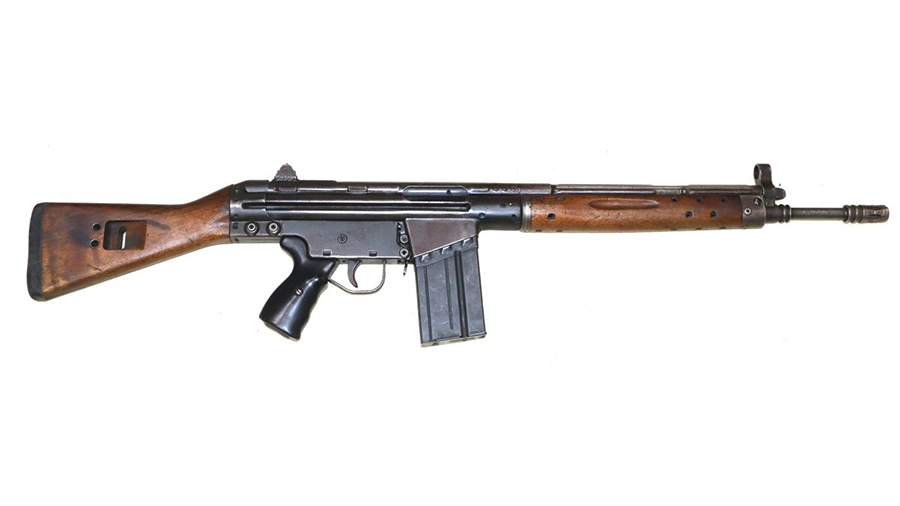
In the late 1950’s, the Bundeswehr (the West German army) conducted trials with the CETME rifles to determine whether or not to adopt them. They approved the roller-delayed rifles with the caveat that some slight improvements be made. West Germany, naturally, wanted their Army’s battle rifles to be manufactured at home. A licensing agreement was worked out to produce an improved version of the CETME rifle and the project was moved to Rheinmetall AG (an automotive and arms maker) and Heckler & Koch. H&K, having existing ties with CETME in Spain, eventually became the primary manufacturer of the new G3 battle rifle.
Among the improvements from the CETME to the G3, HK altered the manual safety lever. The CETME lever was up for “fire” and down for “safe”. The G3 was changed to up for “safe” and down to “fire.” That made for better ergonomics for the shooter.
HK also put their own sight design on the new guns using the now famous “drum” adjustable rear sight. Also, the CETME rifles used steel magazines and most of the originals had wooden furniture. HK realized that aluminum magazines were plenty strong enough, but weighed half that of steel versions. (NB: There are some steel G3 magazines out there, but the aluminum version was more prevalent.) Also, modern G3 rifles used high-strength polymer furniture that was lighter, just as strong, and not subject to swelling and cracking like hardwood did in harsh environments.
With the Cold War under way and the constant fear of a Soviet invasion through East Germany, West Germany turned on the spigot and new G3 rifles flowed out of HK as quickly as they could crank them out. As with all state-sponsored fighting rifles, West Germany and HK started marketing the guns to its allies and friends. G3 rifles soon found their way to North, South, and Central America, several countries in Europe, the Middle East and, of course, to Africa.
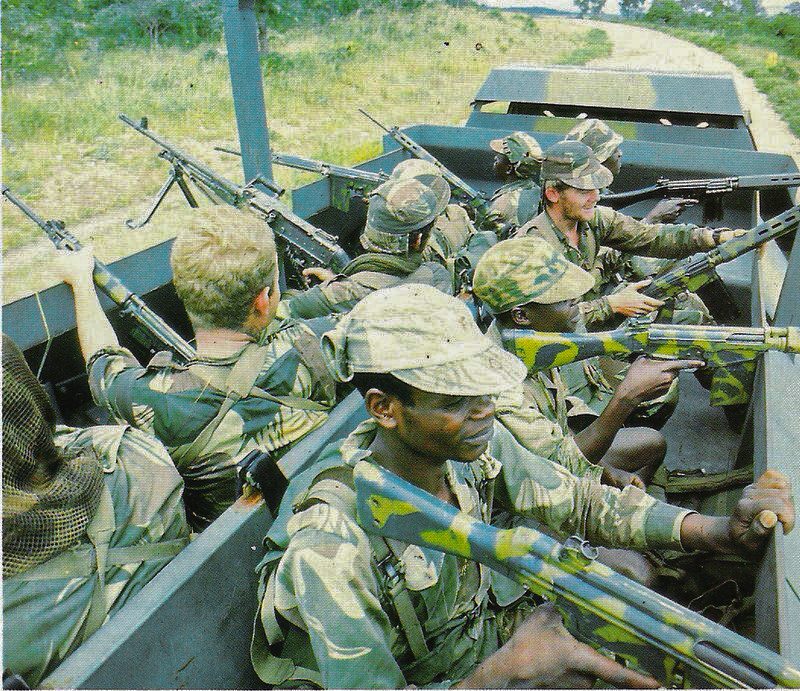
While the R1 version of the FAL was the number one battle rifle for the Rhodesian Light Infantry during the Rhodesian Bush War, the G3 came in a close second. The Rhodesian troops were often spotted with the G3s in hand. The Portuguese used G3 rifles in Angola and Mozambique.
When those countries fell to the communists, Portugal sided with Rhodesia so it was natural that their rifles would migrate across the border. South Africa bought 100,000 G3 rifles from Portugal and called them the “R2.” Some of these may have “accidentally” found their way into Rhodesia.
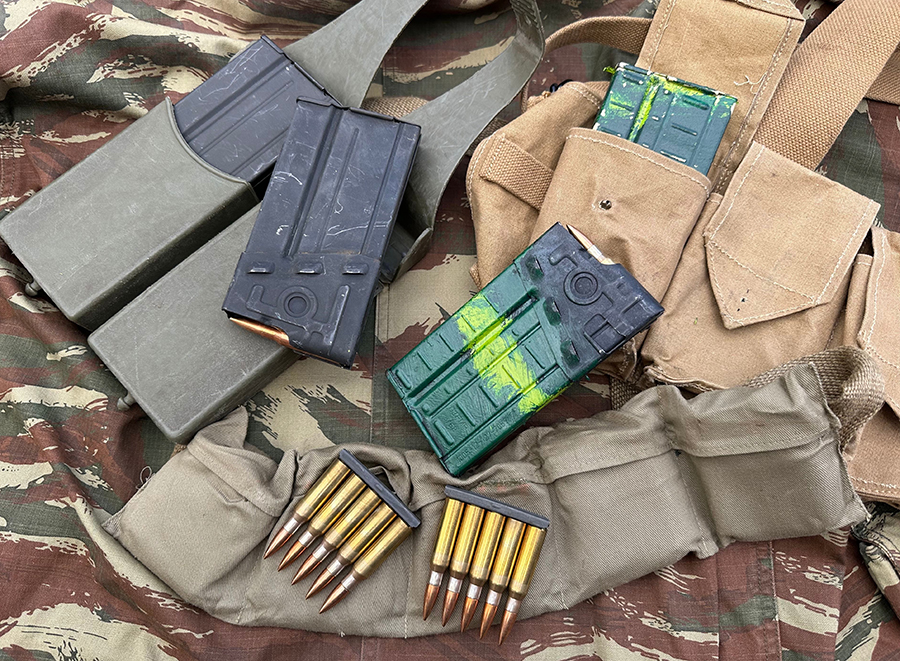
As with all popular military rifles, the HK G3 rifle has seen a number of variations over the years. With semi-automatic and select-fire versions as well as sniper platforms. The basic G3 used a 20-round magazine, fired the 7.62mm NATO cartridge, and used the roller-delayed, blowback action. Soldiers in the field found the G3 to be a reliable weapon, but also one that required dedicated cleaning and lubrication. G3s like to be kept clean and well-oiled, unlike the AKM which seems to thrive on abuse.
Between the original Heckler & Koch models and licensed versions, over eight million G3 rifles are in circulation worldwide. In the United States, Century Arms and PTR Industries make new licensed models of the rifles for American civilian sales.
At the Range
In a world where all the rifles seem to be some variation of the AR, taking the roller-delayed HK, or a clone of the HK to the range can be an interesting diversion. Many years ago, when I was younger and more exuberant, I took a close combat rifle course which included building clearing exercises. 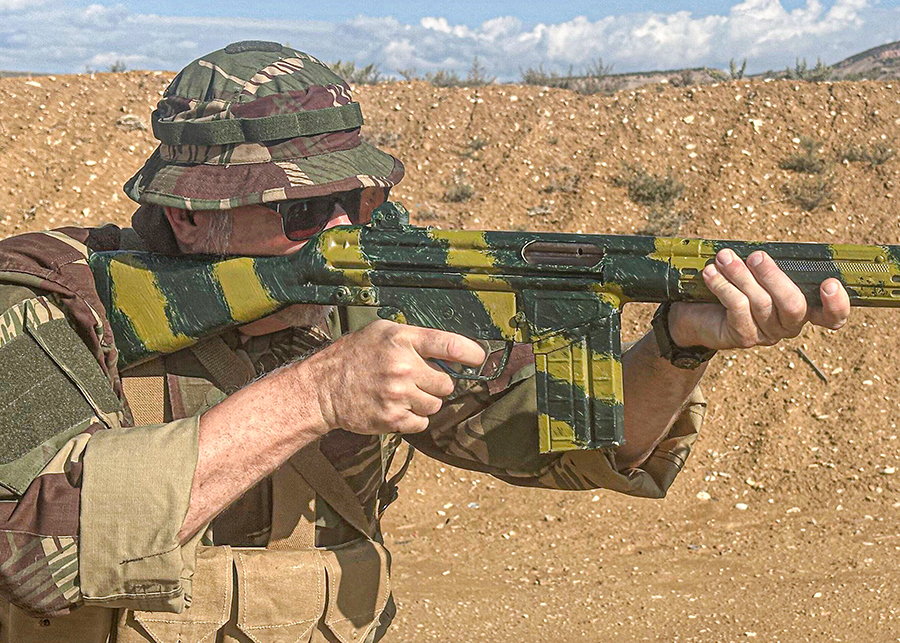
Brothers and sisters, do I need to tell you how interesting it was firing a G3 in hallways and small rooms? It was akin to tossing small flashbang with each trigger press. I can only imagine the bowel evacuation that would occur being on the receiving end of a 7.62 NATO rifle across a 20-foot room.
As Nick mentioned in his piece, my experience with the HK roller-delayed designs is that they very much like to be run wet. Don’t skimp on the gun lube. The only time I have had issues with them is after a protracted shooting session of, say, a few hundred rounds and the petroleum-based lube had cooked off.
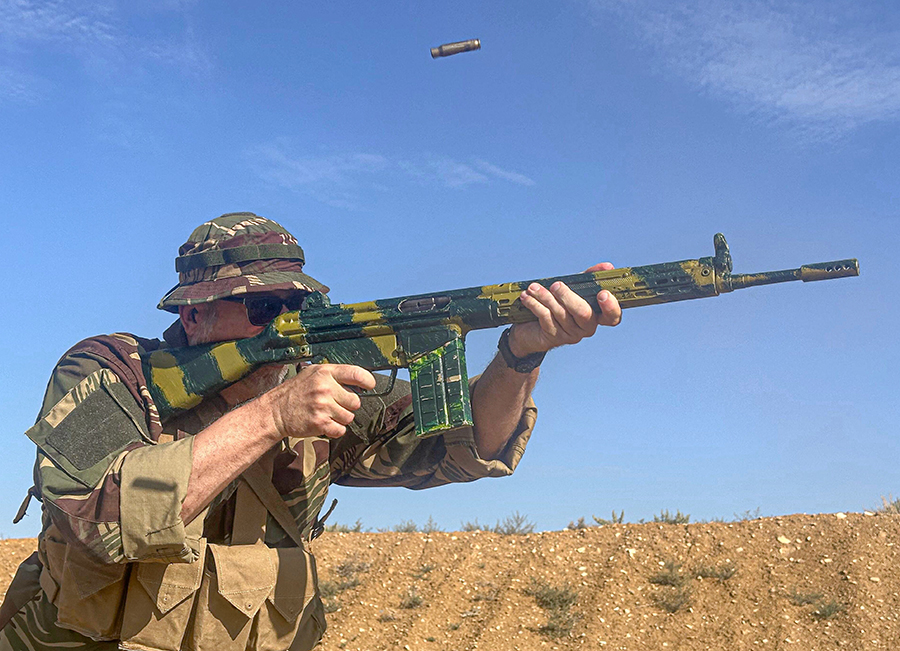
As for recoil, the HK roller-delay does a great job reducing felt recoil. You know you’re shooting a real rifle cartridge, but the gun doesn’t beat you up like some of the compact Garand-style rifles tend to. Regarding the question about which rifle is better for “double-tapping terrs,” the R1 or G3, that might be a very close race.
Wrap Up
With well over eight million original and licensed units in service across the globe, despite the fact that the G3 is long in the tooth now, it was definitely a major player during the time in our history that we called the “Cold War.”
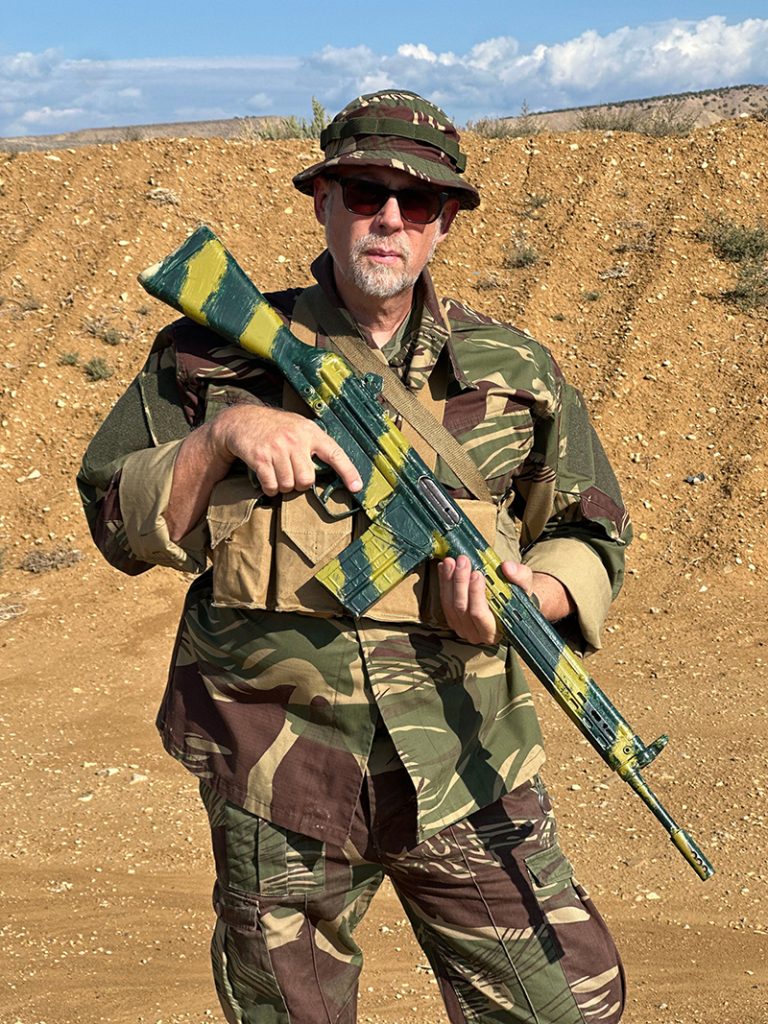
Specifications:
Caliber: 7.62x51mm NATO
Action: Roller-delayed, semi-automatic
Capacity: 20 rounds (others)
Barrel Length: 17.7 inches
Overall Length: 40.4 inches
Weight (empty): 9.7 pounds
Sights: HK rear drum, hooded front
Furniture: Polymer stock, forend, and grip (sometimes hardwood)
Paul G. Markel is a combat decorated United States Marine veteran. He is also the founder of Student the Gun University and has been teaching Small Arms & Tactics to military personnel, police officers, and citizens for over three decades.
well oiled tank.
I have a HK 93, Love the Rifle but find the clatter of the bolt a bit distracting compared to an AR. However, it is no where near as finicky as the AR with ammo
You know what’s funny. I have been following Paul for so long, when the thumbnail pic of this G3 showed up in the email, I was like, “That looks like a Paul Markel gun.” Sure enough, here we are. Man I must’ve worked on thousands of those at Century Arms when I worked there from 99-02. Both the G3 and Cetmes. Great article as usual Paul.
Sorry, roller lockers kick much harder than their gas operated brothers. I got rid of my HK91 for a high-end piston AR10 that shoots far softer and doesn’t need to be made of heavy gauge steel to take the pounding of a G3 bolt carrier. G3/HK91 is the AK of the western world, loves steel case, works every time you pull the trigger, great magazines, but it’s just not as refined as modernized AR10 type rifles like those from KAC, POF, and SIG. If you said I need to shoot my rifle after being run over by a truck, I’ll take the HK91, otherwise it’s the AR10.