I’ve been working in optics for over 15 years, and this is one of the questions I get the most: What’s the best magnification for a hunting rifle? The honest answer is, it depends. But I’ll give you a better answer than most folks are willing to.
Let’s say I hand you a .30-06 bolt gun. Great cartridge. Solid rifle. You could use it for black bear in Quebec or pronghorn in Wyoming. Same gun, but two very different hunts. Can one optic cover both situations perfectly? Not likely.
The rifle might be capable, but the optic is what sets the limitations. The way you set up the glass often determines what the rifle is best suited for. That’s where most hunters get tripped up.
Most hunters over-magnify.
Everyone thinks they’ll be taking 400-yard shots every season. The reality is that most shots happen inside 150 yards. If your scope is more focused on long-distance shots with magnification that tops out at 16X, 20X or even higher, you likely don’t have the low-end magnification range you need for when a deer sneaks in at 40 yards, which, in a lot of the country, happens more often than those longer shots.
High magnification narrows your field of view and exaggerates movement. It makes everything seem like it’s shaking, including the crosshairs. That alone is enough to cause target panic in shooters who don’t put in the time to work through it. Which, in reality, is most shooters.
The best advice I can give you is to stop chasing big numbers. Start setting realistic expectations for your hunt and what your needs on that hunt really are.
The low-end magnification is what matters most. That’s what helps you find game fast, especially when things happen close and quick. For Eastern hunters working dense woods, swamps, or thick cover, scopes in the 1–8X, 2–10X, or 2.5–10X range are ideal. You can pick up game quickly, but still have enough zoom to reach out 200 yards if needed.
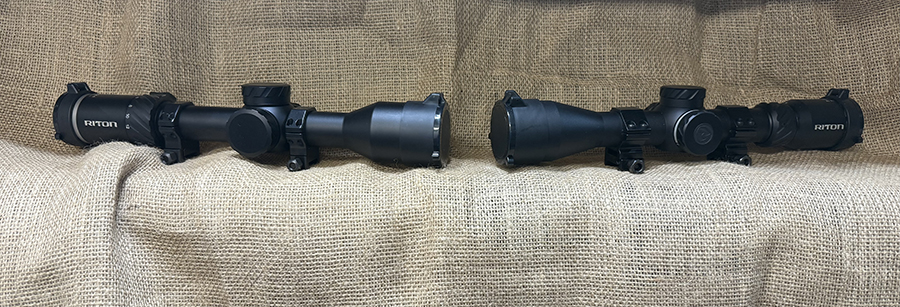
In the Midwest, where a lot of hunting happens around a mix of woods and ag fields, you might lean toward a 3-9x, 3-12x, or 4-12x. They give you more top-end flexibility while still offering a usable field of view at the low end. If your particular property is a little thicker, I wouldn’t hesitate to go to one of those 1X or 2X configurations. Especially if you opt for a 5X or 6X ratio that gets your magnification up into the 10 to 12X range.
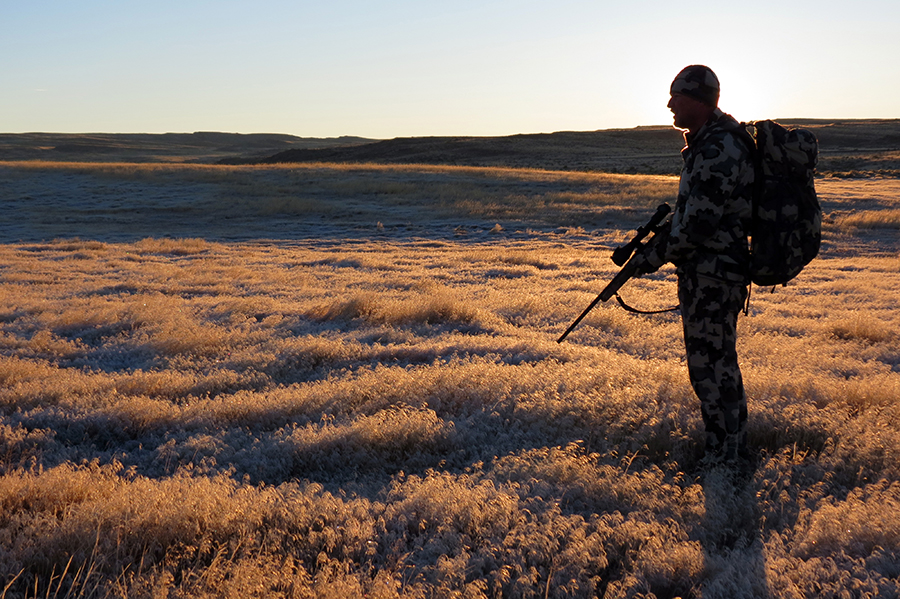
Western hunters are the ones who need the most magnification, but even then, you want a versatile optic. Think 3-15x, 4-16x, or maybe 4-20x if you really plan to stretch things out. But in most cases, going beyond 18X or 20X doesn’t offer a real advantage. It just magnifies your problems.
No matter what scope you choose, always start the day with your magnification turned all the way down.
Every year, I hear from hunters who get caught off guard. A deer sneaks in while they’re still dialed up to 12X or 16X, and they can’t find it in the scope. Or worse, they try to take a shot without knowing where they’re aiming. You’ll almost always have time to turn magnification up for a long shot. But in a quick moment? You won’t have time to dial it down.
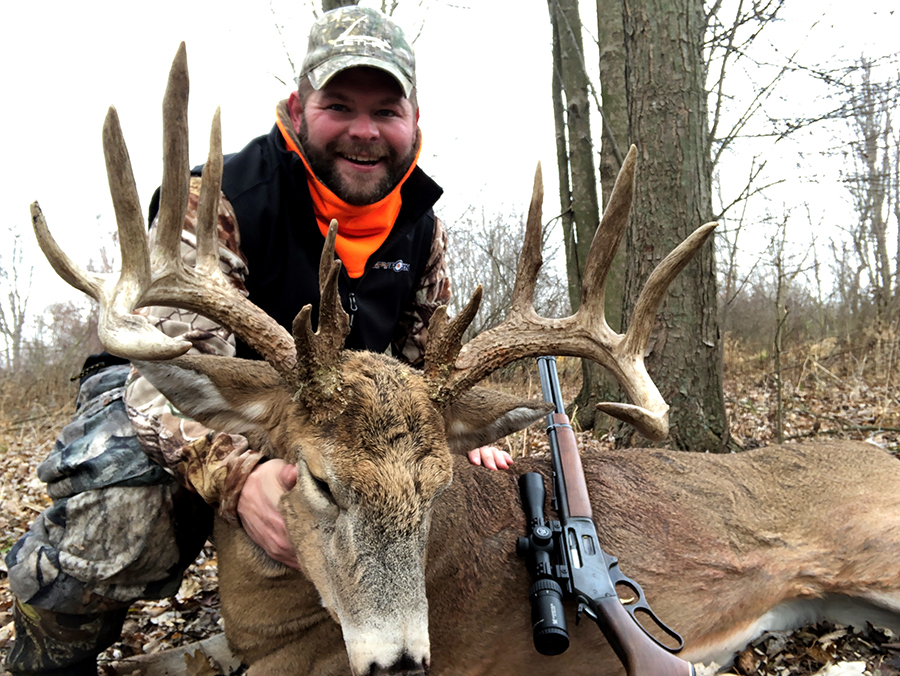
Don’t believe me? Have you ever jumped deer out of a thicket or fencerow on your way to your stand and tried to get a shot off? I talk to hunters that this happens to every year. Far too many of them tell me about how their scope was cranked to the highest magnification and they couldn’t get on target to get a shot off.
This isn’t just theory. It comes from years of mounting scopes, testing gear, and talking with hunters in the field.
You don’t need as much magnification as you think you do. Pick the right scope for your environment. Keep your expectations grounded. And don’t let the numbers on the box trick you into making a bad decision.
Less magnification. More success.
You’re welcome to tell me I’m crazy. But I’ve seen what works, and this is it.
if you can find the target you can take a shot.
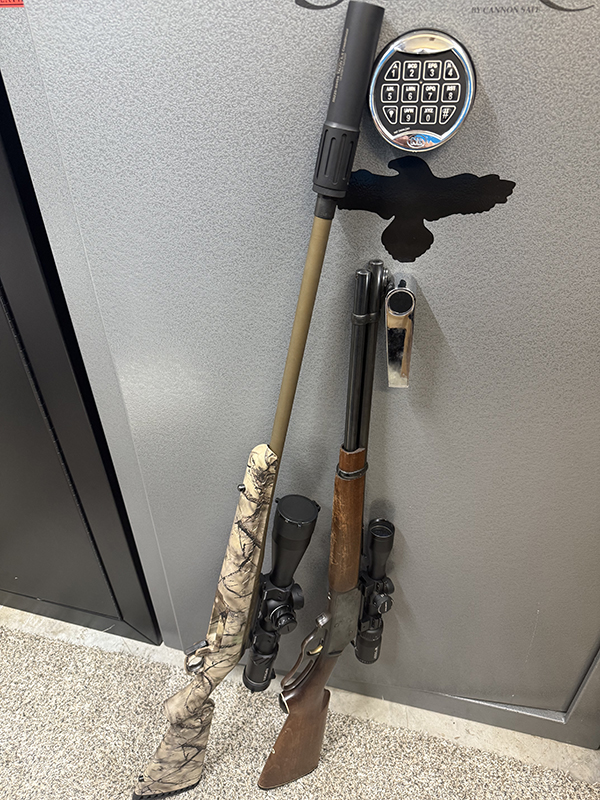
.44mag has skinner peep.
.444mar has 2.5x.
.308 has 4x.
The notion that we don’t need the tools to shoot farther than 150 yards because that’s where most game is taken is a self-fulfilling prophecy, or more appropriately, a self-limiting one. I hear it constantly, “you don’t need a cartridge/rifle/bullet/optic/training to shoot farther because most game is shot close”. Yeah, when you’ve purposely made it so you can’t shoot far, you shoot close.
I like to think that I have ample experience (and success) hunting white-tailed deer. I have used all manner of long guns–shotguns, muzzleloaders, and rifles chambered in common centerfire-rifle as well as handgun calibers. My longest shot was about 160 yards and successful using a rifle chambered in .270 Winchester with a 3-9x variable power scope. My closest shot was 8 yards with a shotgun using a bead site only at the muzzle.
Most of my shots have been between 60 and 130 yards. I rarely have shots closer than that because deer often know that you are there and avoid you. And I rarely have shots beyond that because terrain or forest typically limits visibility. And while I have had a few occasions where deer appeared at 200 yards, I was in a jurisdiction that did not allow centerfire rifle calibers so I did not have a firearm platform with an ethical range beyond 150 yards.
Lately, my hunting has been in a jurisdiction where legal firearm platforms limit me to 150 yards. My scope is almost always set at 4x or 5x and I have had no trouble at all placing accurate shots on deer from 60 to 130 yards. The only times that I have dialed up to maximum magnification is when I am “glassing” deer at 300+ yards. In terms of keeping my scope at 3x I have not done that because it is virtually impossible for a deer to sneak up on me at close range–due to the fact that I am hunting huge and wide-open agricultural fields with an almost 270 degree field of view in front of me in the direction that the deer always travel. (In other words I will typically see them at least 200 yards away before they eventually wander into range.) On the limited occasions that I have been hunting in locations where deer could unexpectedly pop out in front of me at close range, I keep my scope dialed down to minimum magnification, which is 2x on one of my long guns and 3x on others.
At any rate, I believe that a 3-9x scope is more than adequate for close range out to 300 yards.
As a counterpoint, many, if not most, of my deer with a rifle are taken 300-400 yards. It used to be 400-500 yards. My pigs are probably at 200 yards, bear are all over the place, and in southern Africa my shots have ranged from 15-800 yards. I don’t hunt much east of the Mississippi or the West coast.
JWT
Jon Wayne Taylor,
I think you hit the nail on the head: hunting shots of 300 to 500 yards tend to be in the Great Plains or Mountain West states. (I suppose that Texas has a bit of both.)
I have no experience shooting beyond 200 yards so I have no idea what minimum magnification is preferrable at ranges of 300 to 500 yards. What minimum magnification do you prefer at those distances?
Want my extensive and valuable practical hunting experience with various scope magnifications at various shooting distances? Read my earlier comment. Oh wait, you can’t because this site automatically deleted it for no good reason.
Okay, the automatic evaporation of my comments–even exceedingly brief comments–has gone too far. I am done commenting on this site.
looks like it showed up. they either pop right up, surface hours later or vaporise.
My comments that disappeared and reappeared–reappeared about 24 hours later.
yup. lately.
frustrating.
So, does this also effect my Prairie Dog hunting? So really, it very much depends on the GAME as well as the Terrain.
Always carry on the lowest magnification available. There’s always time to go to a higher magnification if you need it, but a near target will demand your lowest magnification and will not allow time to do more than aim, disengage the safety, and shoot. Think about that.