

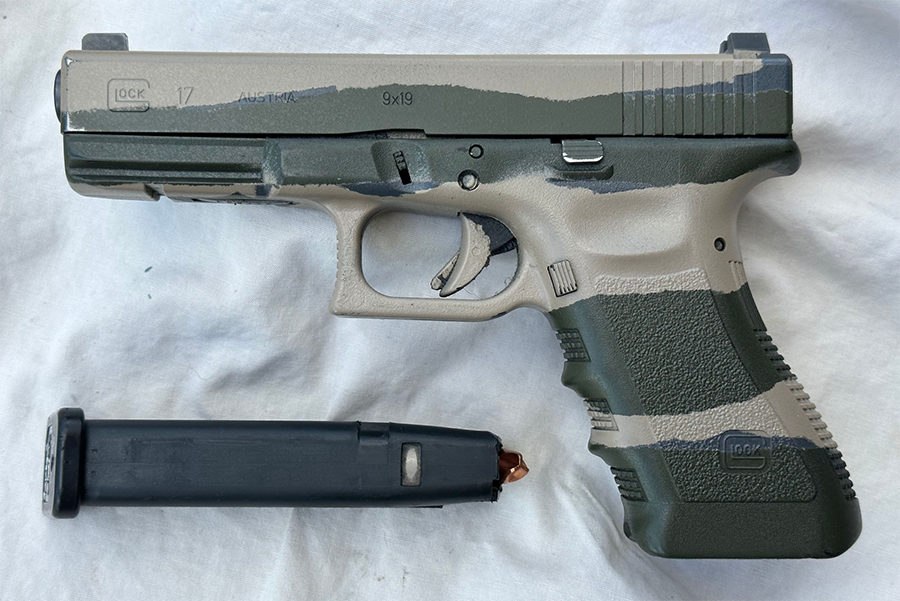
We have been considering various firearms that were designed during the Cold War era as well as those that were carried over from the WWII era while serving with distinction, such as the M1911A1. However, we’ve been holding off on what’s truly the Mac Daddy of all Cold War era pistols designs. We have heard the cries of some of you screaming in the distance, and so it’s time to consider the GLOCK Model 17 pistol.
GLOCK 17 Development Time Frame
While most of those who consider themselves to be “gun people” know some version of the GLOCK story, a great number of younger shooters don’t. To many under the age of 40, the GLOCK pistol has always been a thing. They can’t remember a time when the plastic fantastic from Austria wasn’t occupying shelf space in every gun store in America.
I, however, remember when not only was the GLOCK 17 a new pistol, I recall the corps of America’s gun scribes describing it as “a unique novelty.” One man wrote that while the G17 was “certainly interesting, American law enforcement will never buy and carry a plastic gun.”
Before we get ahead of ourselves, let’s consider how and why the G17 came to be. The world was deep in the Cold War and every nation was considering the firearms in their armories and whether or not they could do better. Austria, a nation that was too close to the Iron Curtain for comfort, had legitimate reason to be concerned.
In 1980, Austria was partially surrounded by the Soviet client states Czechoslovakia, Hungary, and Yugoslavia. If an invasion of western Europe were to take place, Austria, as well as West Germany, were going to be on the front lines.
When Soviet Prime Minister Nikita Khrushchev pounded his first and told western ambassadors that, “We will bury you!”, those in NATO took him seriously. Throughout the cold war there was constant rhetoric from the USSR, but there was more than just talk. The Soviet Union, as well as communist China, were fomenting socialist rebellions all over the globe with varying levels of success.
Such was the political climate when the Austrian Army put out the bid for a new service pistol in 1980. The Austrian Army trials included handguns from SIG SAUER, Heckler & Koch, Steyr, Beretta, and FN with the Browning Hi-Power. The new pistol needed to be “high capacity,” holding more than the then current eight rounds of the Walther P-38 it would replace. The new pistol had to be chambered in 9mm Luger and weigh no more than 28 ounces. Simplicity or ease of use was high on the list.
The G17 has only 34 parts total and lacks extraneous external controls: trigger, slide lock and magazine release button are the only controls on the gun.
Gaston Glock didn’t have a firearms manufacturing pedigree, but he understood the manufacturing and business. Years later, Glock would comment that it was his lack of experience in the gun-making world that actually led him to succeed and to do things that other more seasoned makers would never have attempted. In early 1982, Mr. Glock assembled a team of handgun experts to design a 9x19mm handgun to meet all of the Austrian Army’s requirements.
The use of a molded polymer frame reduced the overall weight to 23 ounces and made that portion of the gun rust and weatherproof. The steel-lined, polymer-bodied, staggered column magazine allowed for 17 rounds to fit in a standard grip length and that round count exceeded that of every competitor.
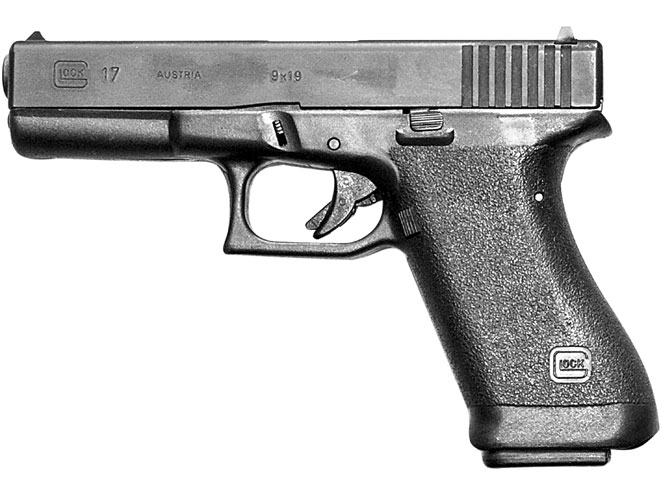
Another Austrian army specification that’s been lost to history is that the magazines should NOT drop free in order to prevent soldiers from inadvertently dropping and losing them. Imagine an Austrian soldier standing in a foot of snow and dropping a magazine. GLOCK magazines were altered later for export to the United States where drop-free magazines for pistols are a must-have. The lack of drop-free magazines in the Gen1 G17 was the reason there were cut-outs in the front and rear of the grip base/magazine well.
Moving into the Future
To the chagrin of all the old European gun makers, the GLOCK 17 outperformed every competitor and GLOCK was given the Austrian Army contract at the end of 1982. European law enforcement and militaries immediately sat up and took notice.
Who the hell is this new guy and how did he beat out gun makers with a hundred years of experience?
Arguably, the most well-known pistol in existence next to the Colt 1873 and the M1911A1, the G17 pistol broke ground in the service pistol world by using a high-strength polymer frame, the first major duty handgun to do so.
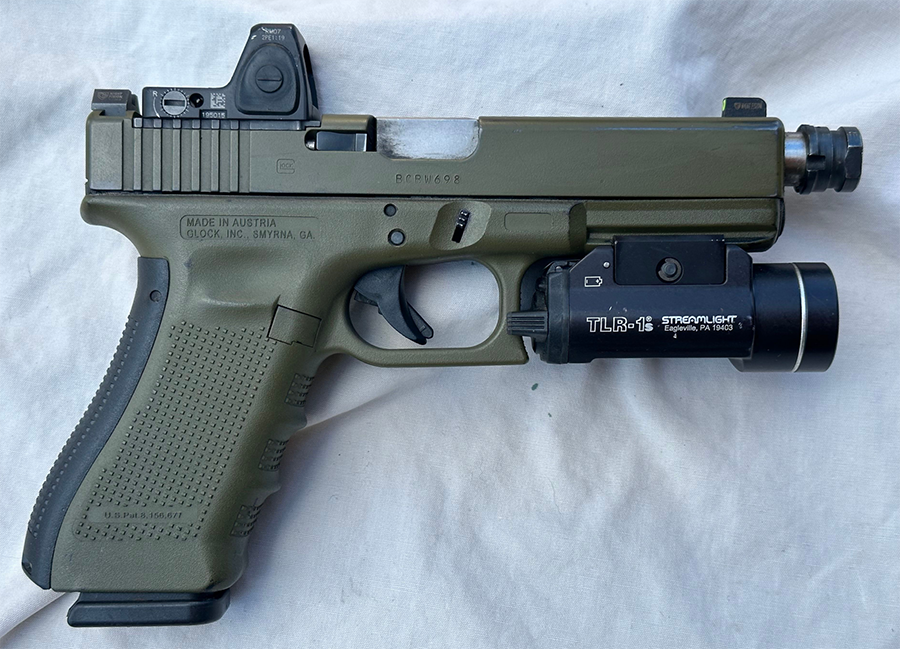
In addition to the polymer frame, which reduced the overall weight dramatically when compared to all-steel and even aluminum framed guns, GLOCK designed a unique striker-fired or “safe action” trigger system. The design eliminated the need for an exposed hammer and put all of the safety mechanisms inside the action, thus negating the need for manual safety switches or de-cocking levers. This greatly reduced the number of parts needed to make the gun.
The striker-fired trigger design further eliminated the long double-action trigger pull followed by a short trigger press. New shooters would only be required to learn a single trigger pull and there were no external controls save the magazine release button and the slide lock for them to master.
The steel slide and barrel were also treated with ferritic nitrocarburizing also known as Tenifer. This metal finish is extremely rust- and corrosion-resistant, more so than any other competitor to this day.
Not surprisingly, the United States Army, who were still using the all-steel M1911A1 at that time, balked at the idea of a plastic gun and showed little interest. History would prove them to have been extremely shortsighted.
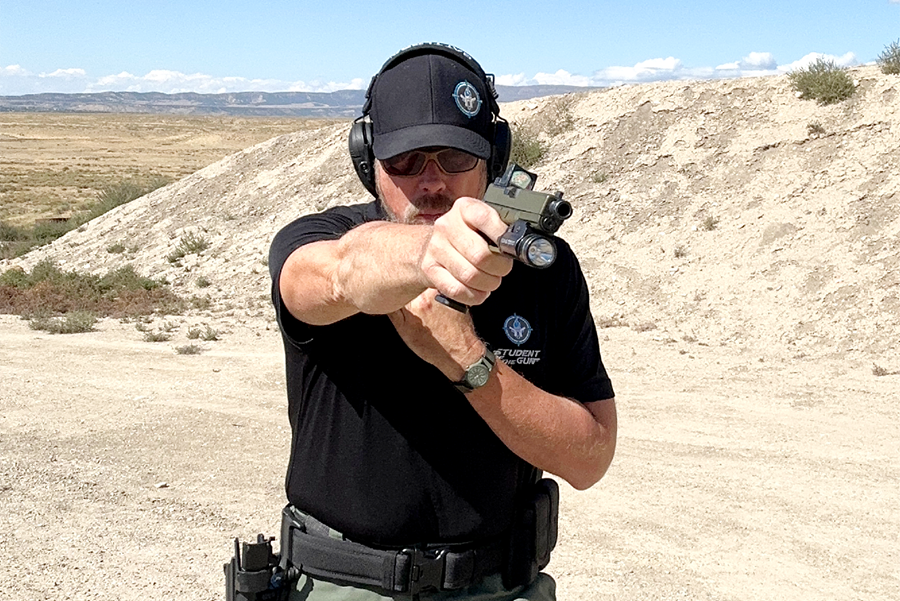
When the company opened GLOCK USA for domestic sales, they had a total of three pistols to offer American shooters; the G17, the compact G19, and the G17L (long slide). Today, GLOCK has many more models in .22LR, .380 ACP, 9x19mm, .40 S&W, .45 ACP and 10mm. They are currently on Generation 5 of their design upgrades the V Series and a 6th generation coming out soon.
Parting Shots
The GLOCK 17 pistol is in active service on every continent, save Antarctica. Over 20 million units have been produced and are in circulation making it the most prolific handgun in history. While many of the firearms designs that came out of the Cold War have since been supplanted by newer models, GLOCK pistols are still going strong with small, but important improvements being made to the original G17 design during the last forty years or so.
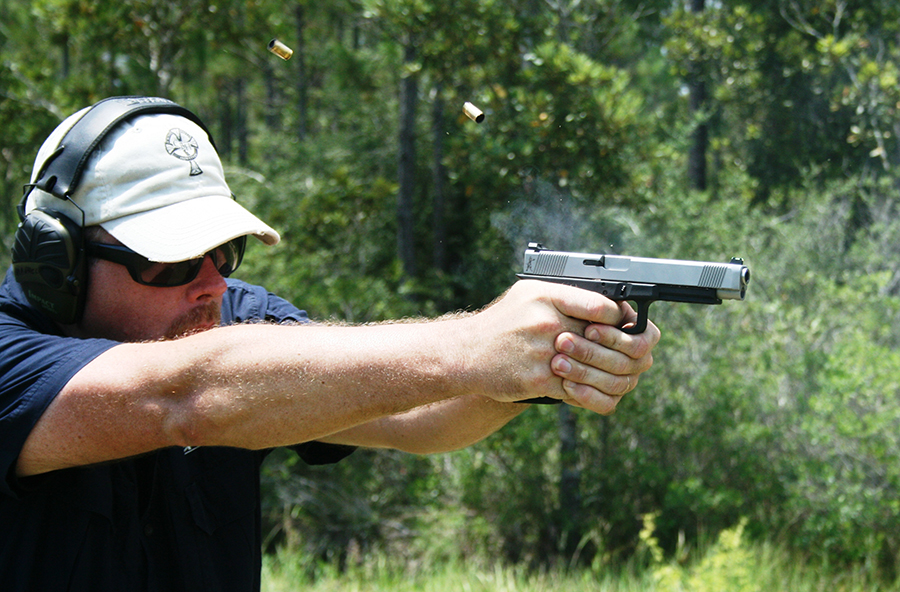
Love GLOCKs or hate them, the polymer-framed, striker-fired design has been mimicked and cloned by most every firearms manufacturer in the world. While it might not say GLOCK on the side of their guns, the influence of Gaston Glock will continue for generations to come.
Paul G. Markel is a combat decorated United States Marine veteran. He is also the founder of Student the Gun University and has been teaching Small Arms & Tactics to military personnel, police officers, and citizens for over three decades.