

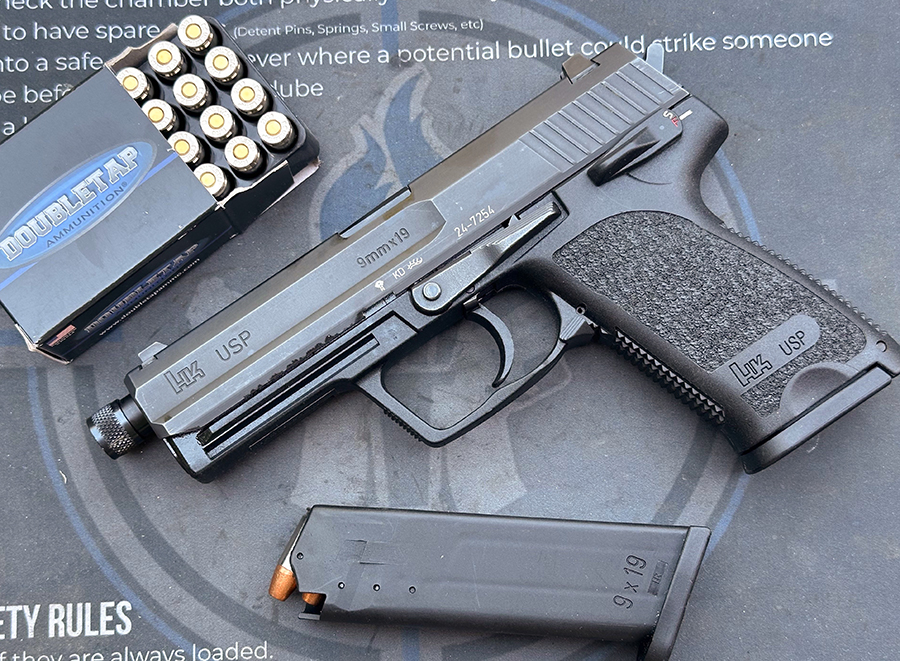
In, what to me is a weird turn of events, the issue of the SIG P320 and its well-documented (multiple surveillance videos) self-starting problem has led to discussion in the gun community about striker-fired handguns and how we were supposedly better off when all the duty guns were the DA/SA configuration. As a person who lived through the era of the DA revolver as an LE standard duty gun and then saw the move to the DA/SA, I thought I might offer some of my forty years worth of experience.
Handgun Actions
I suppose the best place to begin is by laying the ground rules or at least defining what handgun actions or, more aptly, trigger actions really are. Many moons ago, I took a class and the instructor stated (I have witnesses), “The action of a handgun means how many different ways you can shoot it. If you can only shoot it one way that is single action if you can shoot it two ways, that’s double action. There is no such thing as a double-action-only pistol.”
Yes, a person who possessed a piece of paper authorizing him to train others told a classroom full of students that there was “…no such thing as a double-action-only pistol.” I’m pretty sure Beretta, SIG, S&W, H&K, and Kahr Arms would have some thoughts on the matter.
The easiest way to understand the subject is this; if the trigger is only tasked with releasing the hammer (firing pin) that is a single task; ergo single action. If the trigger both cocks the hammer (firing pin) and then releases it, that’s two tasks or double action.
Back in the late 1800s, when firearms manufacturers began to make double-action handguns, such as the Colt Lightning and the S&W Model 10, the common vernacular was to call these “trigger-cocking” guns.
When Gaston Glock came along and turned the pistol world on its head, the GLOCK 17 striker-fired action was technically DA. Chambering a round in a GLOCK pistol cocks the striker about 50-60 percent, depending on the source you get on the internet. Depressing the trigger on a GLOCK “Safe Action” trigger both completes the cocking stage and releases the firing pin. Every striker fired clone of the G17 is similar with varied percentages of “cockiness” on the firing pin.
By comparison, when a round is chambered in a 1911A1 pistol, the hammer is 100% cocked. The hammer resting against the frame on a Smith & Wesson Model 10 is 0% cocked.
I understand that this might seem monotonous or rudimentary to some of you. Nonetheless, based upon the comments we have read and things we occasionally overhear, not everyone seems to get it. Hell, a dude who was teaching a freaking firearms class didn’t even seem to get it.
Of course, the reason why GLOCK came up with the “Safe Action” trigger description was because 99% of all the double-action pistols at that time had exposed hammers (a la Walther P38) and to call the GLOCK a DA would have seemed strange and confusing. But, I can’t see the hammer? That gun can’t be a double action.
Naturally, the advantage of the DA/SA semiautomatic handgun design was the perceived safety of having the first shot be a longer/heavier DA press, but the succeeding shots having a shorter/lighter trigger press were seen as more accurate.
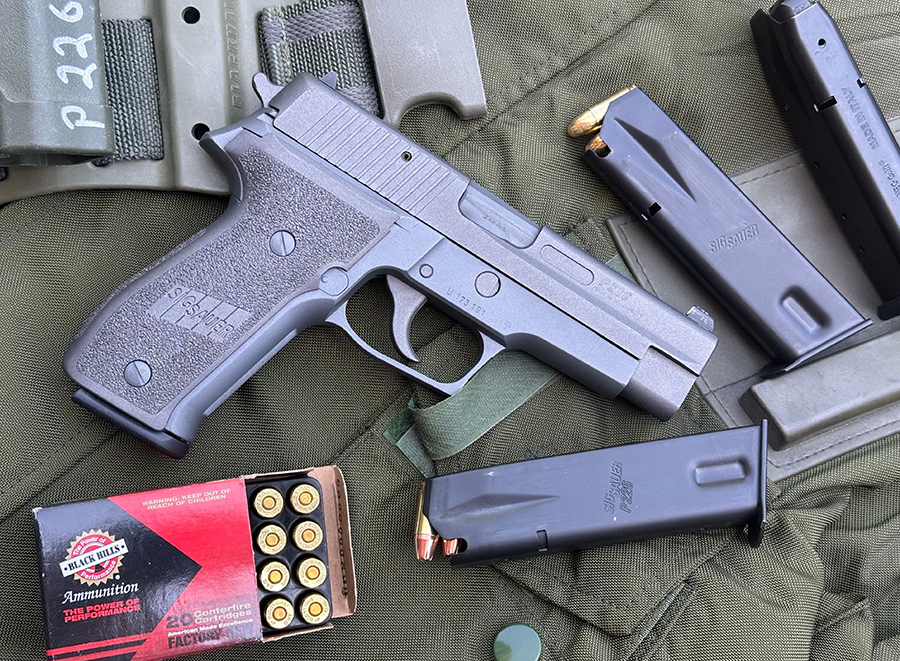
Keep in mind, the standard operating procedure for the US Army and other armies, was to require troops to carry single-action pistols with a magazine loaded, but the hammer down on an empty chamber. The DA/SA design alleviated some of the scariness associated with allowing troops to carry pistols with a round chambered.
Trainers and Shooters
When we transitioned from the SA M1911A1 to the DA/SA Beretta M9, we were allowed to chamber a round, but as trainers we now had to teach our students to master two different trigger presses. Students had to learn to work both the long DA and the short SA and then get into the habit of “decocking” the pistols after shooting them.
Of course, none of that was impossible, or really even that difficult. However, mastering the DA/SA pistol required dedicated training and practice. Something and many units, agencies, and individual shooters were seemingly unwilling to do.
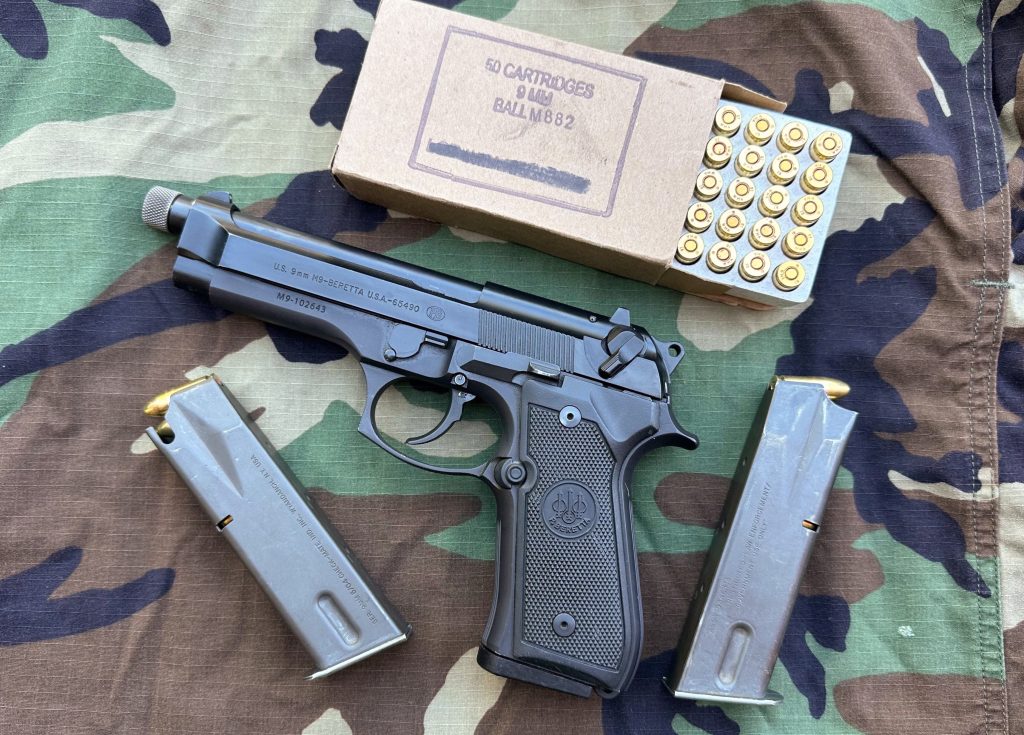
We also have the reality that the first DA trigger press weight tended to vary a good bit from maker to maker. The milspec standard for the M9 stated that a double-action trigger press between ten and fifteen pounds was “spec.”
As another example, when the Ohio State Highway Patrol adopted the SIG P226 in .40S&W, they specified that the gun be produced with “extra heavy” DAO triggers that averaged 12-13 pounds of pull weight. The first time I shot one of those pistols I thought there was something wrong with the gun until my trooper friend laughed and said, “They are all that way.”
Moving in Circles
As mentioned at the outset, not only are gun community folks now talking about how the DA/SA pistols were “safer,” we’re seeing the gun makers floating these designs for their customers. CZ USA is promoting their P-09 Nocturne as a CCW pistol with a DA/SA trigger design.
When I saw the official Smith & Wesson social media outlets promoting their 3rd Generation DA/SA pistols, I thought it was an April Fools joke. However, they are continuing to push the discussion well into April so I can only assume they are serious.
We still recall a time when Walther was promoting their P99 and S&W was promoting the SW99; DA/SA striker-fired pistols. While those were both solid and fully functional designs, in the market they turned out to be as popular as jock-itch.
Regarding the classic DA pistols, such as the SIG P226 and the Beretta M9/92, I would not feel at all undergunned with either. Regardless, I have put tens of thousands of rounds through them in training and practice and that is the rub. You cannot just “buy” a gun and call it good, you have to train with them.
Be Careful What You Wish For
There are several legitimate reasons for the DA/SA pistol design taking a back seat to the current striker-fired handgun designs. We would do well to consider some of those reasons.
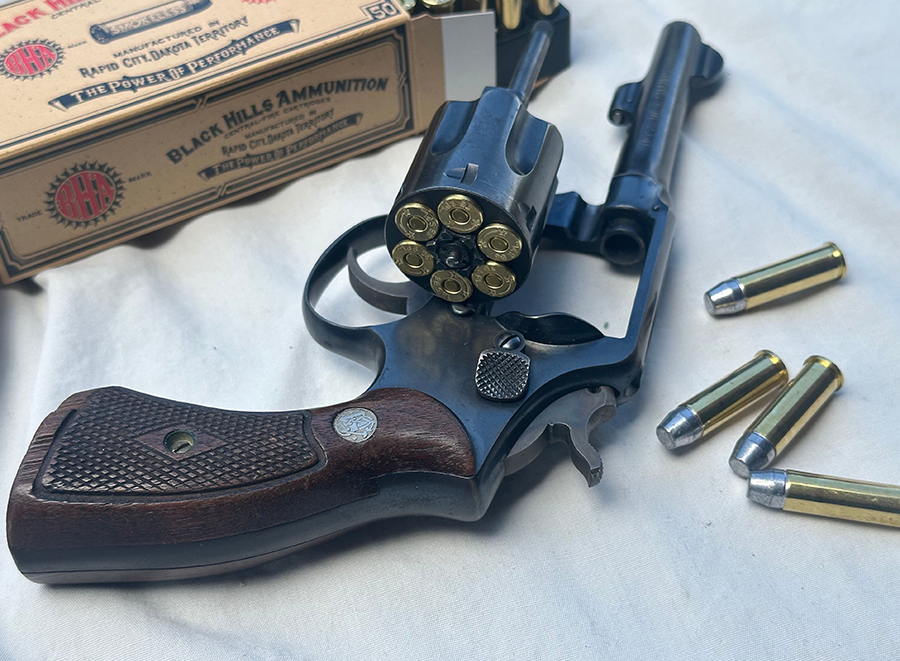
When American law enforcement agencies finally got over their phobia of pistols that were “made of plastic” and didn’t have external safety levers, what they discovered was that it was far easier to train their troops to simply master one, single consistent trigger press, not two. The lack of decocking mechanisms also sped up the learning curve. Afterall, American law enforcement was perfectly fine for nearly 100 years with DA revolvers that did not have external safety levers and they taught their troops to simply master the DA trigger press. (NO, we don’t ‘thumbcock’ the hammer sometimes for better shots).
Buy What You Want
The great thing about being an American is that if the market is there, gun makers will produce whatever the consumer is willing to buy. Consider the modern stupidity of putting comps and ports on guns that are ostensibly for self-defense and concealed carry.
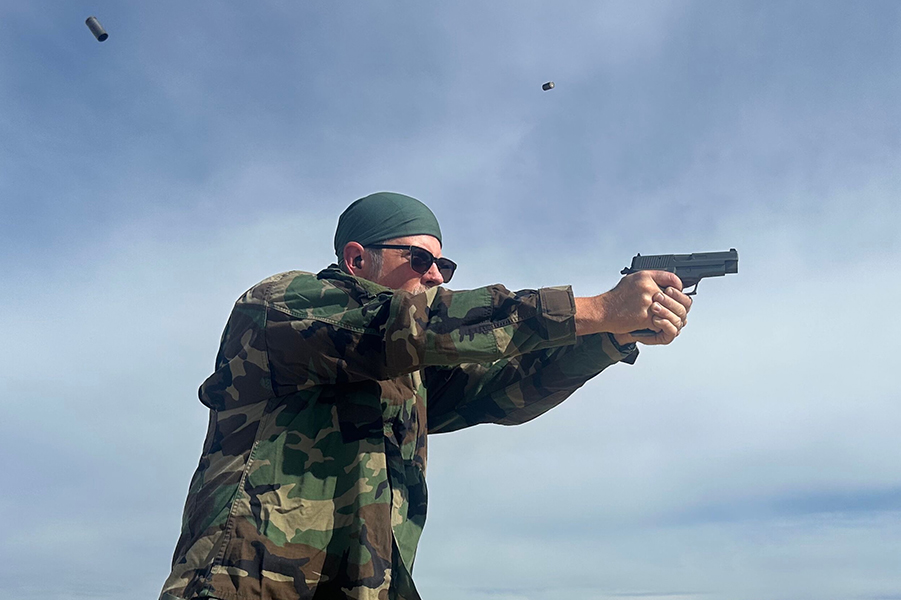
If you have come to believe that these “new” striker-fired guns (the G17 is 44 years old) aren’t safe to carry, go ahead and buy a DA/SA pistol. I would never fault you for that.
Nonetheless, a DA/SA trigger system means that you’re going to have to put in the time through training and practice so that you are not just “throwing away” or “wasting” the first shot. That first shot might be the one that saves your life.
Paul G. Markel is a combat decorated United States Marine veteran. He is also the founder of Student the Gun University and has been teaching Small Arms & Tactics to military personnel, police officers, and citizens for over three decades.