

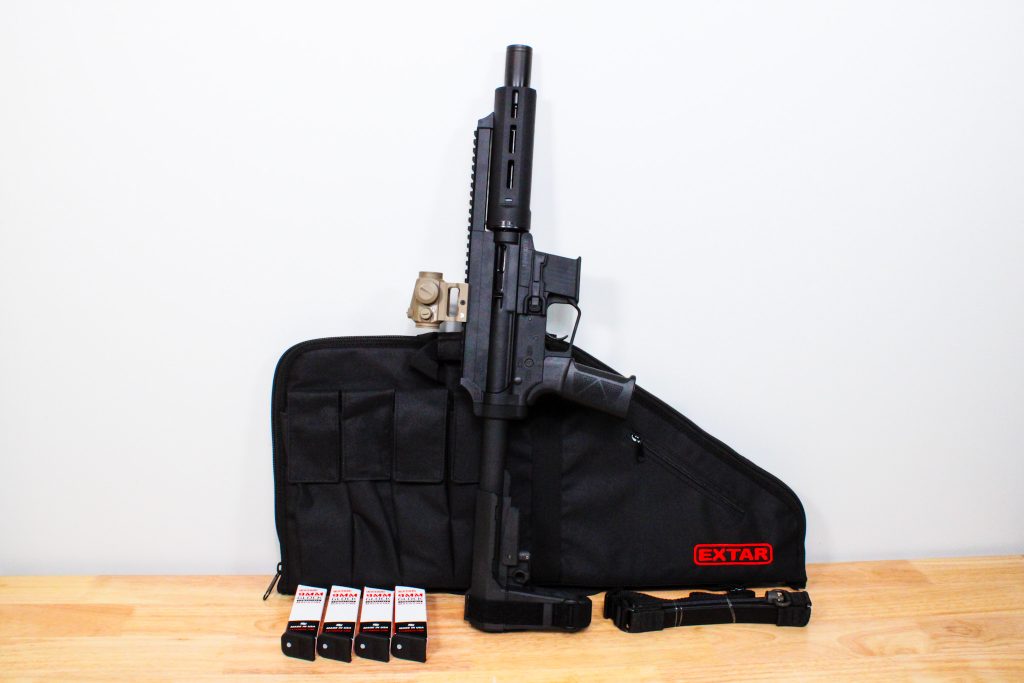
Pistol Caliber Carbines (or PCCs) are all the rage. Whether they are full-length rifles (those exceeding 16″ barrels) or large-format pistols (barrels under 16″ and usually using a stabilizing brace in place of a stock), they’ve become popular with enthusiasts and competitors alike. Currently, there is an abundance of models available to the consumer. From AR-9s to the ubiquitous MP5 platform, there’s something for everyone. However, in my experience, not all PCCs are the same, regardless of their price.
Most manufacturers looking to take a piece of the PCC pie rush guns to market and thus, rely on the simplest of operating procedures—direct blowback. As it sounds, in direct blowback, the pressure from the fired cartridge directly forces the bolt or slide rearward to cycle the action, without the use of any unlocking systems (i.e., roller-delayed blowback). Generally, only the weight of the bolt, as well as the tension of the return spring, mitigates felt recoil. That’s why direct blowback PCCs usually have more felt recoil than a traditional AR-15.
So, when I spoke with Extar and discussed their budget-friendly PCCs, I was surprised by how well they worked and how light they recoiled. So, when the opportunity arose to conduct long-term testing on the EP-9, I said yes.
Who is Extar?
To be blunt, when I first heard of Extar, I thought they were a Turkish company looking to offload their cheap guns onto the American market. Boy, was I wrong. (In my defense, Extar does sound like a Turkish company.) In actuality, Extar is an Arizona-based arms manufacturer. Their founder, a lifelong engineer and injection mold expert, began working in the firearms industry in 1995 by developing and introducing the world’s first molded polymer, rifle-caliber receivers. Neat.
Furthermore, Extar’s mission is “to provide the people of the United States of America with access to firearms that are safe, fun to shoot, easy to use, lightweight, and reliable; available directly from the American factory where they are developed and produced. No Dealer Mark-ups and No Middlemen, only fair pricing for everyone.” While sounding noble, does the product hold up and offer value to the shooter? That’s where we head next.
The EP-9 resembles any number of AR-9 style PCCs—which isn’t to say that’s a bad thing. For one, the controls and manual of arms remain the same as those of my other semi-automatic rifles. Second, modularity remains high, as many parts and accessories can be easily exchanged. However, where the EP-9 deviates is in its construction and operation.
Construction
First, construction. The EP-9 (and the other Extar offerings) is made of “high-quality, engineering-grade polymer.” Many shooters are skeptical of the use of polymer in firearms. After years of working in firearm sales, I’ve run into many people who wouldn’t trust Glock pistols because of their polymer construction (yes, those people still exist.) Extar exclaims that their trust in polymer is warranted: “We’ve been in the polymer industry for more than 40 years, so we know a thing or two about it. Yes, polymers are lightweight, but they are also so strong and so durable that militaries around the world have been using polymer-framed firearms for years, and for good reason.”
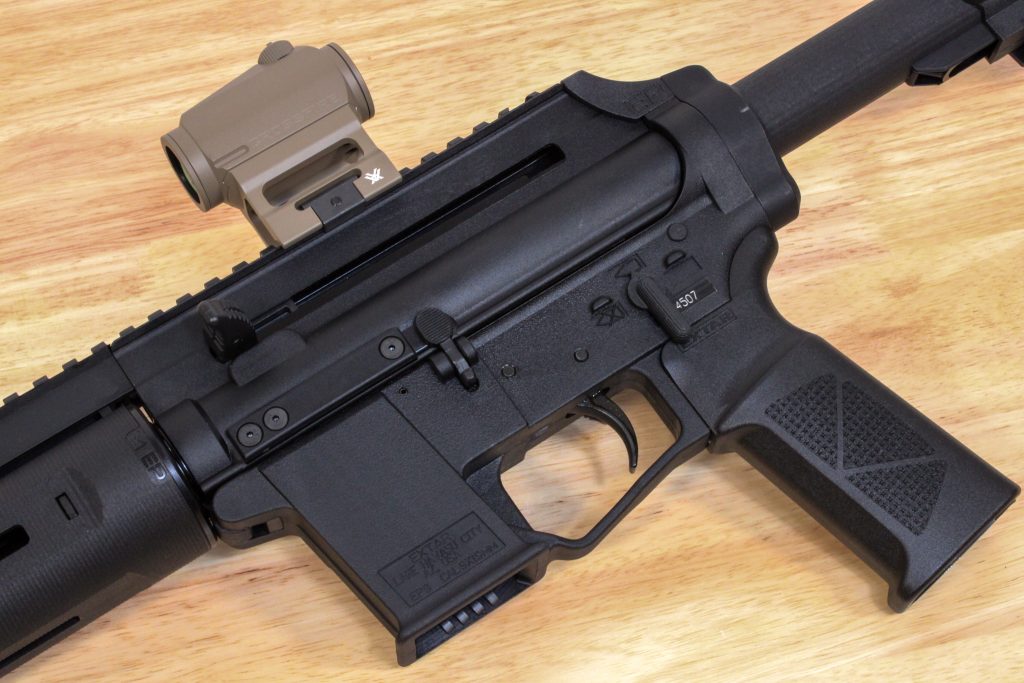
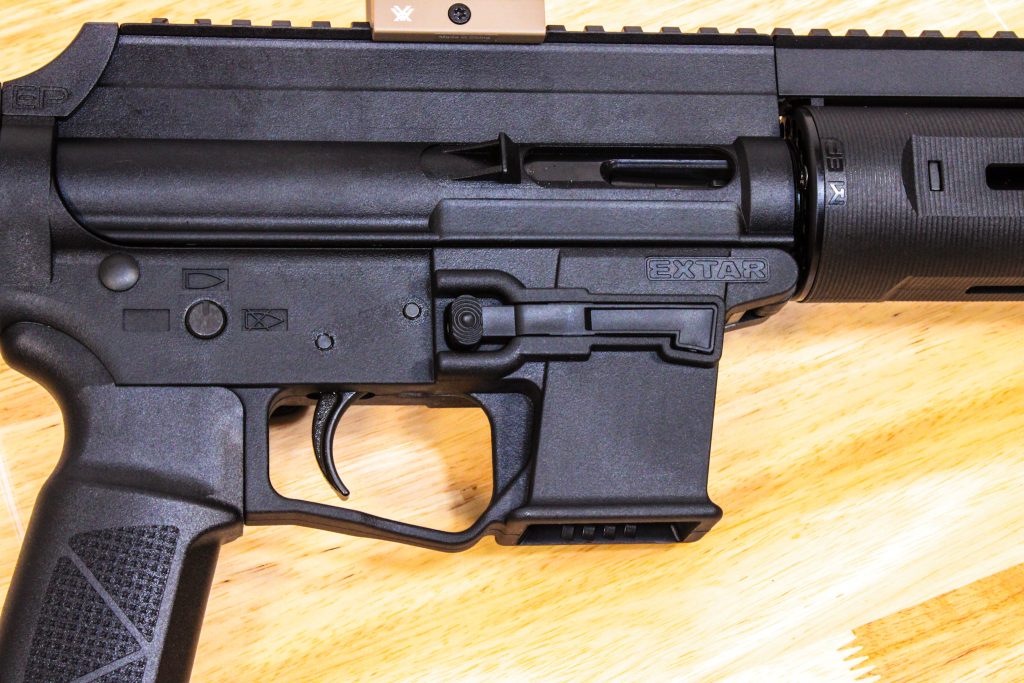
Extar also lists a series of reasons why they view polymer as superior. These include being ultra-water resistant and rust-proof, more comfortable than steel, having close tolerances, being wear-resistant, requiring no lubrication, and being resistant to degradation, among others. Although I’m not an engineer, I trust the evidence provided by Extar, along with their decades of experience in the polymer industry. But there is more wizardry to uncover.
Operating System
The EP-9 functions via direct blowback. As mentioned above, that is a very rudimentary system that leaves a harsh recoil impulse. But when I was shooting the EP-9, I was left shocked. The impulse was soft compared to any other direct-blowback PCC—or any PCC. The first example that comes to mind is the CZ Scorpion, which is also constructed of polymer and is direct blowback. I had a Scorpion and ultimately sold it because I didn’t enjoy shooting it. The EP-9 is a different story. This is perhaps the softest shooting direct blowback PCC I’ve shot yet. So how does Extar accomplish this?
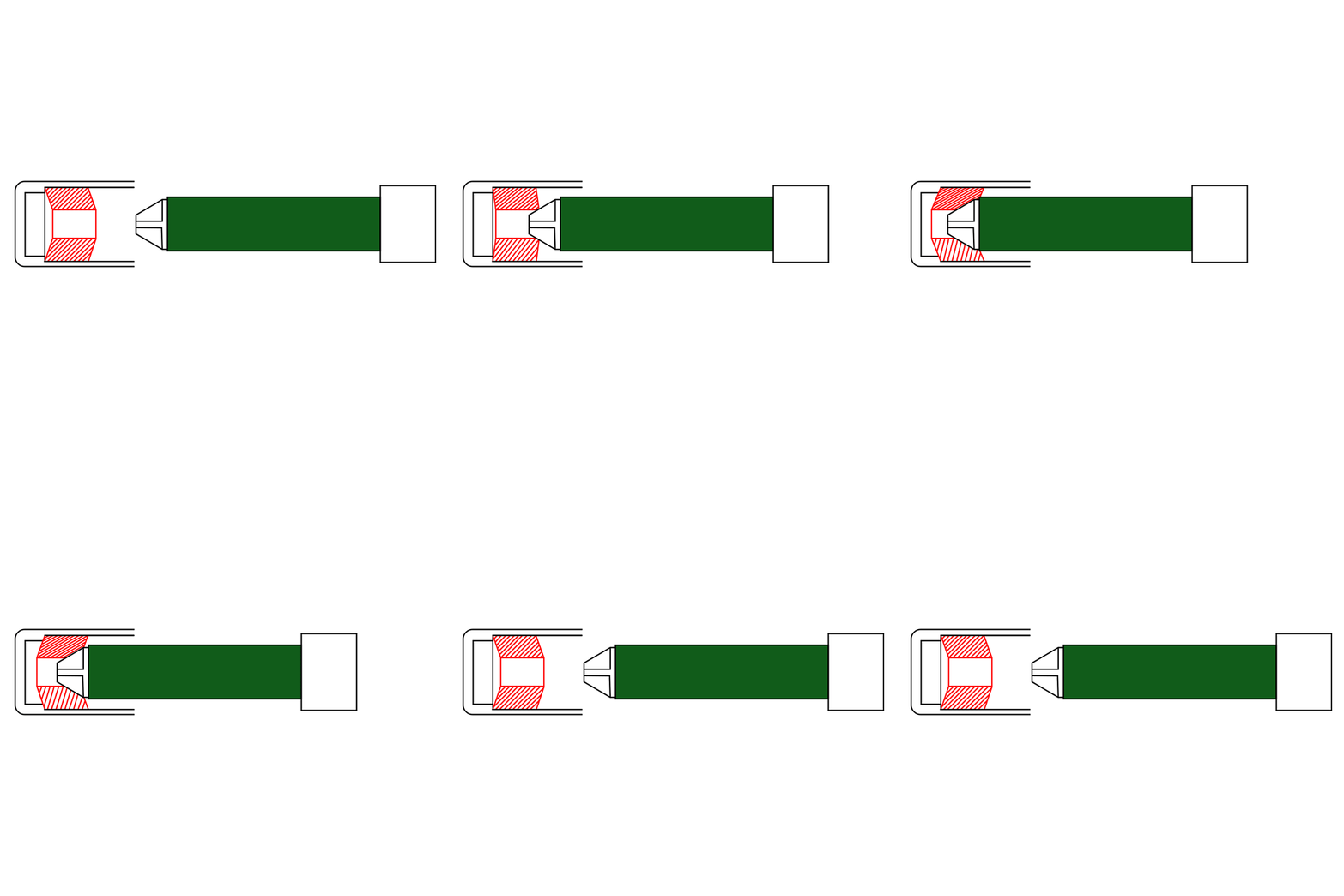
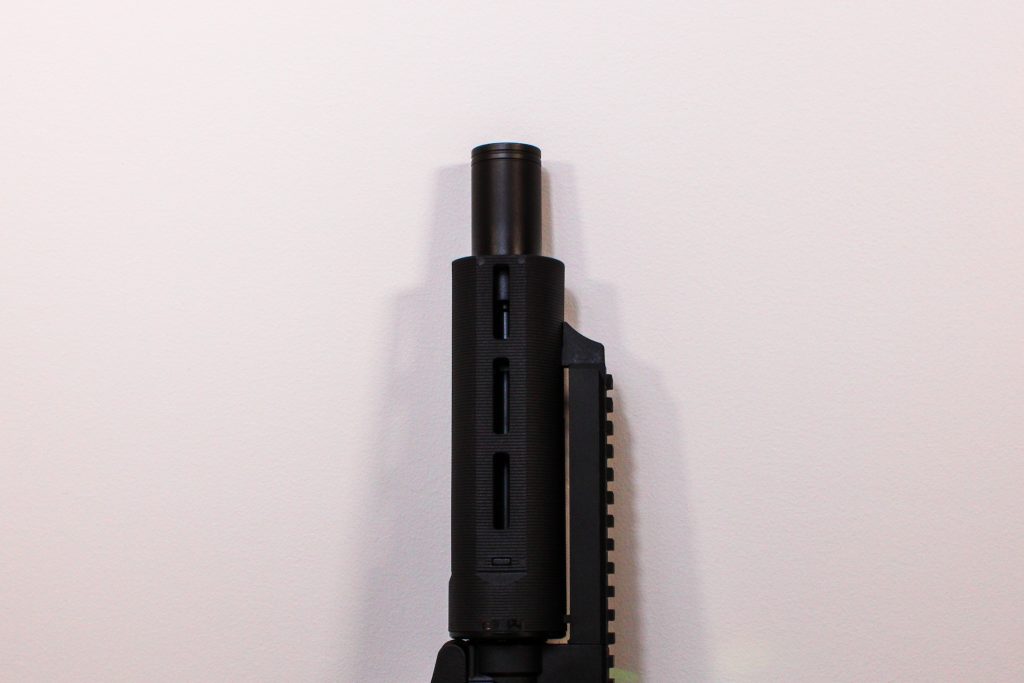
They’ve modified the existing direct blowback operation by utilizing a “Recoil Damping System.” Most of the recoil felt when shooting a PCC is caused by the bolt smacking into the end of the receiver extension. Typically, these guns utilize a lightweight bolt and a thin urethane washer, or a soft tip, to effectively absorb the shock. Extar counteracts the negatives of direct blowback by adding more mass to the bolt and adding a unique dampening system to help slow down the bolt’s momentum.
Exar describes it best: “We have a thick, conical, flexible damper with space behind it to meet the traveling bolt mass. This damper acts as a diaphragm to absorb and slow the bolt’s movement, and it flexes into the empty space behind it. This acts as a proper shock absorber by providing resistance against the movement of the bolt and slowing it down through movement (like suspension does).”
In real-time, the operation feels a bit lethargic or sluggish. It’s a bit hard to describe, but it is something one must experience. The closest example is like shooting a roller-delayed system, where there’s almost a slight pause that allows pressure to drop, thus reducing bolt speed. That’s the highest compliment I can give to a PCC. If it shoots and feels like a roller-delayed blowback gun, then it must be good. And for a gun that retails for under 500 bucks, that’s even more impressive.
Other Specs
The construction and operation of the EP-9 are highlights of the gun. So, for the rest of the specs, I’ll deliver them in rapid-fire fashion.
- Barrel Length: 6.5″ with an extended shroud.
- Muzzle Threads: ½-28″ threads.
- Overall length: 23.8″ or 24.5″ with stabilizer.
- Height: 7.5:
- Width: 2″
- Weight (unloaded): 4 lbs.
- Bolt and Barrel Finish: BLACKNITRIDE+
- Trigger: Single-stage (milspec)
- Charging Handle: Non-reciprocating
- Package: Shipped with 3 Glock-style mags (18 rounds), sling, and case.
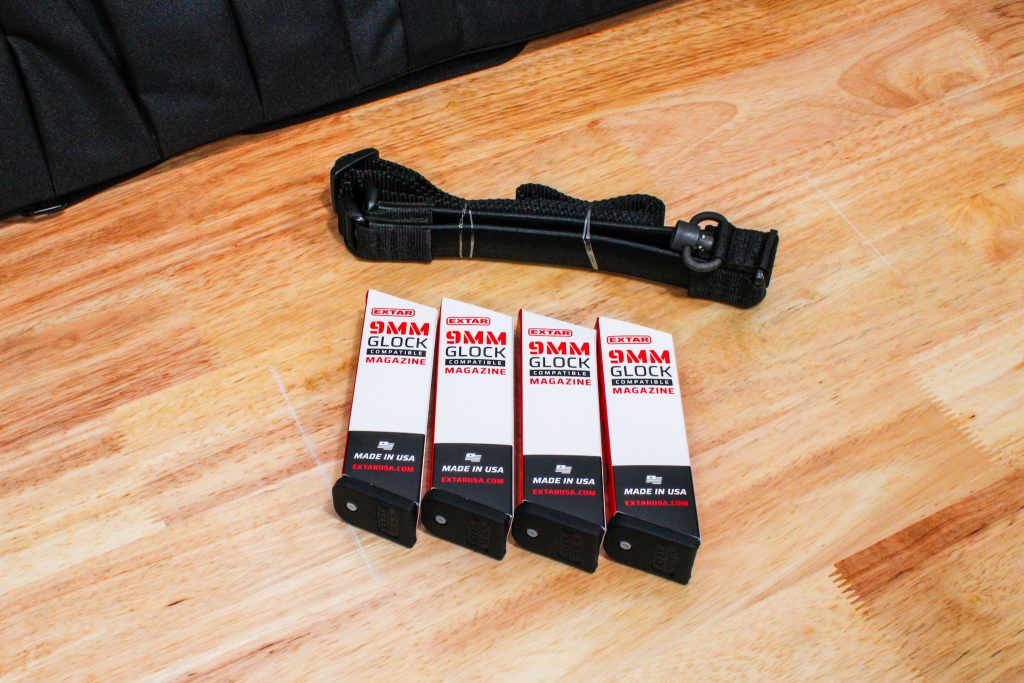
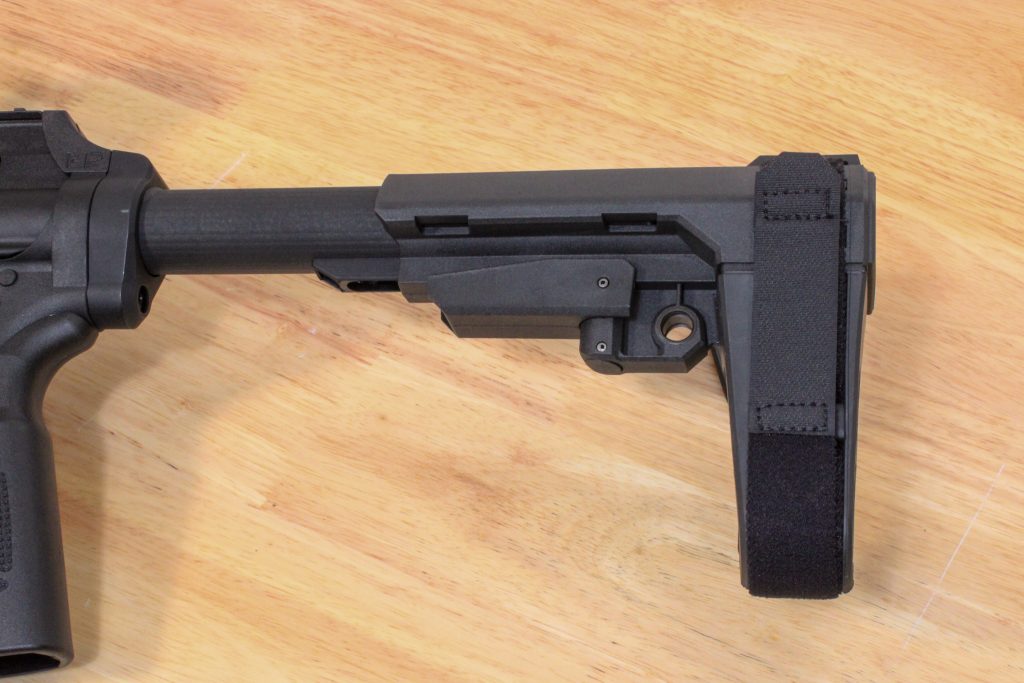
Forgive me for not mentioning this earlier. Yes, this does take Glock mags. While these magazines are not the most aesthetically pleasing in a PCC, they are abundant, and almost everyone should have a pistol that accepts those magazines. MSRP for the EP-9 with Extar Stabilizer is $449. If you opt for the model with the SB Tactical SBA3, that price jumps to $549.00. Regardless, impressive value for what you get.
Zooming Out
Initially, I planned to share some of my first impressions of the gun and discuss its loadout, but there was a lot of ground to cover regarding its operation and construction. It really is a unique PCC. However, in the first 100 rounds, I’ve been really impressed. There have been no malfunctions, and the gun has been enjoyable so far. For reference, I was using HOP Munition 124-gr Poly (this was my first time using this ammo, and I’m impressed; more data on that will be provided in future articles.)
The following articles will cover my initial thoughts, the buildout and testing of the gun, running it through various drills, and my overall conclusions. I plan to spend some time with it to ensure my conclusions are justified. It has the potential to be that good. After 13 years in the industry, it takes a lot to impress me; there just isn’t that much innovation. The EP-9 might change that.
Love my 1st gen Extar! It has run almost flawlessly (maybe a couple ftf’s over the course of 1k+ rounds) and is very accurate out to 50 yards, which is as far as I’ve shot it. Red dot, flashlight, and a few 30 rd mags of 124 gr. hollow points make it my home defense go-to…