

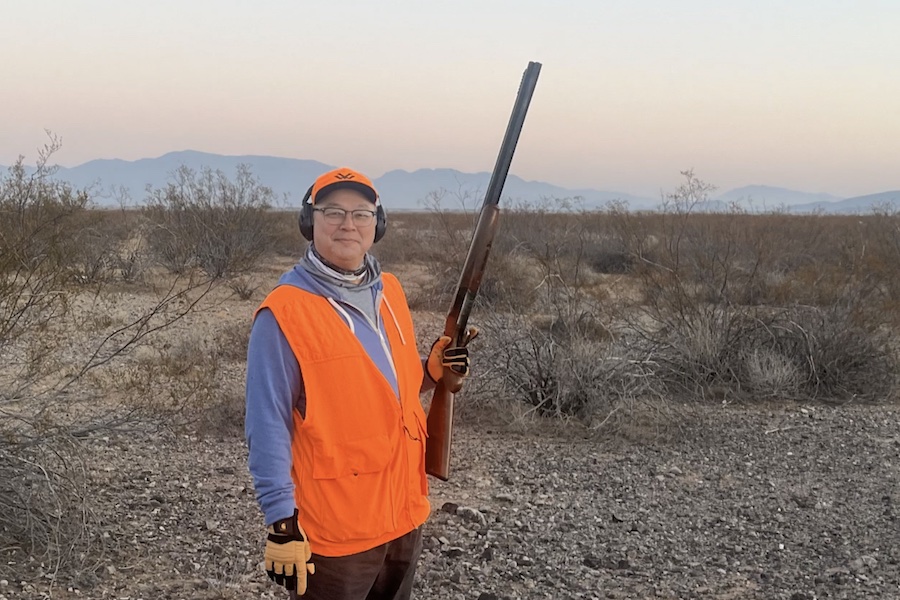
Fourteen years into my personal and sociological journey through American gun culture, I am constantly reminded of how difficult it is to find scholarship on everyday firearm use. Despite the longstanding presence of a robust legal gun culture, the social scientific study of guns is dominated by criminological and epidemiological studies of gun violence.
To be fair, criminologists study crime, and public health scholars study pathology. Sociologists tend to study what’s wrong with society rather than what’s right. We teach courses on “Social Problems” and “Deviant Behavior”; the unproblematic or nondeviant often remain unexamined. Studying the positive aspects of guns and of the communal life organized around their use falls out-side sociology’s analytic wheelhouse.
I understand the prevailing disciplinary view, to a point. Guns are, in fact, lethal tools. This is “a feature, not a bug,” as tech people say. Firearm lethality explains why, although the United States has only a moderate overall suicide rate compared to other developed countries, it has a firearm suicide rate that substantially exceeds these other nations. When people attempt suicide using guns, they die in up to 90% of cases. Firearm lethality also explains why, although the United States is not exceedingly violent or criminal, its criminal violence is more deadly.
The reality that 80 to 90 millionAmerican civilians own an estimated 400 million of these lethal tools means that guns will play a role in negative outcomes like suicide and homicide. But understanding the fun and community that can emerge from the responsible use of firearms is an important part of the story, too—and one that sociologists have neglected to tell.
In my analysis, guns resist simple categorization as either universally good or bad, dangerous or protective, fun or frightening. Instead, they are best understood through a “kaleidoscopic view,” considering the issue from multiple angles. To be sure, this requires maintaining a clear-eyed understanding of the lethal capabilities of firearms. But an exclusive focus on firearms-related harms fails to acknowledge—much less appreciate—the complex social realities of guns. As with other “serious leisure” activities, we need to appreciate the individual and communal pleasures associated with shooting—the pleasures that led me to fall for guns.
— David Yamane in How I Fell for Guns
Up to the 1960s. Most colleges had archery, rifle, shotgun, and even hangun shooting teams. Many offered scholarships for those students as well.
“Up to the 1960s. Most colleges had archery, rifle, shotgun, and even hangun shooting teams.”
Earlier than that, longtime TTAG’er Ralph grew up in NYC.
He told us how high schools had gun ranges in the basement, and intercollegiate shooting competitions…
Late boss did too and he used to take his rifle on the transit bus.
My high school had a rifle shooting team until 1972. The year I was a freshman. The county disbanded all the schools teams.
I was angry. Had been shooting since 8 and was really lookibg forward yo joining.
In my youth you could, and we did, order guns through the US mail. No waiting periods. No background checks.
I bought guns at yard sales when I was 13 and rode them home on my bike.
The student parking lot at my high school had many pick ups with gun racks in the rear windows. Many of these held guns.
Guns are not the problem. The problem is that the democratic party is a terrorist .org with a side hustle in organized crime. Get rid of the democratic party and watch peace return to America.
Will take a lot more than that to fix 2+ generations of various demographic issues and their associated multicultural acceptance of low trust behavior. But yes would help with ending their behaviors being enabled let alone encouraged.
Nice
Hey, I know that guy!
Gallup: 2020. 44% of Adults have access to firearms in their homes.
That’s 113 million.
Since 2020, we have had 12+ million guns sold per year, mostly to NEW buyers.
And the NSSF compiled the ATF numbers. The ATF stated that they started counting weapons in 1986. So, all guns owned/made PRIOR are not counted.
The numbers compiled some years ago…. 443 million.
We probably have over 120 million adults owning 500+ million guns.
All polls are lowballed. Gun owners do not answer ownership questions truthfully.
According to the polls, I don’t own guns.
Gunz is not about feelz. Gunz is for specific purposes, such as obtaining food, effecting self-defence, and disciplining a rogue government. The Second Amendment is about the latter. Period. Full stop. Why does “the gun community” insist on hailing the sporting use of guns, or even the amazing feats of engineering pertaining to guns?
Lawyers: achieving a raft of successes regarding self-defense use of fireamrs DOES NOT establish a strong support structure for overturning the NFA and GCA. The only reasonable, and legalist, course is direct attack, based on the original intent of the Second Amendment. Oh, that might fail? Sure. The courts are agents of government. If the courts fail to uphold the Second Amendment, does that not establish “usurpation”, “rogue”?
I heard the 80 to 90 million gun owners over the last 30 years or so – NICS reports tell us there are tons of new gun owners every year (every month even) and the number of gun owners doesn’t change? What are the original owners dying at the rate new wners are being added. Some how I feel we need to call BS on that.