

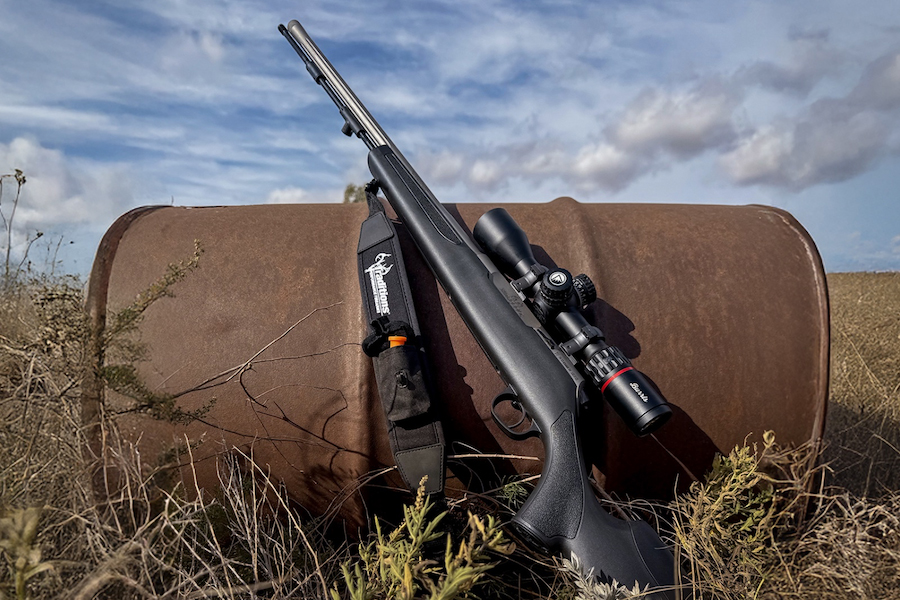
What the hell have I gotten myself into?
I blame Mark Keefe. Yeah, that Mark Keefe, the one who’s the Editorial Director for NRA Publications. He knows everybody in the industry and is respected by all of them. When I first met him it was about 25 years ago when he had a lower position within NRA Publications and only knew half the industry…who, of course, all respected him then.
I was pretty sure I knew everything back then, and I had some astute observations on muzzleloading that I shared with Mark, most of which were about it being the most boring form of shooting known to man. And probably something about paint drying being more interesting. I was an expert, you see.
Well, and this comes as shock as much to me as it does to you, apparently I don’t know everything, particularly on the subject of muzzleloading.
My opinion on shooting a smokepole turned a full 180-degrees during a conversation with Mark while visiting NRA HQ. At the time I was working for the late Chip Rosse at his ad agency, and we were visiting to tour and meet face-to-face with our editorial contacts.
During lunch I bestowed Mark with my sage insights and disdain for the slow, plodding, time suck that is muzzleloading. Without missing a beat, and more importantly without calling me stupid, Mark explained how I was looking at muzzleloading from entirely the wrong perspective. He shared how, in college, with a single $20 bill, he could spend the better part of a day on the range shooting a muzzleloader.
He went on to outline how shooting slowly forces you to focus more on the process, on your mechanics, and thus better understand the art of shooting…and improve your overall shooting skills. By comparison, that same $20 would disappear in a matter of moments when shooting a semi-auto pistol, thanks to the Ricky Bobby urge to go fast.
In that particular moment I went from looking down on muzzleloading to appreciating what it had to offer the shooter and the shooting sports. Mark made one of the best, most logical arguments for muzzleloading outside of hunting the early season that I have ever heard.
From that point on I’ve always thought of muzzleloading as an important shooting activity. Sure, it’s slow compared to other shooting, but with its slowness comes many benefits, not the least of which is enjoying your time on the range.
The funniest thing is that I actually owned a muzzleloader, a Remington 700ML. It was on clearance at the Gander Mountain where I was working at the time, so I grabbed it. I even shot it a few times, then promptly lost the nipple, which took me out of commission. That and the fact I didn’t have a range nearby where I could shoot.
But while my muzzleloader remained bagged up and set aside, my interest in that particular segment of the shooting industry never went away. Mark’s take on the sport always stuck with me, despite me not being an active participant.
That non-active participant thing is about to change. A couple months ago Burris reached out to outdoor and shooting writers and was giving media types one of their Fullfield line of riflescopes. There are six models in the line with some having up to three reticle options. They range in MSRP from $192 up to $600 and I was offered one.
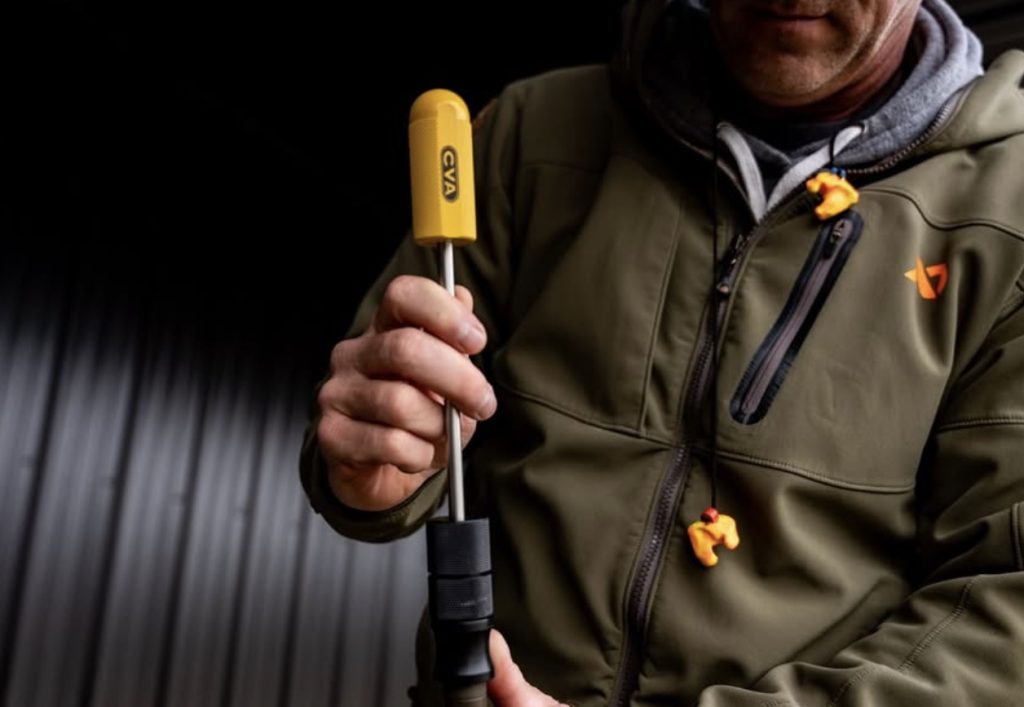
At first, I didn’t see the need to waste Burris’ time or a riflescope since I didn’t have any immediate need or use for a Fullfield scope. Then I remembered that conversation with Mark, and suddenly, if I could get a new modern muzzleloader, some bullets, powder and primers, not to mention all those miscellaneous accessories one needs for muzzleloading, I could do a feature or two on why shooting a muzzleloader is a lot more fun than you might think.
My plan was also to take all the credit for this reevaluation and advocacy for black powder rifles. I’d outline why they shouldn’t be just a passing thought, or an early hunting season purchase, but a primary addition to any shooter’s collection, and do so while never mentioning Mark Keefe’s 25-years-old wisdom.
Obviously I’m not the best at following up on plans, especially plans that resemble those of criminal masterminds from some animated Pixar movie.
So, here I am, heeding Mark’s advice, taking his words to heart, and embracing the muzzleloader, not just as a throwback to the old days of Redcoats, mountain men, and the Civil War, but as a firearm of today taking its rightful place within the modern shooting sports.
More to come….
I learned photography in the film era. Growing up, I spent a lot of time with my dad in our basement darkroom, developing film and printing photographs. We mostly shot 35mm film which we handled in 36 shot cartridges.
When digital photography arrived I started using digital cameras, which let me shoot hundreds of images in an outing with zero cost.
When cell phones arrived even those dedicated cameras fell by the wayside, since the camera that’s always in your pocket is much more useful than the one you have to remember to take with you.
Just like everybody else, I mostly take dozens of snapshots and later discard the ones I don’t like.
When Dad passed my sister got his vast collection of 35mm gear – bodies and zoom lenses and everything else – and I got only his one Hasselblad body and three prime lenses. It uses 120-format film: 6x6cm with 12 shots on a roll.
I have been re-introduced to painstaking craftsmanship. When your camera has a fixed capacity – only 36, or only 12 – you take your time with each exposure. Each one matters more.
Your embrace of a muzzleloader follows the same trajectory.
Growing up I had a similar experience with my dad. We shot mostly 7.62mm which we handled in 5 shot cartridges. I am pretty sure we mostly used a 3×9 lenses. 😉
as spendy as that format is, what would you have to drop on an image sensor to be able to approach similar sized enlargements without noise (“grain” analogy)?
i like my x20 and my 35rc.
the newer breech loading bp rifles are tempting, as is that integrally suppressed one. pretty messy tho.
I have a nice selection of rifles in the popular calibers for white-tailed deer hunting. I have harvested white-tailed deer with a rifle chambered in .270 Winchester. I have harvested several deer with archery equipment. I have harvested multiple deer with a shotgun. I have harvested multiple deer with a rifle chambered in .44 Magnum (yes, the revolver cartridge). And, I have harvested several deer with a modern inline muzzleloader. In fact I harvested seven white-tailed deer in the last two season with my muzzleloader.
You may be wondering why I used my muzzleloader for all seven of the deer that I harvested the last two seasons. First and foremost: it is dead-nuts accurate and super reliable. I have placed accurate kill shots on at least four white-tailed deer all of which were 125 yards (plus or minus a few yards) out. Second, my “go-to” rifle WASmy .44 Magnum rifle–which has been inconsistent (in terms of shooting tight groups) and is questionable beyond 100 yards (due to waning bullet velocity and “rainbow” trajectory causing very fast bullet drop). The last two seasons, I did not have time to sort out whatever was going on with my .44 Magnum rifle so I pulled out my muzzleloader at the last moment and confirmed that it was still shooting dead-nuts on. Thus, I went out to the field with it, with great success and a perfect record.
In my opinion the only real downside to a muzzleloader is cleaning–you really have to clean it thoroughly and promptly after you shoot it, even just a single shot. With a centerfire rifle, you could wait several days (or months) to clean it after a single shot. You cannot do that with a muzzleloader because sulfur residue in black powder (and black powder substitutes) will destroy your rifle if you wait months (and possibly even several days depending on conditions) to clean it.
As the author stated, muzzleloaders force you to slow down and be accurate. That is a good thing. Plus muzzleloaders can be less expensive to shoot than popular hunting centerfire rifle cartridges.
If you don’t have a muzzleloader, I encourage you to buy one. And if you are not into really old-school muzzle loaders, buy a modern inline muzzleloader. They are fun to shoot. Speaking of being fun to shoot, there is another significant advantage to muzzleloaders. First, you can measure your powder load to any level you want. A young shooter would enjoy a 50 grain powder charge. A big burly guy could handle a 150 grain “Magnum” powder charge. Most people like somewhere between 80 and 100 grain powder charges for shooting–and 100 grains is more than adequate for most hunting scenarios. Last but not least, black powder and black powder substitutes burn a bit slower than modern smokeless powders which means their pressure buildup in the barrel is more gradual–and that translates to a more gentle recoil impulse. While recoil from black powder is as significant as many other calibers, it tends to be more of a push than a punch in your shoulder, which is a more comfortable shooting experience for pretty much everyone.
Yesterday or the day before I provided a thoughtful and valuable comment on muzzleloaders–which immediately vanished even though there was nothing remotely off-topic, inappropriate, controversial, or vulgar in my comment.
Viewer comments to articles on this site are a VERY sizable chunk of the value and appeal of this site. Sadly, my enthusiasm to try multiple times in multiple ways to get a comment to finally post here has ended. Thus I will be providing exceedingly few comments going forward and I most certainly will not try to repost a comment a different way to get past whatever automatic deletion this site does.
haha yeah. most of my shite posts are just for fun for some, but when i occasionally am inspired i detect a greater likelihood of etheria. which isn’t really a word.