

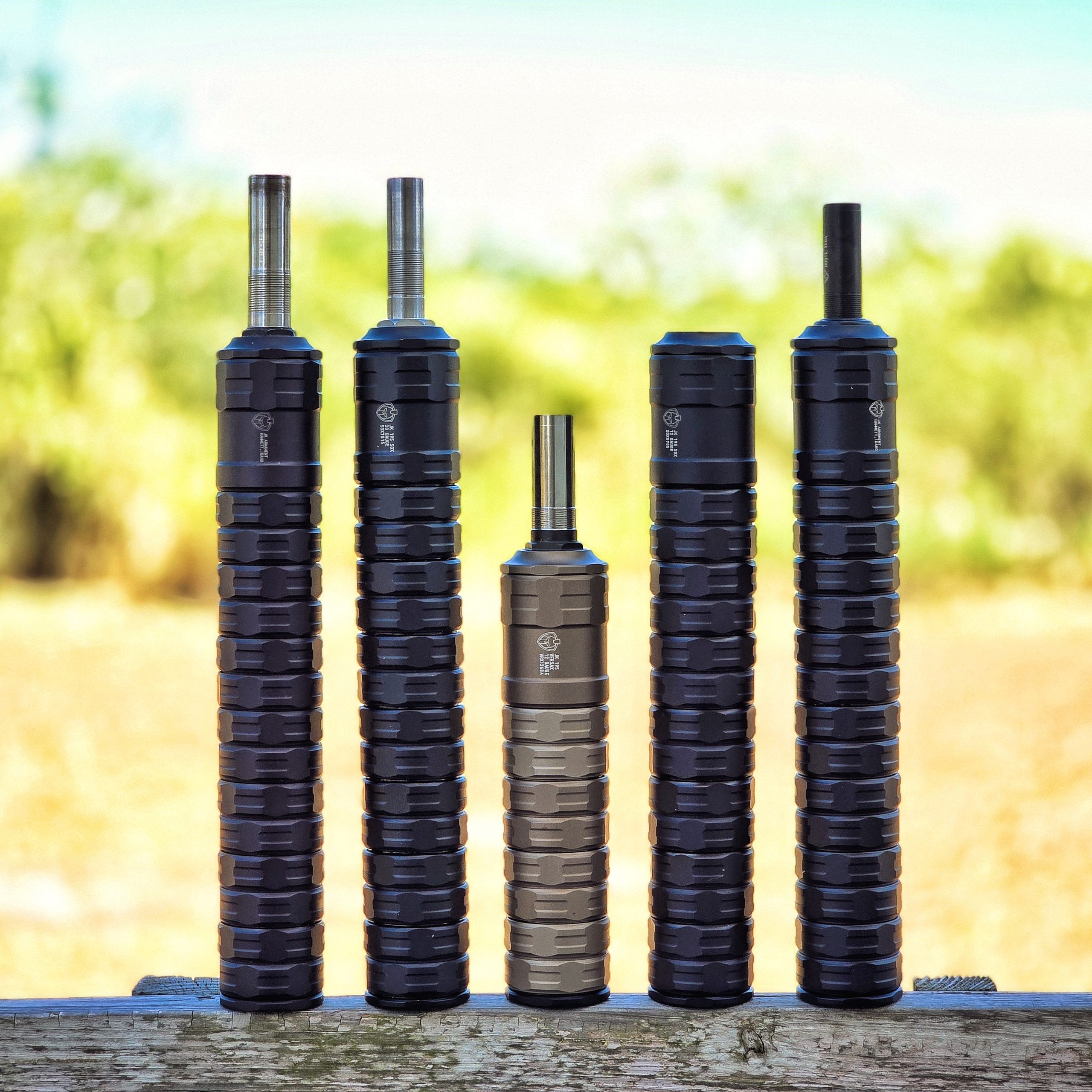
Dan and I went down, down, way down into the southernmost tip of Texas, mere minutes from Mexico, to do a little dove hunting. The tools? Four shotguns, two from Beretta and two from TriStar, one 12 gauge and one 20 gauge from each company.
You know what sucks? Not shooting suppressed. So we borrowed four suppressors from JK Armament — two JK 195 SGX 12 gauge cans and two of the brand new JK 195 SGX 20 gauge cans — plus I brought my personal JK 195 12 gauge shotgun silencer just in case.
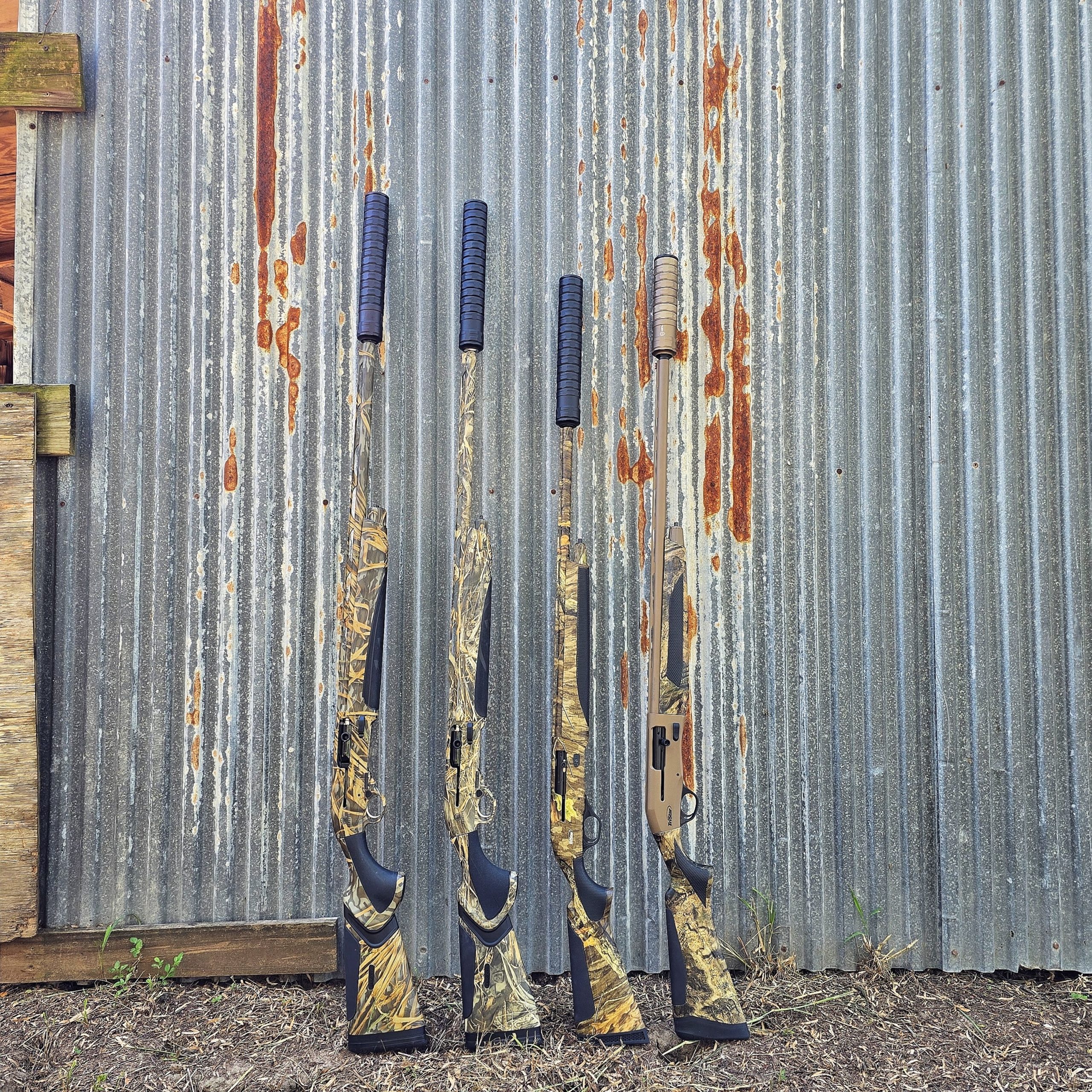
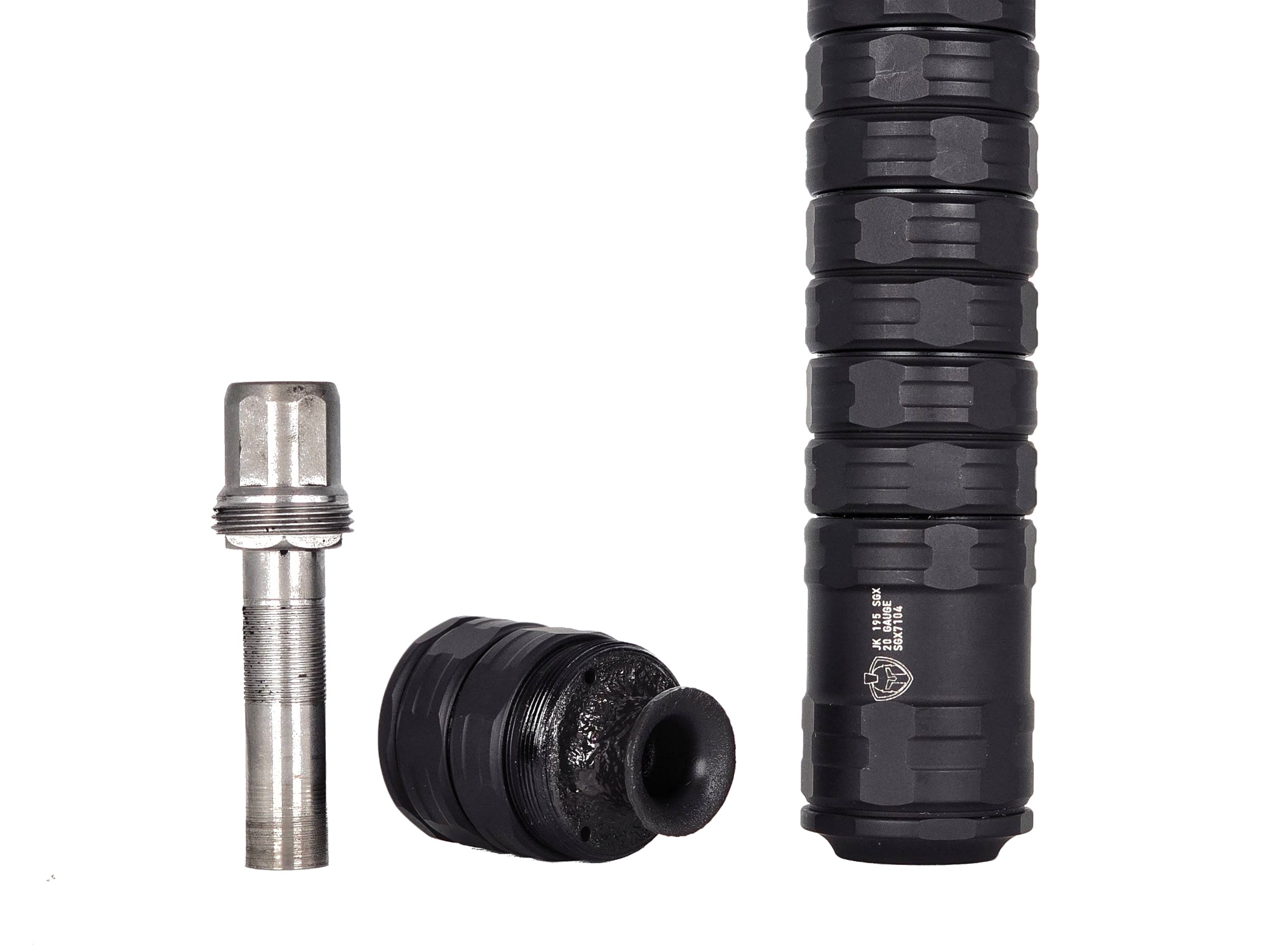
Ain’t that a thing of beauty? We simply removed the factory choke tubes from the four guns, installed the JK CRMDs (Choke Replacement Muzzle Devices) in their place, and then had a simple and quick QD mounting system for the suppressors.
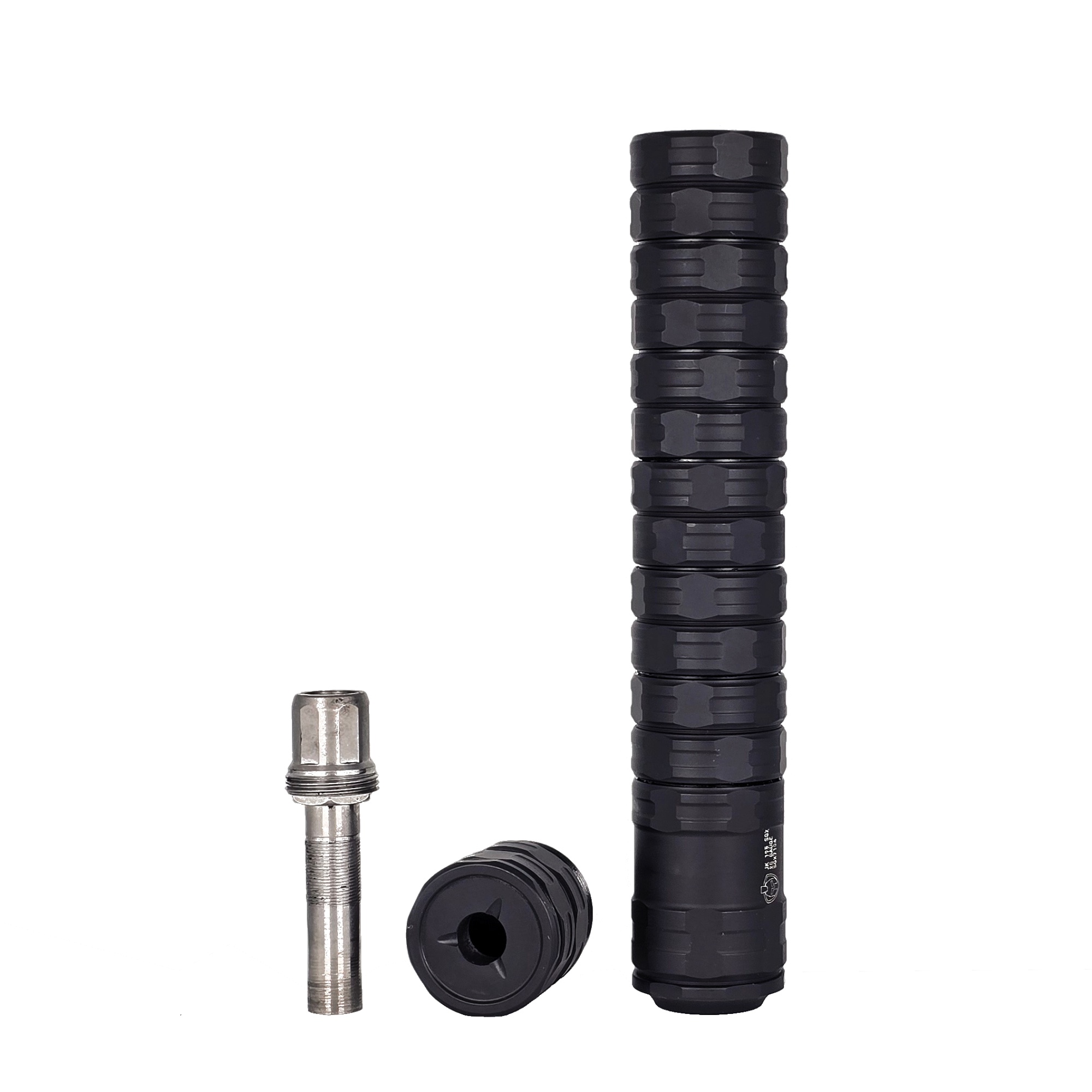
One of the Berettas had some carbon crud in its choke tube threads and that made removing the factory choke and threading in the CRMD more work than it should be, but the large wrench flats on the CRMD made it easy enough.
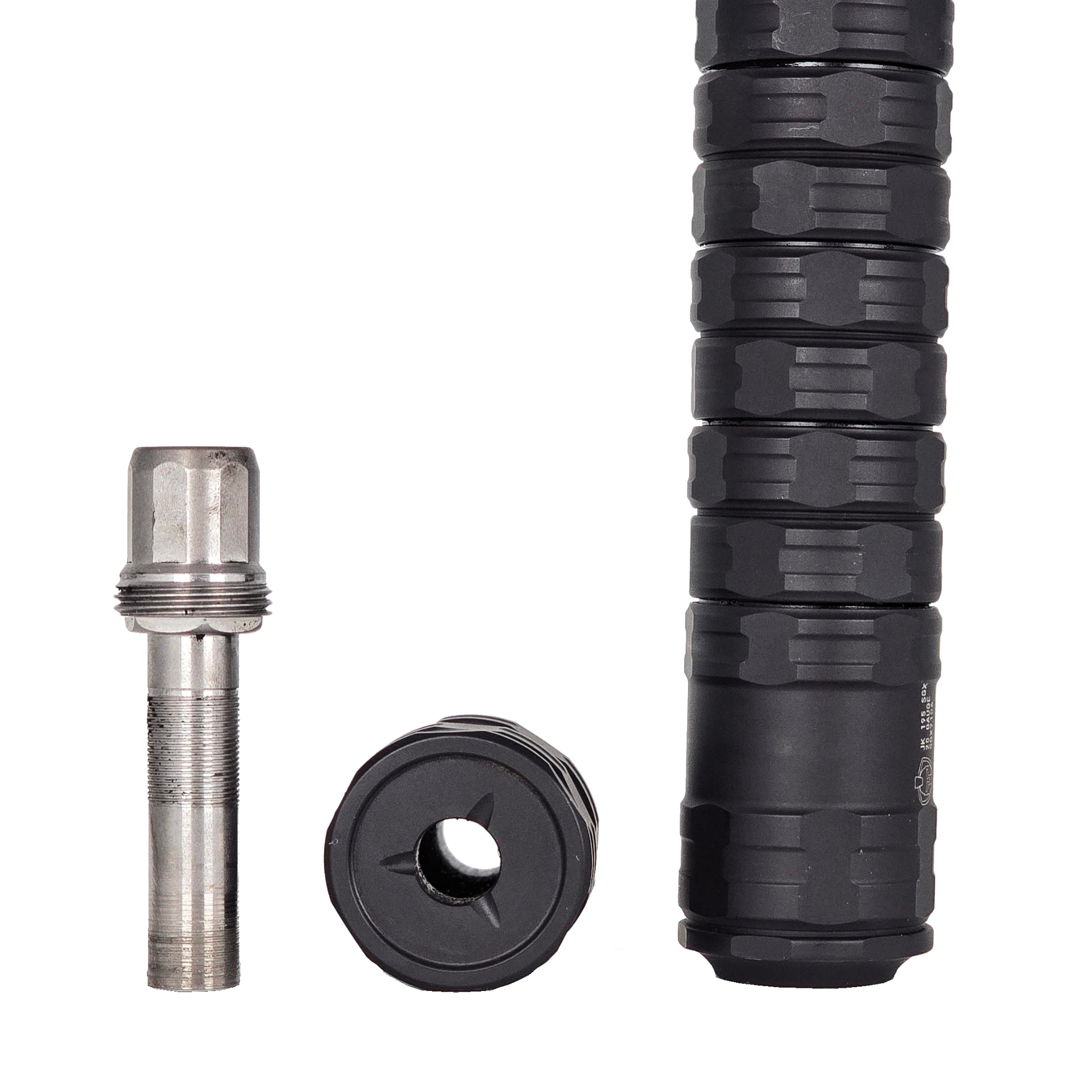
The JK 195 series was really the first shotgun suppressor that was usable for bird hunting or for shooting trap, skeet, sporting clays, etc., because the patented design properly controls your shot pattern. At the muzzle of the 195 suppressors is a screw-on front cap, in this case called a Choke Cap, and it behaves exactly like a shotgun choke tube.
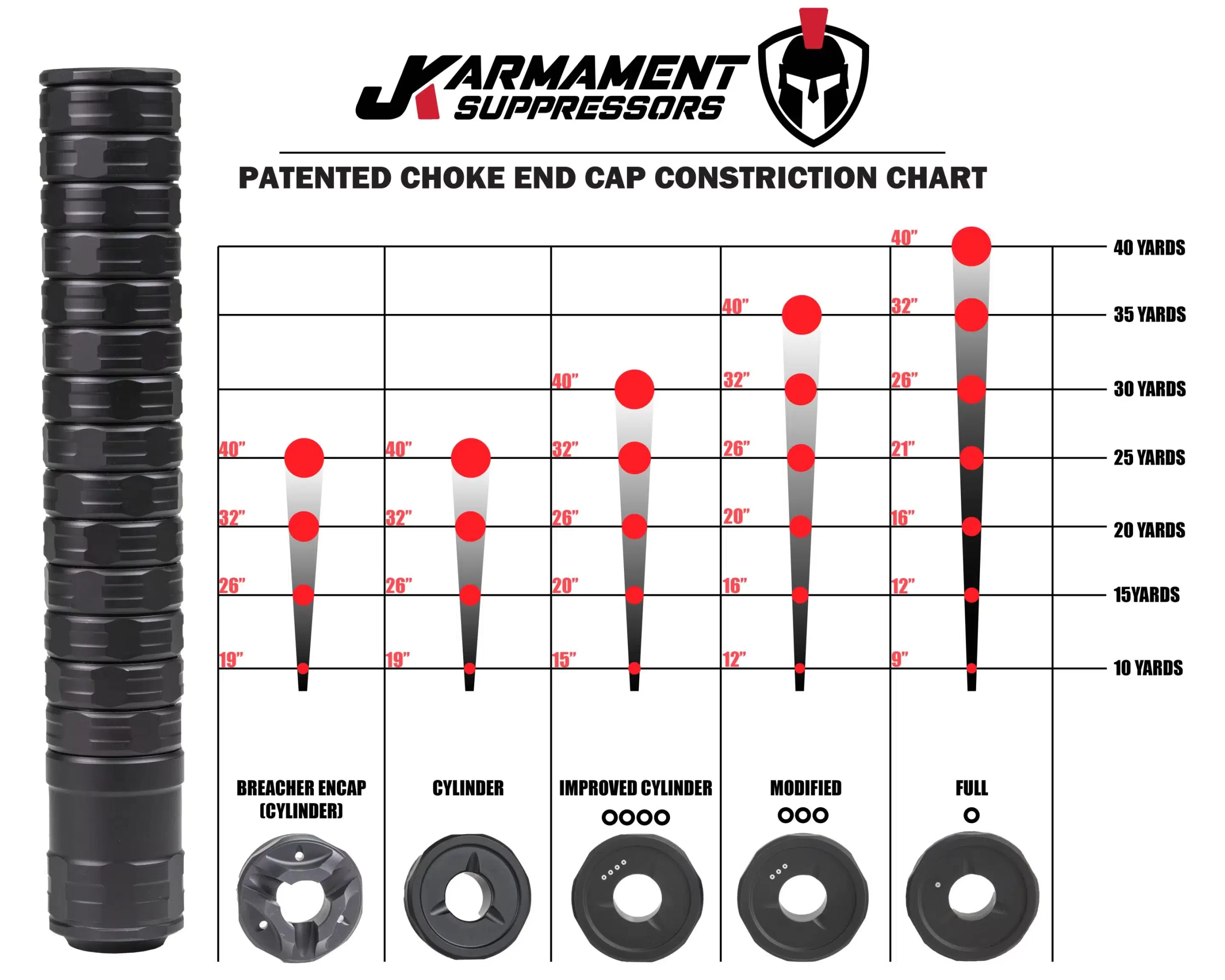
Available in Cylinder, Improved Cylinder, Modified, and Full, the Choke Caps control your shot pattern constriction just as they should. We ran Modified chokes for our dove hunt. (since our hunt JK has released the Widowmaker End Cap in both 12 gauge and 20 gauge, which allows you to install any Accu-Choke footprint choke in it, whether flush or extended, which is pretty sweet)
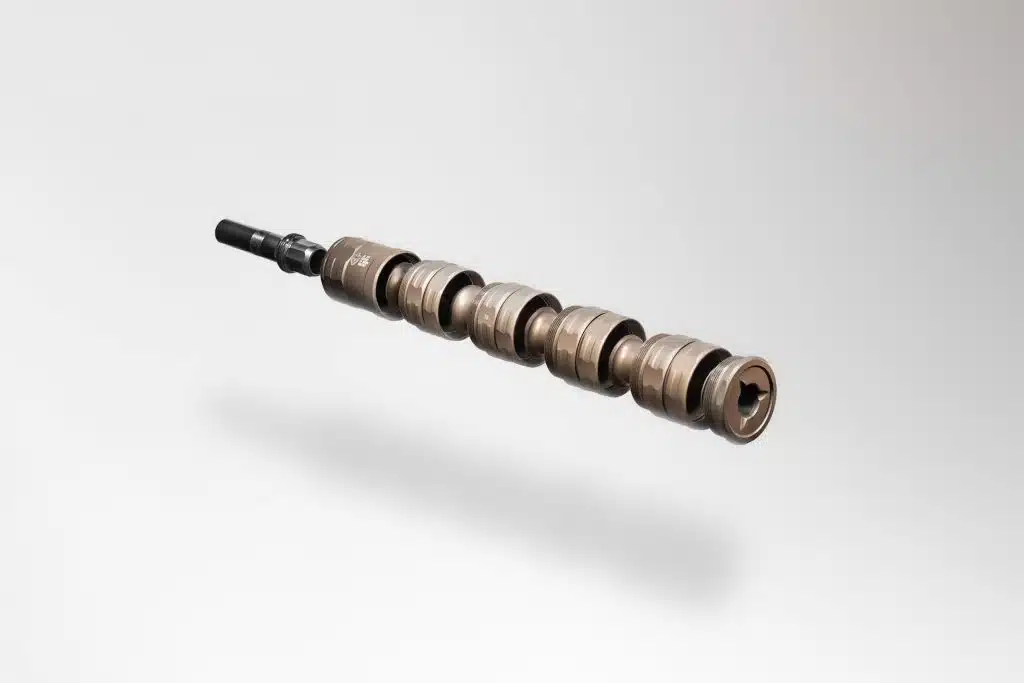
In addition to offering legitimate shot control with multiple restriction levels, the JK 195 innovated one other mechanism that made it the first truly practical shotgun suppressor: wad-friendly baffles. The trumpet-style mouth on each of the modular baffles allows the shot cup / wad to enter without damage while it simultaneously controls the wad to keep it closed all the way down and through the suppressor, whether you’re running one baffle or all of the baffles.
Previous shotgun suppressor designs were not so friendly to the plastic shot cups. They didn’t control the cup as well and even tended to damage them by shaving off plastic. Shoot a couple boxes of shells through those cans and you’ll often find little plastic bits collecting in the action of your shotgun because of this. Not to mention they were cylinder bore only and didn’t pattern very consistently.
I’m not trying to knock on previous shotgun suppressors here so much as explain why I thought the JK 195 series was so dang cool when it was released a couple years ago, and why I got my hands on one as my first shotgun can as soon as I possibly could. It’s fun to shoot suppressed under any circumstance, but doing it in a truly practical, usable, effective scenario is just that much better.
And that’s precisely what Dan and I did in the southern tip of Texas!
Check out the video above for some highlights and banter from our trip.
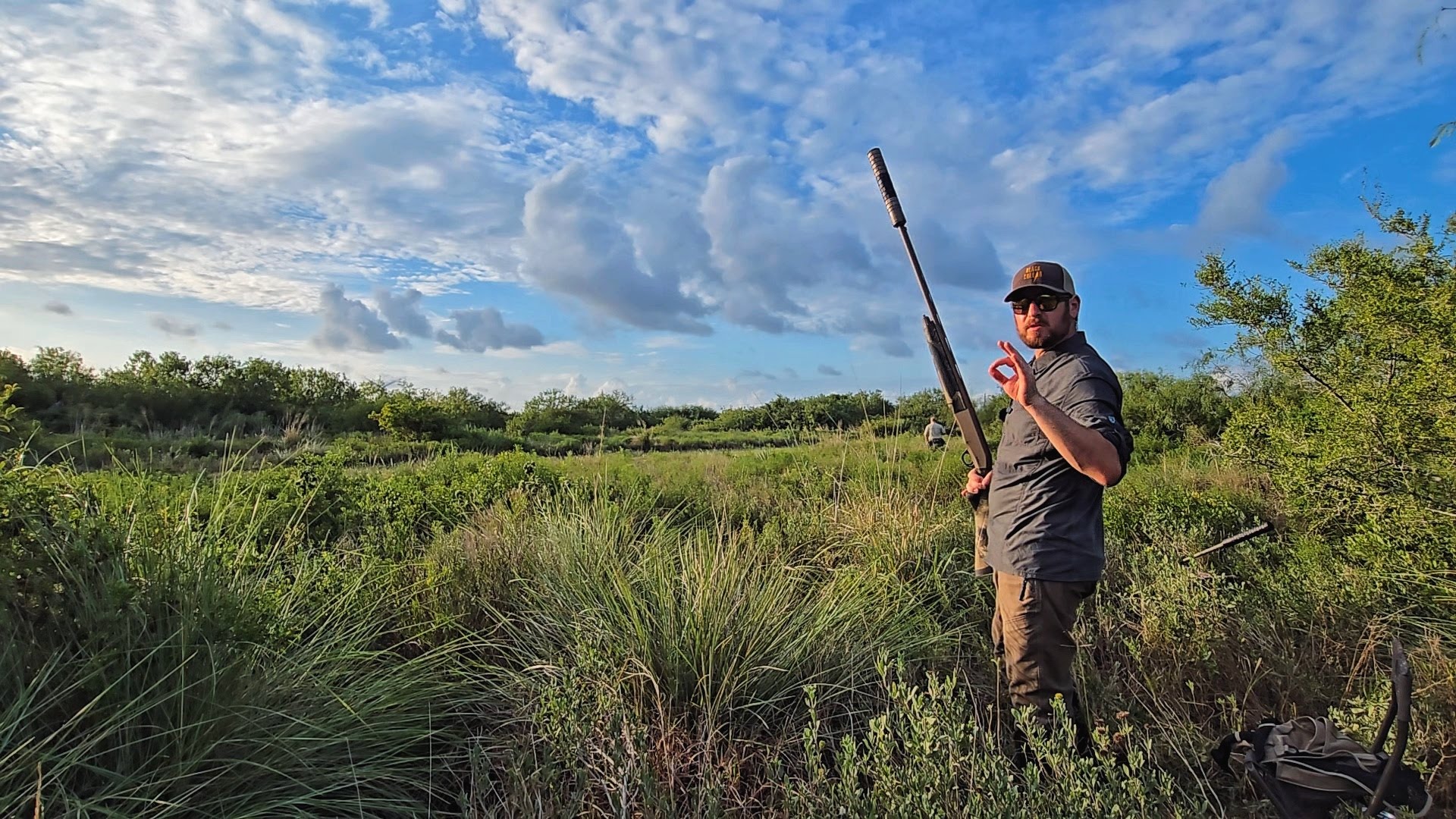
Yes, that’s right, banter. Dan and I could hear each other. We could talk at low volume. Hearing protection becomes far more optional rather than mandatory with the addition of a decent suppressor. It’s much more comfortable, practical, and enjoyable to make your gun wear the hearing protection for you!
That said . . .
None of the 12 gauge shotgun suppressors on the market are what anyone would call “quiet.” They push right up against or, in some scenarios (gun model, ammo type, etc), slightly exceed the generally-accepted 140 dB “hearing safe” threshold. Hearing damage is also a cumulative thing, so your shooting volume (quantity, not sound) and duration matters.
JK Armament considers their shotgun suppressors (and their JK 105 CCX 9mm suppressor) to be “special use” suppressors, which means they’re physically smaller than they’d truly have to be in order to reliably suppress the host firearm down below that 140 dB threshold without being run “wet.” The 195 series comes with Vaseline pre-applied inside the baffles in order to show the owner how much and where to apply it, and to ensure each owner experiences shooting the suppressor wet.
Thanks to the relatively low pressure and heat generated by shotgun shells plus the large amount of air volume inside the 195 series suppressors, petroleum jelly applied in the baffles lasts through at least a 25-round box of shells before you’re likely to notice the sound level creeping up.
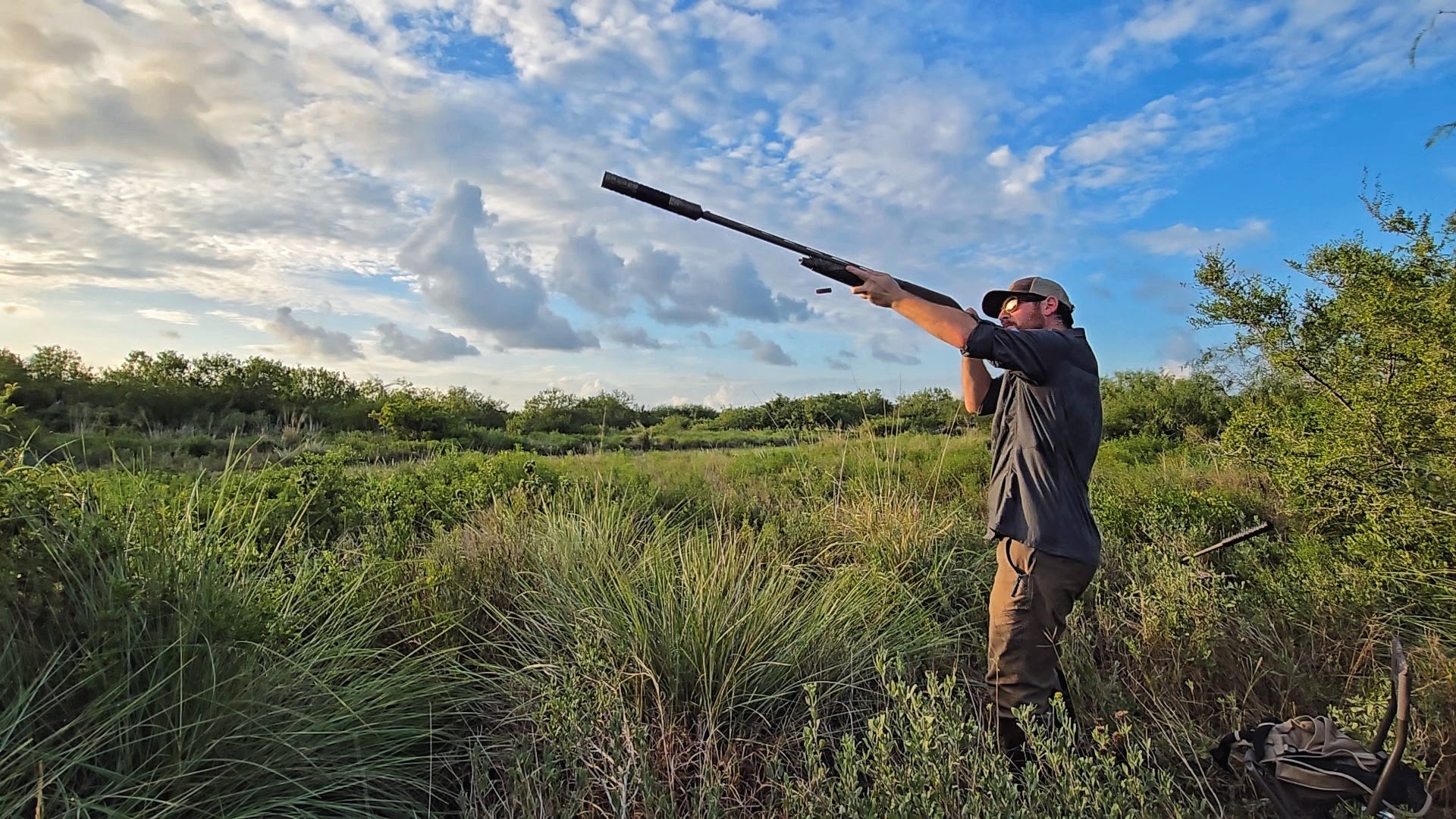
I don’t let Dan get within 100 yards of Vaseline so I didn’t bring any on this hunt, which meant we got to experience the entire lifecycle of the suppressors going from wet to dry. On our first evening of dove hunting we didn’t wear hearing protection and it was perfectly comfortable. Thanks to slightly more airspace inside the suppressor and the smaller powder charge, the 20 gauge is a bit quieter than the 12 gauge. We both shot slightly fewer than a full box of shells and didn’t notice the sound volume level of our shots changing.
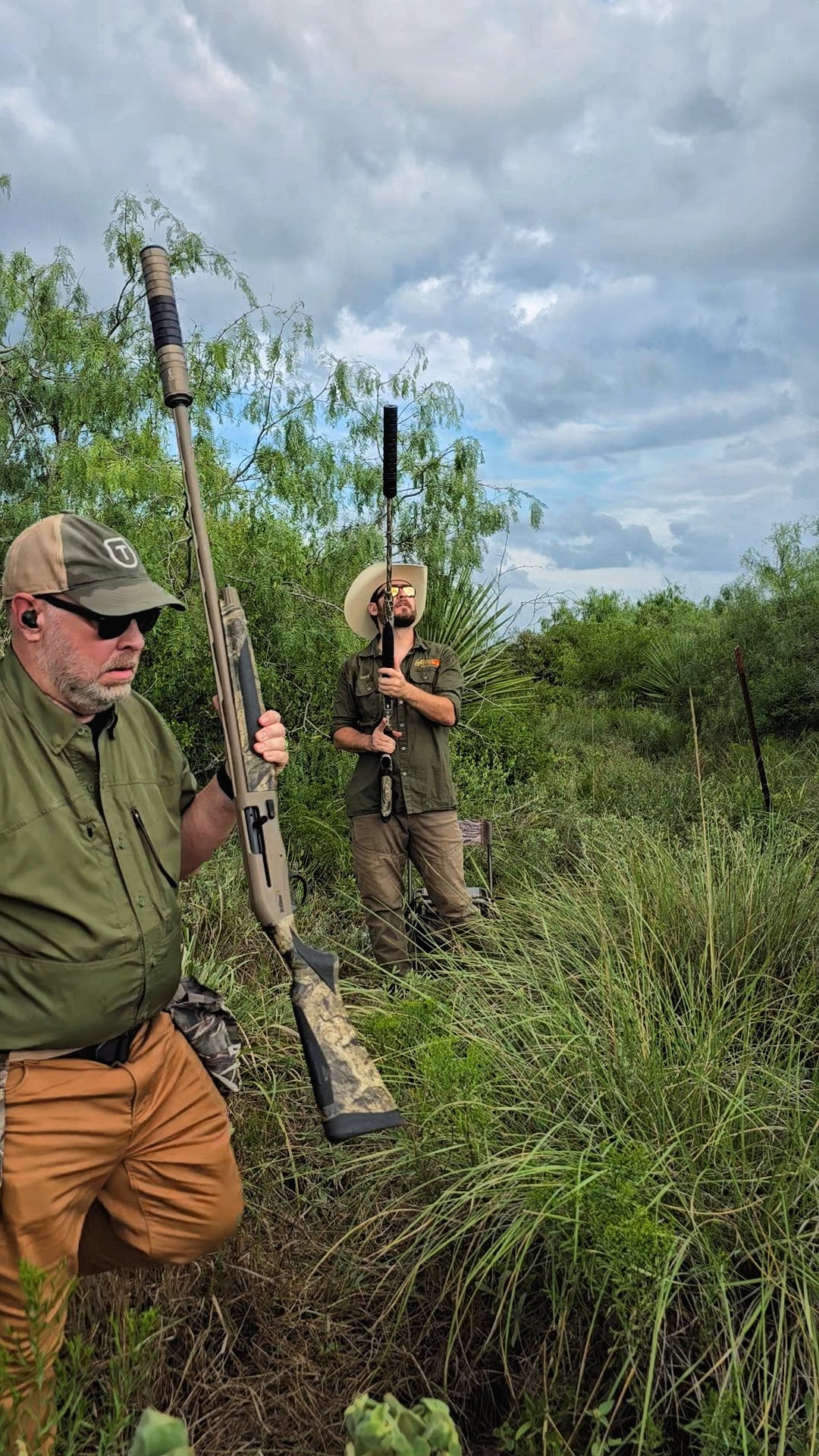
On our second day, Dan wore his customary electronic plugs and I started out without ear pro but put plugs in after a combined ~dozen shots. Mostly this was due to Dan’s 12 gauge firing from 10 to 15 feet away from me, not from my own 20 gauge. From directly behind the gun it’s quieter than from assorted angles off the muzzle. Had I been farther from Dan or hunting alone I may have forgone the ear pro.
Even with hearing protection in, hunting with the suppressors was more enjoyable than hunting without them, and for multiple reasons.
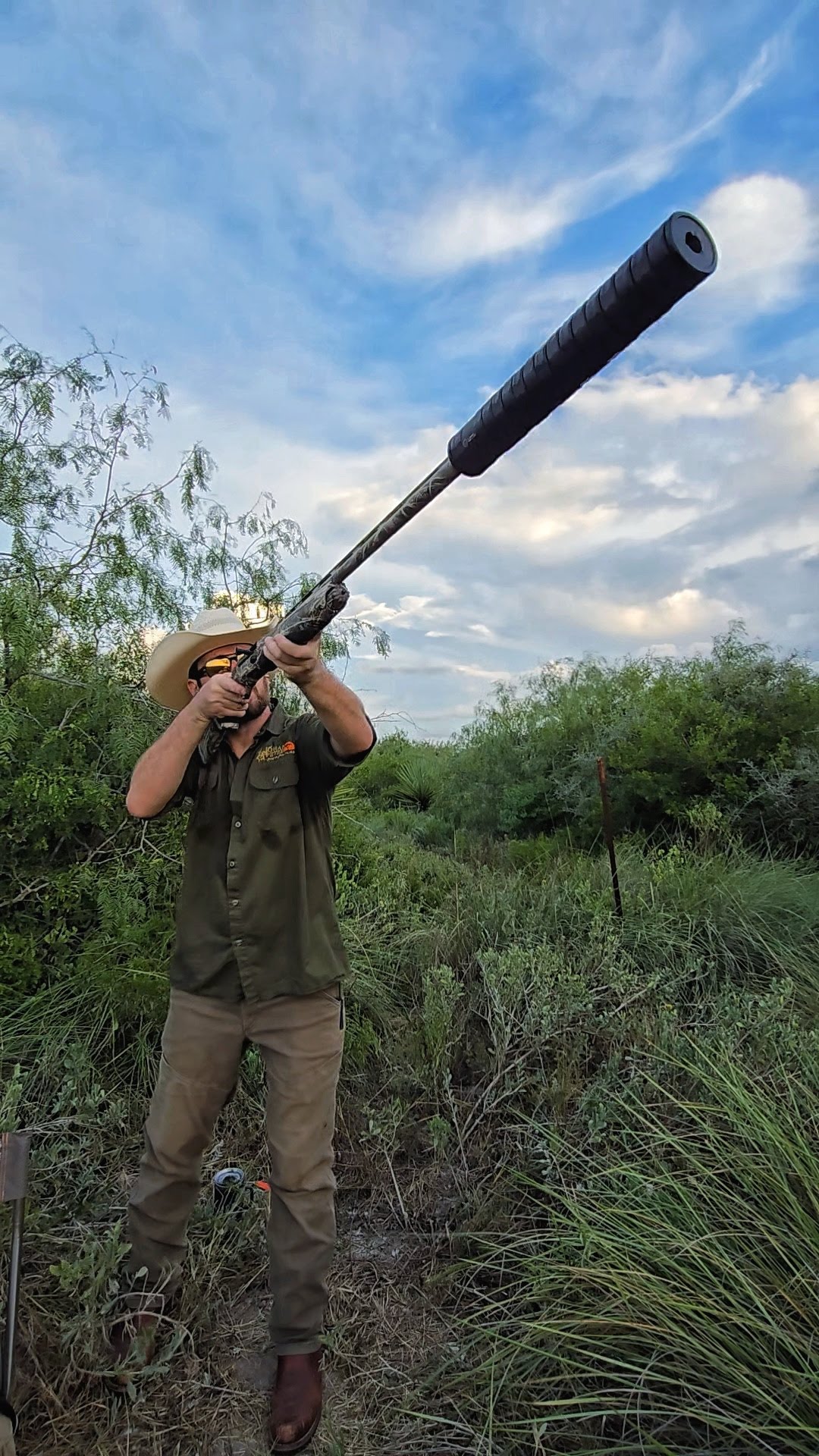
These things reduce felt recoil pretty effectively and they completely eliminate blast and concussion. You know, the overpressure whump that you can feel in your chest and sinuses and whatnot. The “bass” from a 12 gauge (or a centerfire rifle)? That’s totally gone. Sound suppression aside, a suppressor’s ability to eliminate muzzle blast and concussion as well as reduce recoil — on a centerfire rifle it’ll cut 50-60% of the felt recoil — is worth the price of admission as it makes the shooting experience much more pleasant.
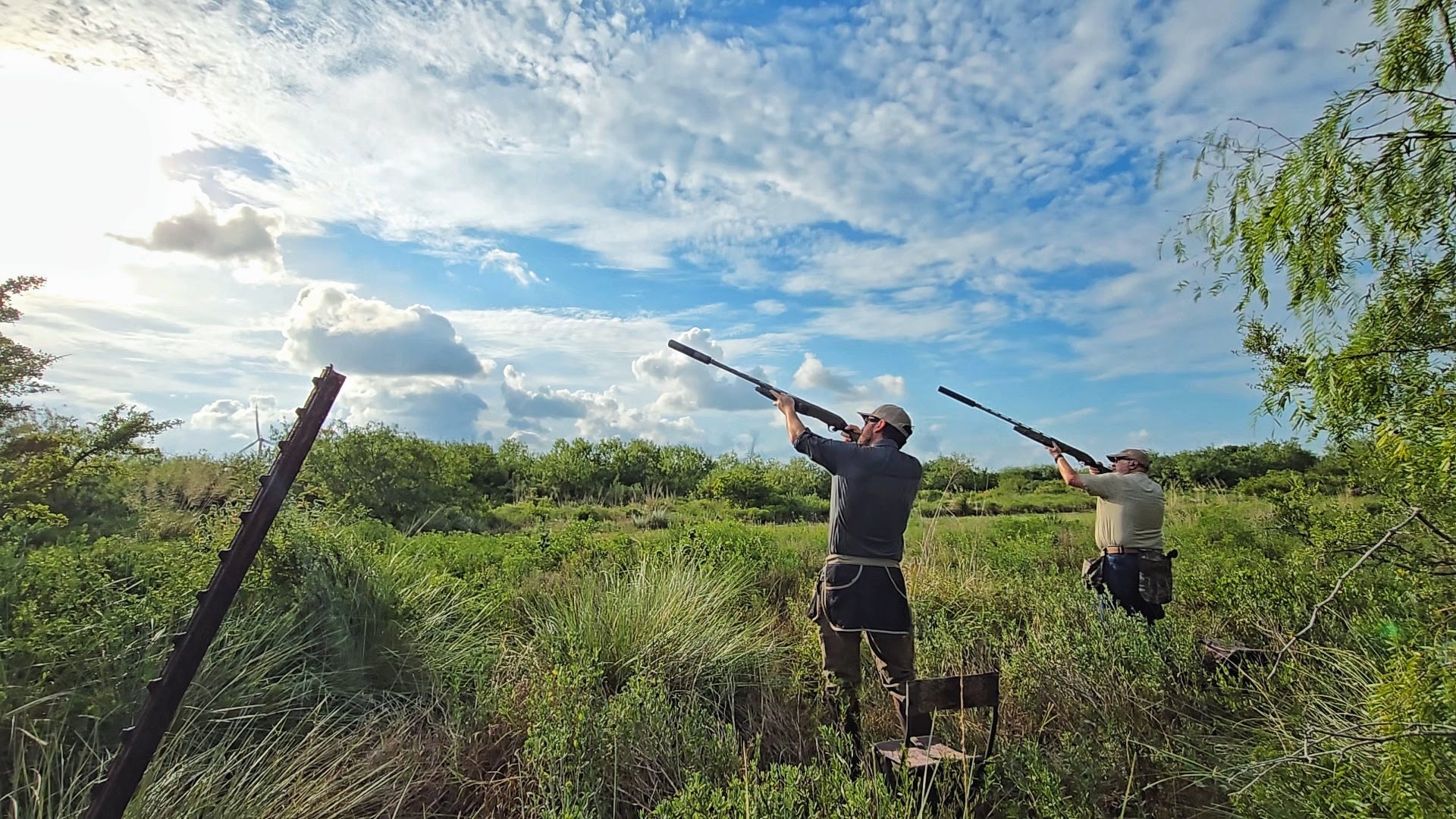
Dan and I both agreed that the weight of the suppressor — about 22 ounces with the JK 195 in its longest possible configuration, including the CRMD muzzle device — aided our shooting. Our swing and our aim was smoother, we swung through the target more consistently and more smoothly, and the suppressor dampened out little jitters and shakes and such. It’s a lot like how shock absorbers control and smooth out the motion of the springs on your vehicle.
Visually the suppressor gave me a big ol’ aiming point and a smooth swing that helped me lead the quick doves accurately and consistently. I’m not particularly great with a shotgun and my hit percentage on this trip was, I felt, markedly higher than normal for me.
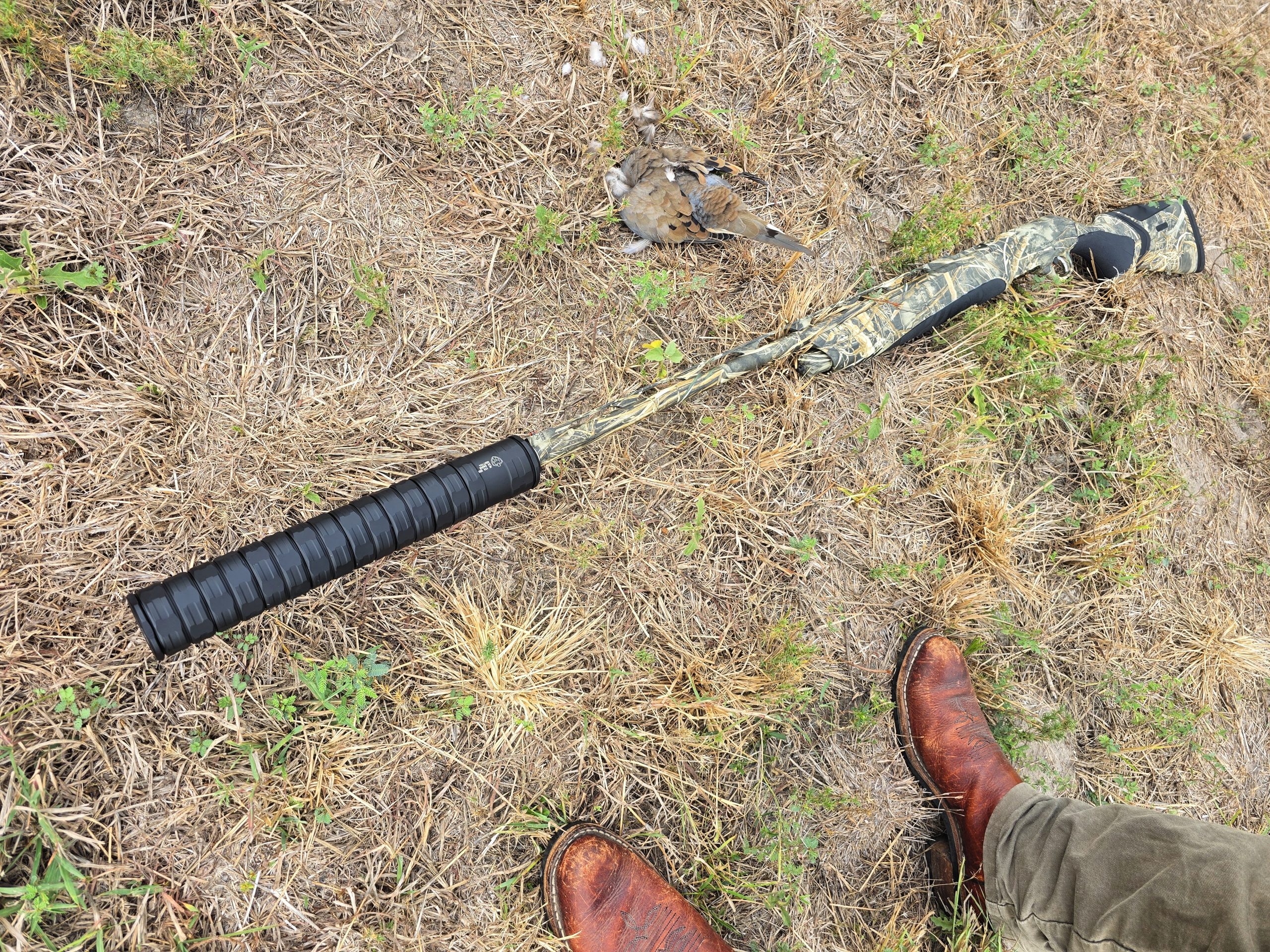
It’s a little wild to look at that sewer pipe and realize the JK 195 is particularly small and lightweight for a 12 guage suppressor, but apparently it is. There’s a lot of gas volume coming out the front of a shotgun and this thing is skirting the limits of how small a 12 gauge suppressor needs to be in order to bring sound levels down an acceptable amount — again, accomplished best by running it “wet.”
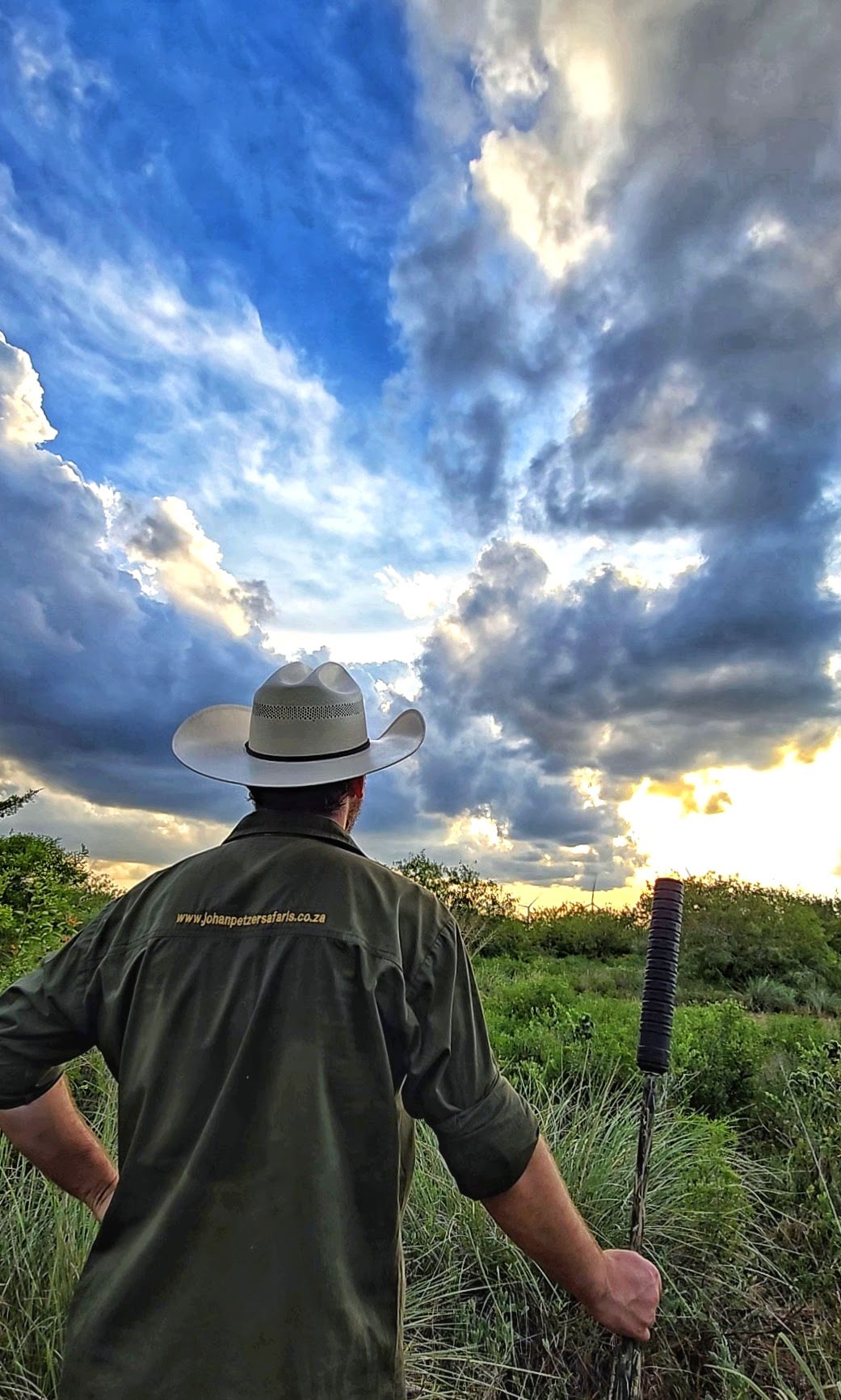
If you’re looking for “Hollywood quiet,” you won’t find it with a suppressed shotgun (not even with JK’s No Country For Old Men-inspired “Friendo“), but if you’re looking to hunt and shoot far more comfortably with advantages beyond the obvious sound suppression, I’d highly recommend it. Heck, in a manual action shotgun (as opposed to a semi-auto) with the suppressor run wet and with subsonic ammo (whether birdshot, buckshot, or slugs) it does get pretty close to movie quiet territory for the shooter.
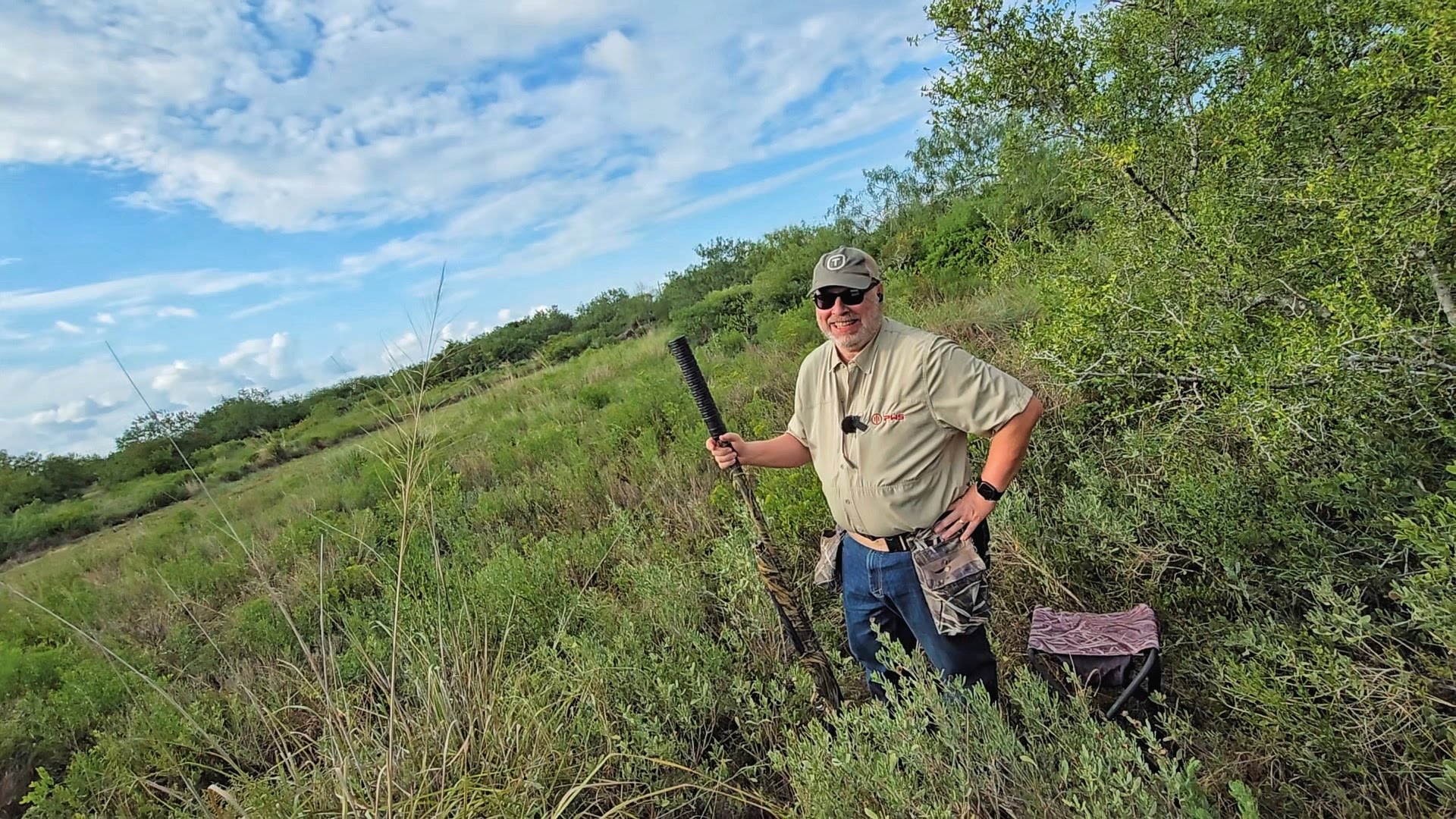
Doves, turkey, ducks, quail, pheasant . . . get out there and hunt suppressed! It’s great. It’s better. The JK 195 series makes it possible and practical thanks to how it properly controls shot patterns, and now’s the time to take advantage of it.
ATF wait times are down to a couple days to a couple weeks now. Beginning January 1st the $200 tax is completely gone. Head over to Silencer Shop to find the 12 gauge, 20 gauge, or other suppressor that’s right for you and for the simplest suppressor-buying experience possible.
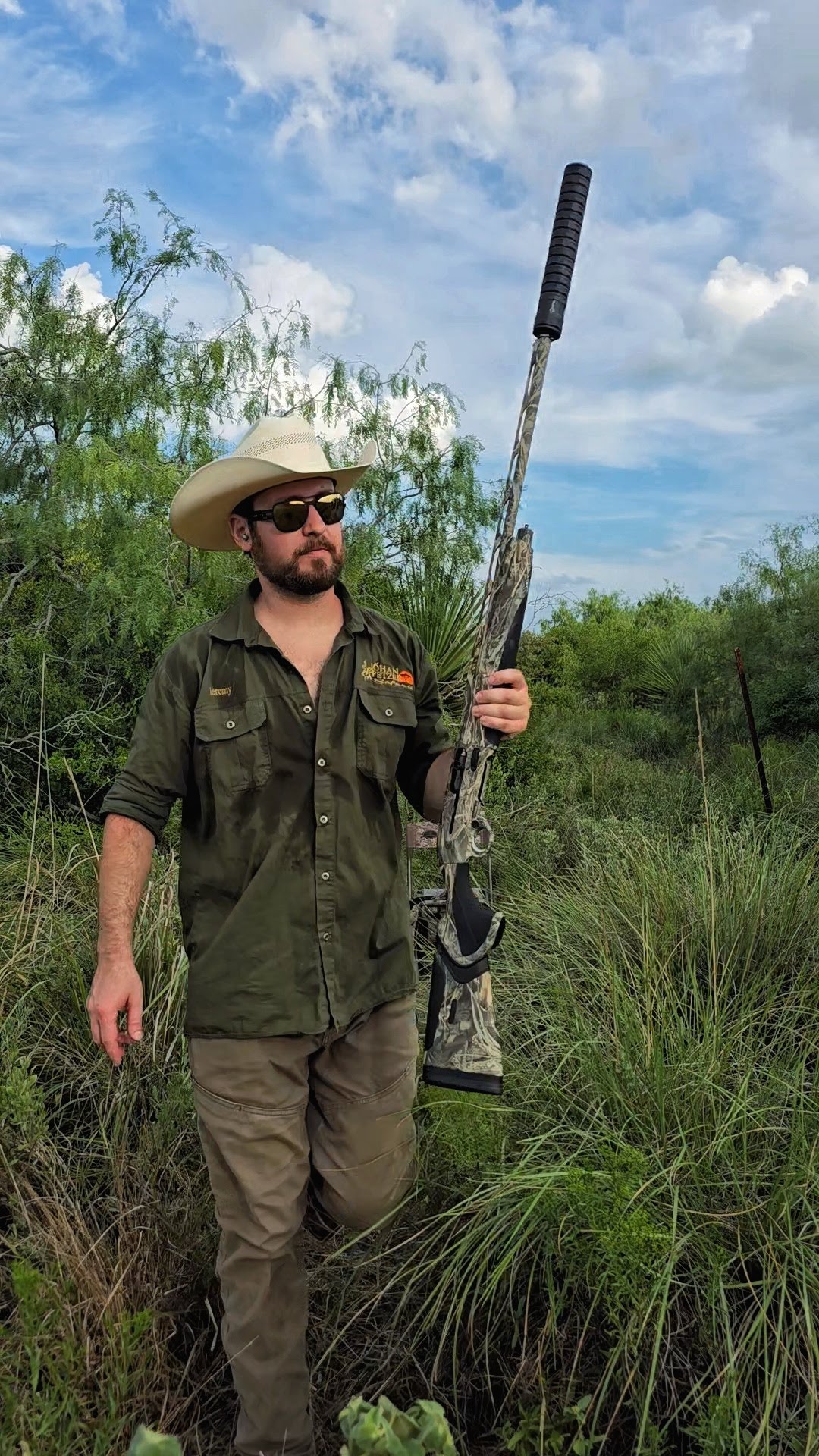
Specifications: JK 195 SGX Shotgun Suppressors
Length: 3.375″ to 12.2″ (configurable)
Weight: 3.0 oz to 21.1 oz (configurable, not including mount)
Material: 7075 billet aluminum
Caliber: 12 gauge or 20 gauge
MSRP: $945
Hunt suppressed?
Hell, park that can on a Mossy ‘Shockwave’ and you are good-to-go for hearing-safe home defense…
“I love the peasants! Pull!” (Mel Brooks)
Now there is a fascinating idea: I would LOVE to have a semi-auto 20 gauge shotgun with an 18-inch barrel (thus avoiding the dreaded and arbitrary “short-barreled shotgun designation) and a suppressor for home defense. And load it with sub-sonic slugs. Wowza! No human on earth is going to shrug off a 20 gauge shotgun slug–even when it is subsonic on impact.
You know, a 12-inch barrel with a permanently mounted suppressor that brings it at least to legal length would be pretty badass.
Or just build a short barreled shotgun! After Jan 1 it’s free. No more $200 tax to file that Form 1 and build your own (or to buy one on a Form 4).
“After Jan 1 it’s free. No more $200 tax to file that Form 1 and build your own (or to buy one on a Form 4).”
Hell yeah, I’m filing for a number of form 4 cans come Jan 1…
“…just build…”
https://www.luckygunner.com/lounge/shotgun-hack-job-budget-diy-home-defense/
Garage project for those with medium hand tool skills. A grand for the suppressor stings, but lose the tax and add in a basic used pump shotgun…
And if you are worried about good thread alignment (and you should be, else you may build a one shot wonder), have it professionally chopped and threaded.
“A grand for the suppressor stings, but lose the tax and add in a basic used pump shotgun…”
I’m thinking along the lines of a free stamp and scratch-build a can from plumber’s pipe…
JK Armament does a bunch of barrel threading as a service, including on shotgun barrels. I sent in a pump action 12GA to them and had them cut it down to about 13-14 inches (as short as it could be and clear the pump) then externally thread the barrel for their OBMD (https://jkarmament.com/products/jk-bald-eagle-12ga-over-barrel-muzzle-device/) and install one. Works great!
No, that’s the point: A Shockwave or Aftershock is a firearm, neither a shotgun nor a short-barrelled shotgun. So there’s no registration and no tax, just transfer it on a normal 4473.
Yeah and it’ll be useable after filing a Form 1 and putting a stock on it to turn that confused non-binary monstrosity into a functional firearm 😜
Yeah, even with just three baffles you’d cut down on sound, muzzle blast, concussion. No need to suffer hearing damage along with all the rest of the negative aspects of that scenario
Cool. But given the changes in the laws pertaining to cans (and the possible removal of them from the NFA entirely if the ASA suit succeeds), what we need to see are some BCA integrally-suppressed shotguns.
LKB,
I despise integrally suppressed firearms because I want the ability to thoroughly clean the barrel AND the baffles inside the suppressor.
That would be cool. A ported barrel with the suppressor over it could be very effective while also not adding any length. Difficult with gas operated systems, easy with inertia or manual action.
uncommon_sense, there are quite a few integrally suppressed designs that allow for both of those things without any difficulty. They disassemble just fine or otherwise provide full access. Some make it harder, but there are still ways. Nearly all centerfire rifle cans are fully sealed anyway and you can’t access the baffles inside the suppressor. The effective ways to clean those (soaking in a solution) can often be used for those more complicated integral setups as well. In really all scenarios you can clean your barrel with a bore snake. If you want to use a rod, the only typical restriction is that you don’t want to use patches if you’re going to be passing it through the suppressor.