
Open Letter to Reform the National Firearms Act
May 17, 2025
The Honorable Jodey C. Arrington
Chairman, House Committee on Budget, U.S. House of Representatives 1111 Longworth House Office Building
Washington, DC 20515-4319
The Honorable Virginia Foxx
Chairman, House Committee on Rules, U.S. House of Representatives 2462 Rayburn House Office Building
Washington, DC 20515-3305
Rep. Arrington, Rep. Foxx, members of the House committees on Budget and Rules:
As leaders of the undersigned organizations, we demand immediate inclusion of portions of the Hearing Protection Act (H.R. 404) and the Stop Harassing Owners of Rifles Today (SHORT) Act (H.R. 2395) in the forthcoming reconciliation bill. These critical pieces of legislation address longstanding, unjust restrictions imposed by the National Firearms Act (NFA) of 1934, which infringe upon the Second Amendment rights of law-abiding Americans. The failure to incorporate these bills into the reconciliation package would represent a profound missed opportunity to restore individual liberty, protect public health, and uphold constitutional guarantees.
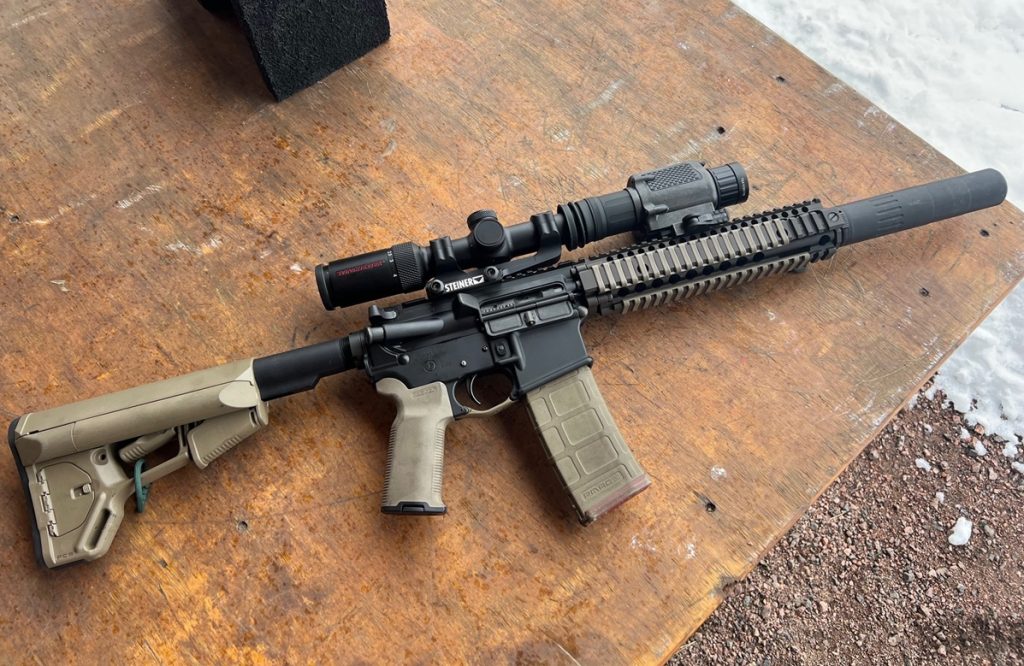
The Hearing Protection Act (H.R. 404), introduced by Representative Ben Cline (R-VA-06), seeks to remove firearm suppressors from the NFA’s burdensome regulatory framework, replacing it with a streamlined purchase process for typical accessories. Suppressors, contrary to popular misconceptions, do not silence firearms but significantly reduce noise levels, mitigating the risk of permanent hearing loss for shooters and hunters. The American Academy of Otolaryngology– Head and Neck Surgery has endorsed suppressors as effective tools for preventing hearing damage, a public health concern affecting millions of Americans. The current NFA requirements — including a $200 tax stamp for both manufacture and transfer of the devices, extensive paperwork, and excessive waiting times — serve no meaningful public safety purpose while imposing undue financial and administrative burdens on responsible citizens. With over 4.8 million suppressors in civilian circulation, their widespread use underscores the need for reform.
Similarly, the SHORT Act (H.R. 2395) addresses the arbitrary NFA classification of short-barreled rifles (SBRs) and short-barreled shotguns (SBSs), which subjects them to the same onerous regulations as transferable machine guns and other highly restricted devices. This outdated framework, rooted in 1930s-era fears of organized crime, lacks relevance in the modern context, where SBRs and SBSs pose no greater threat than standard rifles or shotguns. The SHORT Act would delist these firearms from the NFA, eliminating unnecessary barriers to ownership and ensuring that law-abiding Americans are not penalized for exercising their constitutional rights.
Language compliant with the U.S. Senate “Byrd rule” (2 U.S.C. 644) is circulating the Second Amendment community and should be incorporated in the current budget reconciliation package. The urgency of including this language in the reconciliation package cannot be overstated. Recent reports indicate that the House Ways and Means Committee has delayed action on both H.R. 404 and H.R. 2395, potentially due to lobbying efforts that prioritize commercial interests over the public good. Such delays are unacceptable, particularly when public sentiment, as reflected in numerous grassroots calls to action, overwhelmingly supports NFA reform. The reconciliation process offers a unique opportunity to bypass Senate filibuster constraints, ensuring that these common-sense reforms reach the House floor and become law. Failure to seize this moment risks further entrenching an antiquated and unconstitutional regulatory regime.
Opponents of these reforms, such as Michael Bloomberg’s “Everytown for Gun Safety,” argue that suppressor deregulation poses public safety risks by making gunfire less detectable. This claim is false and ignores the reality that suppressors reduce, but do not eliminate, firearm noise. Moreover, homemade suppressors are readily accessible to those with criminal intent.
The public safety argument against SBR deregulation is equally baseless, as these firearms are functionally identical to their longer-barreled counterparts. These objections, often rooted in fearmongering rather than evidence, should not override the constitutional rights of millions of Americans.
The Second Amendment unequivocally protects the right to keep and bear arms, and the NFA’s restrictive provisions—originally enacted to combat gang violence nearly a century ago—have long outlived their utility. The Hearing Protection Act and the SHORT Act represent measured, practical steps toward aligning federal law with contemporary realities and constitutional principles. Their inclusion in the reconciliation bill is not merely a policy preference but a moral and legal imperative.
We, the signatories, therefore, demand that the House Committee on Rules and the committee on Budgets act decisively to ensure that the publicly available, broadly supported, modified language of H.R. 404 and H.R. 2395 are incorporated into the reconciliation package in their entirety, without dilution or compromise. The American people deserve legislation that respects their rights, promotes public health, and dismantles unnecessary bureaucratic obstacles. We strongly urge you to heed the calls of millions of gun owners and Second Amendment advocates who have made their voices clear. The time for action is now.
Respectfully,
F. Paul Valone
President, Grass Roots North Carolina Exec. Director, Rights Watch International
Gary Marbut,
President, Montana Shooting Sports Association
Philip Van Cleave
President, Virginia Citizens Defense League
Sean Caranna
Executive Director, Florida Carry, Inc.
Tom King
President, New York State Rifle & Pistol Association
Rep. JR Hoell
President, New Hampshire Firearms Coalition, Inc.
Kevin Starrett
Director, Oregon Firearms Federation
Dianna Muller
President, Women for Gun Rights
J.R. Stoker Jr.
President, Firearms Owners Against Crime Institute
Dr. Joe Hannon
VP, Gun Owners of New Hampshire
Dennis Fusaro
Member, Legislative Policy Committee, BOD National Rifle Association
Jon Richardson
Member, BOD National Rifle Association
Bryan Strawser
Chair, Minnesota Gun Owners Caucus
David Adams
Exec. Director, Virginia Shooting Sports Association
Laura Whitcomb
President, Gun Owners of Maine
Holly Sullivan
President, Connecticut Citizens Defense League
John C. Poole II
Exec. Director, Texas State Rifle Association
Charles Hiltunen
President, Indiana State Rifle and Pistol Association
Rocky Marshall
Boerne, TX
Mike Duralia
President, South Carolina Carry
Kevin Patrick, Jr.
Acting President, West Virginia Citizens Defense League
Matthew Andras
President, Coalition of New Jersey Firearm Owners
Mark W. Pennak
President, Maryland Shall Issue
Richard Pearson
Exec. Director, Illinois State Rifle Association
Kimberly Morin
President, Women’s Defense League of NH
Klint Macro
President, Allegheny County Sportsmen’s League
Rich Kerlin
President, Beaver County Sportsmen’s Conservation League
Blaine Toy
President, Unified Sportsmen of Pennsylvania
R
ob Pincus
Director, 2nd Amendment Organization
They should do this. Its about time, really past time as it should have been done many years ago.
as an aside thing ….The article pic – The 1990’s called, they want their quad rail hand guard back. 😁
“rooted in 1930s-era fears of organized crime, lacks relevance in the modern context”
What organization put this sell out language in there? It was NEVER relevant and NEVER justified. It was a creation of the same government that literally had elderly Americans shot in the back for not marching into concentration camps fast enough.