

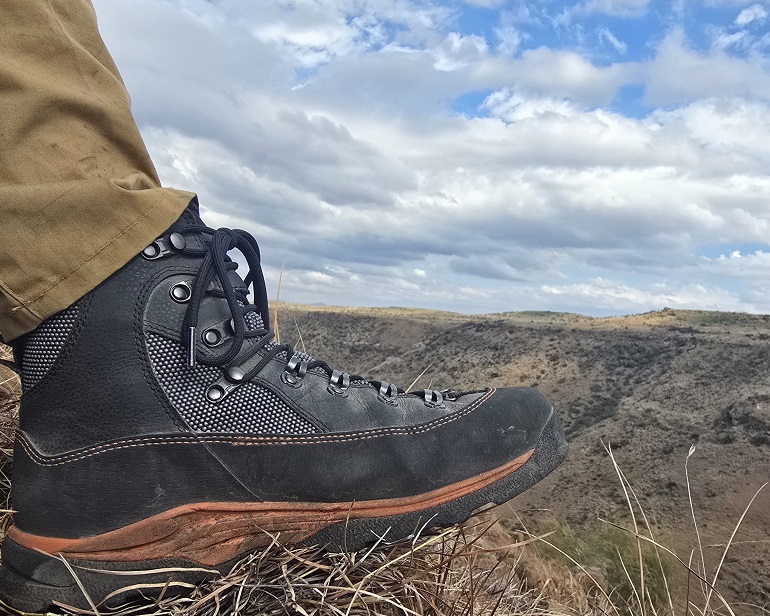
For 2025, I had a series of week-long hunts coming up that were going to put me in cold, wet, and higher altitude places on a couple different continents. For that, I was going to need a new pair boots, but I didn’t want to spend $500 on a pair I knew I was only likely to wear for a year, as I generally don’t like to hunt in cold, wet, higher altitude places. That said, I needed a solid boot with a wide last that would endure some difficult hunts.
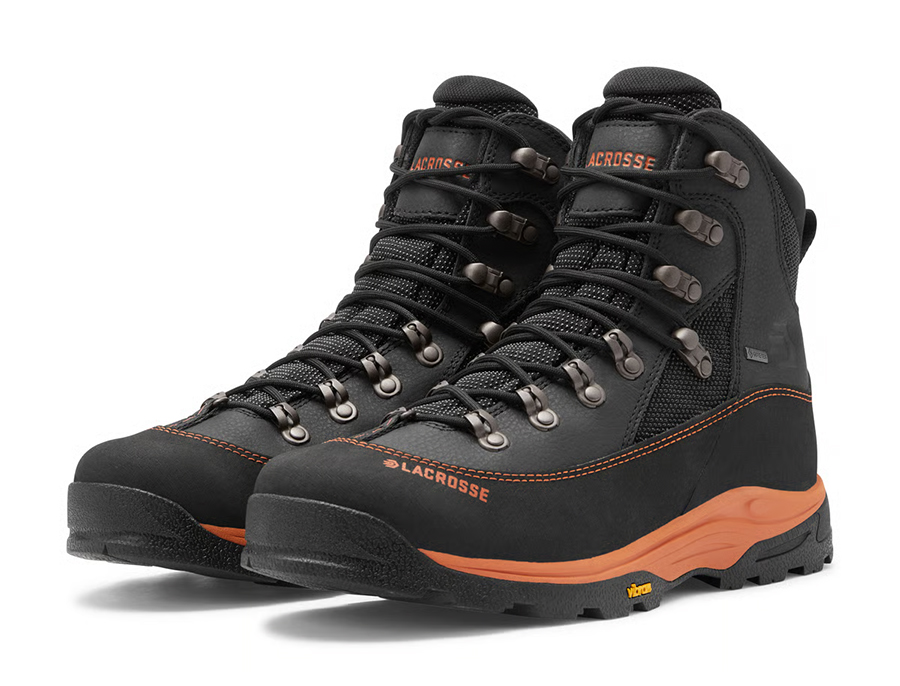
After looking online, I tried out Lacrosse’ Ursa MS GTX. This boot grossly exceeded my expectations, keeping my feet dry, blister-free, and firmly planted on the ground in some very rough country over the last year.
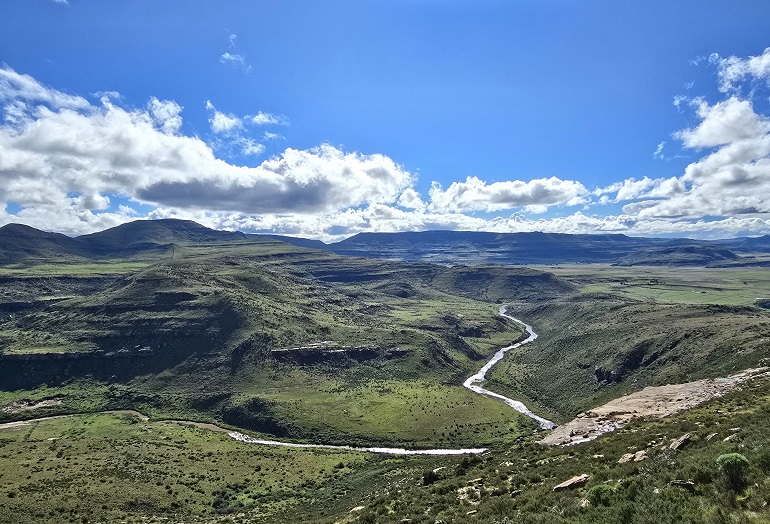
Although I usually wear Muck boots for wet weather, that wouldn’t do for my winter hunts in the mountains that border South Africa’s Free State and the land-locked nation of Lesotho, or the subsequent Vaal Reebok pistol hunt in the Eastern Cape.
Experience told me to expect a mix of uneven mountain terrain mixed with wet grass, light snow, and innumerable streams to cross in barely freezing temps. Waterproof boots were a must, but so was something that would keep me from breaking an ankle or sliding off the mountain.
For the waterproofing, the Ursa MS GTX performed flawlessly. Prior to the Africa hunts, I tested the boots on an early spring bear hunt in Idaho. I got absolutely soaked on that hunt with a mix of sleet and snow. As it turned out, it was too early to find the bears. They hadn’t come down from their hidey-holes in the mountain yet, but man, it was gorgeous country.
I feel like I spent most of that hunt standing in wet snow, but none of it got into those boots. That gave me confidence to bring them on my hunts to South Africa where they’d be tested in earnest.
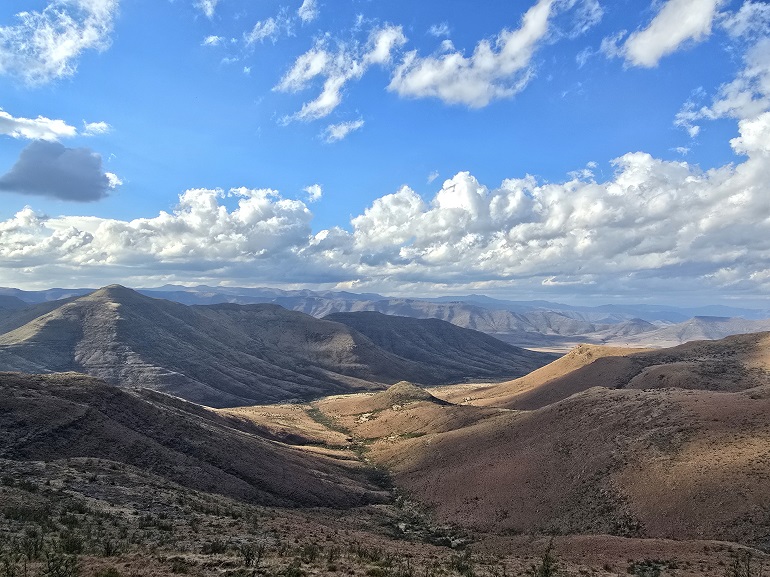
Most folks, even those who have gone on a safari or two, have no idea that South Africa has mountains. They aren’t the Rockies, but the area where I like to hunt is above 9,000 feet, and there are several 11,000-foot peaks in the Drakensberg.
The elevation combined with the season meant that much of this hunt was going to be below freezing. Here’s where the Ursa MS GTX boots got their real test. Much of the outside of the boot is covered in something LaCrosse calls HexGuard, an extremely tough and abrasion-resistant material. The HexGuard, combined with sturdy leather, proved more than enough to handle the rocks and endless thorns. We put in a lot of walking miles up and down the mountains for those hunts and the boots certainly outperformed me.
The sole is the fairly common Vibram MONT. It’s a little sticky, but not soft, with big channels for mud and muck to release from. That worked really well for my intended use.
They got really muddy during the Spring bear season in Idaho, but shed that mud quickly as I walked. The same can be said for my fall mule deer hunts in Montana with snow from the Beartooth Mountains. In the Eastern Cape, the outsole performed extremely well with the mix of wet grass and rocky terrain. That said, if you intend to hunt in hard rock areas like granite mountains, you’d be better off with a flatter softer, even grippier option, but you’d sacrifice the wet weather hold and longevity.
A big reason I picked this particular boot was the last itself. The last is the actual foot mold inside of boot and it plays a huge role in how it actually fits on your foot. You’ll find that lots of different boots have the same last, across lines and sometimes even across different brands.
LaCrosse used the JVC6-693H last, the same used on some of the Danner boots, which were some of the better combat boots I’ve ever worn. LaCrosse offers this last in a wide form, which my monkey-like feet require. If you’ve got E to EE feet, that’s definitely something you want to pay attention to.
The only gripe I might have with these boots is the position of some of the quick-lace grommets. Because the pair under the ankle are set so low, they can be at an odd angle to get hooked, making them challenging to get on with cold hands. The upside is that, also due to that position, the boots get a great lock on the ankle, helping to provide solid support.
With all the miles and conditions I’ve put these boots through, they’re worth every penny of their $300 MSRP, but there’s no need to pay that. Look around the internet and you will find them much cheaper, sometimes below $200. At that price, they’re an exceptional value.
I had only intended to wear these boots for a season, but next year I have some hunts in Scotland and Europe booked. Since these LaCrosse boots are still going strong, I’m betting their soles see another continent soon enough.
SpecificationsL LaCrosse URSA MS GTX Boots
Weight: 3.1 lbs
Height: 7″
Liner: GORE-TEX
Shank: Bi-Fit Board
Footbed: Open Cell Polyurethane
Outsole: Vibram MONT
Made In: Vietnam
MSRP: $300 (found online for $166-$275)