
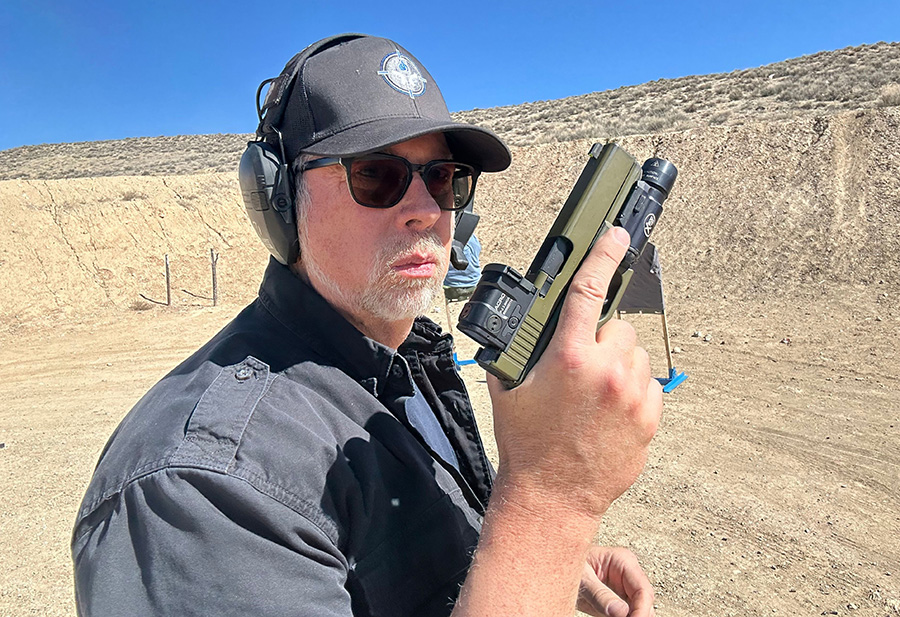
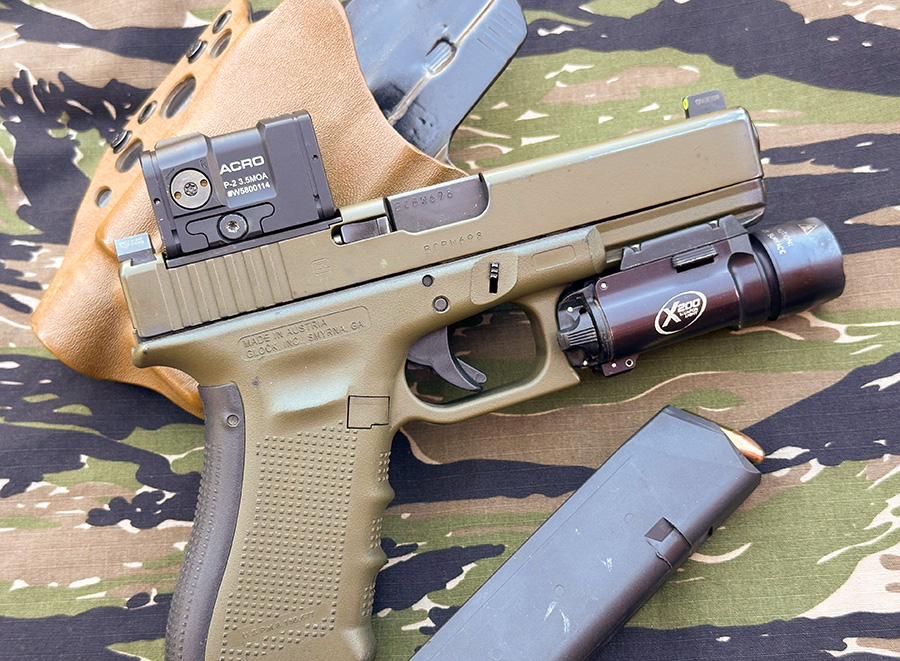
It didn’t take long — maybe ten minutes — for the gun community to dub the Aimpoint ACRO P-2 red dot optic the “tactical mailbox.” When you see the optic affixed to the slide of your favorite pistol, it’s not difficult to see why that nickname stuck.
Also, thanks to good old American ingenuity, about a day after someone called the ACRO the “tactical mailbox,” an enterprising person fired up their 3D printer and made a cover and obligatory red flag for the mailbox. The cover/flag option that I purchased came from a company called Nameless Arms.
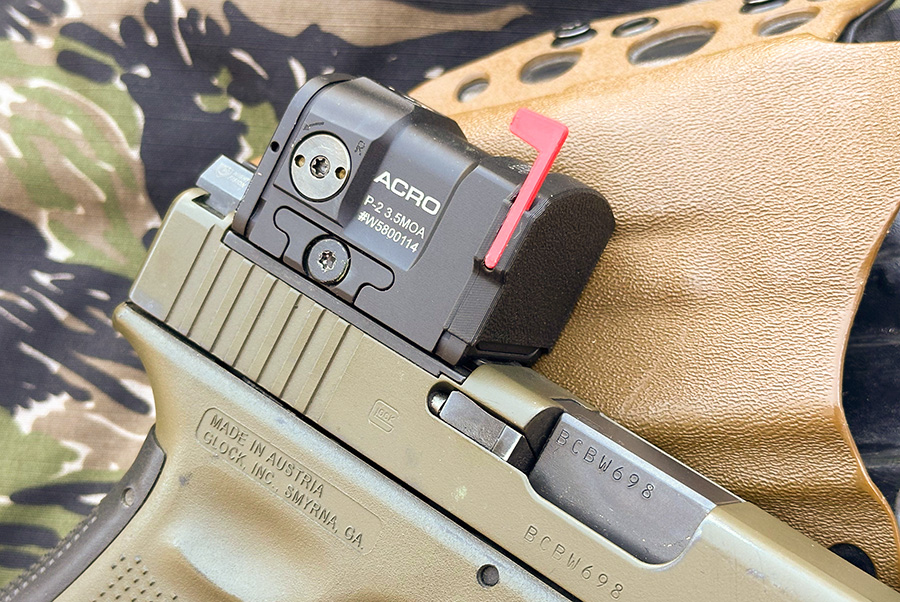
Aimpoint ACRO
In case you haven’t been paying attention, the Aimpoint ACRO P-2 was an answer to those customers who desired an enclosed emitter handgun optic. Yes, they also have the COA now, but let’s stick to the ACRO. The model I have on hand has a 3.5 MOA dot in genuine red. On the “mid” setting, the CR2032 battery has 50,000 hours (over five years) of constant operation battery life.
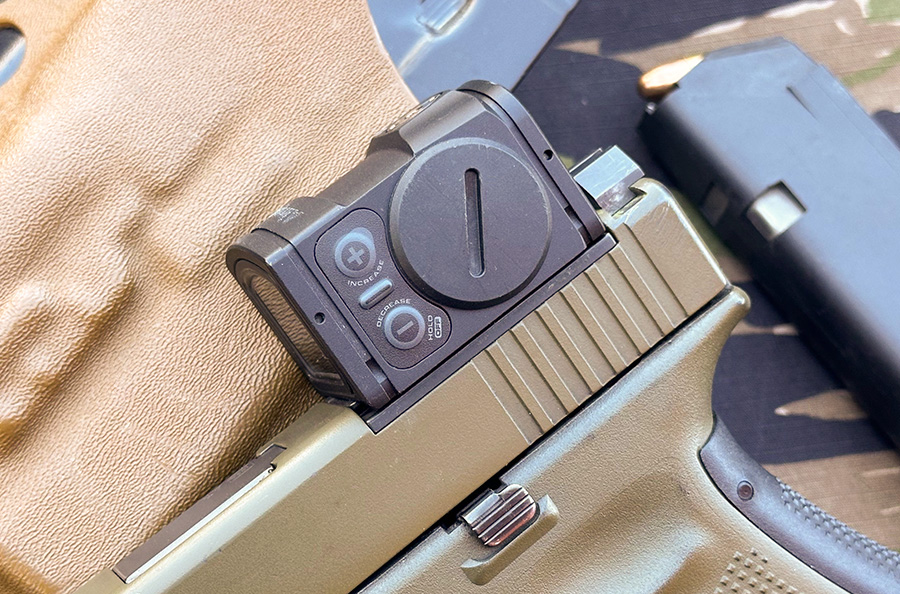
The user has the option of four night vision compatible settings and six daylight settings. For its size, weight is a relatively light 2.1 oz, not including the mounting plate for your pistol. Also, the ACRO is “water-resistant” and submersible to 115 feet (35 meters).
Due to the enclosed emitter configuration, the ACRO does not mount to pistol slides like typical open emitter red dots do. Aimpoint has an entire page of mounts and mounting accessories to serve the end user. My choice was pretty easy as the GLOCK MOS slide cut is one of more popular slide cuts for optics. For those already very familiar with the ACRO, I won’t belabor the manufacturer specs.
Red Dots Aren’t a Magic Solution
While pistol optics are marketed as accessories that are supposed to make aiming your handgun easier, there is no such thing as a free lunch. As in, everything comes with a price. The price of the red dot, or the cost, is hours of practice developing the habit of target focus versus front sight focus.
One of the issues that red dots (or green or amber) are supposed to fix is the tendency to focus intently on the threat during a lethal force encounter, while disregarding the front sight or “looking over the gun.” On paper, the ability to look through the viewing window of the optic to the threat, while allowing the dot or reticle to be superimposed on it, seems easy enough.
However, in reality, we find that many folks want to put their visual focus on the dot/reticle and this process slows them down considerably. We have encountered folks who commented that the red dot actually “slowed me down” and went back to shooting iron sights. There is nothing wrong with that.
Also, the ever present tremor of a living human holding a handgun seems magnified by the little red dot which refuses to hold still. People will say, “The dot is moving and I can’t get it to hold still. I never noticed that with my regular sights.”
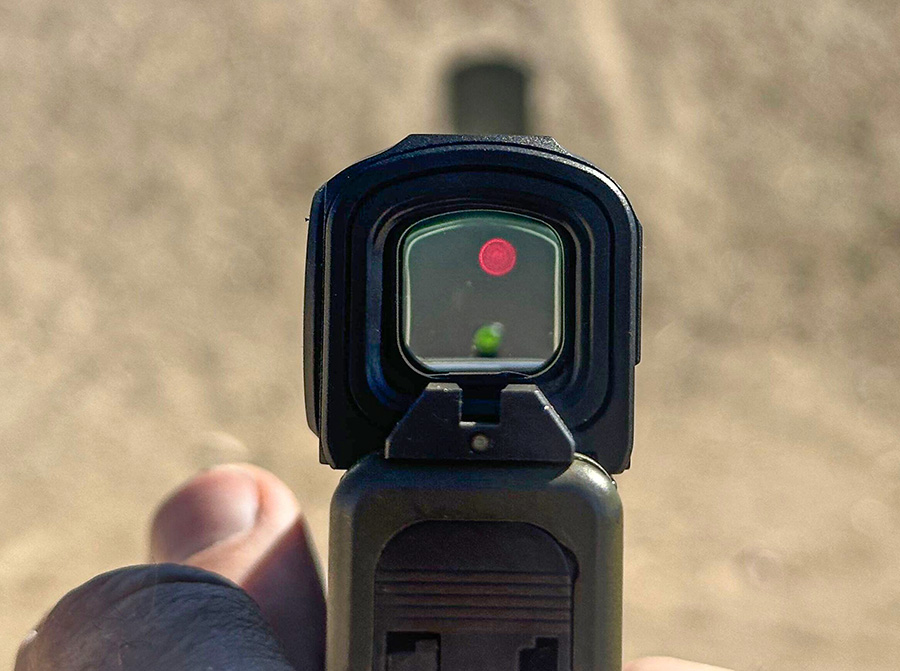
That statement is very true. Most people never notice a tremor in their front sight, but when they switch to a dot, the darned thing won’t hold still. Of course, the tremor was always there. It just took you looking at a dot to realize it. The honest truth is that if you could hit your target with iron sights, you can hit your target with a dot, even with a slight tremor. However, you need to get over the psychological discomfort from seeing the movement in the dot.
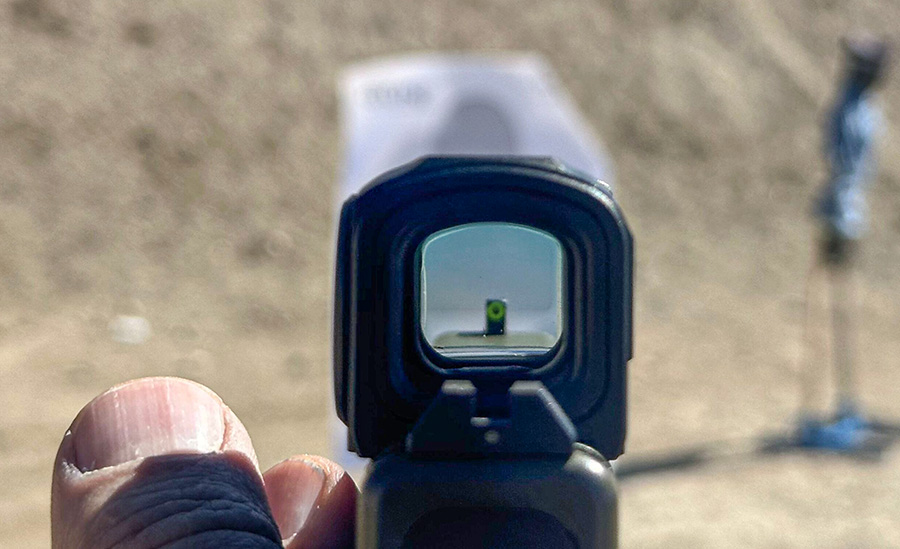
Two other big issues are both finding the dot and losing the dot. The finding part comes during the presentation of the gun to the target. This requires a lot of draws and presentations to reprogram yourself. The losing the dot occurs during recoil and while moving from target to target. While there is no magic fix for either issue, improvements can be had through dedicated training and practice.
To Cover or Not to Cover
A technique to assist shooters in developing target focus that we have found useful when working with our SOTG University students is an old one that dates back to the Vietnam War. In 1970 the US Army Special Forces used a then experimental sighting system called the Singlepoint OEG (occluded eye gunsight). This wasn’t an optic like we know them.
The Singlepoint OEG forced the shooter to perceive the aiming dot with their dominant eye and provide the target information to the brain with their open non-dominant eye. The brain put the entire sight picture/target picture together and SF trainers discovered that their men had tremendous success using the OEG both day and night. Their ability to put hits on target while moving was also impressive. During the Son Tay Raid, US Army SF personnel killed dozens of enemy combatants and did not lose a single man.
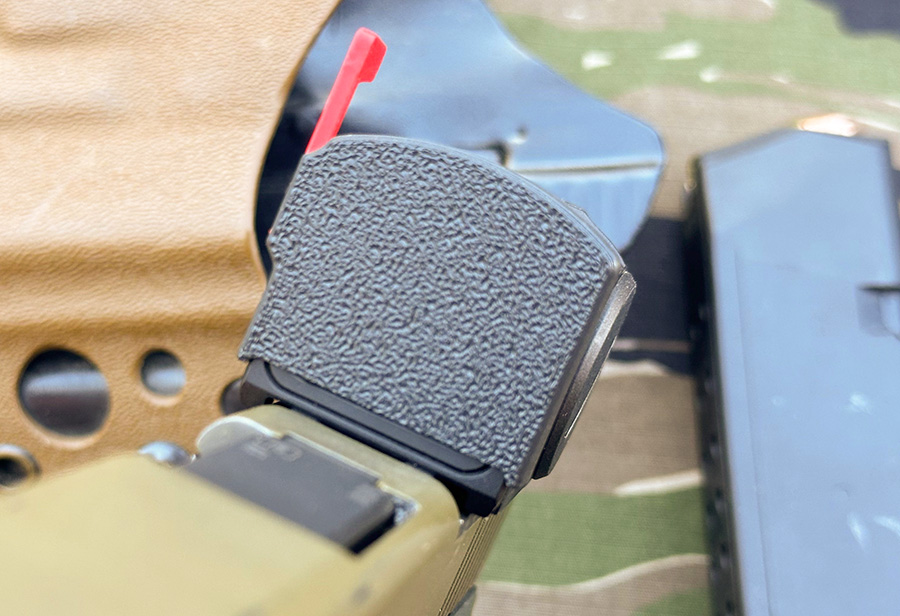
In order to set up a modern red dot optic like an OEG, you need only to cover the front of the view screen/lens. Yes, you could do it with tape, but a better option is an opaque cover that blocks the light. The ACRO sight body was designed to accept various cover options. The mailbox cover from the aforementioned Nameless Arms was not just a funny novelty item, it was a practical training accessory.
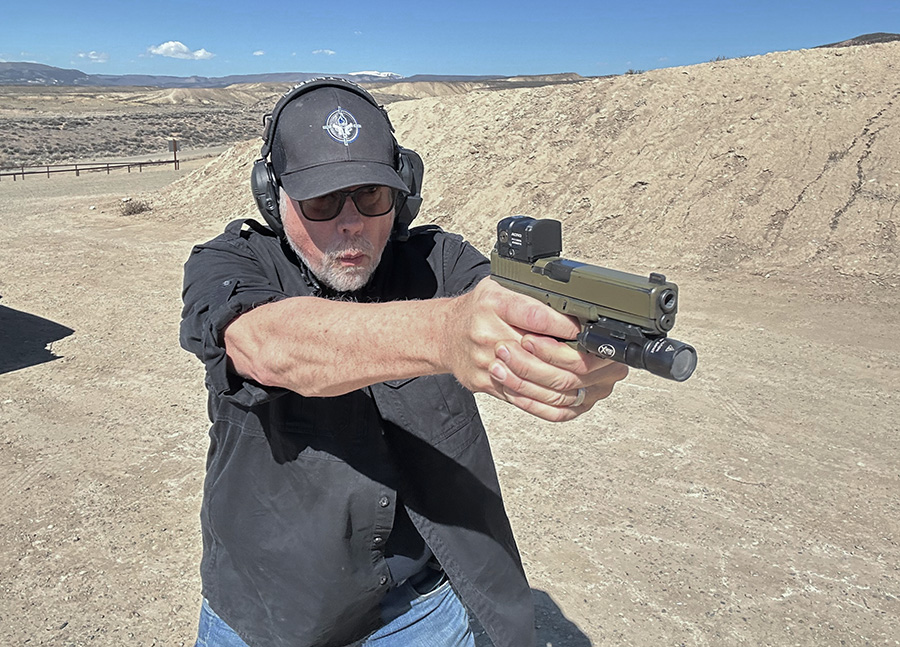
When you first cover the lens, your rational brain says, “This isn’t going to work.” or “This is weird.” However, we have found that our students have tremendous success with their optics covered in the OEG fashion. The inability to look through the optic to the target forces the non-dominant eye to provide target information and the brain does what it is supposed to do and puts it all together. For the skeptics, yes, accurate fire is still possible. We had students shooting a steel half-silhouette at twenty-five yards without a problem. Moving and shooting and engaging multiple targets also came naturally.
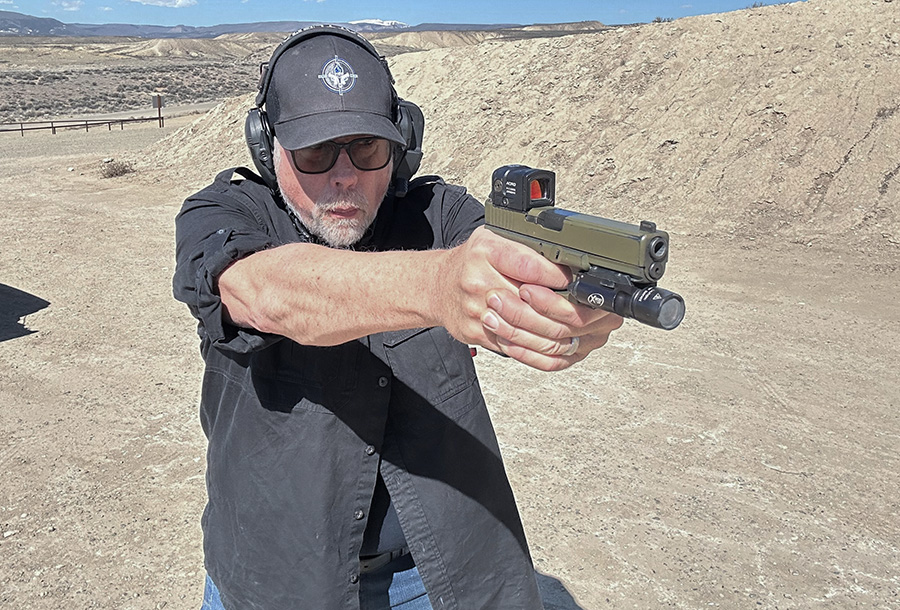
After you have mastered shooting the ACRO with the cover on, you can remove it, but the skill and ability that you developed during the OEG training is still present. If you find yourself having trouble with dot focus/target focus issues, this might be a good way to practice.
Guillotine Technique: Off With Their Heads!
Another issue that folks fret about is, “What if my battery dies right in the middle of a fight.” Okay, despite the 50,000 hours of battery life, let’s consider what you might do if the dot goes out. Many folks have already “fixed” this by putting extra-tall “suppressor-height” sights on their guns. Yes, that can be a solution.
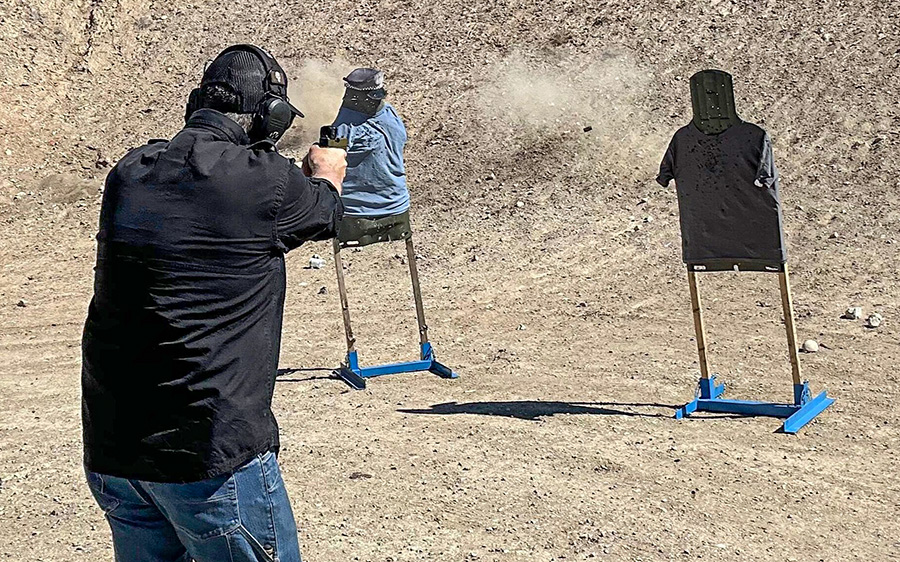
One of the other issues that old-school shooters have with optics is lens obstruction. “What if the lens gets mud or snow or rain on it or it fogs up and I can’t see through it clearly?” Well, if you practiced the OEG technique, then that is not really all that big of a deal. Just keep both of your eyes open. If the dot is still there, you can get hits on target.
However, for the sake of argument, let’s just say the dot disappears and you don’t have extra-tall back up sights. There is a simple solution called the “Guillotine Technique.” This is where you take the top edge of the optic housing and use it to “cut off” the head of the humanoid target. If you put the head on top of the optic housing and press the trigger, without moving the gun all over the place, your hits will go into the upper chest of the silhouette.
The next time you are at the range, set up a silhouette, turn off the optic and give this a try. You might be surprised at how well you perform. Or, you might realize that you need to put in more dedicated time pressing the trigger perfectly. Either way, you win.
Paul G. Markel is a combat decorated United States Marine veteran. He is also the founder of Student the Gun University and has been teaching Small Arms & Tactics to military personnel, police officers, and citizens for over three decades.