

Legal scholars in the self-defense realm have for decades dispensed advice and recommendations in the pages of various gun magazines. A good many of these publications employed those who not only had the knowledge, but a lifetime of experience using and carrying firearms for martial applications.
I submitted my first article to Harris Publications in 1993 and received a phone call from the Senior Editor, Harry Kane. After vetting me on the phone, Harry bought an article for Guns & Weapons for Law Enforcement magazine from me. When it came to those who wrote for his law enforcement and self-defense periodicals, Harry had a strict rule, he didn’t print articles from anyone who had never carried a gun for living. At that time I was a combat veteran and was working full-time as a professional bodyguard.
The purpose recounting all of this is to point out that a couple of decades ago, there were only a handful of places to go to get shooting and gun carrying advice. Excluding the hunting and outdoors magazines, there were perhaps a half-dozen that printed articles dealing with self-defense with a firearm. Today, there’s such a glut of content spewed by those of questionable reputation that it’s extremely difficult to get both thoughtful and intellectually honest advice.
Reloads for Self-Defense?
During a recent Martial Application of the Pistol course, one of our students, a very intelligent and learned man put forth the question about the use of reloaded ammunition for self-defense carry. To his way of thinking, he could produce ammunition with controlled expansion bullets in his shop for a fraction of the cost of commercial ammunition and then use them in training and practice, therefore knowing exactly how his carry ammo would perform.
To those who don’t have a litigious mind, you might think, sure, why not?
I would venture that it’s been at least three decades since I read an article in the aforementioned dead tree magazines that warned against such behavior. In my forty years of being involved in some form of martial gun handling, I have heard the admonition against reloaded ammo for self-defense myriad times. However, the reality is that every day, a new person gets involved in the gun community and starts thinking about home defense and concealed carry. Therefore, the warning bears repeating.
Lawyers, Attorneys, and Other Vermin
The saying goes, “Everyone makes fun of lawyers until they need one” and that much is certainly true. There’s also an age-old joke, “What do you call a bus full of lawyers driving off a cliff?” The answer: “A good start.” I like to share that one with my attorney friends.
If and when you use a firearm in the gravest circumstances to save your life or that of an innocent person, it will be lawyers who will consider your actions and decide whether or not to charge you with a crime…or not. (Remember, a judge is also a lawyer). Additionally, even if you’re exonerated of all criminal charges, you may still have to deal with a civil suit. The attorneys aligned against you in a civil case don’t even need to prove you’re guilty beyond a reasonable doubt. They just need to get a jury to feel bad enough for their client to decide to punish you.
An old adage that has held true since I first heard it is, “If the facts of the case are in your favor, argue the facts. If the facts aren’t in your favor, make emotional arguments.” Emotional arguments don’t address the Big 3 Use of Deadly Force Questions: ability, opportunity, and intent. No, quite the contrary, emotional arguments address seemingly silly or superfluous topics like your choice of gun, its configuration, and the choice of ammunition, just to name a few.
Remember, a hostile attorney is looking for anything they can find to paint you as a reckless, negligent, or malevolent person. If your actions don’t violate the Big 3 questions, they will make emotional attacks. You’re a “gun nut.” You wanted to kill someone.
Having loaded your self-defense firearm with handloaded or “home-loaded” ammunition, it’s not a stretch that a hostile attorney will assert to the jury that “commercially available ammunition wasn’t good enough” and that you set out to make ammunition that was “even more deadly and destructive” to ensure that your ammo would cause “maximum damage.”
Such accusations put you and your counsel on the defensive, forcing you to try to convince a jury that none of the above was true. Remember, your jury isn’t going to be made up of sympathetic gun toters. The opposing counsel will ensure that.
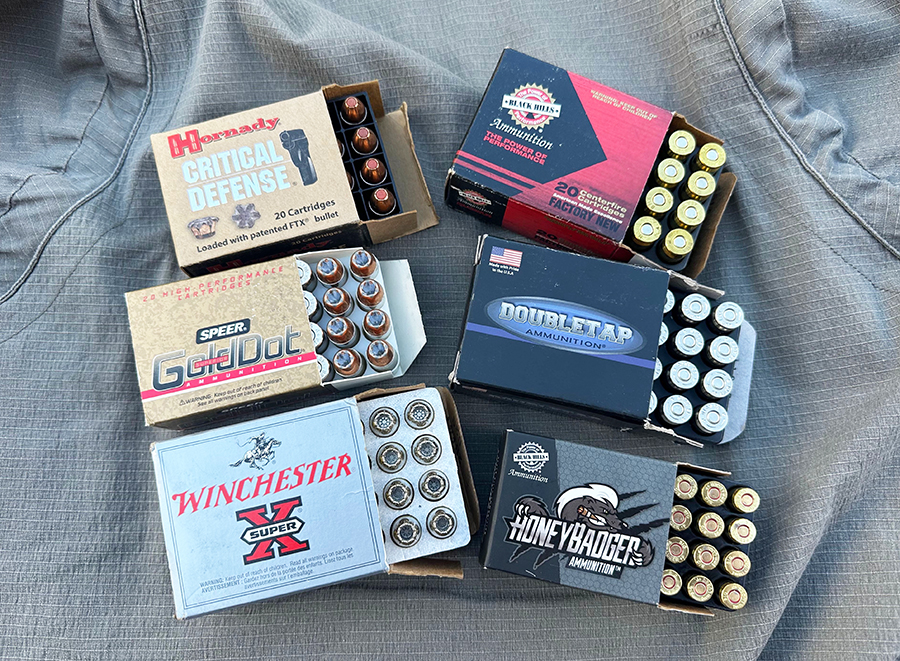
Rather than have to defend the use of your handloaded ammo, wouldn’t be a better choice to let the ammunition manufacturer defend their product? Whether it’s Black Hills, Federal, Hornady or Winchester, those companies have invested thousands and thousands of dollars in the development of their self-defense ammunition. They have a stake in defending their design and manufacturing practices. Most of them will state that their self-defense ammunition meets FBI protocols for duty ammo. No hostile attorney is going to attempt to convince a jury that the FBI’s protocols for personal defense ammunition are wrong.
For years and years, my advice to those who are unsure about which self-defense load to carry is to find out what ammunition your local police or sheriff’s department is using. If you have no other brand loyalty, just purchase the same thing that local law enforcement uses. If you’re ever questioned, your attorney can say that if it’s good enough for local cops to carry, it’s certainly good enough for an armed citizen. Again, no hostile attorney is going to try and convince a jury that the Sheriff’s Department is wrong and their ammo is evil.
Reliability
Yes, you might be really good at reloading ammunition. Perhaps you have reloaded ten thousand rounds in your lifetime. That’s all well and good. When you get to 100 million rounds loaded with zero defects, then we can talk. Ammunition manufacturers put a great deal of quality assurance and quality components into their ammo that’s designated as “duty” or “tactical.”
Think about it…a large percentage of duty ammunition goes to law enforcement sales. Ammo makers know that their product absolutely has to work and that its performance will be closely scrutinized. Don’t believe me? Ask Winchester about the rectal exam that they had to undergo regarding their Silver Tip Hollowpoint in 1986.
As good as you may be with your Dillon Precision reloading press, you don’t come close to those companies that have a hundred years of experience doing it for a living. If you want to reload for training and practice, great. Do it. When it comes to self-defense, leave that to the professionals.
The Cost?
No, duty ammunition that’s specifically made for self-defense is not cheap. It isn’t supposed to be. After you have determined that the duty load you have chosen runs reliably in your carry or home defense gun, you can keep it loaded up for some time.
Unless your firearm has been subjected to harsh conditions — submerged in water, taken on deployment to the jungle or the desert — a good rule of thumb is to treat yourself to fresh self-defense ammunition annually on your birthday.
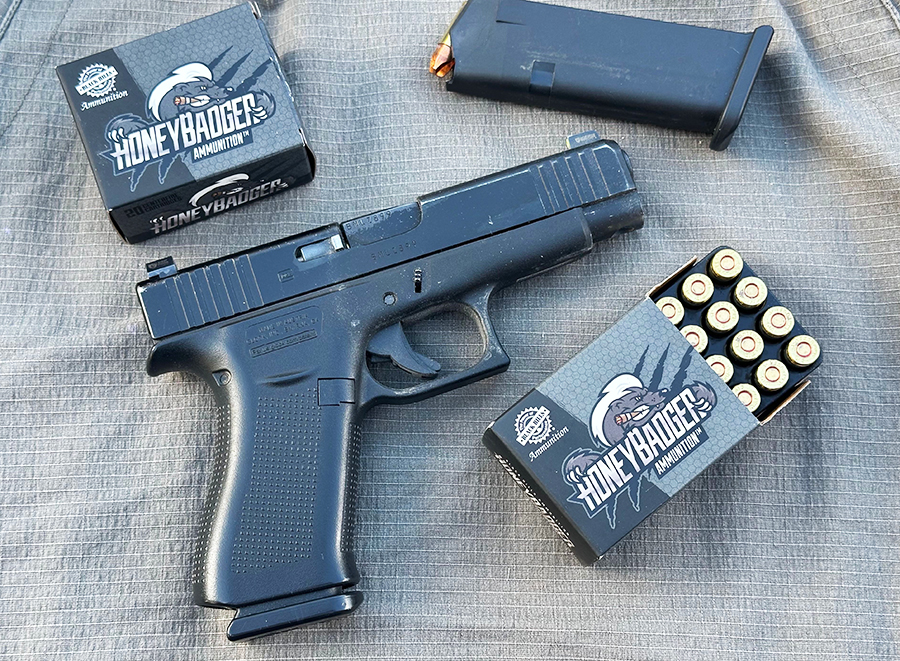
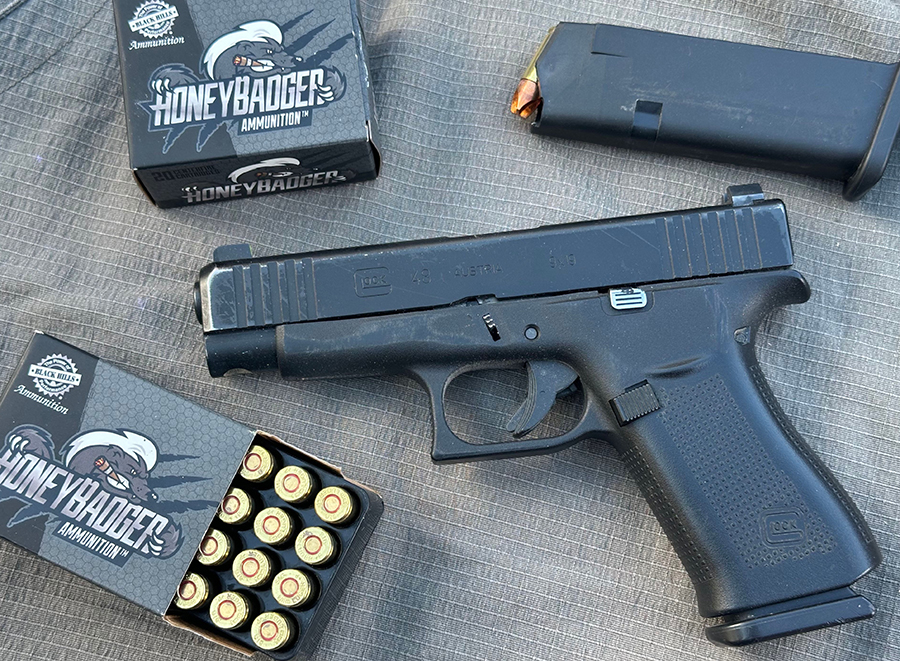
For my GLOCK 48, the pistol is loaded with 10+1 rounds and a spare magazine has 10 rounds for a total of 21. A fresh box of Black Hills premium “Honeybadger” ammo will run about $35. That’s a $35 investment once a year for a tool that could save my life or that of my loved ones. Should that ammunition ever be called into question, the folks in South Dakota can defend their manufacturing practices, not me.
Paul G. Markel is the founder of Student the Gun University and has been teaching Small Arms & Tactics to military personnel, police officers, and citizens for over three decades. He is the author of numerous books and is a combat decorated United States Marine veteran.
“…(Remember, a judge is also a lawyer).”
Not always.
Judges are typically required to have a law degree and experience as a lawyer. But in some states non-lawyers can also serve as judges, usually, in lower-level courts.
But, those “lower-level” courts do not have jurisdiction to hear felony cases or high-dollar (>$10K to $20K) civil cases.
So, yes, in this context, the judge will be law-trained and will most likely have had courtroom experience before taking the bench.
A county court is a lower court type that has jurisdiction over civil and criminal (felony or misdemeanor -deiends on the state or county laws) cases within a specific county. There are county courts in some states that have judges that are not lawyers.
I’ve practiced law in dozens of states for decades, and I don’t know of one state that permits appointment, or election, of lay judges to courts with jurisdiction to hear felony or high dollar civil cases.
But, if you can verifiably name even one, I’ll defer to your expertise.
I never said, in my original post, that judges without law degrees hear felony cases or high-dollar civil cases. But you jumped immediately to that qualification.
but…. for example, in West Virginia, magistrates, who may not be lawyers, can preside over felony arraignments. In New Mexico, judges without law degrees can hold preliminary hearings for felonies where the rules of evidence apply and decide if a felony was probably committed. Connecticut, Idaho, Indiana, Iowa, New Hampshire, and Washington also technically allow ‘lay judges’ in certain circumstances to handle certain aspects of low class felony’s (although this practice with ‘lay judges’ is rare, and has been used for ‘vehicle related felonies’ such as DUI in some jurisdictions). In South Carolina, 75% of magistrate judges do not have law degrees and handle thousands of lower-level criminal (usually misdemeanor, but in some cases lower class felony aspects) and civil cases (not sure of limits) and are only required to have a four year degree and pass a basic competency exam but not required to have a law degree.
Mississippi allows some judges to serve without law degrees, particularly in lower courts like Justice Courts, where candidates need only a high school diploma and must complete a training course. Mississippi Justice Courts have jurisdiction over small claims civil cases involving amounts of $3,500 or less, misdemeanor criminal cases, and traffic offenses occurring outside municipalities. They can also conduct bond hearings, preliminary hearings in felony cases, and issue search warrants.
Federal judges are not actually required to have a law degree. There are no formal constitutional requirements for becoming a federal judge in the United States, such as age, education, or legal experience. But, there is a set of criteria in place by Congress that requires them to have a law degree but the criteria is not law.
Remember in my original post I said “But in some states non-lawyers can also serve as judges, usually, in lower-level courts.” > I did not qualify as to specifically ‘lay judges’.
Yet you says this: “I’ve practiced law in dozens of states for decades, and I don’t know of one state that permits appointment, or election, of lay judges to courts with jurisdiction to hear felony or high dollar civil cases. ”
A lay judge, sometimes called a lay assessor, is usually a person assisting a judge in a trial or hearing. Lay judges are used in some civil law jurisdictions and are usually used when the county does not have juries. But, another name for ‘lay judges’ is also, and more commonly known as, ‘Justice of the peace’ and its in this where ‘lay judges’ mostly appear in the legal system in lower courts of limited jurisdiction across the nation where they adjudicate minor traffic and criminal law violations (mostly misdemeanor but also in some jurisdictions low class felonies not requiring mandatory jail time) and small civil claims. A ‘justice of the peace’ can be, depending on state law, elected or appointed.
So I’m wondering about what you posted. I never said anything about ‘lay judges’. I’m talking about actual judges not ‘lay judges’.
But I did try to include your ‘lay judge’ thing also in my response above with this > “Connecticut, Idaho, Indiana, Iowa, New Hampshire, and Washington also technically allow ‘lay judges’ in certain circumstances to handle certain aspects of low class felony’s (although this practice with ‘lay judges’ is rare, and has been used for ‘vehicle related felonies’ such as DUI in some jurisdictions but its rare in these jurisdictions).”
I guess though ‘lay judges’ have different uses, for example; Where I live, our county circuit courts, use ‘lay judges’ in cases of egregious non-payment of child support, which is a felony here, where the defendant has chosen to have the judge decide and waived a jury trial – they are used to assist the actual judge hearing the case. Here also, ‘lay judges’ are also used in cases before a judge to determine custody of children in cases where the birth parents do not appear in court but a relative wants to have custody – in this they sort of substitute for a ‘jury’ here in these cases, to advise the judge of their decision as a ‘jury’ might to keep things balanced. But we also have ‘justice of the peace’ courts called ‘justice courts’ and they routinely handle low class first time felony DUI or first time low dollar shop lifting felony cases (no I’m not going to post where I live, I don’t give out such information on line). There is no requirement here that a ‘lay judge’ titled ‘justice of the peace’) have a law degree.
But what ‘lay judges’ can or can not do is decided by the state law.
‘lay judges’ are a sort of ‘persistent anomaly’ in the legal system. The U.S. Supreme Court, in North v. Russell (1976), refused to abolish ‘lay judges’ on federal constitutional grounds (basically, they are constitutional).
You have “practiced law in dozens of states for decades” yet confuse ‘lay judges’ with actual judges and didn’t know that some states do not require judges in lower courts to have law degrees? I’m confused over that, and I’m also confused as to why you started twisting this into specific qualifications for ‘lay judges’.
anyway….overall 32 states in the U.S. allow individuals without law degrees to serve as judges, particularly in lower-level courts. These positions can include magistrates, justices of the peace, county judges, and municipal judges, depending on the state. The cases they can handle, their jurisdiction, is defined in the states law but in many cases they can handle criminal cases (misdemeanor or felony) and they can also handle civil cases and the amount up to which they can handle in these is defined in the states law but some states allow up to $10,000.00.
The amount of these judges in states vary. For example, in North Carolina 80% of magistrates do not have law degrees and in South Carolina 75% of magistrates do not have law degrees.
But its a ‘mixed bag’ kind of thing for what they can handle and how much they can do. For example, in New Mexico judges without law degrees can hold preliminary hearings for felonies where the rules of evidence apply and decide if a felony was probably committed – but preliminary is as far as it goes for them – but some judges in Mississippi without law degrees can go as far as imposing a fine or (very limited time) confinement or both for certain low class but non-violent felonies.
But yes, overall, there are judges without law degrees and some can do criminal felony cases, and in some jurisdictions non-lawyer non-law degree judges may adjudicate cases involving firearms. But overall, on average (nation wide) the kinds of cases they handle involve civil disputes, misdemeanor cases, felony arraignments (and some types of felony cases), initial court appearances for serious crimes, protective orders, search warrant applications.
And then in states where a law degree is required there may be exceptions for certain courts, where specific statutes may allow for alternative qualifications. For example; In Michigan there are such exemptions from having a law degree for Michigan’s district courts, which handle lesser offenses, civil claims under $25,000, and preliminary matters for higher courts where there is an alternative qualification of having ‘substantial legal experience’ but a JD and experience as a lawyer is not required. Another exception is for Michigan’s probate courts, which oversee estates, guardianships, and certain mental health proceedings where a JD and experience as a lawyer is not required but exception qualification is the judge-person must demonstrate “good moral character” and “suitability” for the position.
There are literally judges and ‘lay judges’ (‘Justice of the Peace’) without law degrees all over the country, adjudicating civil and criminal cases (misdemeanor and felony), and you never knew this with practicing in dozens of states for decades when 32 states, over half the country, allowing these without law degrees? I’m confused, how could you not know this?
.40 cal Booger, all that is fascinating factual information, but in the end, it doesn’t really matter.
We’re talking about cases of “wrongful death”, “manslaughter”, “murder”, or *maybe*, if people were “only” scared or injured, “aggravated assault”.
You have merely given us enough information to confirm that yes, in the circumstances we’re talking about here, the judge will *also be* a lawyer.
Your elaborate and verbose attempt to parse the definition of “lay judge” completely obfuscates its plain meaning. The adjective “lay” simply refers to a “non-professional”.
Nearly every state, including my own, allows non-law-trained persons to act as judges, or justices of the peace, in courts of EXTREMELY limited jurisdiction. But those courts DO NOT adjudicate, or “hear”, felony cases that involve homicide or attempted homicide (as described by Mr. Markel), nor do they adjudicate high-dollar injury or wrongful death cases. Those cases are only brought in courts of general jurisdiction (the names of which vary by state), whose judges these days must have a law degree from an ABA accredited law school.
Given all your professed erudition, I’m surprised you don’t know that.
“Your elaborate and verbose attempt to parse the definition of “lay judge” completely obfuscates its plain meaning. The adjective ‘lay’ simply refers to a ‘non-professional’. ”
I’m not trying to parse it. I’m just confused over your use of it in your reply and tried to include it in as short as context as I could because that’s what I thought you wanted to also discuss when you suddenly threw in ‘lay judge’.
First you say : “So, yes, in this context, the judge will be law-trained and will most likely have had courtroom experience before taking the bench.”
OK, so far at that point I followed you with that and I had a whole slew of cases lined up to post where judges without law degrees and not lawyers had indeed adjudicated murder cases and gun cases and self-defense cases and all sorts of felonies, especially in North Carolina.
But you threw me for a loop when you suddenly introduced ‘lay judges’ and switched from ‘judge’ to ‘lay judge’ with: “I’ve practiced law in dozens of states for decades, and I don’t know of one state that permits appointment, or election, of lay judges to courts with jurisdiction to hear felony or high dollar civil cases. ”
(which is not correct because justices of the peace can be either appointed or elected depending on which state and its requirements – and a justice of the peace can be a ‘lay judge’)
Now you come back with: “…The adjective “lay” simply refers to a ‘non-professional’.” and then split up words to separate it from its context of application to ‘judge’ when its very clear that ‘lay judges’ in the context of magistrates and justice of the peace are considered ‘professional’ positions.
A lack of law degree or not being a lawyer does not mean these are not ‘professional’ positions or ‘professionals’. Professional (adjective) – also means following a line of conduct as though it were a profession – and also means relating to, or characteristic of a profession. Are magistrates and justice of the peace not following a line of conduct as though it were a profession, is what they do not relating to, or characteristic of a profession?
So I’m just trying to understand what you are talking about when you suddenly threw in ‘lay judge’ in your reply – you switch from ‘judge’ to ‘lay judge’ in an interchangeable manner as if they are the same thing then you say basically ‘Oh, no, its professional vs non-professional’ then say I’m trying to somehow ‘obfuscate’ with an ‘elaborate and verbose attempt to parse the definition of ‘lay judge’ when your sudden very use of the interchangeability of ‘judges’ and ‘lay judges’ is obfuscating.
When I ask the deputy what ammo they’re issued, do I need to know manufacturer and product line and weight and all the other details?
Should I make a FOIA request for their procurement contracts so I can get the SKU or UPC?
Can I get in trouble for accidentally buying Hornady Critical Duty instead of Hornady Critical Defense?
Or can I just buy “factory 9mm JHP” and call it a day?
I suspect you could just walk up to a cop at a “Cop’s Night Out” Community Outreach event and ask them what kind of ammunition they use for self defense, and maybe even ask why it’s the preferred ammo.
I also suspect if you remember the specifics wrong, but make sure it’s FBI-approved for law enforcement, it wouldn’t matter if you get it “wrong” — for all intents and purposes, it will be “right enough” for a Jury.
And I finally expect that if all else fails, answering “it’s the cheapest reliable brand that is approved by the FBI” will be satisfactory for a Jury to hear in any case.
Should I be using self defense ammo that causes minimal damage? lol I get what the author is saying but it seems a decent attorney could easily shred those “emotional arguments”.
Yes, with the right expert evidence, they could.
I’m afraid it’s the author that’s getting a little emotional.
You want ammo that do it’s part in stopping the bad guy if you do your part and put it in the vital areas. Full metal jacket ammo causes minimal damage but tends to over penetrate. The best duty rounds go deep enough to hit vital targets and expand enough to do the most damage possible. That combination has proven most effective in actual shootings.
Okay. I’ve heard this before many times.
Let’s have some actual example where using reloads was used against someone in a self-defense case. Otherwise this well-written article is ultimately just more supposition and what-ifs.
On the other hand the author specifically recommends the Honey Badger solid-copper fluid-transfer defensive round. Now, I like Lehigh Defense and their design concepts, and I definitely see a reason for choosing these if you live in New Jersey. But what I would be more worried about is choosing an “unusual,” not to say “exotic,” self defense round design that hasn’t (as far as I know) been adopted by any major LE agency. That, I could much more easily see generating accusations of wanting to cause grievous injury and pain etc. than using a completely conventional projectile that happens to be a reload.
I don’t have a horse in this race – I don’t reload, and I carry what the local PD use. (Mostly since I got a great deal on a case some time back.)
I don’t know much about reloads, but disingenuous prosecutors have appealed to the jury’s emotions by claiming that a particular ammo choice was meant to kill instead of defend. Yes, it’s ridiculous, but there’s no guarantee that the jury will be composed of logical individuals, especially in a deep blue district where most are anti-gun.
Recall the Kyle Rittenhouse trial. Rittenhouse used plain Jane 55gr FMJ. The prosecutor tried to argue that Kyle chose that ammo because it was so deadly. Yes, that happened. Would a prosecutor depict a self-defense situation as murder simply because the defender used ammo called R.I.P.? That depends on the kind of district you’re in. But does it matter since it’s absurd, and you aren’t guilty? Do juries always get it right?
It’s easy to say “but Rittenhouse was found Not Guilty!” — but it’s also easy to forget the self defense cases that are razor-thin and fail on one tiny detail.
And that was after a very expensive trial.
This is complete nonsense. Please show us a trial where this actually occurred otherwise it is conjecture.
Spot on Mr. Markel!