

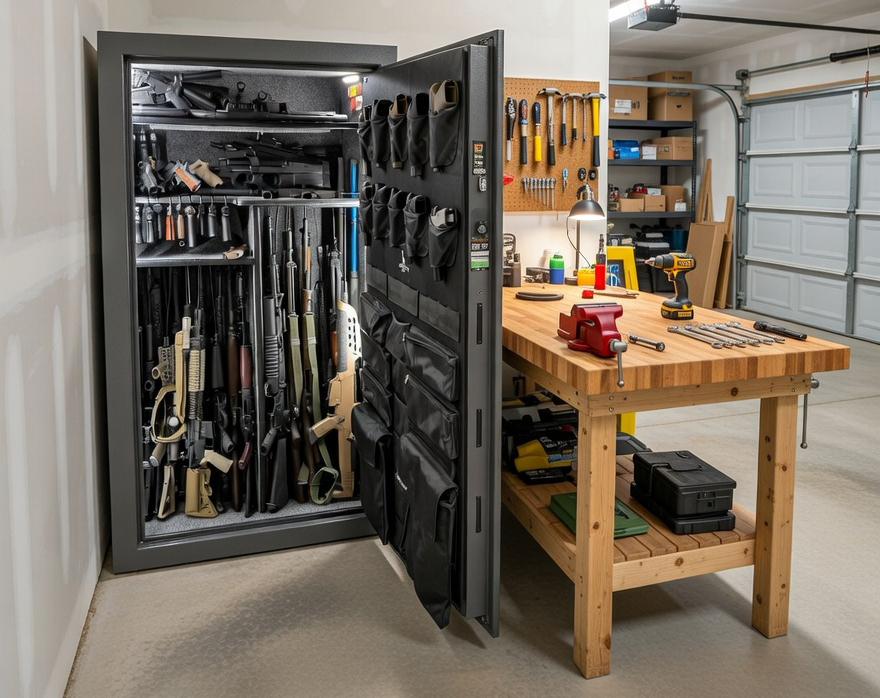
For many families, firearm ownership becomes most visible not during purchase but during inheritance.
When an estate is settled, executors and heirs often discover one or several firearms that must be properly stored, evaluated, and eventually transferred or sold. In some cases, the collection may consist of only a few hunting rifles. In others, it may include dozens of firearms accumulated over decades.
What begins as a personal property question quickly becomes a compliance and valuation issue.
The First Step: Identify What You Have
Before any sale is considered, families typically need to establish three things:
- The type of firearms involved
- Approximate market value
- Applicable state and federal transfer requirements
Many executors are unfamiliar with firearm classifications. A modern sporting rifle, a WWII-era military firearm, and a pre-ban semi-automatic rifle may all require different considerations depending on state law.
Valuation research often begins at model-specific resources such as firearm valuation guides, where families can determine approximate current market ranges before deciding how to proceed.
Without this step, families risk either undervaluing the collection or approaching the wrong resale channel.
Inherited Firearms Present Unique Legal Considerations
Unlike ordinary personal property, firearms are subject to both federal and state transfer laws. Requirements may differ significantly depending on where the estate is being administered and where the heir resides.
For example, California’s handgun roster and restrictions around certain configurations can complicate private transfers in ways that do not exist in many other states. Executors handling estates that involve California residents often need to consult state-specific guidance before proceeding.
Resources such as the California firearm legal guide provide clarity around transfer requirements, roster implications, and interstate considerations.
More broadly, centralized overviews like state firearm legal guides help families understand the compliance landscape before making decisions.
Taking time to understand these frameworks reduces the risk of improper transfers or unnecessary delays.
When a Collection Is Larger Than Expected
In many estates, what appears to be a small grouping of firearms turns out to be a significant collection.
Long-time owners frequently accumulated:
- Hunting rifles across multiple calibers
- Legacy revolvers and pistols
- Historic military firearms
- Pre-ban or import-restricted models
- In rare cases, NFA-regulated items
When collections expand beyond a handful of firearms, the logistics shift. Individually listing items through auctions or coordinating multiple private buyers can become time-intensive and fragmented.
Guides such as the complete guide to selling a gun collection outline the structured steps families often take when evaluating full-collection liquidation rather than piecemeal sales.
This includes inventory documentation, valuation alignment, compliance verification, and shipping considerations.
Selling Inherited Firearms: Process and Documentation
Executors managing inherited firearms must also consider:
- Proof of ownership or estate authority
- Death certificates or probate documentation
- Proper storage during transition
- Interstate transfer requirements
A practical overview of these considerations can be found in resources like the selling inherited firearms guide, which outline common procedural questions families encounter.
The goal is not speed, but clarity. Proper documentation and lawful transfer pathways protect both the estate and the eventual buyer.
Private Sale, Auction, or Structured Buyer?
Once valuation and compliance considerations are addressed, families typically evaluate their options:
- Local private sale
- Auction consignment
- Sale to a licensed dealer
- National structured buyers
Each Path Has Trade-Offs
Private sales may offer flexibility but require coordination and legal awareness. Auctions can maximize exposure but introduce time uncertainty and commission structures. Licensed dealers and national buyers may provide consolidated handling of logistics, compliance, and payment.
Platforms like We Buy Guns operate as national licensed buyers, purchasing individual firearms as well as full collections while managing transfer compliance and shipping.
For families unfamiliar with firearms markets, centralized handling can reduce complexity during an already demanding estate process.
A Deliberate Approach Benefits Everyone
Firearms often carry financial value, historical significance, and personal meaning. When they enter the estate process, the combination of compliance requirements and market variability can feel overwhelming.
The most effective approach is deliberate:
- Identify and inventory the firearms
- Research model-level valuation
- Confirm applicable state legal requirements
- Choose the resale channel that best fits the estate’s goals
As secondary market research becomes more accessible and structured buyers expand nationwide operations, families have more clarity and options than ever before.
For executors and heirs, informed preparation remains the most important first step.