
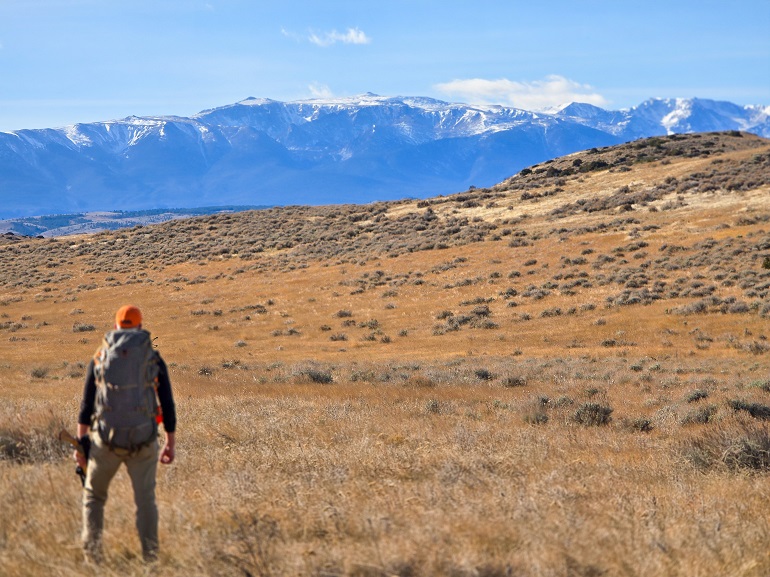
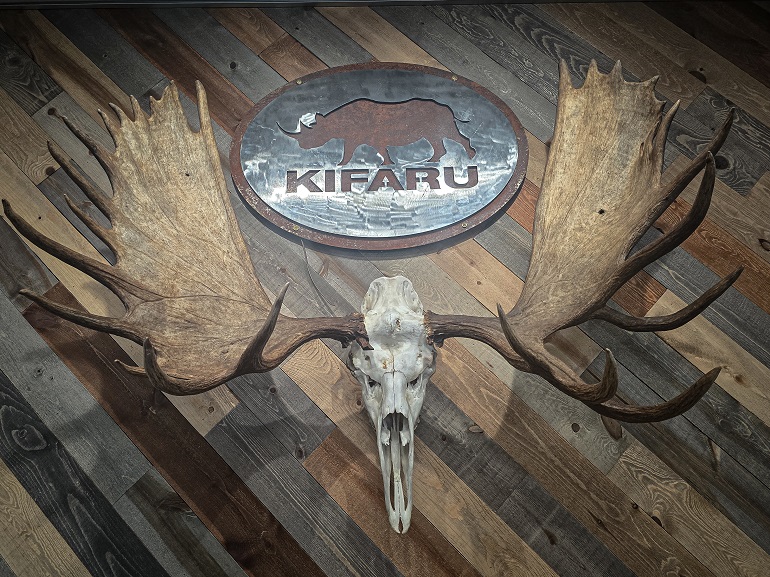
Early this year I was on the way to prepare for a series of hunts in Idaho and stopped off in Riverton, Wyoming at the headquarters of Kifaru International. I was interested in some of their fishing gear, but I had no idea that their products were actually made right there in Wyoming, I though the location was just some sort of outlet or headquarters. Nope, out of that tiny town Kifaru is making some of the best hunting gear on the market, and I bought lots of it.
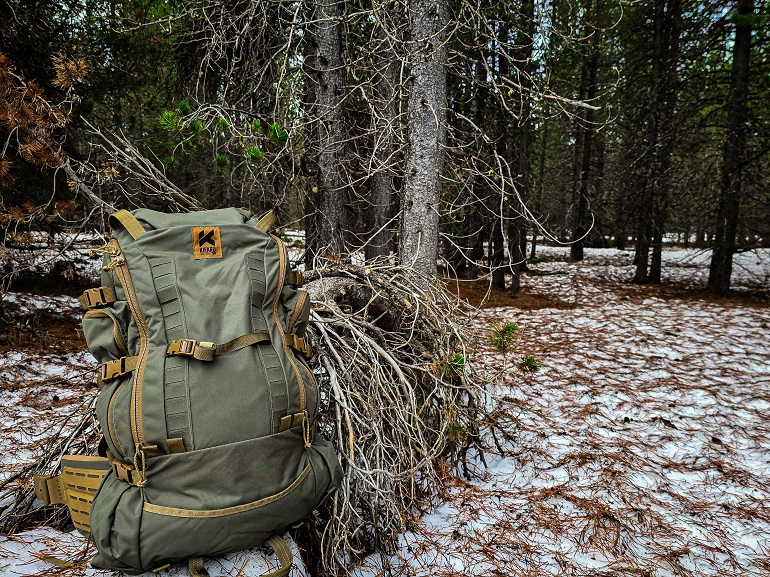
One of the best things I got from Kifaru was their 44 Mag pack with their ARK frame. It came out in 2024 and I used it for all of 2025. This is, without a doubt, the best heavy haul frame I have ever used, and that’s from a dude that’s been mountain climbing (fifteen 14ers and counting plus McKinley!) and mountain hunting for over 30 years now.
The real work done by any backpack is the frame. Sure, the bag material, the layout, all that is important, but it’s the frame itself that determines how weight is carried on your body. A bad frame, or just a badly fit frame, will leave the weight sagging, sloshing, pulled away from your body and hard down on your shoulders. The wrong frame will radically limit how much you can carry and how far you can carry it.
Kifaru’s ARK frame has managed to be fairly light in weight, ridiculously tough, adjustable, and feature rich. It’s a frame made by people who clearly actually carry heavy objects in the field, who hunt, and who spend the time to get the details right.
The core of the frame itself is a carbon fiber frame sheet. Kifaru claims in their videos that they’ve run it over with a fork lift, dropped it off buildings with 150lbs in it, and more. I believe it. I weigh just over 200lbs. I propped it up between two chairs and stood on it, without effect. At the same time, it has a small amount of flex in it, perfect for moving with the body while keeping loads still. Big cut-outs in the center form a cross bar layout. I’m sure those big cut-outs in the middle of the frame were made to reduce weight and increase strength but they have the secondary advantage of adding space for airflow under the pack. Any bit there helps.
A key feature to the ARK frame is its adjustability. It pains me to see someone take a backpack out of the box and start using it, but probably not as much as it pains them. Serious backpack frames should be sized to fit the user, and just a couple of inches of adjustment can make a huge difference in how the pack feels and moves, especially over long distances or with heavy loads. The ARK frame uses simple hook and loop tabs and cuts into the ARK frame for a variety of adjustments. I spent some time with the pack loaded and unloaded, standing in a mirror to check different placements and generally just to try out taking it apart and putting the pack back together. The frame adjusted to fit me perfectly, but the wee folks under 5’6″ might struggle with it, as only the 25″ ARK frame is offered with this 44 Mag pack. (Kifaru offers a smaller 22″ version as well, just not with the 44 Mag.)
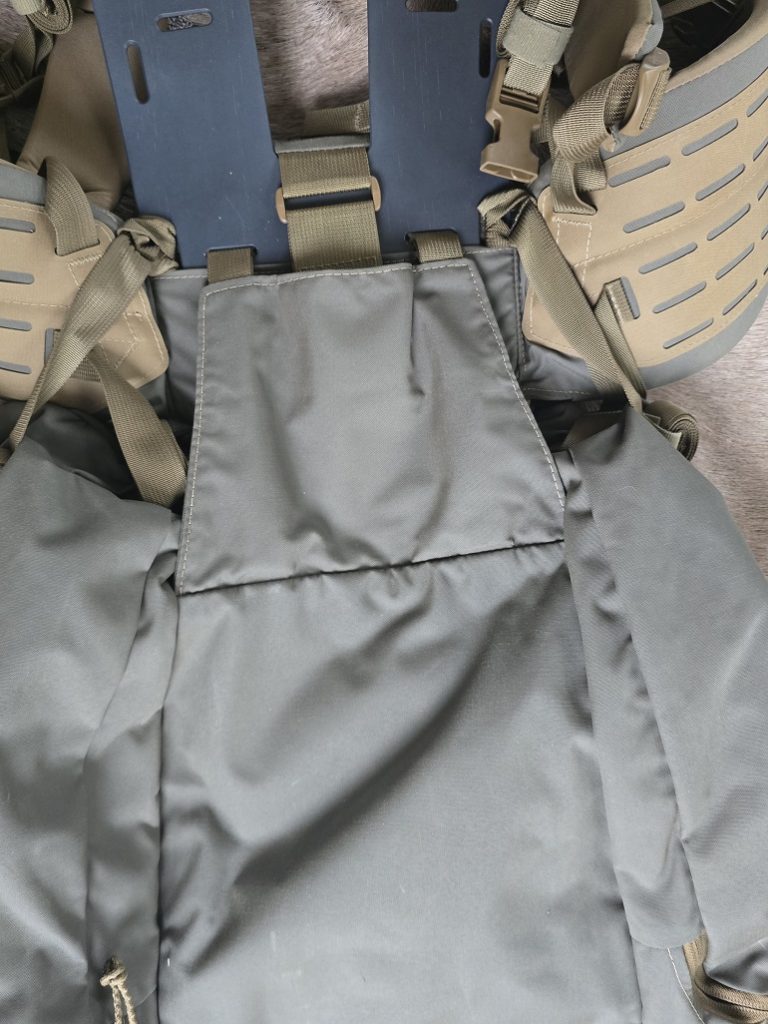
You’ll also find a built-in load shelf, something many find essential for a hunting focused pack. By loosening the side compression straps, or simply unbuckling them altogether, you can slide game bags full of meat and bone between the frame and the pack. Alternatively, you can ditch the pack altogether and just use the frame and a lightweight load sling to haul meat. I just put all the meat I can carry inside game bags and put them into the pack, packing out a little less meat for the first load, so a load shelf isn’t so valuable to me, but those of you willing to haul a heavy load of meat as well as your gear together will find it vital.
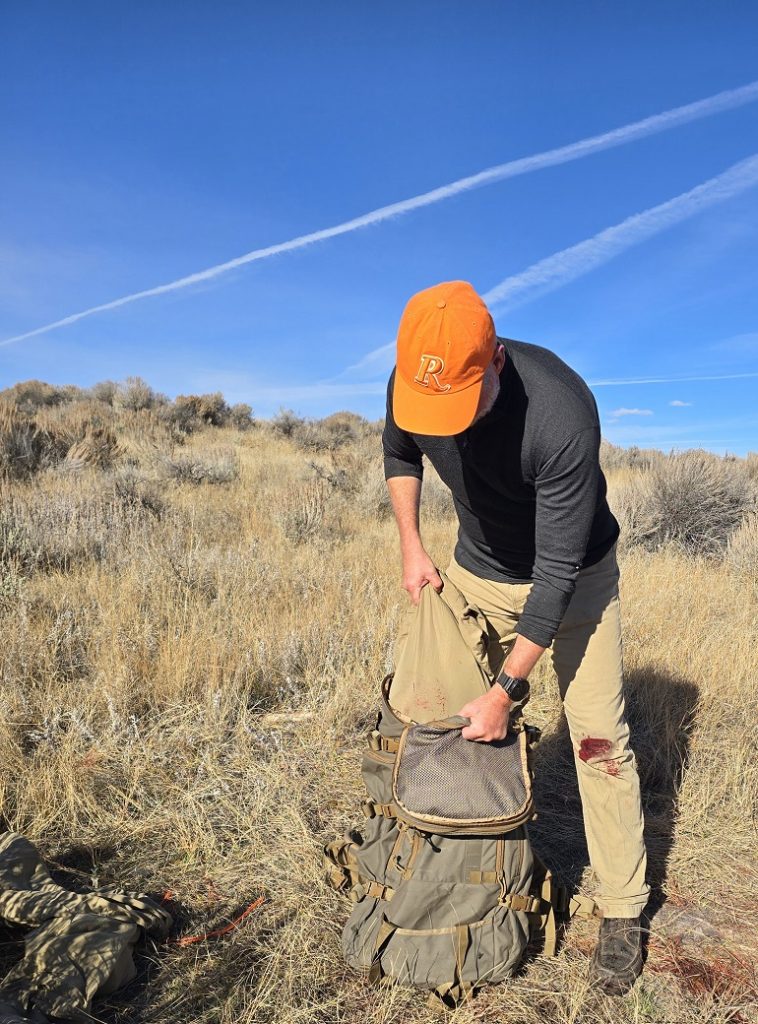
That said, on my last Montana mule deer hunt I forgot to line my pack with a thick trash bag before I shoved the meat into game bags and loaded it up. The interior of the pack got pretty bloody. I washed it off in a nearby creek later and was very thankful to find the interior lining of the pack allows easy cleaning. That’s particularly important for those of us who pack out meat in bear country, you really want to make sure that pack gets very, very clean after your hunt if you use it to haul meat, and try not to forget a liner.
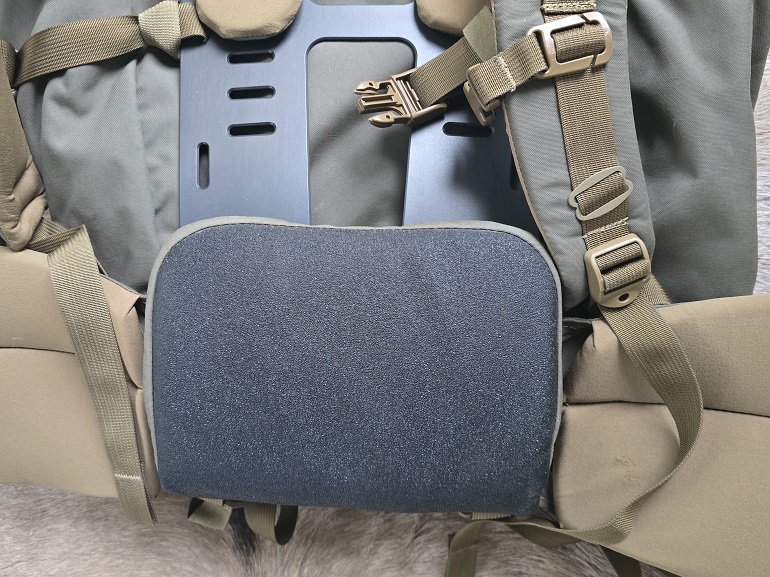
The padding on the shoulder straps, belt, and lumbar pad are unusually thick and firm for a hunting pack frame. This is one place where many ultra-light packs cut weight. You probably won’t notice any issues with less substantial padding your first few hunts, but after a while, you will. This is especially true of the lumbar pad, as the thickness of the lumbar pad changes the offset of the pack, affecting how it rides on your body. The ARK frame’s lumbar pad is thick enough that I popped it off the frame and used it as a seat to sit and glass whenever I’d found a vantage point to stay and spot for half a day or so, a welcome comfort. (The more comfortable you are, the more likely you are to identify game while glassing.) If any of the padding pieces wear out, they are replaceable.
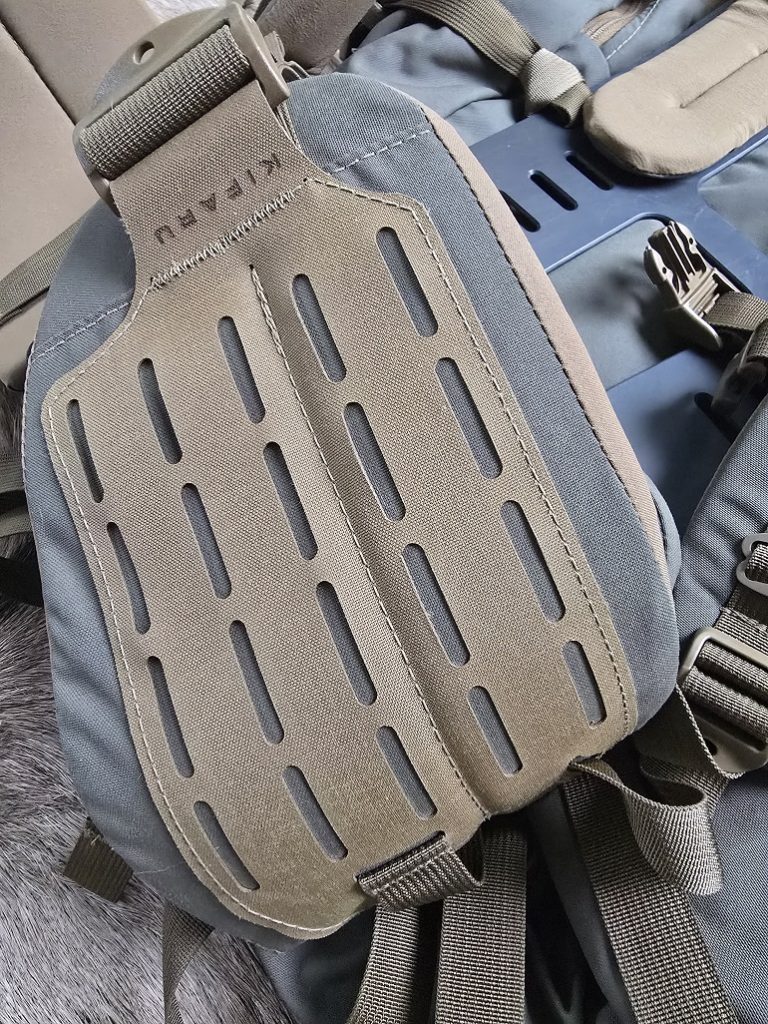
A small thing that makes a big difference is the MOLLE panels on the belt. These panels cover pretty much the entirety of the belt and are appropriately stitched and spaced. By that I mean they are wide, stitched in more than one place, but loose enough that getting something attached, and unattached, isn’t a chore. Those of you who spend time in bear country are already recognizing the value. Your bear spray goes on one side, your pistol holster on the other. The most vital things you carry are now forward of your hips, where they need to be, and are easy to pull off and attach to your pants belt or chest rig when you remove your pack.
As far as the 44 Mag pack itself goes, apart from the ARK frame, the 44 Mag is about as big of a pack as I actually want to carry. Yes, there are bigger packs, and Kifaru makes some that seem great, but the 44 Magnum is a 4,720 cubic inch pack. That’s all I need for a solid 10 days of hunting, if I’m careful about what I pack. There’s an old adage, “give a soldier a ruck and he’ll fill it”. It’s absolutely the truth. Any bigger than this and all I do is add weight that will slow me down and beat me up anyway.
As it is, I was able to load over 100lbs worth of gear and mule deer into the pack and successfully walk it out of Montana’s Beartooth mountains. That was probably as heavy as anything I packed with this pack, although I also took out an entire black bear hide and meat on a separate hunt, which likely ended up about the same. The pack and frame handled both loads (as well as their much lighter pack-ins) extremely well.
I like very few pockets on a pack. I’d much rather just one big open space and I’ll use smaller stuff sacks for anything I want separated. The 44 Mag has one primary pocket in the center, with a big horseshoe shaped zipper to open it. That’s great, as it allows you to lay out the back and unzip the whole darn thing while it’s flat. You can get whatever you want without having to dig it out and mess everything else up.
It’s also got a couple of exterior top compartments, one of which I’ve never actually used, as well as a mesh interior pocket, also which I’ve never used. There’s the ubiquitous water bladder pouch with ports, which I don’t use. I find I drink a lot more water if it’s in my hand, so I just keep a bottle in my hand. What I did use were the long external side pockets, one for a small tripod and the other for a spotting scope. They are about perfect for this.
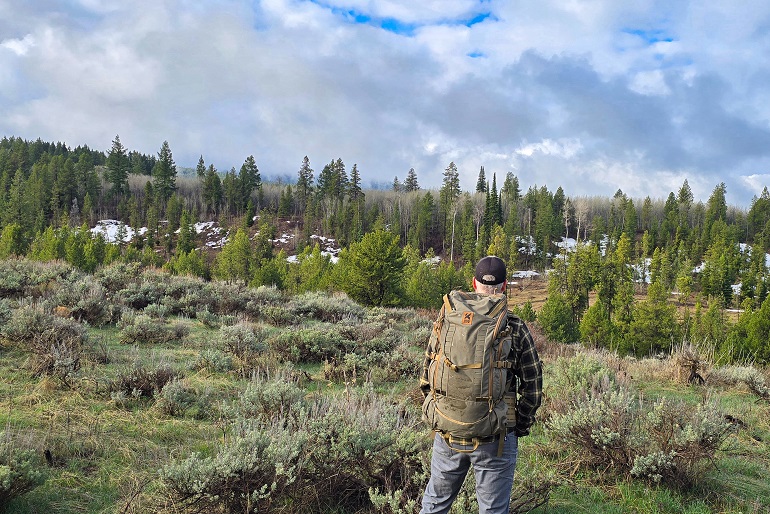
There’s not a lot of attachment points on the front of the pack, but there are plenty. Combine the MOLLE slots on either edge, the big handle-like straps up at the top, and the 4 tabs at the base, and you can strap just about anything you want to the back of the bag. Also note that the bottom of the bag has a shelf/pocket. Put all that together and you can easily load up a bow or a rifle to the back of the bag and keep it in place. I did most of my hunting with a TC Encore pistol with a 15″ barrel this last year and found strapping the pistol in a soft case to the back was no issue at all, although I usually just kept it in hand.
The whole pack is made of 500D Cordura. That’s not particularly light, but it is extremely tough. It also doesn’t make that horrible loud “zippy” sound some nylon does when you walk through bush. The real upside is that it’s not going to get a hole rubbed in it from your gear, it’s never going to rip from a heavy load, and if you are in the kind of thornbush that can tear this bag, leave.
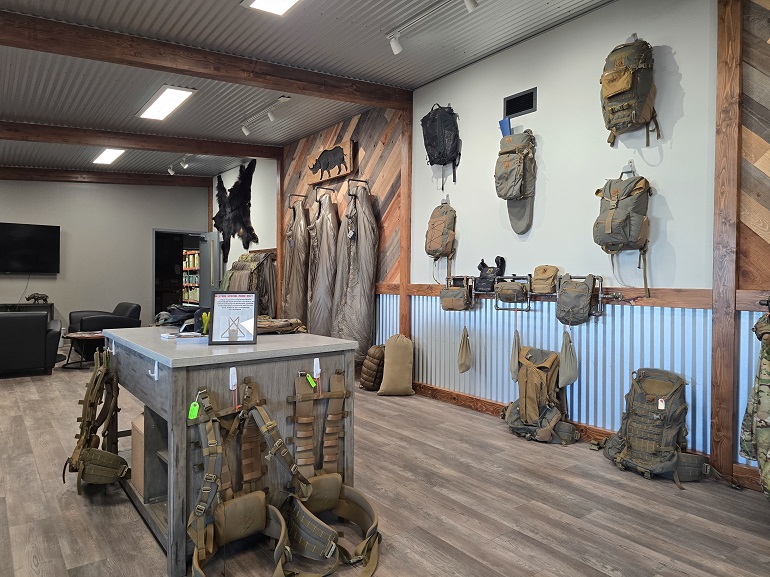
One of the things I love about this brand is their in-depth videos on every aspect of their gear. You can find out the right way to attach the bag to the frame, how to size and fit the frame itself, how to use the load sling, add other bags to the frame, and really anything you’d want to do with any of their bags or the ARK frame their on their Youtube site. If you aren’t super familiar with how bags and frames should be sized and put together, or just need a refresher, it is very handy.
The 44 Mag (Gen 2) combined with the ARK frame is about ideal for the vast, vast amount of pack-in hunting anyone will accomplish in their lifetime, with the possible exception of extreme cold weather, high-altitude adventures. It’s crazy sturdy, fairly light, and has all of the features you’ll actually need, without gimmicks. It’s clearly made by folks that hunt, and made right here in the USA is a big bonus.
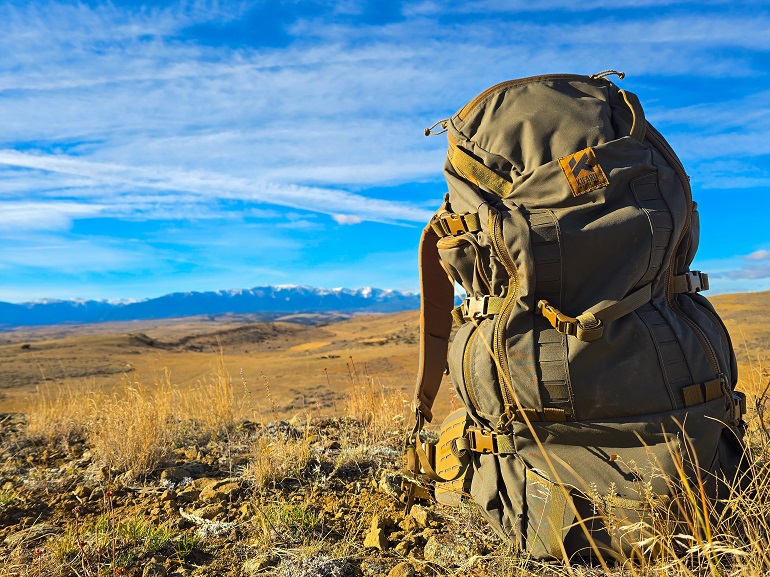
Specifications: Kifaru 44 Mag Pack
Material: 500D Cordura
Weight: 3 lb 4 oz (bag only) / 6 lb 6 oz (with Medium 25″ ARK Frame)
Volume: 4,720 CI (3,670 main / 340 lid / 355 side pockets ×2)
Material: 500D Cordura construction
Panels: Laser cut MOLLE
Zipper type: YKK zippers
Country of origin: Made in the USA
MSRP: $350 –Bag only, ARK Frame – $500
This pack sounds great.
Unfortunately such expenditures are too rich for my blood.