

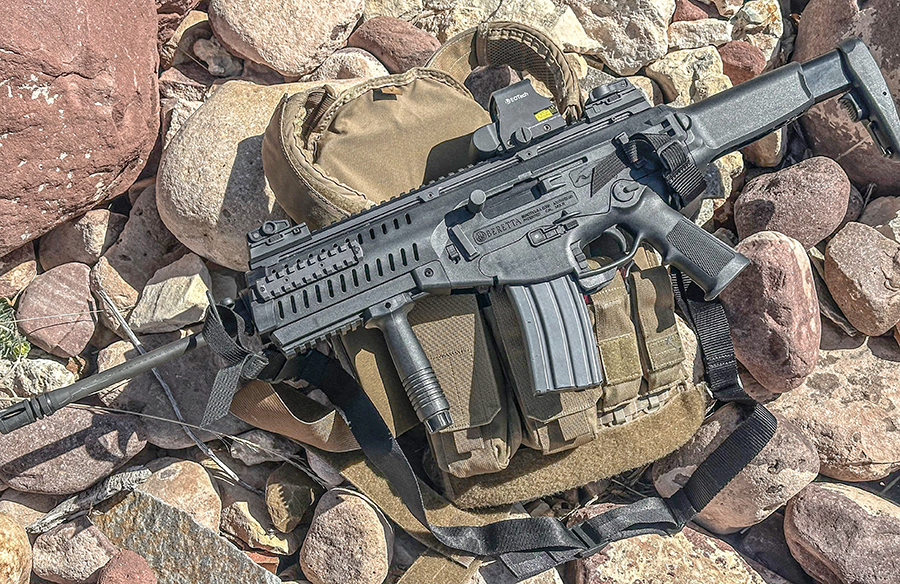
As our friends from Italy have been in the gun news quite a bit lately, I thought this might be a time to discuss an exceptional firearm from Beretta, one that has become a modern classic, even if it never really caught on. I am speaking of the ARX 100 rifle.
Many savvy readers are likely aware that the current Italian Army service rifle is the ARX 160 select-fire, chambered in 5.56mm NATO. Following NATO specs, the ARX 160 uses STANAG magazines and the 16-inch barreled version has a bayonet lug. The new rifle, introduced in 2008, was designed for the Italian Army to replace the aging AR-70/90.
Featured here is the commercial ARX 100 5.56mm version of the rifle that was built in Gallatin, Tennessee for the United States civilian market. The Beretta ARX 100 simply followed the pattern of the ARX 160, minus the select-fire option and bayonet lug. When I showed the ARX to my youngest son, who’s in his 20s, he said, “It looks like something you’d build out on Call of Duty.”
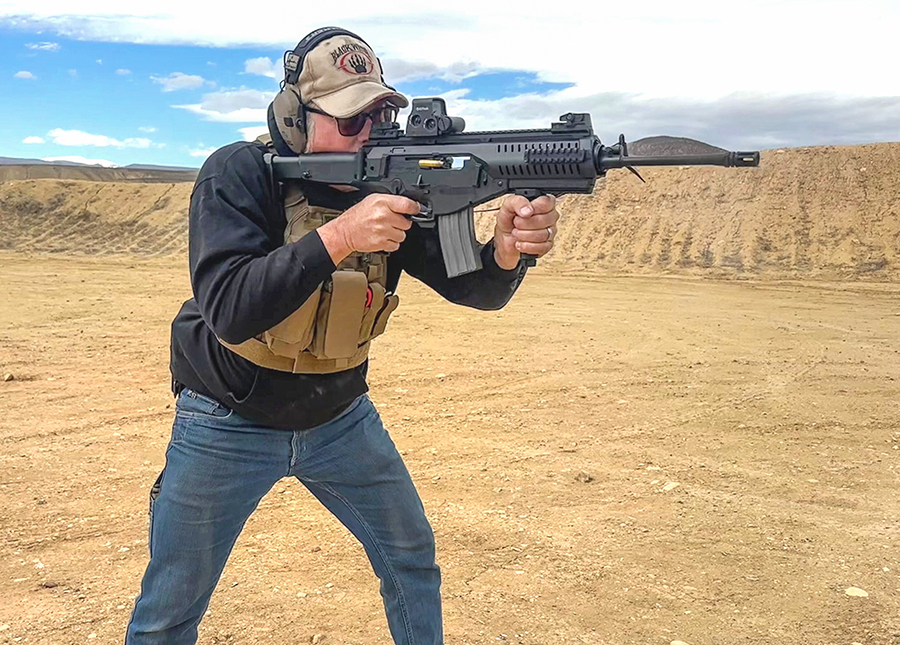
ARX 100 Features
Zach’s CoD comment wasn’t that far off of the mark. The Beretta ARX 160 is a modular 5.56x45mm NATO rifle designed for the Italian Army’s “Soldato Futuro” or “future soldier” program.
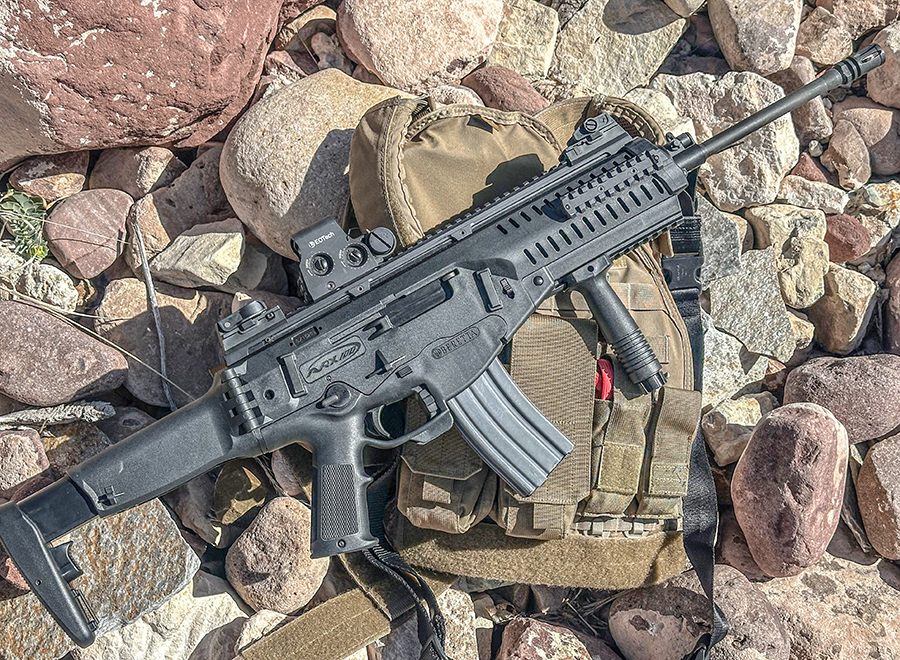
As you’d expect, the ARX 100 is semi-auto and has a 16-inch barrel with a true 5.56mm NATO chamber. The muzzle device is a NATO-style flash hider/muzzle brake. By using a great deal of high-strength polymer and aluminum, as well as steel where it’s needed, Beretta was able to keep the empty weight of the ARX relatively low at only 6.8 pounds. For a full-sized rifle that’s exceptional. By comparison, the empty weight for the Colt M16A2 is 7.5 pounds.
The operation of the ARX is a short-stroke gas piston. One of the features that the Beretta engineers built into the rifle was “the lightweight technopolymer receiver allows for reliable operation with virtually no lubricants.” The old Marine in me cringes at the thought of running a dry rifle, but I appreciate the idea of deliberately minimizing metal on metal contact to reduce friction.
All of the manual controls on the ARX 100 are built to be ambidextrous. I suppose the only feature that’s not ambi is the side-folding stock which both retracts and folds to the right of the receiver. The stock has a 4-position adjustment. While you can fire the gun with the stock folded, there wouldn’t seem to be any practical reason to do so.
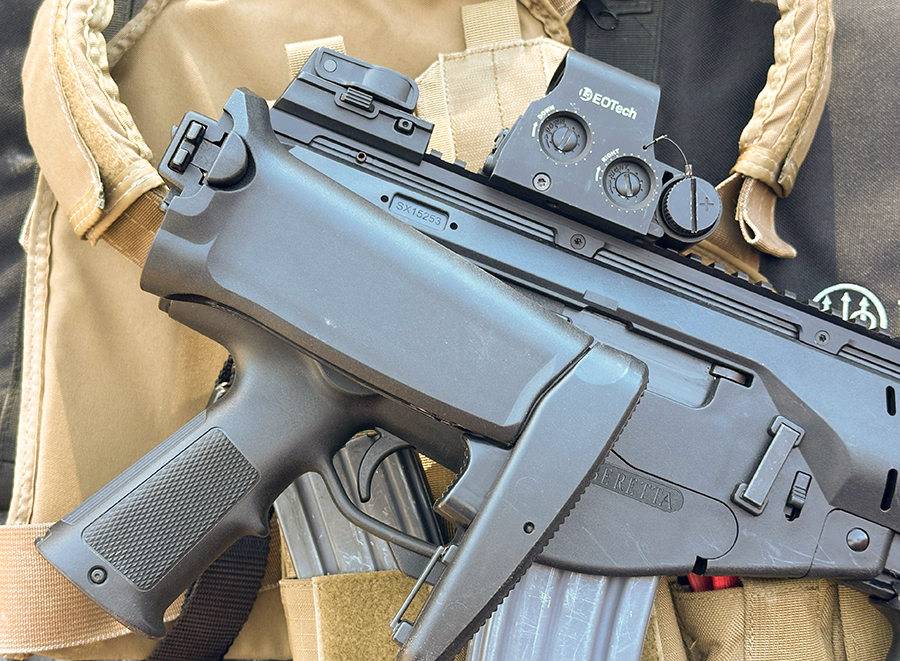
The charging handle for the bolt can be set up so that it’s accessed either side of the receiver.
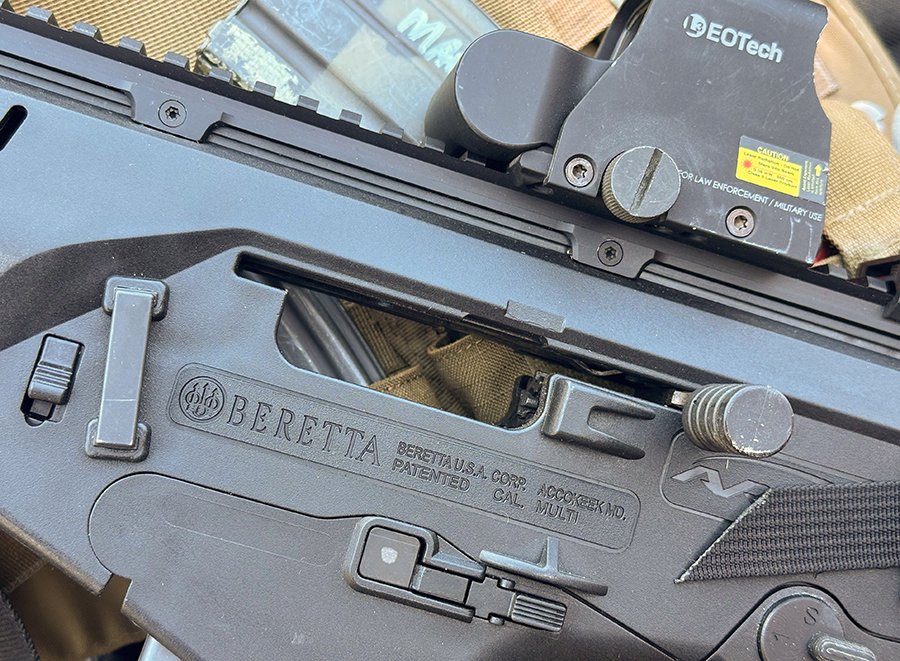
The user can also switch the brass ejection from the right side to left by using the tip of a 5.56mm cartridge to depress a selector button at the rear of the receiver.
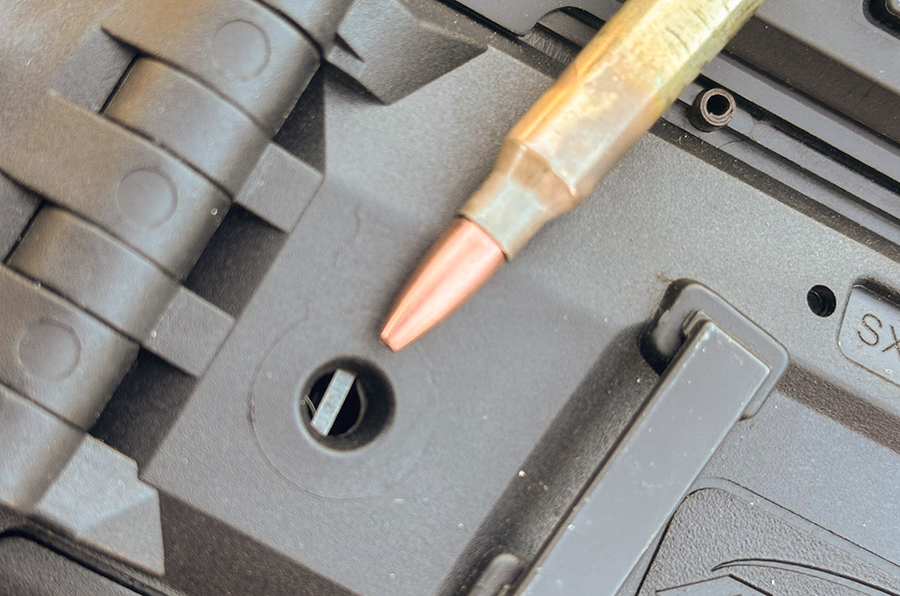
That is a pretty slick option. The ejection port area is open on both sides and, as you can see from the photos, you can see through it from side to side.
Additionally, as you’d expect from a modern combat rifle, no tools are required to disassemble it for cleaning or field maintenance. The barrel can be removed and replaced very quickly. Though now extremely difficult to find, Beretta offered a 10.25-inch SBR barrel for those who desired that configuration. Perhaps, now that the tax stamp for SBRs is $0, Beretta might want to do a limited run of SBRs or RCPs…maybe?
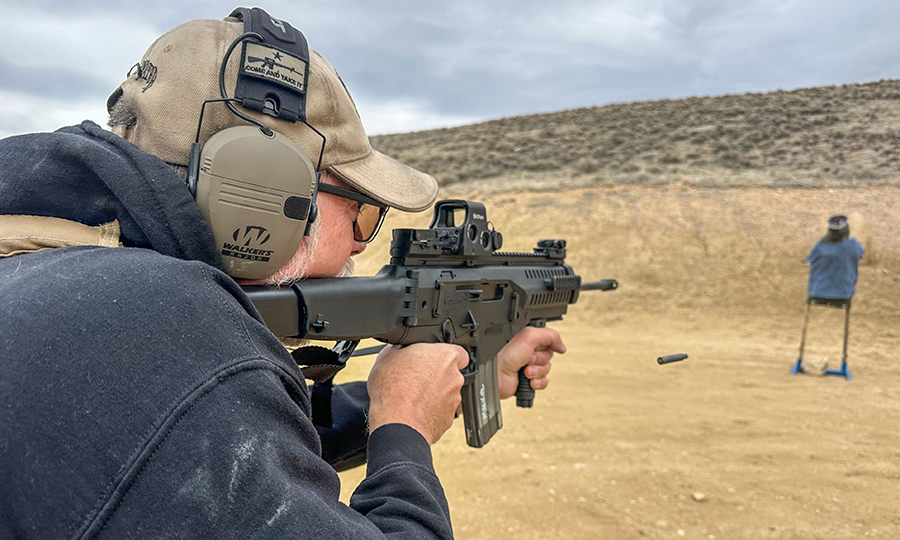
Other features include a full M1913 Picatinny rail running the entire length of the top of the rifles receiver. There are additional accessory rails on the forward left and right sides of the rifle. The forward sling swivel rotates to either side and you can attach the rear of the centered sling loop to the stock. The ARX 100 rifle came in a very nice black padded nylon case with flip-up/fold-down iron sights, a black nylon sling, a single aluminum STANAG mag and the owner’s manual, of course.
Factory Add-Ons
Other than the EOTech HWS optic, the only other things I added to the ARX 100 that didn’t come with the gun were an extended Picatinny rail for the base of the forend and an enlarged cocking handle. Both of these items came directly from Beretta’s online store.
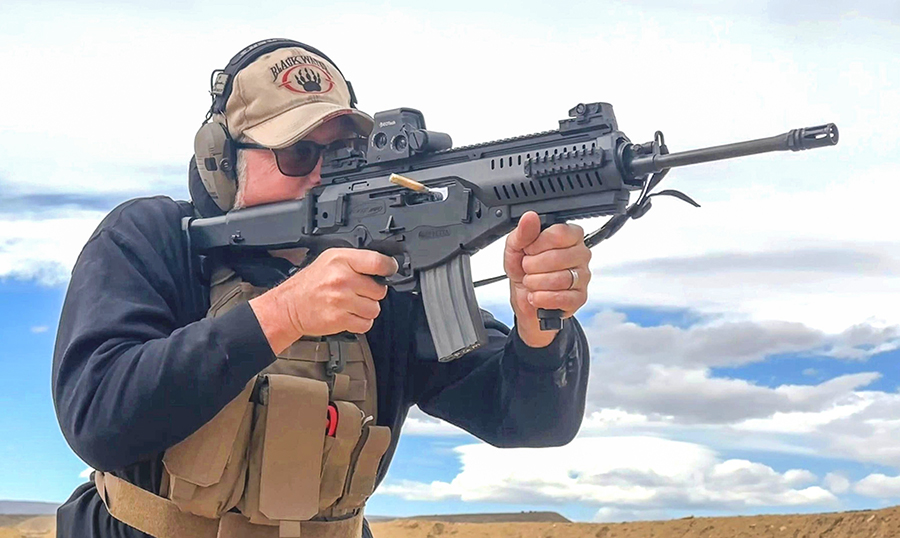
The pic rail allowed me to attach a vertical grip, so that’s one more add-on. The enlarged cocking handle is self-explanatory.
Range Time
To adjust and zero the irons, Beretta includes a sight adjustment tool that works very well. The rear sight has an adjustable diopter to be used to dial in longer distances after the BZO has been set. I took the time to BZO the iron sights at 25 meters and then I installed an optic.
My preference is the EOTech HWS optic, but the included sights work well. I zeroed the reticle on the HWS at 50 yards, a practical distance for such a rifle.
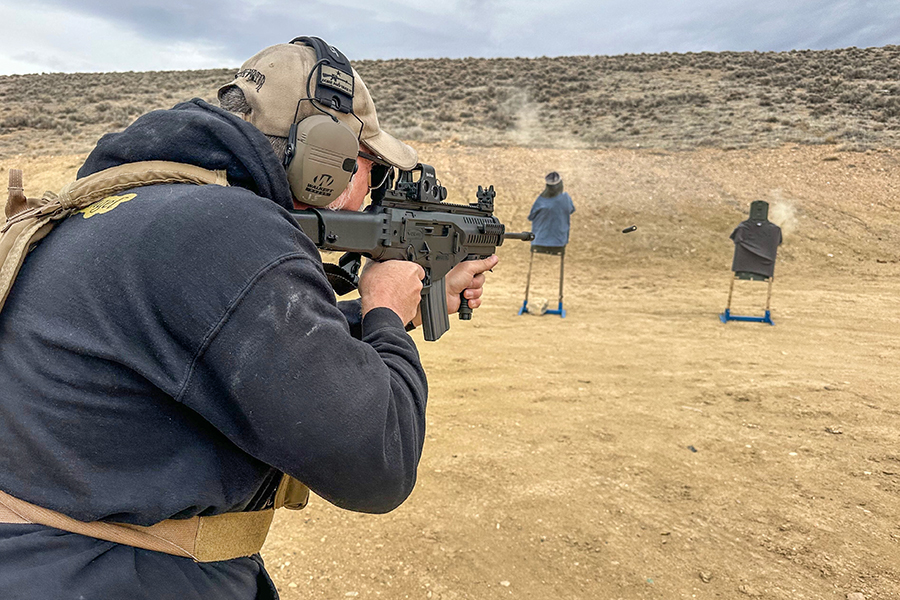
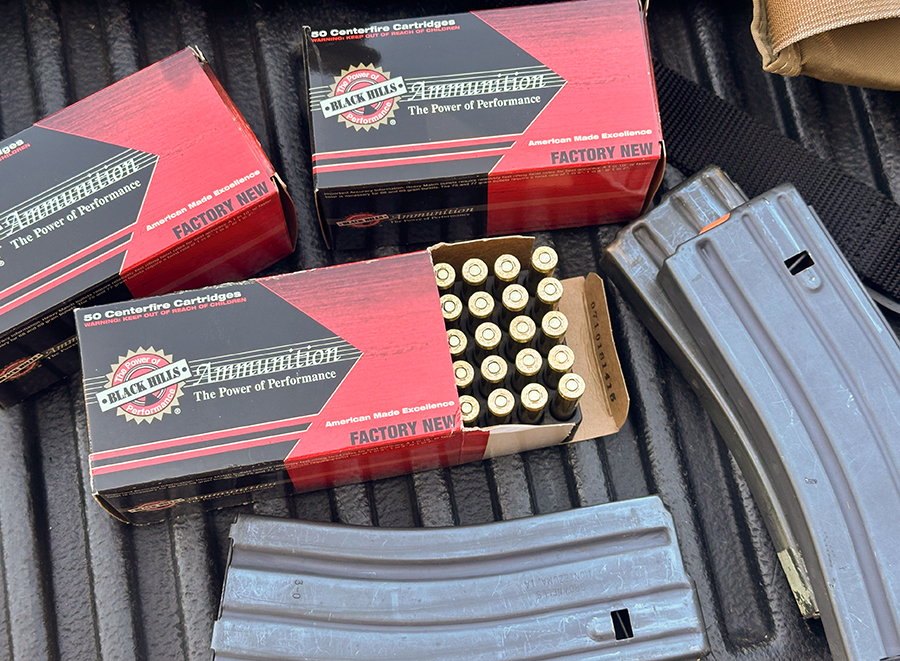
In addition to the included 30-round aluminum magazine, I brought more from Brownells for range sessions. The ammunition I used to zero the optic came from Black Hills and was their 62 grain DP load. Over time, I used a variety of .223 Remington and true 5.56mm ammunition in the rifle.
It’s been a few years since I purchased my ARX 100. To be honest, range sessions with the ARX 100 are a joy. The recoil impulse is what you’d expect from a piston-driven 5.56mm…that is, mild to say the least and certainly controllable enough for rapid fire. Thousands of rounds later, I can’t recall any stoppages. I even ran gray steel-cased Russian ammo through the gun and it consumed it all without complaint.
Out of Production, Sadly
If I could predict the tastes of the American gun buyer, I’d be making money selling guns rather than writing about them. Hence the reason I’m still here typing away. Beretta discontinued the ARX 100 in the US in 2019 due to tepid sales. The rifle’s $the $1,500 price tag probably had something to do with that, especially on a gun with a lot of polymer.
Beretta pulled the ARX right before the massive COVID gun-buying boom that kicked off in 2020 and went on for about three years. Think back to the spring and summer of 2020 where gun makers couldn’t keep up with demand and prices were at all-time highs. Beretta wouldn’t have been able to make enough of them if the ARX had still been in production.
If there’s some positive news, it’s that the ARX 100 was made in Tennessee and all the machines and tooling to build these excellent rifles still exist. Could it come back for commercial sales in the United States? While I wouldn’t hold my breath waiting, anything is possible. As to the question, “What was wrong with the ARX 100?” from my perspective, the answer is nothing. It was and is a great rifle.
Paul G. Markel is a combat decorated United States Marine veteran. He is also the founder of Student the Gun University and has been teaching Small Arms & Tactics to military personnel, police officers, and citizens for over three decades.