

There are plenty of “budget” firearms out there. Many of them have strong feature sets, but they come from nations such as Turkey and Brazil. They’re more affordable because their manufacturing costs are significantly lower (despite the dreaded T-word).
When Rost Martin, a firearm manufacturer from the great state of Texas, introduced the RM1C pistol, people took notice. The line has gained popularity among users and built a following—something that’s difficult to achieve today, given stagnant sales and market saturation. Following the success of the RM1C, Rost Martin introduced an updated version that reflects today’s current trends.
In the first article of this series, I gave you my first impressions of Ross Martin’s new RM1C-Comp. Now that I’ve had a chance to put some rounds down range, let’s see how my initial impressions hold up, and how I’m setting up this pistol for carry.
First Shots
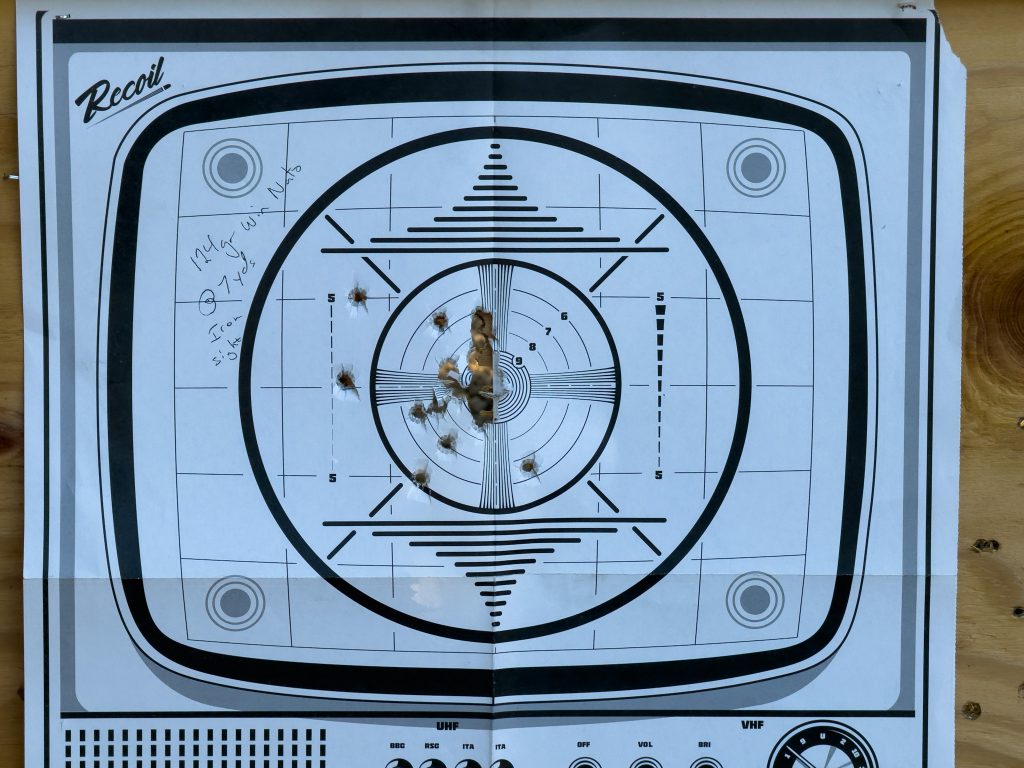
For the first range session, I shot 150 rounds. While that may not seem like much for experienced shooters, that’s a typical range session for many people. Keep in mind, everything today is more expensive and our time is limited. For this session, I brought a box of Winchester 124-gr NATO-spec ammunition and an ammo can with a mixed lot of 115-gr ball ammunition from various brands. Temperatures hovered around 80 degrees and humidity was mild. For accuracy testing and note-taking, I drove to Kelbly Rifle’s range, just north of me (I use a private range for more dynamic shooting). I completed the initial testing at seven yards—a practical distance for many carry scenarios.
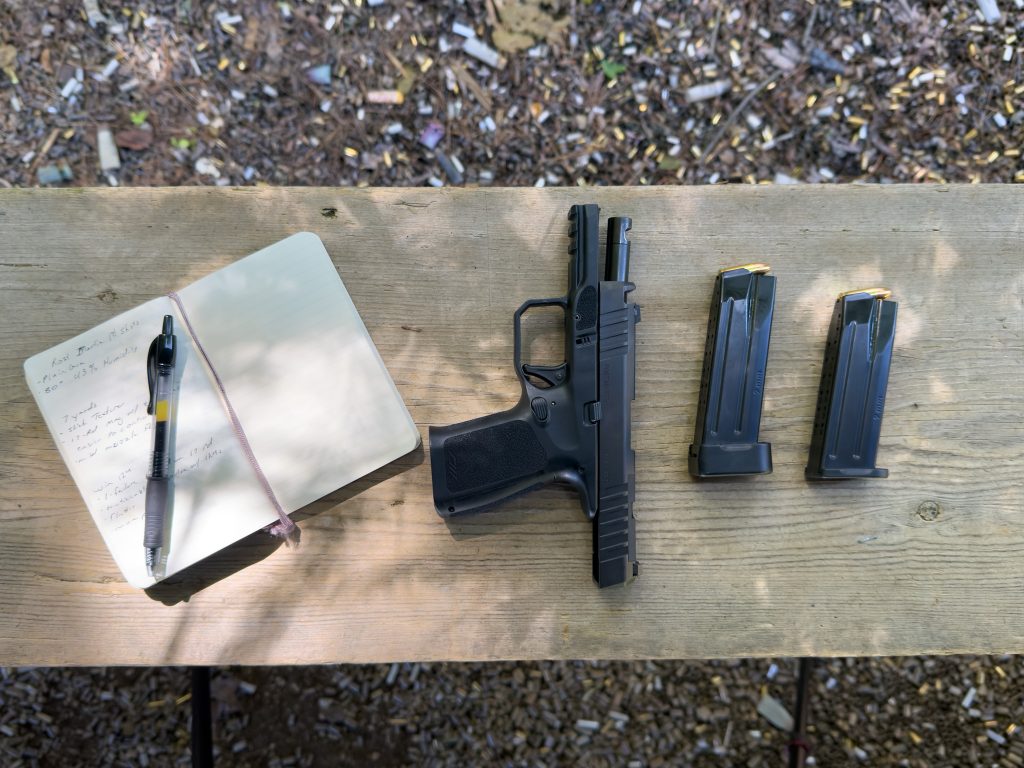
Here’s what I noticed after 150 rounds:
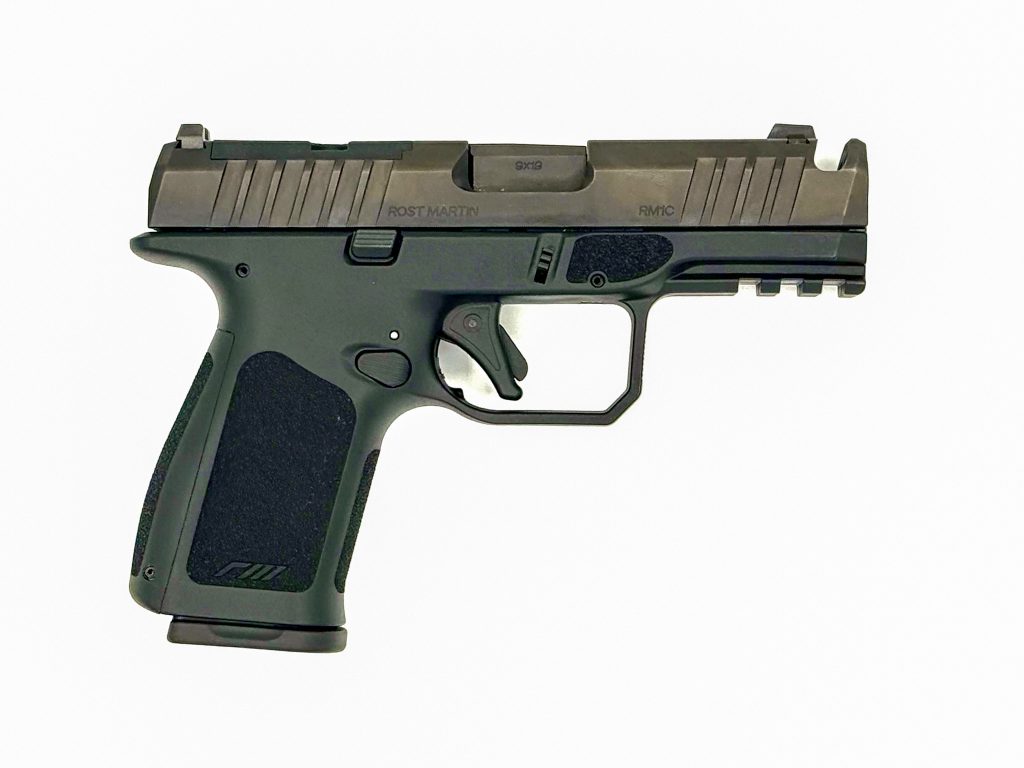
- The texture is slick. After warming up, I kept having to readjust my grip. Although it wasn’t excessively hot outside, it was still warm and sweaty palms are a hindrance to good pistol shooting.
- The extra grip purchase provided by the 17-round extended magazine was noticeable, but not a huge deal. I shot just as well with the shorter mag. For those with larger hands, that might be something to consider.
- A common trend I’ve noticed with compensated guns is that 124-grain ammunition tends to be more accurate and better at actuating the comp. What I mean is that 115-grain ammo can vary in pressure and it’s often lighter. So, there isn’t always enough pressure built up to effectively activate the comp. I thought the compensator helped flatten the impulse a bit with 115-grain ammo. Still, I saw a significant difference when I switched to Winchester NATO ammo (which usually runs a bit hotter).
- That said, accuracy was better with the 124s than the 115s. Again, that’s common, at least for me. When I switched back to the 115s, the groups opened up slightly.
- I had one failure with the 17-round magazine. It was the second run of that magazine and the first with the 124s. It looked like the round didn’t ride into the feed ramp correctly.
- Regarding recoil, with 124s, it was flat and more like a punch. The 115s had a milder impulse but more muzzle rise.
- Regarding the trigger, I noticed it broke in a bit throughout the range session. Feset is very smooth and easy to feel, making for accurate shooting. Initial take-up remains a bit long, but once you settle in, it’s easy to feel the reset.
- Besides its texture, I wish the RM1C-Comp had a gas pedal molded into the frame. My offhand thumb naturally rides a bit high without one. Maybe I’m spoiled, but many manufacturers now include that as a standard feature.
Overall, an impressive first range session that continues many of my initial thoughts from the previous article.
Build Out
With all of that said, it’s time to set up the RM1C-Comp for everyday carry. While the base model is perfectly fine, I had some things I wanted to address before carrying.
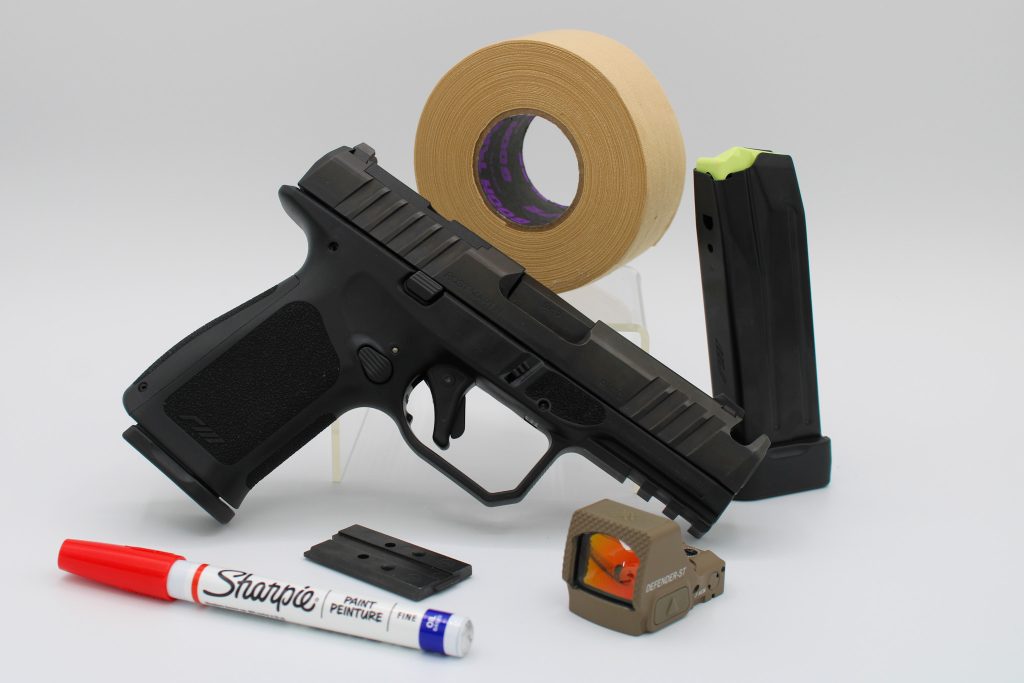
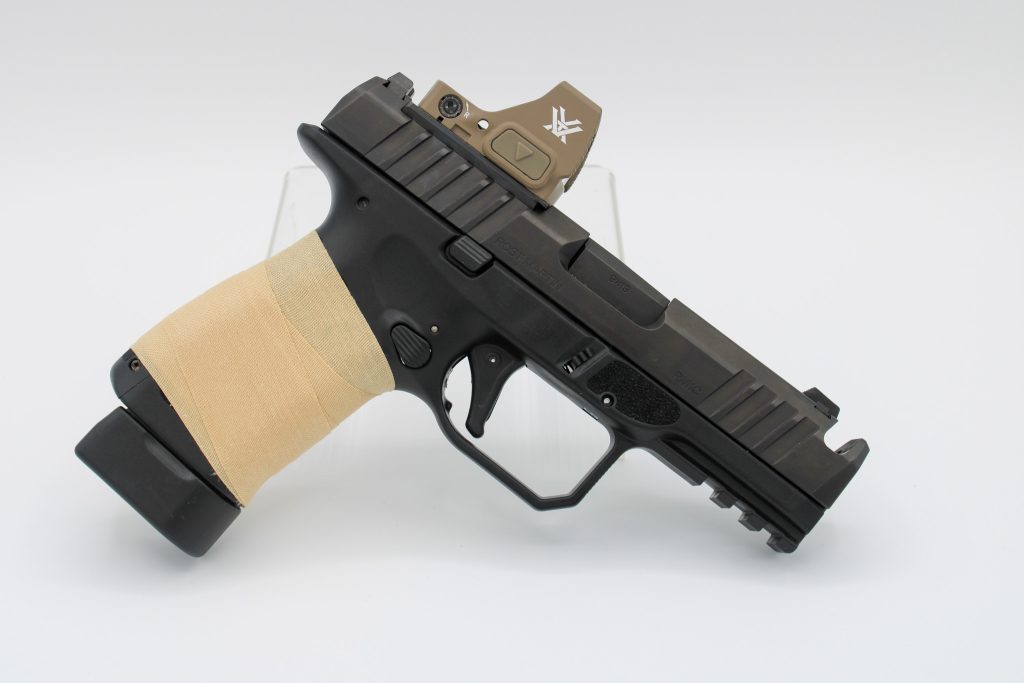
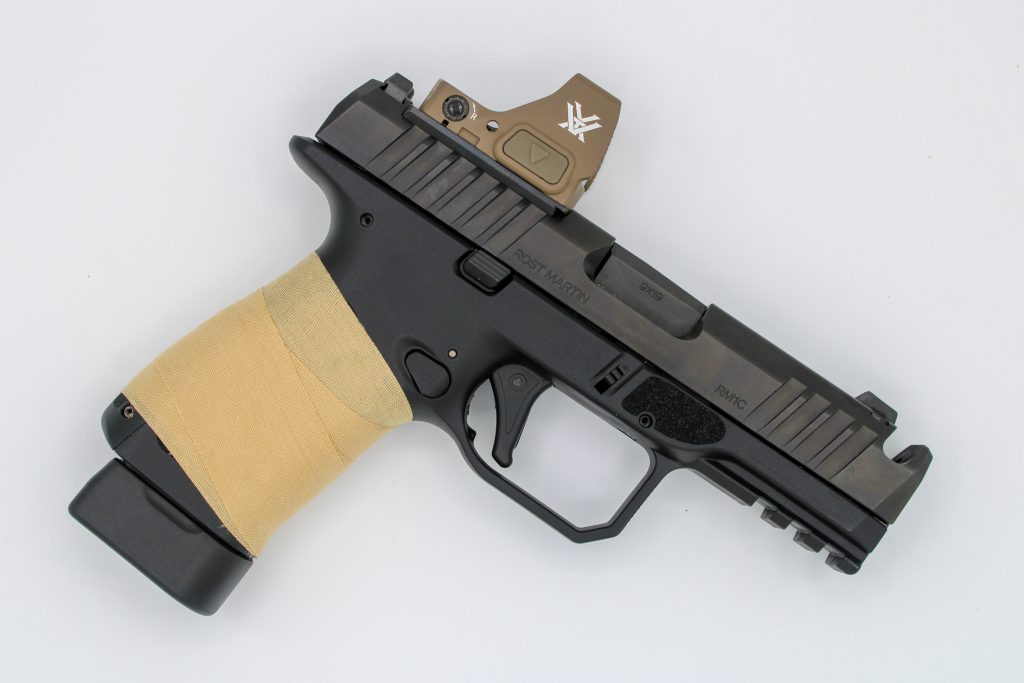
- Red Dot: The pistol is optics-ready, so I’ll take advantage of that. Unfortunately, it ships with only an RMR plate. That plate’s fine if you plan to run a Trijicon or maybe a Holosun. However, I intended to install a Vortex Defender-ST, which requires a Delta Point Pro plate. No big deal—I ordered the extra plate from Rost Martin for $23.50. Since I didn’t want to be too plain, I chose a FDE Vortex Defender-ST. Mounting was straightforward: remove the dust cover and use the screws provided by Rost Martin. I torqued everything to 18 in-lbs and then used a Sharpie paint marker to mark witness marks on the screws. (Pro tip: always do this—that way, you can easily tell if an optic screw is coming loose.) Note that the Defender-ST does not co-witness with the iron sights. Not a big deal to me, but it might be to some.
- Grip Texture: As I mentioned earlier, the texture is too slick for my liking, especially when it’s hot and humid outside and my palms get sweaty. There are several options to address this issue with grip tape. There’s specific “gun tape” available, but I usually use Howie’s hockey tape. It’s inexpensive and works well. For this project, however, I chose Goon Tape’s Raid Tape in Desert Rat (paying tribute to the legendary 7th Armored Division of WWII). Plus, it gives off that tan/FDE look I was aiming for. The tape feels great and lets me build up areas I want.
- Holster: Options for holsters are pretty limited, but that’s typical for new guns. It’s the usual cycle where many manufacturers wait for market acceptance of new models. Usually, I attach a variation of the Streamlight TLR-7 sub to a carry gun. However, I couldn’t find a light-bearing holster for the RM1C for under $100. That kinda defeats the purpose of a consumer looking at a reasonably priced EDC pistol. Rost Martin lists several holster options on their website, however, I chose a We The People Holsters IWB with a claw. When I bought it, We the People was running a 25% sale and you can’t beat a good sale. (The holster is somewhere in middle America right now, making its way to me.)
That’s the majority of the “customization” I’ve done to the pistol. The only other thing I did was swap out the medium backstrap for the small one and bought an additional 17-round magazine.
Zooming Out
First impressions matter, and so far, the Rost Martin RM1C-Comp has made a good one. It performed well in its inaugural range session with only a few minor complaints—most of which I addressed during the build-out stage. The addition of a red dot and some grip tape will help me run the gun harder, while the holster will provide some practical carry time.
The final article in this series will be an overview of really putting this pistol through its paces in various drills and assessing its carry capabilities. Again, the point of a review is to determine whether a firearm meets the demands of its target market. In this case, people who are looking for a quality carry arm at a reasonable price.
Stay tuned.