
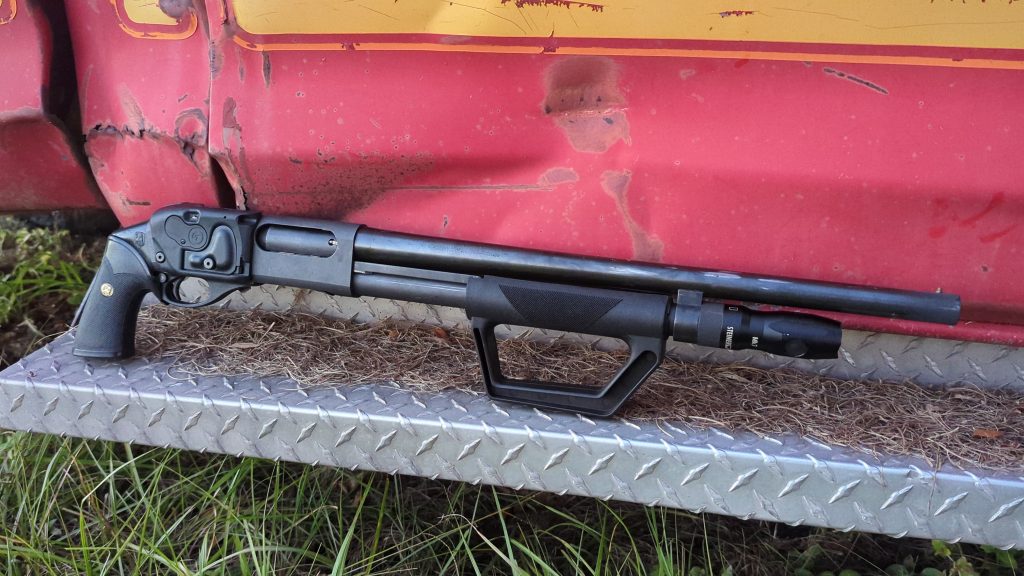
You have to love a good pawn shop find. Most pawn shops have outrageous prices, but once in a while I run into an 870 for around a hundred bucks. Sure, it’s a little beat up, and Mossberg actually makes the barrel for the 870, but it’s a hundred bucks!
I didn’t need an 870, but for less than a nice dinner with my wife, I had one. Through the mounting of numerous accessories, it’s become what I’m lovingly calling the 870 WTF (what the folly).
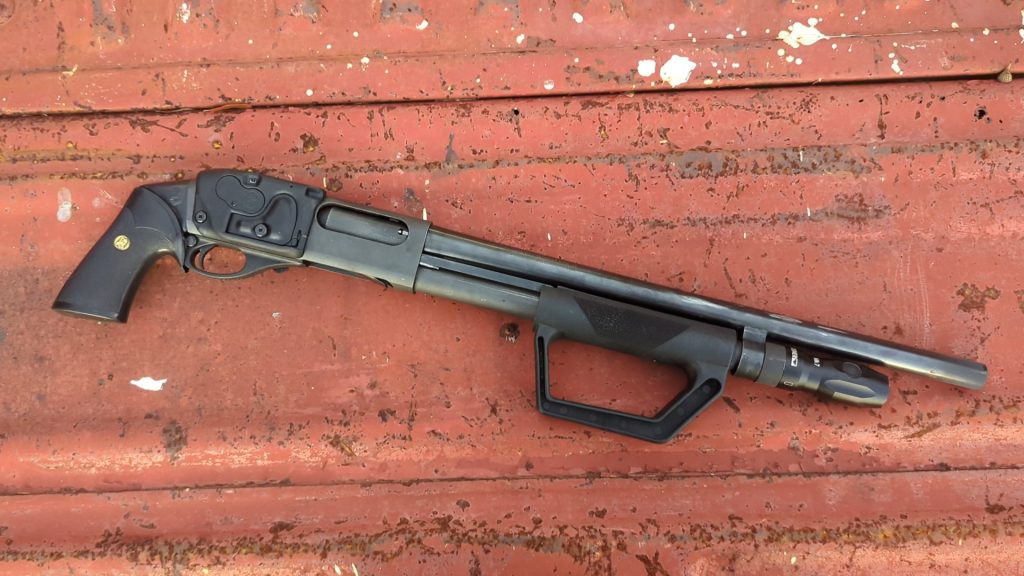
I’m a shotgun guy. I’m also a weird gun and gun accessory guy so in a short period of time, I had acquired an 870 and several odd accessories for it. The 870’s legacy as one of America’s favorite shotguns ensures it has an extremely robust aftermarket.
Each of these accessories could have its own short article, but it’s more interesting to cover them as a whole. Not just how the accessories work on their own, but how they combine and work together to form the Remington 870 WTF.
The 870 WTF: Front to Back
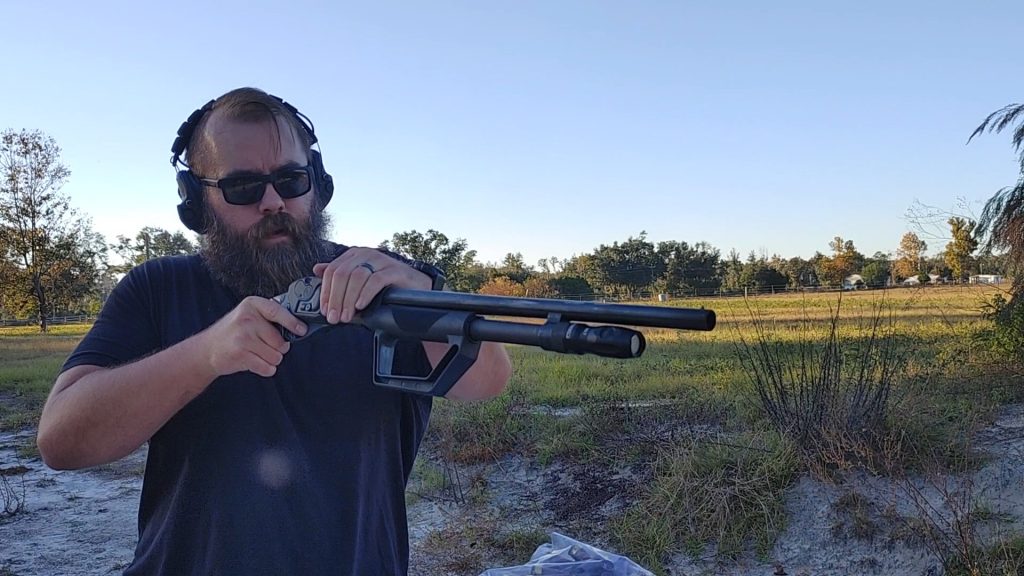
Right after acquiring the 870, I was watching the 1990s B-movie classic Timecop. The film has an interesting mess of firearms, and one that caught my eye was an 870 equipped with an odd forend. It had a U-shaped polymer handguard. A quick Google search told me this was a Butler Creek Protector handguard.
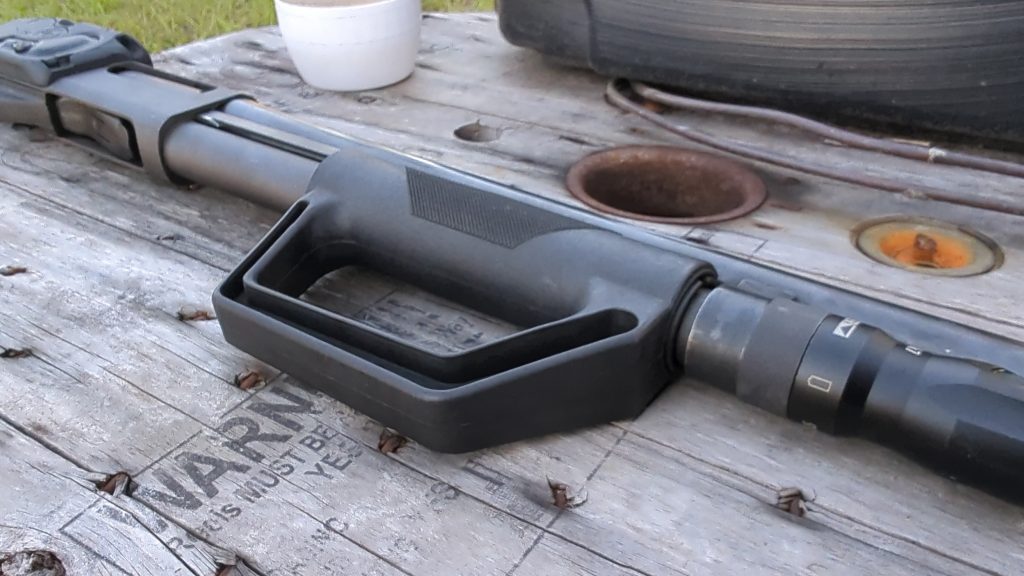
Butler Creek stopped producing the Protector a lifetime ago, but eBay proved fruitful, and I had one coming my way. That initial purchase was just for the cool factor. It may also have been partially fueled by a few craft beers while watching Timecop.
According to the Protector’s patent, the U-shaped (or to me, D-shaped) wrap-around design keeps your hand from slipping off the pump. That’s fairly obvious, but I wanted a source before I assumed. According to some old photos of the Protector’s packaging, it lists three benefits:
- Protecting the hand and knuckles in tactical situations.
- Preventing hand slippage on short-barreled shotguns.
- Serving as a durable and accurate rest for long-range shooting.
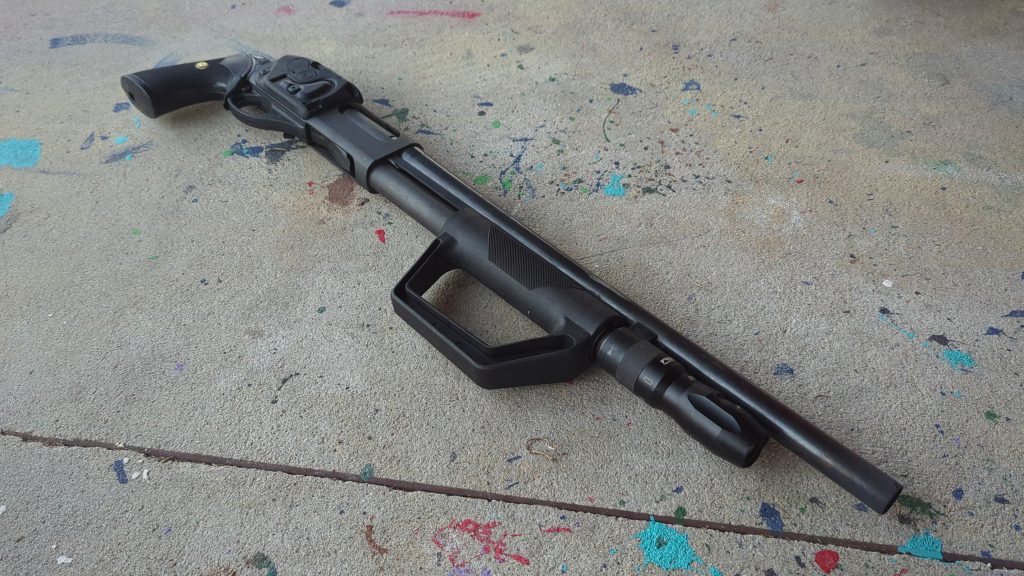
The slippage on short-barreled shotguns is worth mentioning because any time the pump is close to the muzzle, you run that risk. The Kel-Tec KSG handguard has been an issue in the past, but that risk is fairly low if you use the gun enough.
Using the Protector
What I found to be the most helpful feature of the Protector on the 870 WTF is helping me exercise a good push/pull. I can affirmatively push against the U-ring, enabling me to use an extremely effective push-pull technique. The recoil impacts my hand a fair bit, which, for a few shots, isn’t bad, but gets old by the end of a box.
I eventually shifted my grip to hook my thumb behind the forward part of the U-shaped grip, which cut down on the pain while still allowing a good push/pull on the gun. I’m thinking I could cut up a shoe insole, secure it with a little grip tape, and reduce that pain and fatigue-inducing recoil even more.
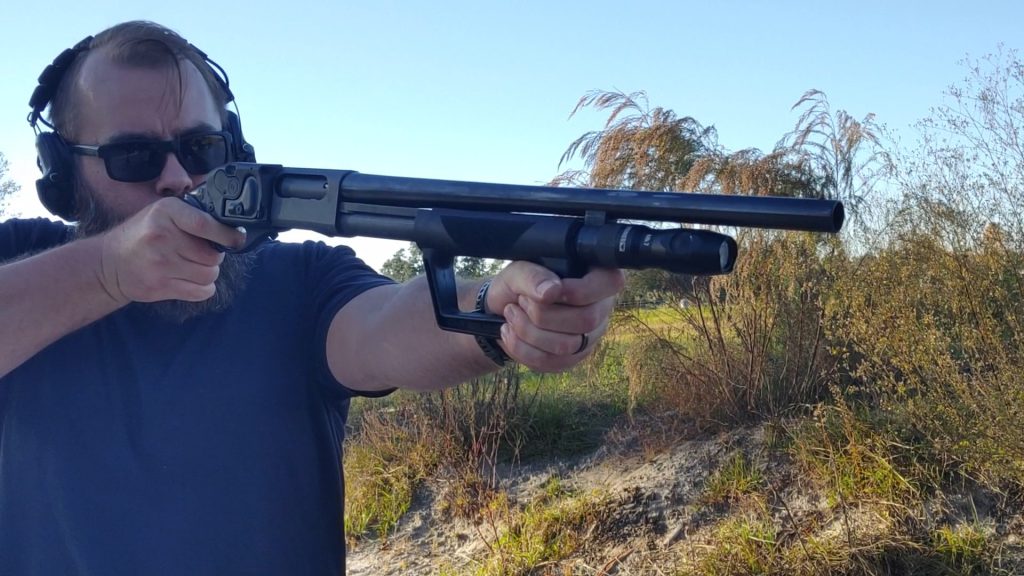
I can put two rounds of buckshot on target in less than a second at ten yards. That’s my standard with a stocked shotgun; with a pistol-grip-only gun, it’s tough. I credit that performance to the increased recoil control the Protector offers.
While it might not have been intended for this use, it works effectively at helping establish a good recoil-reducing push/pull. Secondly, I realized it works with my next attachment: the Steiner MK7 Battle Light.
The Steiner MK7
Lights on pump shotguns can be tricky. The moving pump makes pressure switches difficult. The only company I know that produces a shotgun-specific pressure switch is Streamlight.
Alternatively, you can turn the pump into a weapon light, like the TL Racker and SureFire DSF. This is typically the best idea for a pump gun light. The main downside is that after you fire, the light moves back and forth, but it’s not a big deal.
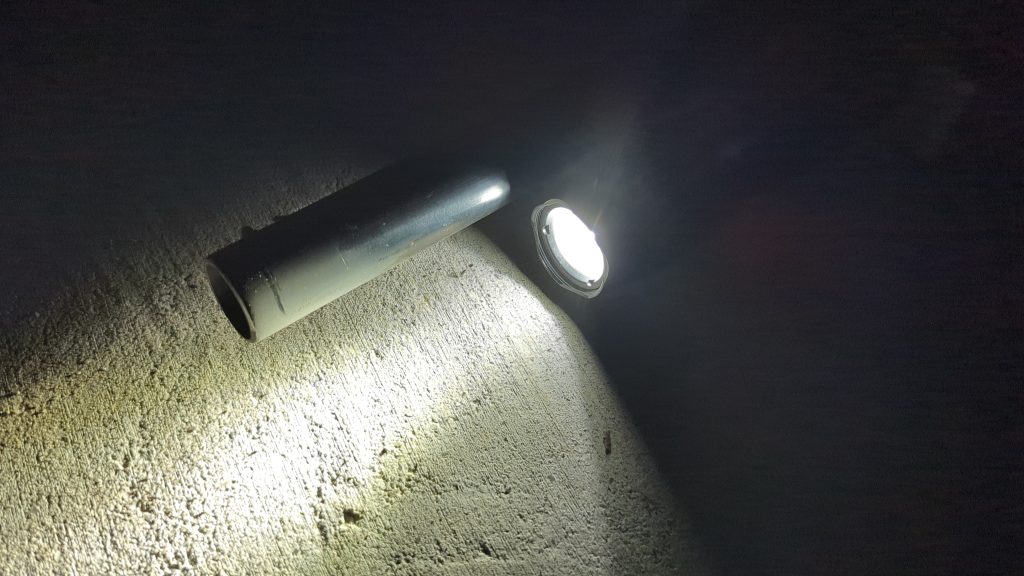
The MK7 Battle Light replaces the magazine cap on your shotgun. It’s is a two-piece system that allows you to remove the light without removing the magazine cap. The design allows you to position a light fairly far forward on the gun, depending on the magazine tube length.
The MK7 has two ambidextrous buttons, but it suffers from one big problem: reaching the buttons requires you to move your hand from the forend to activate and deactivate the light. It’s not optimal, but it works. The MK7 was discontinued years ago, and when Steiner cleared them out for $50, I had to pick one up.
The MK7 puts out 300 lumens of light, so it’s a bit behind the curve in terms of power these days. It’s rock-solid, though, and well-built. Being able to dismount it without disabling your shotgun is great, and that lets you turn it into a handheld light. It’s neat, but the ergonomic concerns made it unpopular.
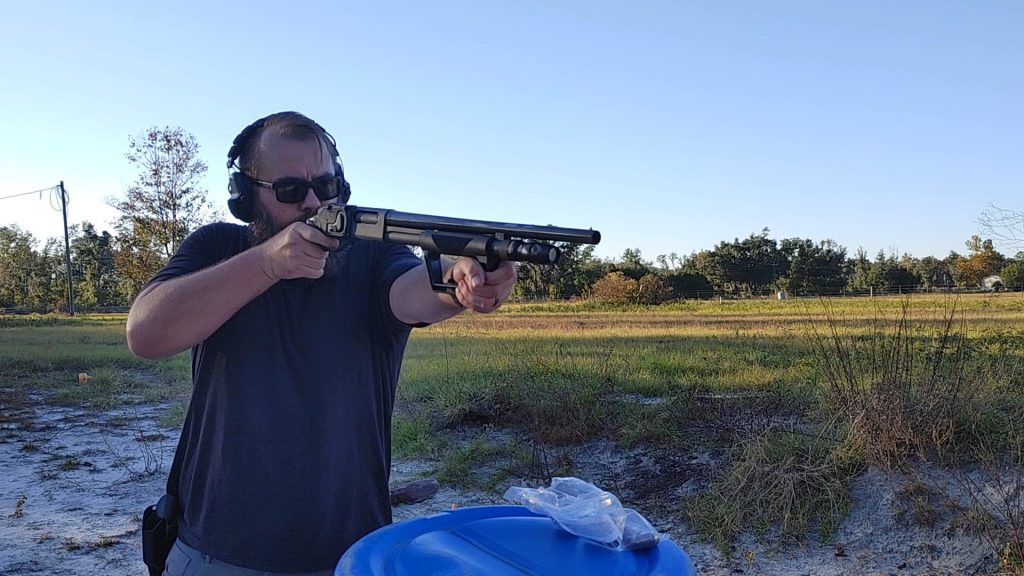
On the 870 WTF, this problem is solved. The short four-round tube on the 870 keeps it close to the forend. When I use the thumb grip, I can reach the button without breaking my grip. It’s still a long reach, but I can get there.
The Pachmayr Vindicator
The Pachmayr Vindicator grip is another discontinued item I picked up off eBay. All those junk emails eBay sends me can occasionally be valuable. I purchased the full Vindicator grip and forend for $125, and for some reason, some people are just trying to sell the grip for over $500.
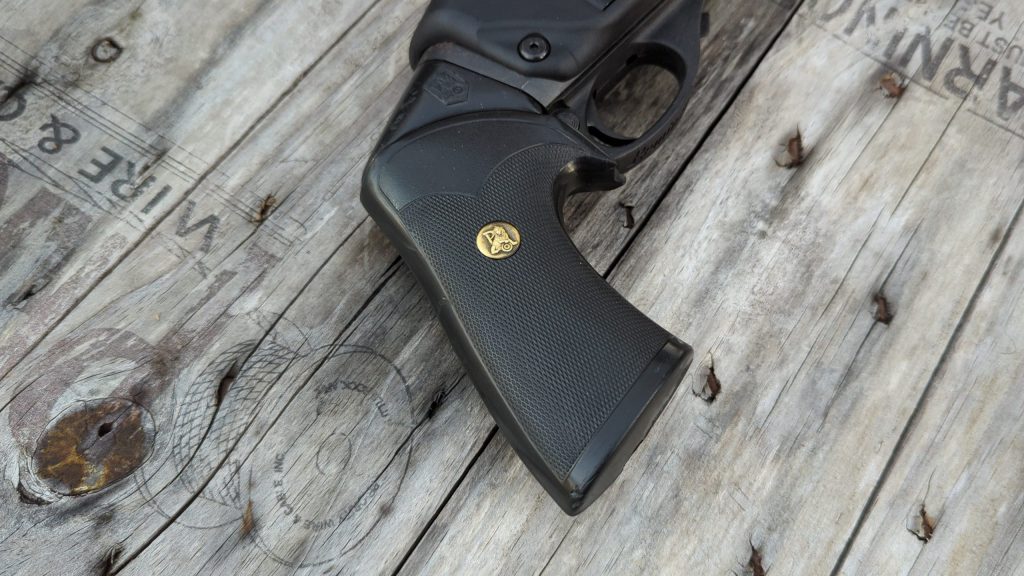
The Vindicator grips were an entire line designed for various firearms. They even had an AR model. Pachmayr adopted what’s essentially a revolver design for a shotgun. The grips are a two-piece system. One piece attaches to the receiver and serves as the base for the rest of the grip.
This creates a unique inward curve in the grip that we don’t see with standard pistol-grip shotguns. Most are swept back. The most famous use of the Vindicator grips is its presence on the breacher configuration of the 870 MCS. Now it’s a part of the 870 WTF.
If you’re a pop culture fan, the Vindicator grip has shown up in movies like 13 Hours, Chappie, Dredd, and the video game Manhunt 2.
The grip is thick and rubberized. It’s very tacky and it feels fantastic. Their claim to fame was the air pocket recoil chamber. The Vindicator grip promised to reduce felt recoil and strain on the shooter’s hand and wrist.
Shooting With the Vindicator
That may be true, but the Vindicator’s thick, soft rubber helps a lot with that recoil. In shooting, the grip never strained my wrist or induced the wrist-arthritic pain that traditional pistol grips can. It proved to be incredibly comfortable and overall, it’s the best pistol grip I’ve ever used.
Besides sparing my dainty wrists from all of that recoil, the Vindicator grip made it easy to support the gun while reloading. That inward curved grip allows my wrist to better support the gun than a swept-back grip.
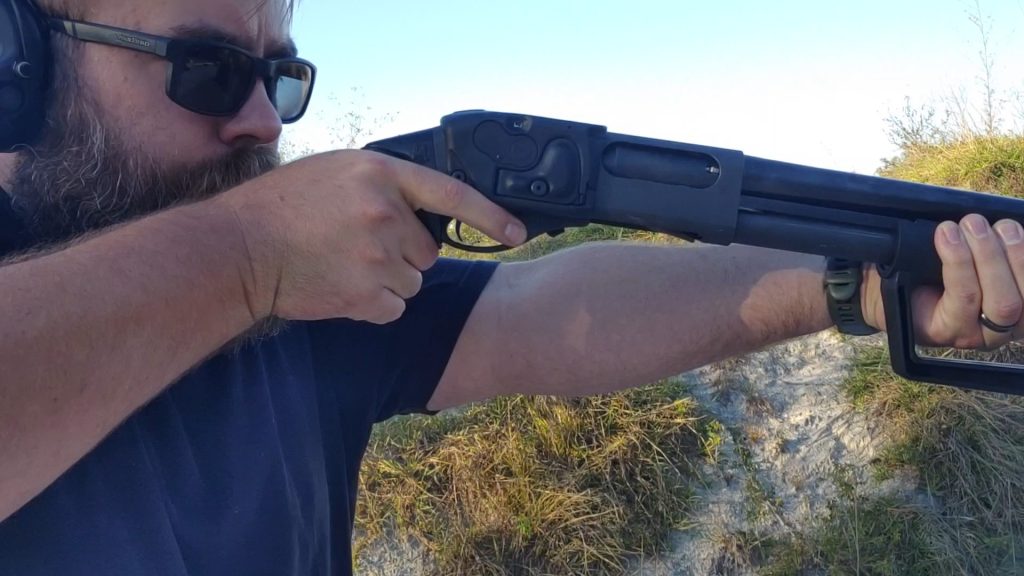
Now I really want a Mossberg 500 model for my Compact Cruiser.
Is it better than a Shockwave-style grip? I don’t think so, at least in terms of ergonomics. I like aiming my PGO shotguns, and the Shockwave-style grip makes this feel a bit more natural. The downside of the Shockwave grip is that keeping it aimed at the target while reloading takes more wrist strength.
Oh…The Laser
Yeah, I had a Crimson Trace Laser Saddle lying around, so I tossed that on the gun, too. I’m not a huge visible laser fan for self-defense, but now I have a ton of fun shooting from the hip accurately with the 870 WTF.
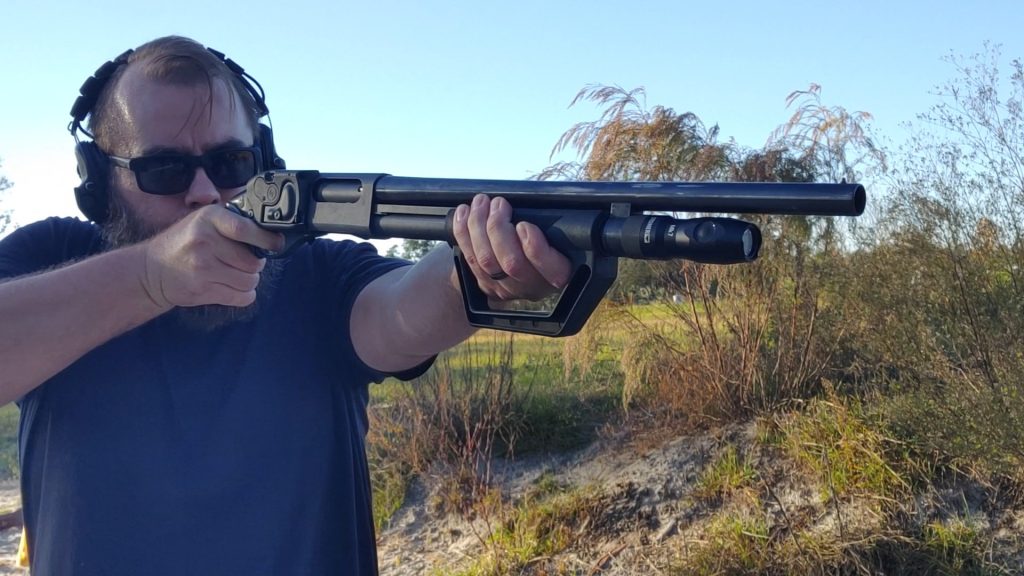
It works, but like a lot of lasers, it fades in bright light too fast. Still, shooting clay pigeons on the berm with a laser is downright smile-inducing. It’s on there to round out the full 870 WTF package.
The 870 WTF
The 870 WTF is a scrap heap amalgamation of parts and pieces, but surprisingly, it came together pretty well. It’s not going to replace my dedicated 870, but it gave me a fun way to talk about several, mostly discontinued, shotgun products that are out there.
I purchased the mossberg 590 version of this over 15 years ago. And later purchased a shoulder stock for it.
looks effective. the choate folder is the way to go, tho.