

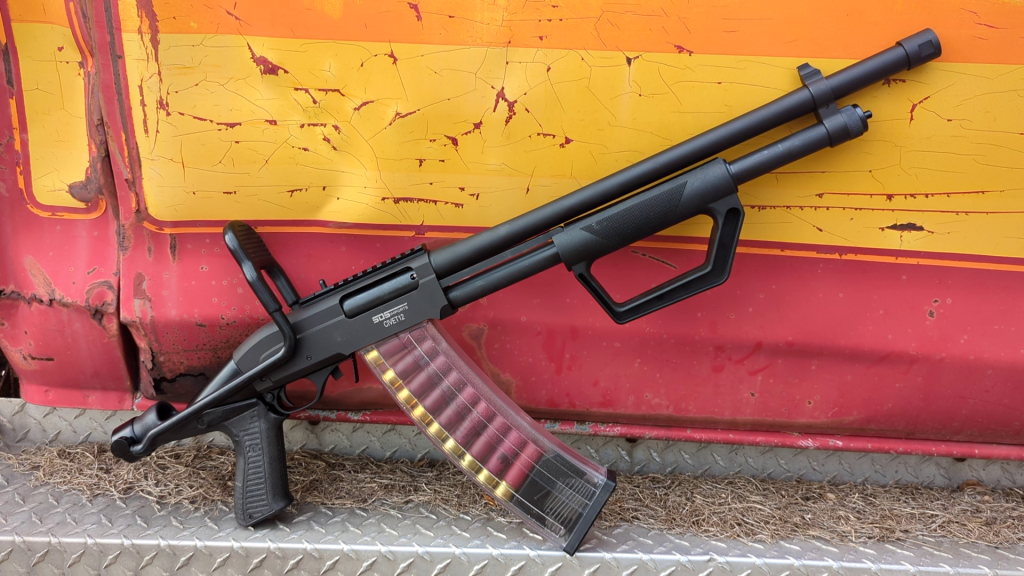
As a shotgun connoisseur, my collection looks like a league of nations. I have a little something from everyone. Recently, two guns have joined my collection from China. They’re identical and I accidentally bought two, but they were only $150 apiece, so it’s not like I’m spending a pile of money. Sometimes a good pint of stout can impede your add-to-cart finger.
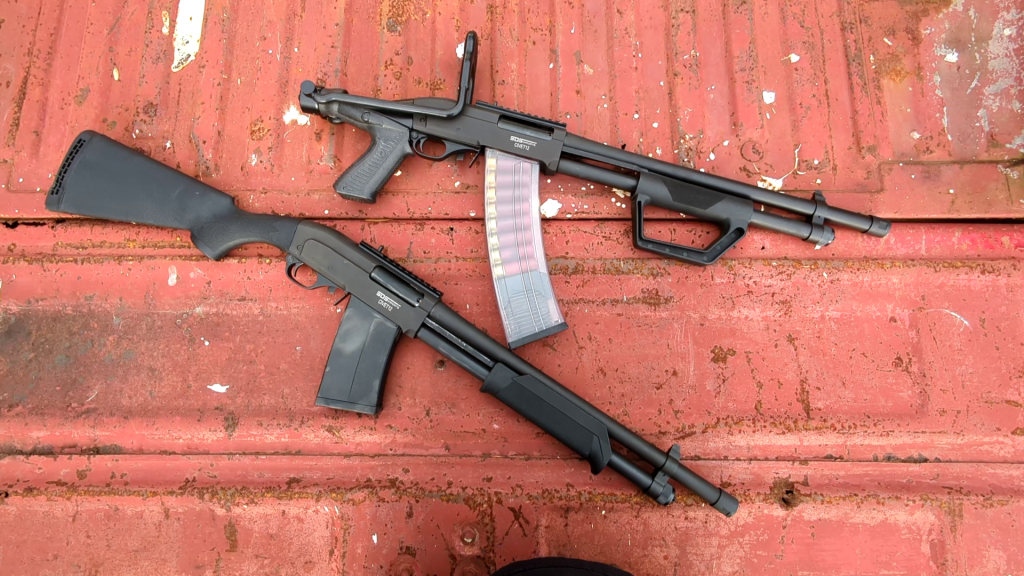
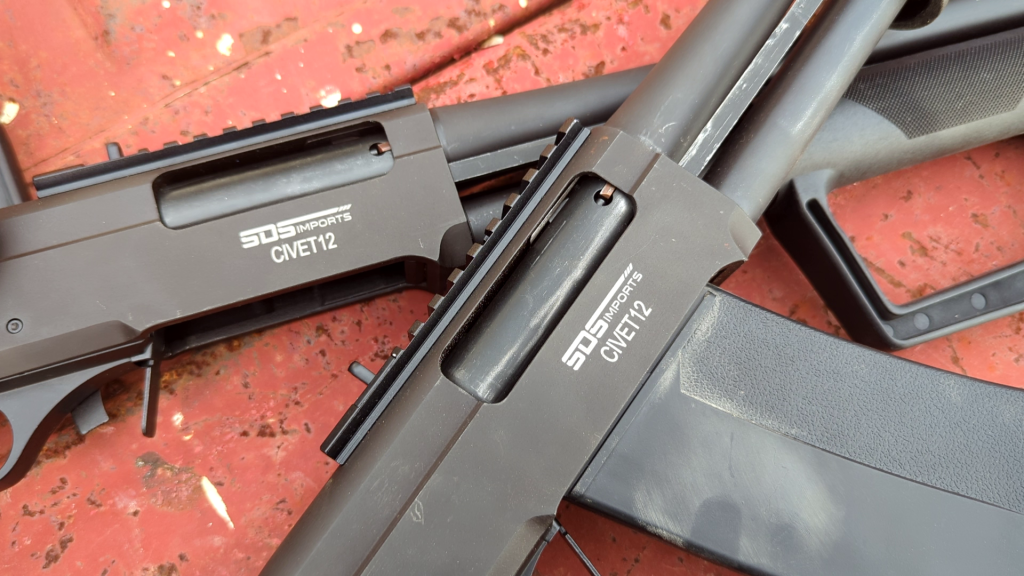
The pair of shotguns are of the SDS Imports Civet 12 variety.
Everyone makes rifles. Everyone makes handguns. But shotguns seem to be reserved for just a few countries, likely due to their niche use by military forces.
When it comes to foreign shotguns, the Italians really bring the A-game. The Brits have some fancy sporting guns for sure, but they aren’t exactly common or affordable. Of course, there’s lots of junk from Turkey, but what about China?
In the past, I’ve found Chinese shotguns to be fairly solid. I’m not vastly experienced, but my Norinco 97 and my Cimarron 1887 run quite well. I enjoy shooting them a lot and they deliver an affordable old-school experience. I’m sure I have a single-shot gun made in China somewhere, but ultimately, my experience is fairly limited.
The Civet 12: A Chinese 870
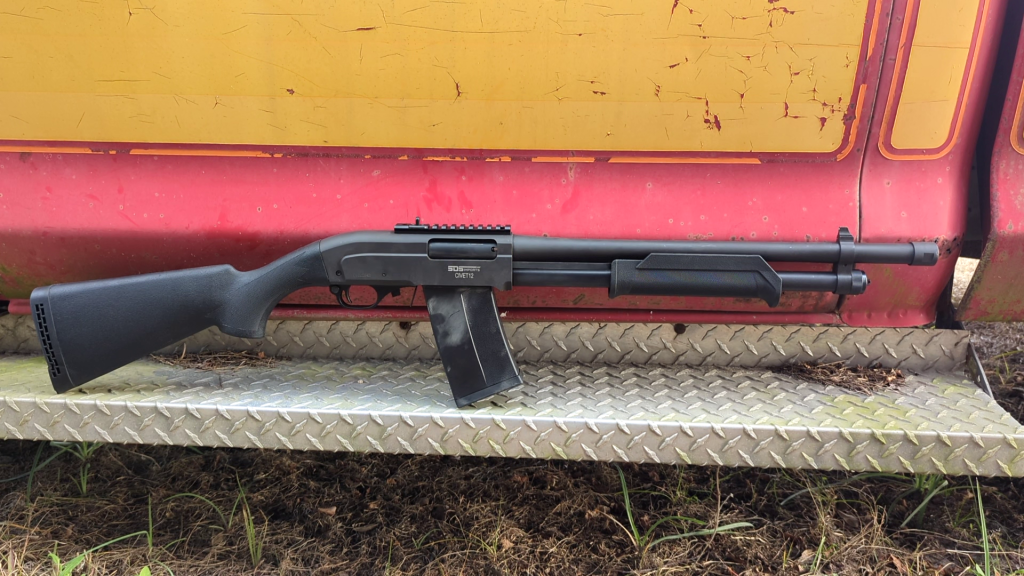
The Civet 12 is a modified Hawk 982, which is a Remington 870 clone. The modifications are adding Saiga mags to the action. The receiver is extended and modified to accept Saiga mags with an AK-style magazine release in front of the trigger guard.
Adding a magazine to a shotgun takes care of one of the shotgun’s biggest problems: reloading. Thumbing a round at a time into a tube takes time. Swapping mags takes a lot less.
The Challenges of Magazine-Fed Shotguns
Magazine-fed shotguns have their own inherent problems. Some are better than others, but the general problem with magazine-fed shotguns is the shells. The bulk of a shotgun shell is soft polymer. When stacked on top of each other, under the pressure of a magazine spring, they’ll deform. It takes time — a fair bit of time — but it will happen.
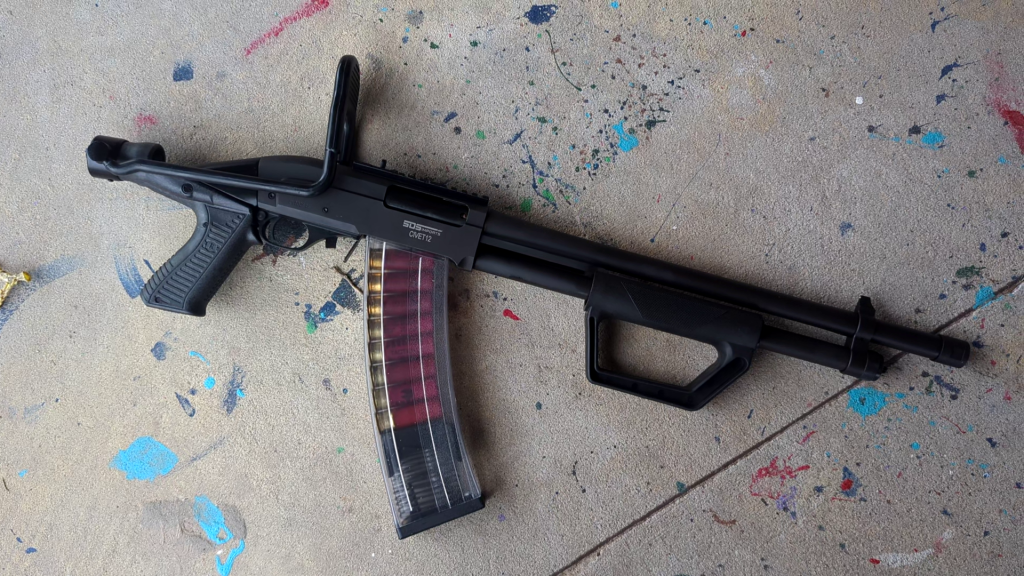
As the hulls deform, they flatten…and then you get feeding issues. You can’t leave one loaded for a long period of time, and with the price of low-recoil 8-pellet Flitecontrol, it gets expensive to deform shells.
The way a magazine-fed shotgun handles changes a bit. You can’t just top it off. You have to swap magazines to fill a partially loaded gun. Switching from buckshot to slugs requires a magazine change rather than a slug select drill.
Breaking Down the Civet 12
The Civet 12 uses a common magazine platform. You can find Saiga magazines from several manufacturers in capacities ranging from 5 rounds to drums. Each Civet came with one five-round magazine and one ten-round clear magazine when it shipped from SDS Imports.
The gun’s 870 DNA makes it easy to add 870 accessories. I took one of the Civets and added an old Knoxx top-folding stock and an even older Butler-style handguard to make what’s arguably the worst configuration possible.
The Knoxx stock has a long length of pull and the Butler forend is really short. When I choked up on the stock enough to use the forend, the stock popped me in the mouth. I didn’t fire it much in this configuration.
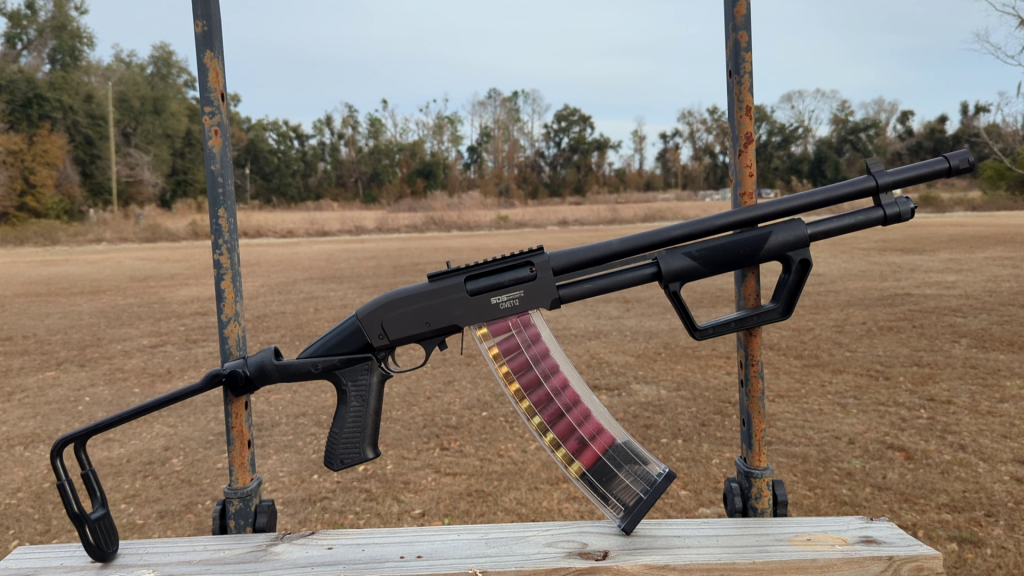
It’s terrible, but it looks neat…or at the very least AI-generated. You can seemingly add any stock and forend from an 870 you want. I thought about adding a Surefire DSF just to have a light that costs more than the gun itself.
The magazine tube is empty and not used. You can store Skittles in it if you want. It’s also longer than the stock 870 lmagazine tube and you can’t swap 870 barrels with the Civet. At least mine don’t fit. The stock barrel is 19 inches, and the gun can chamber 3-inch cartridges.
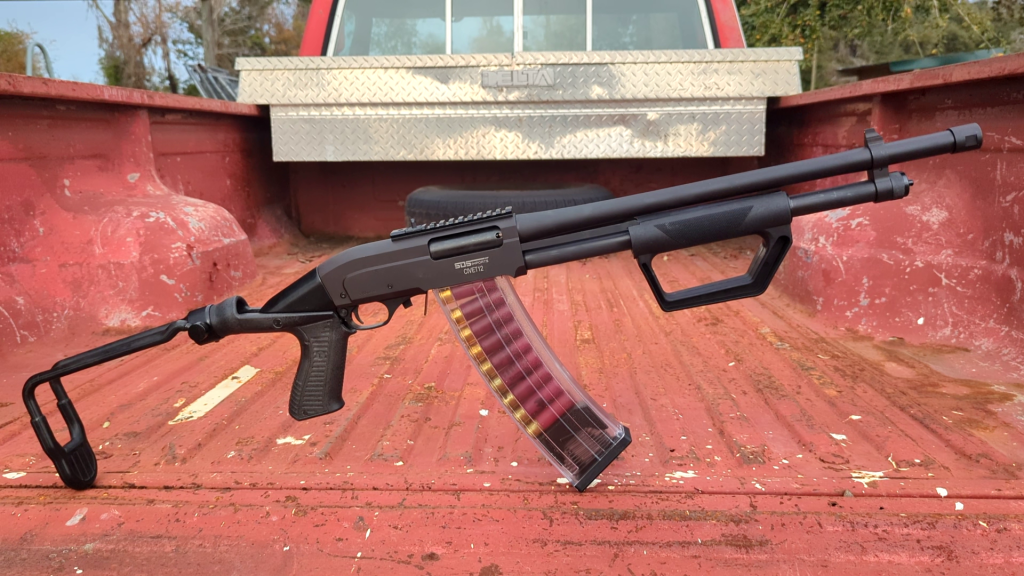
The standard stock length of pull is too long, somewhere in the 14+ inch realm. The pump is fine, but lightly textured, and your hand slides around on it, but hey, you can swap them for other 870 options. The Civet comes with an optics rail where your rear peep sight lives. Up front there’s a rifle-style sight. The barrel is threaded to accept Saiga muzzle devices.
Shooting the Civet 12
I’d love to tell you this is a bargain gun that runs really well, but it doesn’t. During my shooting, I had numerous failures including a lot of double-feeds with both guns. They seem to be somewhat sensitive to that. It happens regardless of how fast and hard I work the action.

Once, when I reloaded, the round popped out of the magazine as the magazine entered the gun. That caused a failure to feed. I had a few of those. I also had some failures to extract. Most of the time, working the action a time or two freed the spent shell.

Other times, I had to run a rod down the barrel to get the empty shell out. That happened with a few different ammo types. It seems to run best with Federal Flitecontrol buckshot, but even then, it wasn’t reliable enough to trust for any serious task. I think the difference was the higher quality nature of the Flitecontrol, and likely other higher quality rounds would work fine, too.
Ultimately, though, the Civet just wasn’t all that reliable.
Ergonomics and Loading Issues
Reloading the Civet doesn’t feel really intuitive to me. It’s clumsy. Clumsier than a Saiga. It’s certainly a skill issue on my part because I did get better at it with time, but still, the portion where you rock the front lug in seems to be the issue.
It’s sometimes hard to find the lip, and the front lug always seems to sit a little high or a little low. It’s also easy to accidentally hit the pump with the magazine when you reload, moving it just slightly forward — and I mean just a hair. That means the action closes without a round in the chamber.
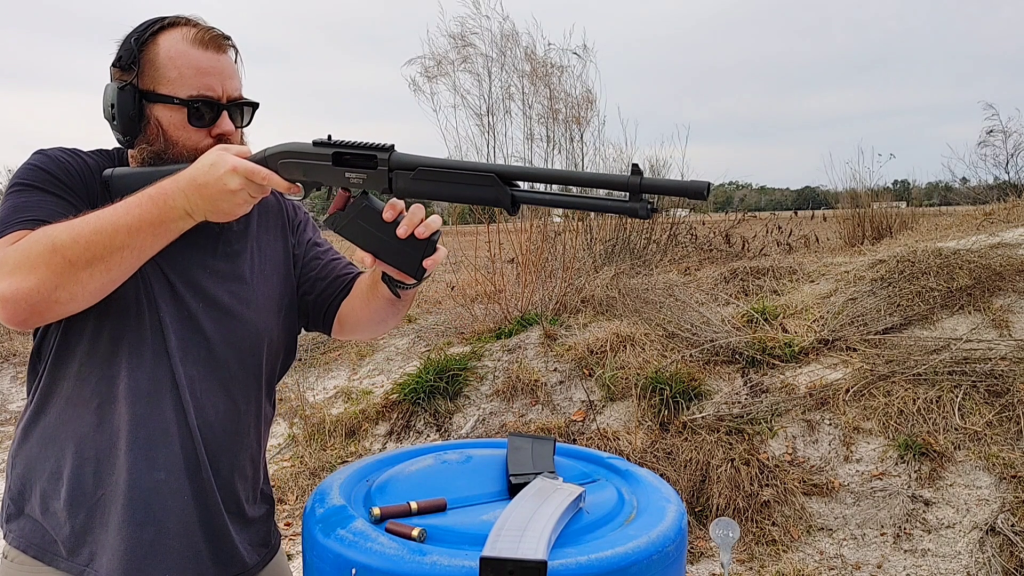
Also, you can’t insert a magazine with the action closed. Even with a single round in the magazine, you can’t load it into the gun without opening the action. I like a cruiser ready for a defensive shotgun, and that’s possible. Insert the magazine with the action open, reach in, press the first round down, and pull the action closed slightly to hold it in place. Then you can close the action with an empty chamber, drop the hammer, and you’re ready to rock and roll.
Working and Gunning
The action is surprisingly smooth and when the gun works, it’s fun to shoot. Dropping ten rounds from a pump shotgun is a blast. The gun recoils like any twelve gauge and would be easier to handle with a set of Magpul SGA furniture. A shorter LOP would make it a lot easier to get behind the gun and engage in a good push/pull.
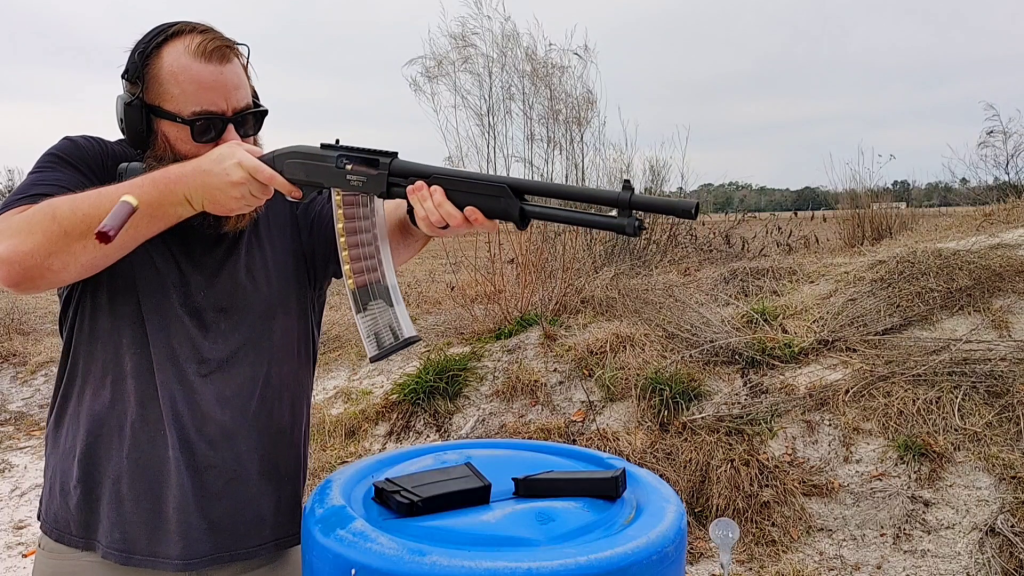
The sights are fine for a shotgun. A rear peep sight and front rifle sight puts buckshot right where you want it. It’s also easy to add a red dot, which would be the move if I wanted a serious defensive shotgun.
Final Verdict on the Civet 12
Sadly, the Civet 12 just isn’t a serious defensive shotgun. I had problems with both guns, so they’re range toys at best for me. I’ve seen other reviews where the gun seems to work quite well, so it might be one of those things where you either get a good one or you don’t.
The Civet 12 shows promise and I might try a higher-quality magazine. I’m not a big Saiga guy so if you know of some good Saiga magazines, let me know and we might revisit the gun. I don’t think good mags will fix the extraction issues, though, but I might be wrong.
“Sometimes a good pint of stout can impede your add-to-cart finger.”
lowered inhibition does not equal impediment.
Excellent explanation of the inherent problem with mag fed shotguns (deformation of the polymer shells).
But that also begs the question I’ve always had: why hasn’t an ammo company simply put out all-brass shotgun shells and market them as “specially designed for use with magazines”?
All brass shotgun shells have been around forever (many cowboy action competitors use them because they can be reloaded hundreds of times). Article about how they are reloaded: https://www.americanhunter.org/content/loading-brass-shotshells/
Sure, they’d be slightly more expensive than regular ammo. But duty / SD ammo is always more expensive than cheap range stuff, and being able to have mags loaded and ready to go in a SD gun is the whole point of the exercise.
Great review, Travis. I totally feel your pain on the shell deformation issue—it’s the Achilles’ heel of mag-fed shotguns, especially with those softer polymer hulls. Since you mentioned looking for higher-quality Saiga mags to see if they’d fix the cycling, have you looked into the technical specs or reliability tests discussed in this thread https://podcast.kkbox.com/sg/episode/Kl41jNQd-KTbLZv8zL? I’m curious if a more rigid feed lip design might mitigate those double-feeds you experienced, or if the Civet’s 870-clone geometry is just inherently finicky with the rocking-lug reload style.