
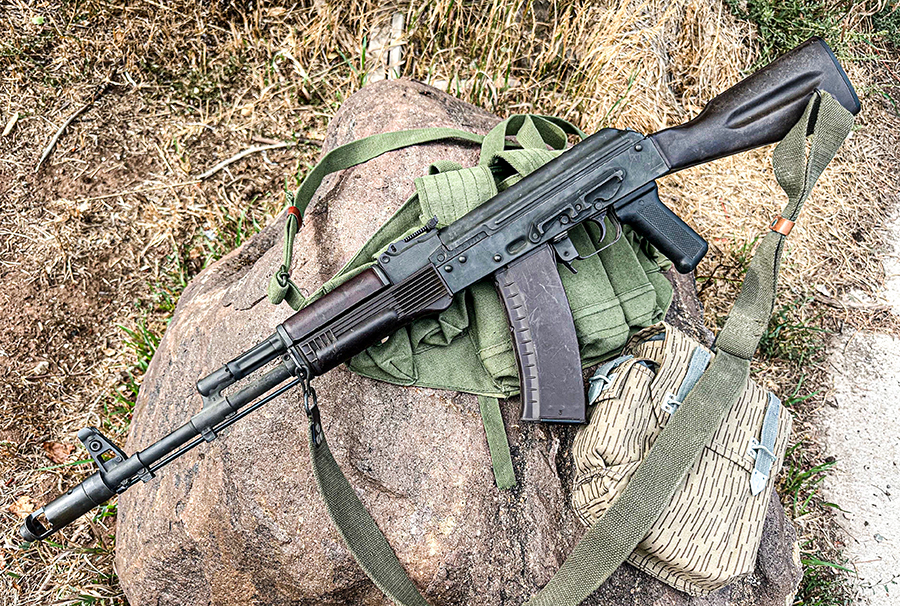
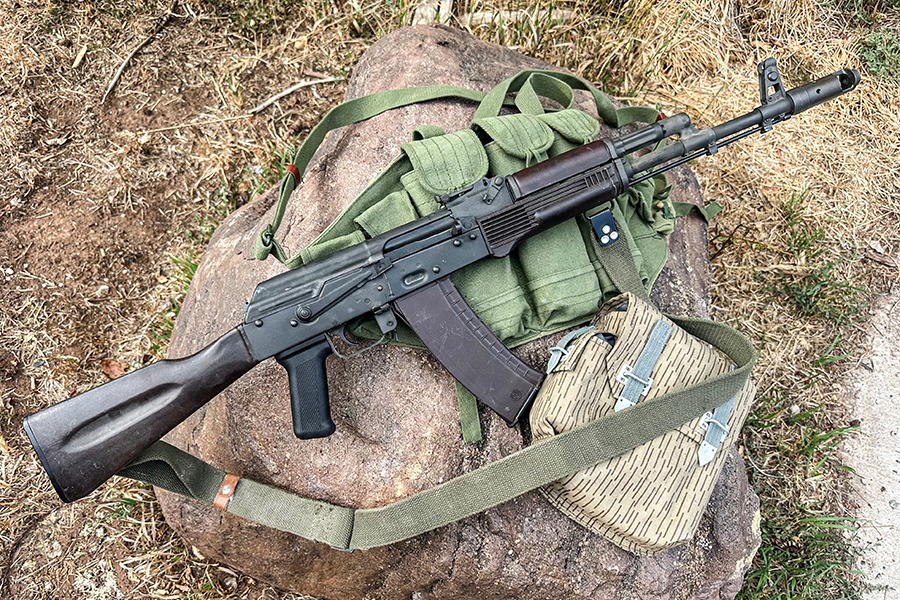
While the Soviet Union began the Cold War with the AKM chambering the M43 7.62x39mm round, they closed out the worldwide conflict with a similar, but in many ways different, rifle. Also, though no true Russian would ever have admitted publicly that it was the capitalist United States that spurred them into action to create a “sub-caliber” AKM, it is hard to deny the truth.
The Poison Bullet
Just as the M43 7.62x39mm round was developed first, before the AK-47/AKM, the 7N6 round, aka 5.45x39mm, was an idea that began in the late 1960s. Coming out of WWII, the USSR seemed to have only .30 caliber barrel-reamers; 7.62x54R, 7.62x39mm, 7.62x25mm, and for a few decades they were satisfied with that situation. The lesson learned from WWII by the Soviets was to never allow there to be a time again when they had more soldiers than they had rifles to issue them. When the AKM went into full production, the USSR and their Warsaw Pact allies started cranking them out in the millions and the M43 ammunition in the billions.
However, the “evil capitalists” in the United States decided to switch from their .30 Caliber 7.62mm NATO (M14) to the 5.56mm NATO (M16A1) for their primary infantry rifles. Despite the naysayers who called the 5.56mm a “gopher round”, the proof was that the troops of the hated US Army were putting their M16 rifles to good use in combat in Vietnam. The success of the new “sub-caliber” American rifle round inspired the Soviet leadership to put the development of a new infantry rifle at the top of the priority list.
The first cartridge was the 7N6 5.45x39mm. Interestingly, the 53 grain projectiles are actually 5.62mm in diameter, not .21 caliber as has been the persistent rumor. If you really want your mind to be blown, the projectiles for the 5.56mm NATO are 0.224 inches in diameter or 5.68mm.
The 7N6 bullets were purpose built to be unique and deadly. Using a copper coated, steel jacket, the 7N6 bullets had an empty space “air gap” at the nose, with lead alloy and a steel “penetrator” core. The cases, like the M43, were lacquered steel with a slight taper to ensure feeding and function.
It was the Soviet-Afghan war where the cartridge was first put to use in constant combat and subsequently,it was the Afghan mujahideen who gave the 7N6 the nickname “the poison bullet” due to its grim lethality on the battlefield.
A dual-purpose round, the 7N6 bullets were both extremely effective on soft targets as well as being “armor-piercing”. The new 5.45x39mm load did not just penetrate soft (Aramid fiber) armor, it would also penetrate the hardened steel plates and helmets of the era, even from hundreds of meters away.
For comparison, the 5.45x39mm 53 grain projectiles are averaging better than 2900 FPS out of the muzzle. The 7.62x39mm 123 grain bullets will clock in the 2300 to 2400 FPS range. The 5.45 is just flatter shooting and, when comparing apples to apples, will group tighter than the bigger round.
AK-74
While there was some competition in the early 1970s for the new infantry rifle, it was only the Kalashnikov version, a modified AKM, and the Konstantinov CA-006 rifle, which made it to the final trials. Speaking of Mikhail Kalashnikov, very reliable sources have documented the fact that he was not at all a fan of the new “sub-caliber” AK and felt that more time should be spent improving the M43 cartridge. However, the Americans were using the smaller, faster bullets and competition between enemies is a helluva motivator.
As history would prove, the Kalashnikov design won and the new rifle was put into development and production. The AK-74 was officially blessed and adopted by the Soviet Union in January of 1974. While very similar to the AKM, the new rifle was lighter, had dramatically reduced recoil when compared to its older brother and was more accurate. While the long range lethality dropped some, the Soviet Military was more than willing to make the trade off.
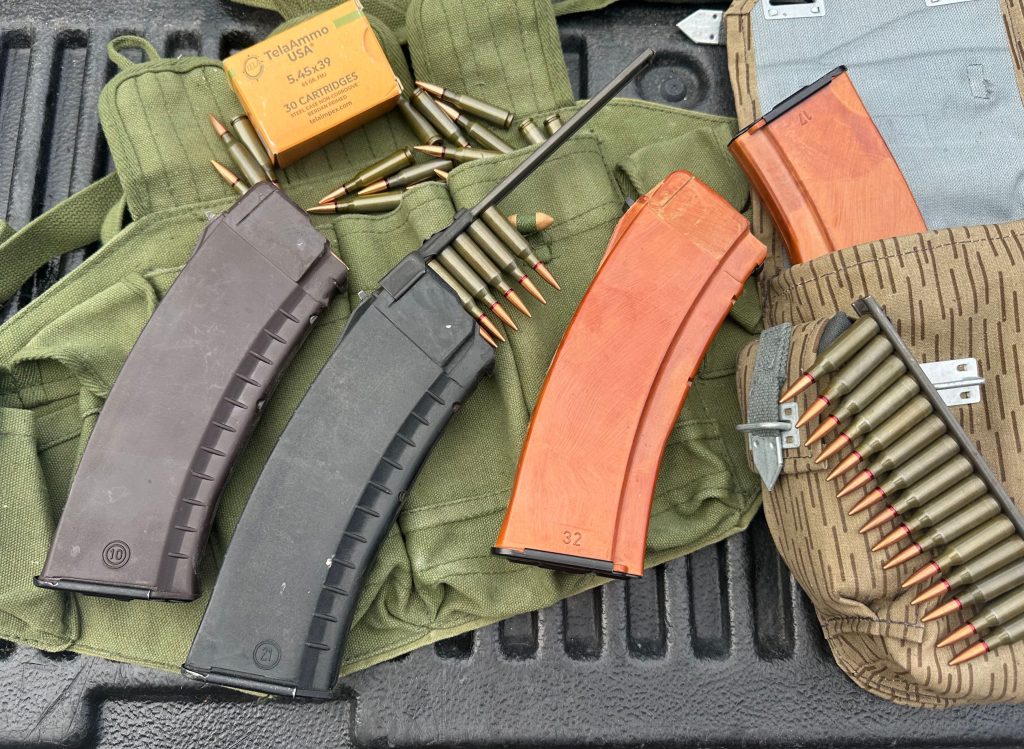
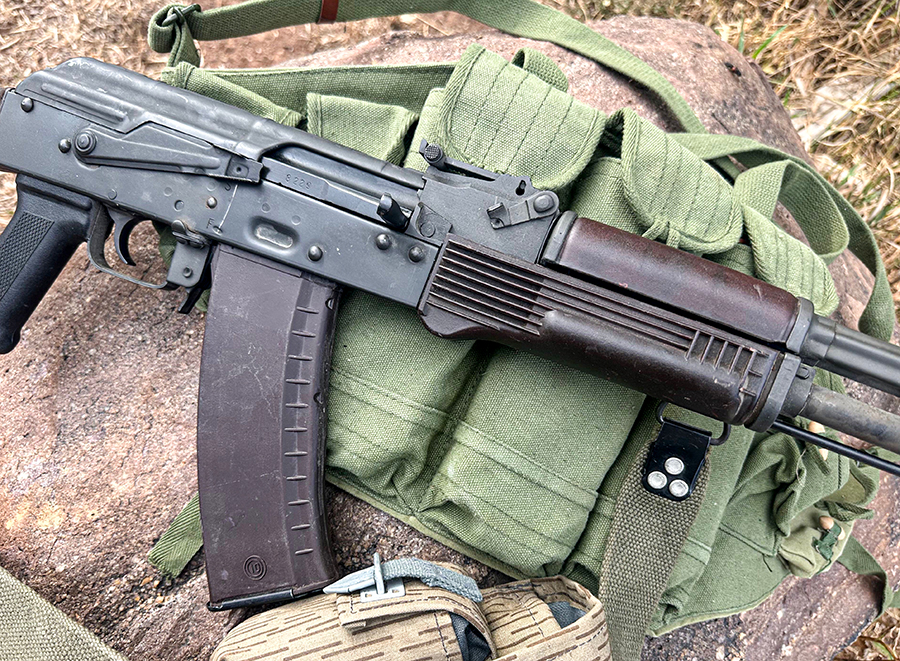
Also, just as the American troops could now carry more ammunition per pound with the 5.56mm than they could with the 7.62mm NATO, by using the new 5.45x39mm with Bakelite magazines, (followed soon by the glass-filled polyamide plastic “plum” mags) instead of steel, the Soviet infantry soldiers’ full ammunition loadout weight was cut in half. Same number of shots, half the weight.
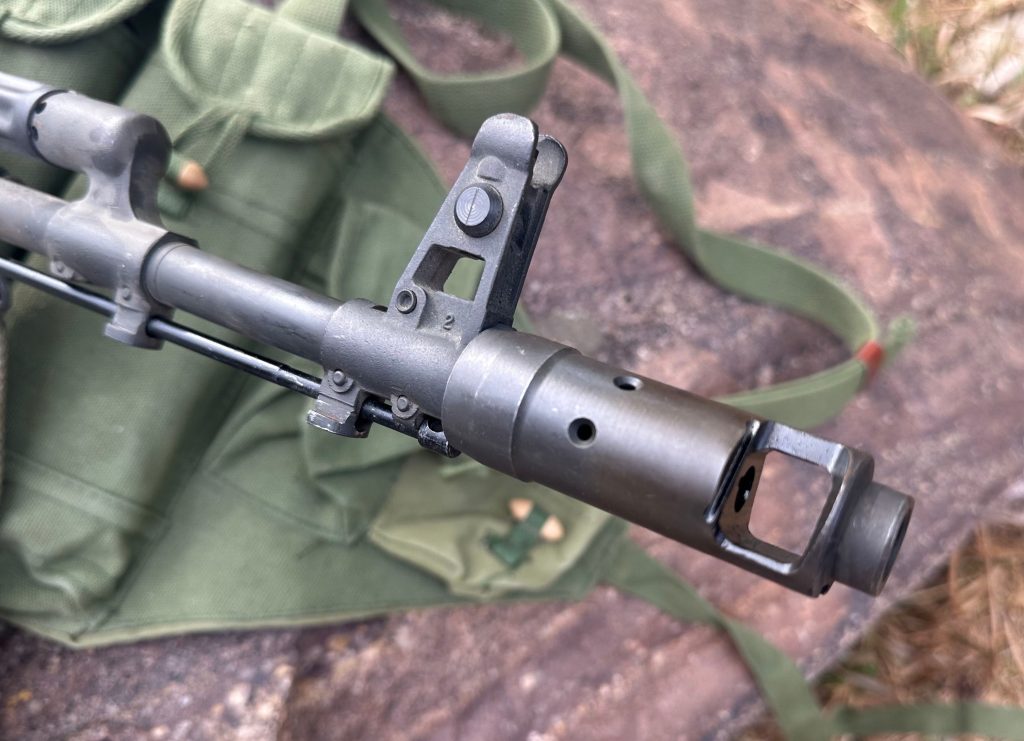
Another big factor was the adoption of the new AK-74 muzzle brake. While a relatively simple design, when paired with the light recoiling 5.45x39mm, during rapid fire, the new brake ensured that the muzzle barely moved off the target. While the larger AKM on full auto sounded ferocious, the fact was that after the first couple of rounds, bullets flew all over the place. With the AK-74, a Soviet soldier could lean into the rifle and dump rounds into human-sized targets on full-auto with little difficulty.
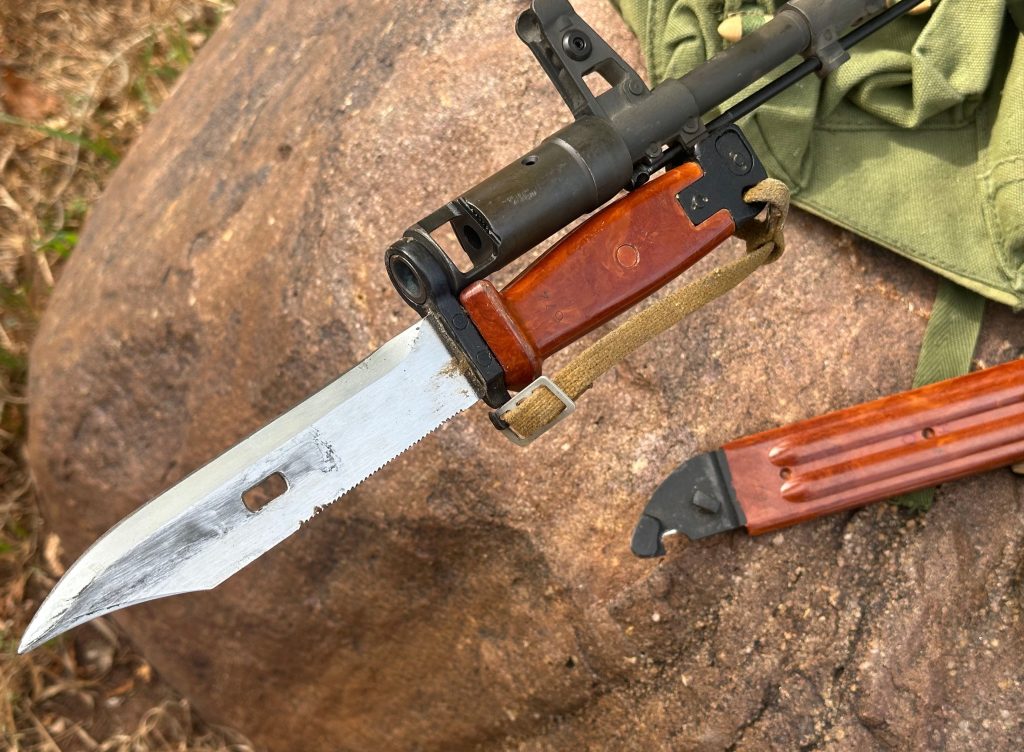
Also, the new AK-74 muzzle brake was designed to allow the use of the existing AKM bayonets. The Type II AKM bayonet, with Bakelite handle and sheath, was an ingenious design. Not only would the bayonet create a nasty wound, it was a multi-purpose tool with a built-in wire-cutter (long before the US Army M9 bayonet) and you could also put the bayonet ring into the scabbard and use it as an ice pick or a light duty hammer.
While the initial production units had hardwood, that was quickly replaced by glass-filled polyamide composite furniture in dark plum color. The first models of the AK-74 had a fixed stock. The AK-74S had a metal side-folding stock. The compact AK-74U with its short barrel, “Krink” brake, and side-folding stock became the new hotness for vehicle crews.
We should not discount the fact that the AK-74 had identical controls and operating features to the AKM rifle that the troops were already trained to use. The learning curve from AKM to AK-74 was essentially nil. Such was not the case for American troops who learned to operate the Garand-style M14 and then were given the M16A1 that was a completely different animal altogether.
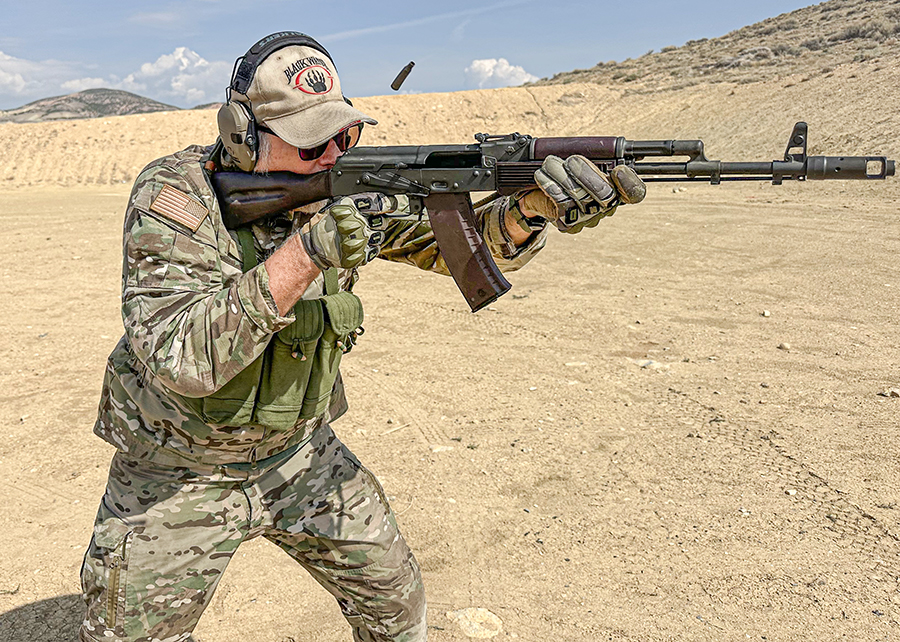
Equipping the enormous Red Army with all new AK-74 rifles was a massive undertaking to be sure. Many of the Warsaw Pact allies, while interested, had billions $ tied up in the 7.62x39mm rifles. However, with Mother Russia fully behind the project, East Germany, Poland, Romania, Bulgaria, Hungary, and Azerbaijan all got on board with the new round and rifles.
Though the AK-74 is now viewed as the “old model”, it became the AK-74M (Modernized) and then the AK-100 series was rolled out. However, the new rifles are considered to be as close to perfection as you can get by the countries using them.
Allies and the Worldwide Proxy Wars
Just as the SKS rifles were relegated to Reserve and Auxiliary troops, as well as being handed out to “revolutionaries” when the AKM took precedence, when the AK-74 was adopted and the troops turned in their 7.62x39mm AKMs, the Russians didn’t just throw them away.
What the Soviet Union now had were millions of AKM rifles all packed up in shipping containers to be sold to their 3rd World allies all over Asia and Africa. Naturally, none of those countries were bitching. By the 1980s, Communist revolutionaries, who once had to be satisfied with WWII surplus guns or out of date SKS rifles, now had real AKs for their men to put to use against the “evil imperialists”. Ditto the billions of rounds of M43 ammunition that the Warsaw Pact had stockpiled.
Also, just as the United States has a bad habit of leaving behind arms and ammo when they abandon a conflict, the Soviet Union did the same thing in Afghanistan. During GWoT, American forces had to face Taliban and Al Qaeda fighters armed with AK-74 rifles captured from or simply left behind by the Russians.
Modern World
It took decades for residents of the United States to get past their “weapons of the enemy” or “AKs are junk” mentality. However, after the fall of the Soviet Union, savvy American gun buyers were gobbling up the super-inexpensive 7N6 ammunition and semi-auto imported guns, that is, until the criminals in D.C. saw that they were having too much fun and put import bans on the fodder.
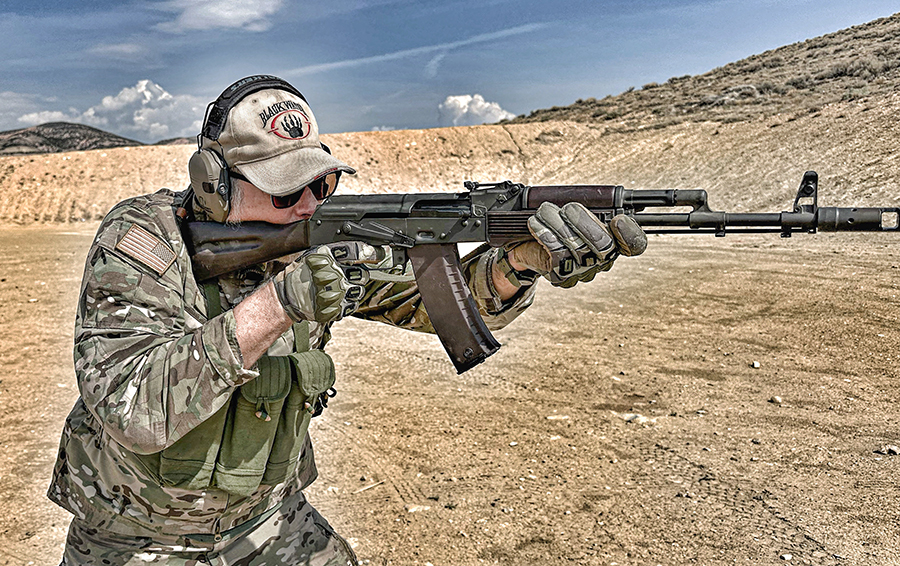
Today, Americans have warmed up to the 7.62x39mm and the Kalashnikov guns, but they are still by and large behind the curve when it comes to appreciating the genius that is the 5×45.39mm round.
Is the 5.45x39mm a better fighting rifle cartridge than the 5.56mm NATO? Before you answer, consider the following. The parent case for the 5.56mm was the .223 Remington case. The parent case for that cartridge was the .222 Remington. The .222 Remington was designed for hunting and to be fired from a bolt-action rifle, not a select-fire fighting rifle. The tapering on the 5.45x39mm case (just as the M43) was not just a weird afterthought. Because it is not a “straight-walled” case, the moment the extractor pulls on the tapered case, it overcomes the friction of the super-heated chamber. The straight-walled 5.56mm case has more friction to overcome during extraction. That makes a difference.
Also, the extractor claw on an AK-74 is massive when compared to the AR which seems puny and fragile by comparison. If reliability is your primary concern for a fighting rifle, which it should be, then the AK-74 with the 5.45x39mm seems to be a better choice than a 5.56mm AR.
As for me, I purchased my first AK in 7.62x39mm about 30 years ago, but it was not until 10 years later that I bought a WASR-2 in 5.45x39mm. I was amazed at the difference. In the first month I burned through an entire “ham-can” of 5.45. We even set up a video camera at 90 degrees from the shooters to record the recoil impulse. The movement of the muzzle off target was barely perceptible. Century Arms is currently selling new model rifles in 5.45x39mm called the BFT74 if you are interested.
Whether Americans love it, hate it, or just don’t understand it, the AK-74 was truly a serious gun of the Cold War.
Specifications
Caliber: 5.45x39mm
Action: Gas piston
Capacity: 30 rounds (others)
Furniture: Hardwood or polymer
Barrel Length: 16.3 inches
Overall Length: 37.1 inches
Weight: 6.8 lbs (empty)
MSRP: varied based on maker
Paul G. Markel is a combat decorated United States Marine veteran. He is also the founder of Student the Gun University and has been teaching Small Arms & Tactics to military personnel, police officers, and citizens for over three decades.
“The success of the new “sub-caliber” American rifle round inspired the Soviet leadership to put the development of a new infantry rifle at the top of the priority list.”
Not sure how accurate that statement is…
“Success” isnt the right word.
It was my understanding that the reason for the new round was the belief that a wounded comrade that is still alive, kicking and screaming for help is a much bigger problem than a dead comrade that you can leave on the field until it is safe to retrieve the body. The difference of killing philosophy was on display during the Vietnam war and probably had a factor in the decision to produce a similar cartridge that produced similar results.
Good write up otherwise.
yeah, no. haha it wasn’t to tie up medic resources.
but i don’t think they developed a new caliber for afghanistan due to anything we were doing.