

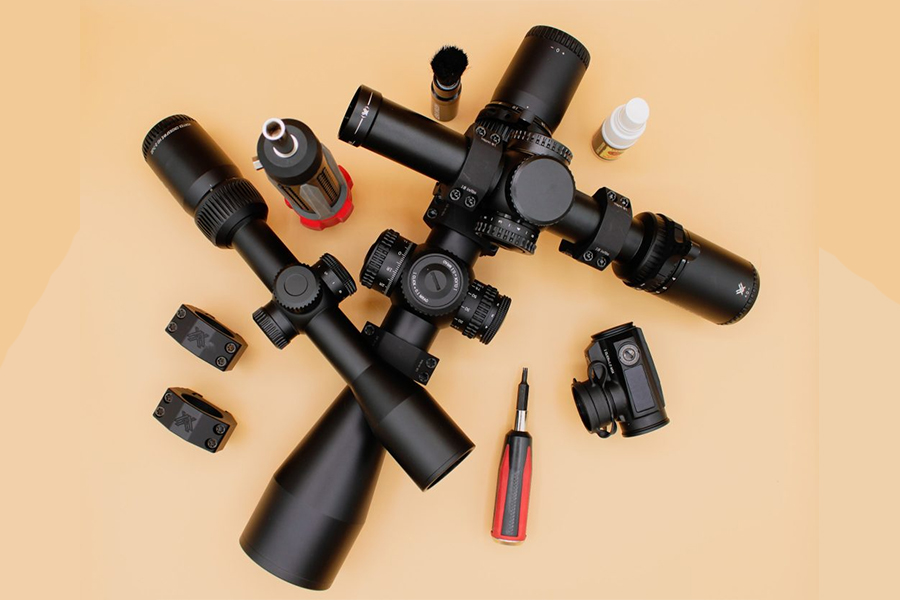
In the last edition, I discussed the differences between MILs and MOA. These are the most common angular measurement systems used in optics today. Now that we have a base understanding of that, it’s time to move on to reticle types. But first, let’s go over the fundamentals once more.
Reticles: More Than a Crosshair
As optics have advanced over the past two decades, so have the reticles they use. Everyone is familiar with a basic duplex reticle. It has vertical and horizontal stadia that are usually thicker on the edges and step down in size as they approach the center.
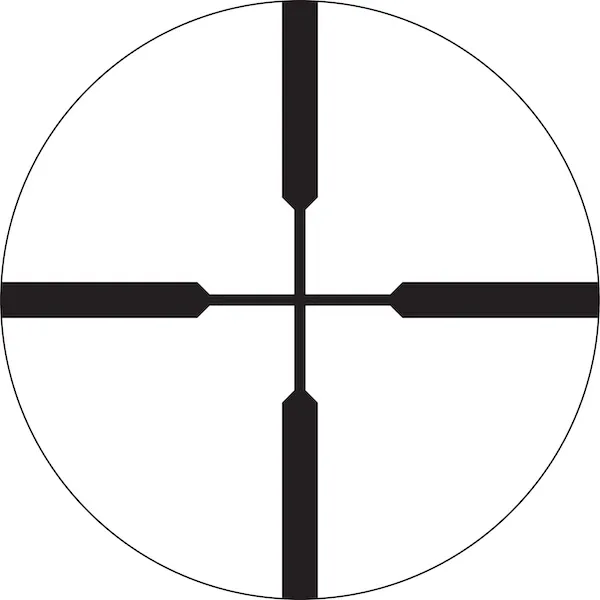
The simplicity and ease of use of this design have been the standard since the inception of rifle optics. The elevation and windage can be adjusted using external turrets that move the reticle in a grid-like pattern (not the vertical and horizontal axes individually). Other options existed over the years, mainly designed for hunting, with more advanced reticles being used by the military’s elite units…snipers, for instance.
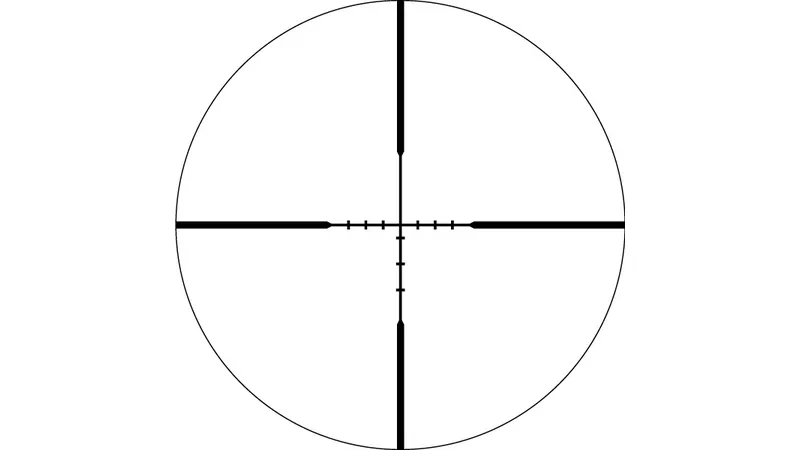
Reticle with names such as Boone and Crocket or German #4, among others, are essentially enhancements to the standard duplex. It wasn’t until Nikon’s Bullet Drop Compensating reticle, which debuted in the mid-2000s, that a lot of shooters and hunters began to notice other options.
Simply put, a BDC reticle has holdover points along the vertical axis that represent various distances, with the center of the crosshair usually set to 100 yards (though that isn’t always true). Essentially, if your target is 300 yards away and you are shooting a standard cartridge—say, .308—the user holds the reticle on the second BDC point. This system worked well enough that Nikon released a variety of scopes in different configurations to fit a multitude of applications (predator, tactical, and rimfire).
Even with the popularity of BDC reticles, it wasn’t without its faults. Most importantly, the reticle is fixed in the second focal plane. That means the reticle can only be used at a fixed magnification, usually the optic’s maximum power unless you’re a math whiz and can calculate the holdover points as magnification changes.
Furthermore, BDCs are a fixed solution and don’t easily allow for changes in parameters such as caliber, temperature, and elevation. Ballistic calculators can be used to “adjust” the holdover points, but that removes the ease of standard 100-, 200-, 300-yard (and so-on) points. For the average whitetail hunter in Ohio, where shots are regularly taken at less than 200 yards, and frequently under 100 yards, for that matter, the BDC reticle can be a fine solution.
A number of optic makers haveo tried to fix the problems of BDC by moving the solution to the turret. Leupold does this with their Custom Dial System. Essentially, the user provides Leupold with their ballistic and environmental information. Leupold then performs the ballistic calculations and applies them in yardage increments engraved on a scope dial that the user then installs.
The turret adjustments aren’t affected by the reticle’s magnification. They remain constant, thereby addressing an inherent problem with BDC reticles. Still, if a shooter wants to change calibers, or goes from hunting deer in Ohio to elk in Colorado, elevation impact will drastically change the dialing, requiring a new turret.
BDC and CDS optics are still very popular today and work really well for most shooters. But there are other reticles out there that take advantage of first focal plane optics and modern-day ballistic solvers.
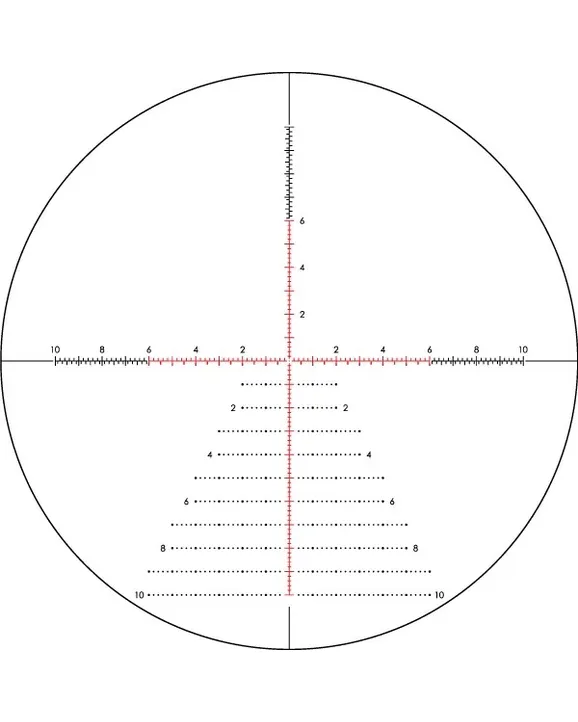
Christmas Trees Aren’t Just for the Holidays
A common trend in modern optics for the precision rifle community is advanced reticles that allow the user to hold over for elevation and windage based on data from ballistic calculators. These calculators use specific cartridge ballistics combined with environmental data entered by the shooter (or obtained from devices like a Kestrel weather meter).
Common calculators include Applied Ballistics, Hornady 4DOF, GeoBallistics, and the Shooter App, all available in the app store on your smart device. A shooter can then either dial or holdover to adjust for distance and wind using the calculator’s information.
For bench shooting without time constraints, dialing tends to be more accurate. However, for competitive shooters or hunters, time is usually limited. Dialing can slow the process, so shooters often resorts to holding over.
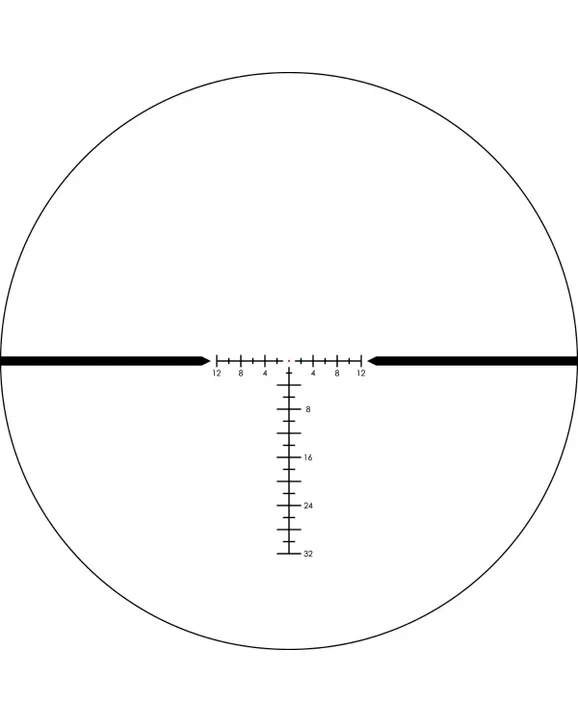
Optics makers such as Burris, Vortex and Leupold strive to offer the best optimized reticles for the purpose. Reticles like Vortex’s new EBR-7D and Leupold’s PR-2 are quick and efficient, but don’t overload the user with information. These are much more advanced than traditional “mil-dot” reticles, which were overly simple—mainly used for range estimation—and tactical reticles like Horus Vision Tremor 3 and H-59, which better serve operators in the field. (Detailed looks at the EBR-7D and PR-2 can be found here).

FFP reticles are considered advantageous both on the firing line and in the field. As techniques are developed in long-range competitions, those products and methods are increasingly making their way into hunting, with new classes of shooting competitions created to mimic field conditions, such as the NRL Hunter division.
Parting Shots
Reticles have significantly advanced since the first magnified optics were first used on rifles with some of the greatest progress made in the past twenty or so. What once seemed to be “long-range” isn’t so much any more. The modern shooter has more good options than ever. BDC reticles and CDS turrets are more than sufficient for most shooters and hunters within a limited range. For those aiming to push the limits, current Christmas tree reticles on more advanced FFP scopes offer better options that expand what’s possible.
In the next article, I will do my best to debunk some common myths about optics. Don’t touch that dial.