
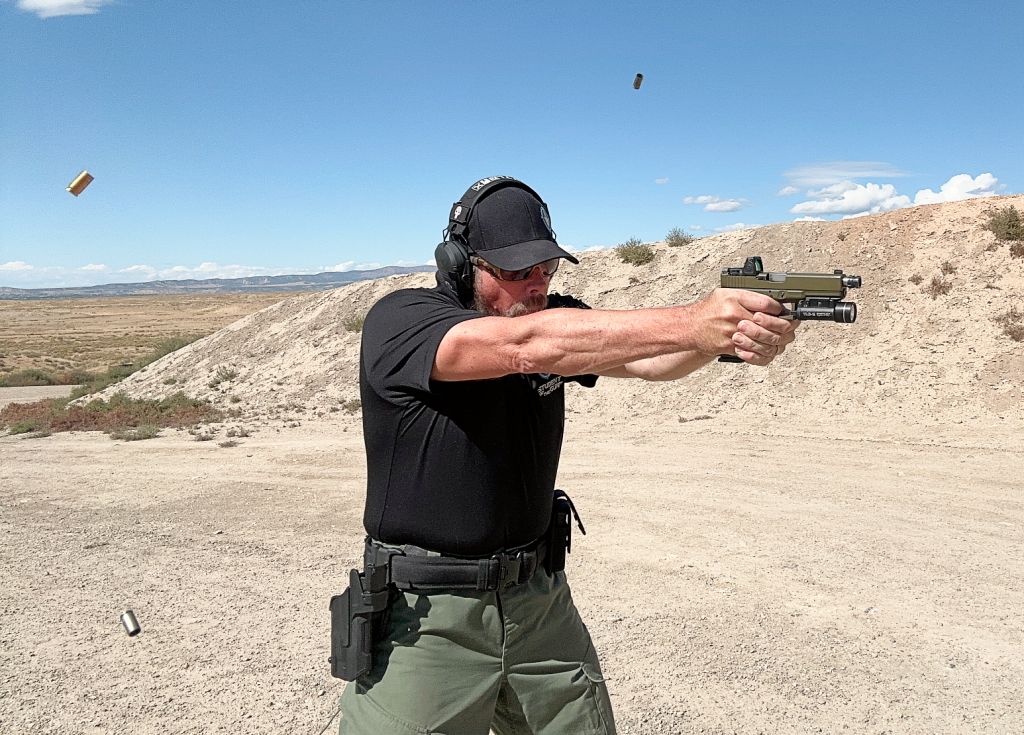
“Ceasefire! Stop!” I heard the voice from behind me yelling. I was on the firing line working one-on-one with a student. I tapped my shooter on the shoulder and said “Stop, hold on.” As the man had been instructed, he stopped firing, put his pistol on safe and kept the muzzle pointed down range.
Now I turned to address the instructor who had called for a ceasefire. “What’s up?” The man, a retired US Navy veteran, closed the distance to myself and my shooter and, gesturing to the ground said, “His feet are wrong.” I feel certain that the annoyance showed on my face. “He hasn’t missed a target,” was my reply. To which he retorted, “Yeah, but his feet are wrong.” In order to get things moving again, I seem to remember nodding my head and saying “Okay” and we continued the drill.
What’s the Goal?
I know that I have two audiences out there; one that rolled their eyes and thought, “That’s too stupid to be true.” Then there’s the other side who are saying, “Well, if the man’s stance was wrong it needed to be corrected.”
For clarity, the situation I was operating in at that moment was as a small arms and tactics instructor for the Expeditionary Combat Skills school. This was a four-week, pre-deployment workup for active-duty troops preparing for deployment to combat zones and the time was around 2008, during the GWoT.
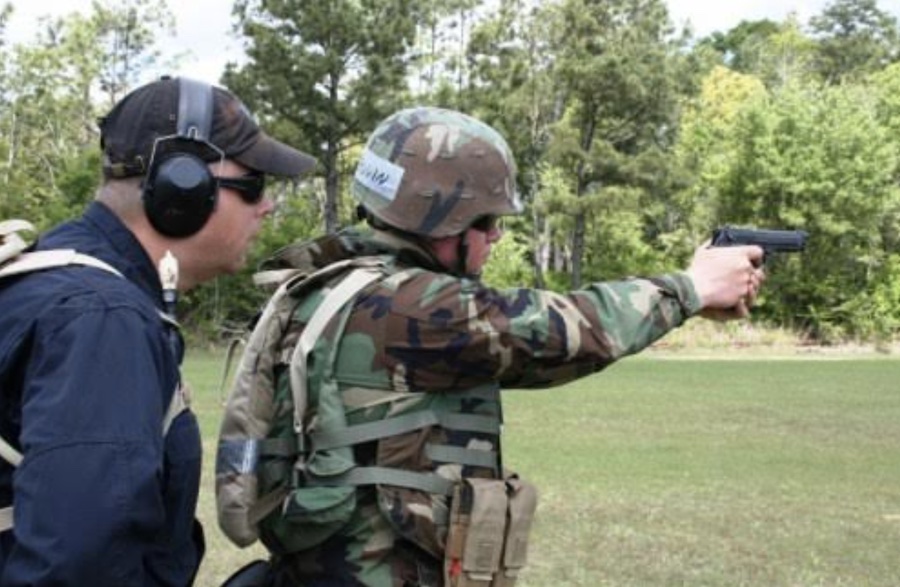
Our training program was not an introduction to handguns or basic gun safety class, this was a very serious undertaking. We were preparing young men and women to enter an active combat area. The goal of the course was supposed to be to ensure that students could put rounds, on demand and regardless of circumstances, into human-sized targets from varied distances. Moving and shooting, use of cover, transitioning from a downed rifle, and other tactics were all parts of the curriculum.
Was the goal close order drill or ballroom dancing? Were we working with a high school marching band? No, we were supposed to be ensuring that students had the skill and ability to kill before they got killed. As I mentioned at the outset, before my comrade called a ceasefire, my student was engaging reactive steel targets and hadn’t missed a shot. Pardon me but, Who the f*@k cares how his feet are pointed if he’s hitting the target?
Back to the Beginning
Some forty years ago, in the summer of 1986, I took my first professional firearms training course. The class was four days, at least ten hours a day, and I easily fired over 1000 rounds. At that time, the way to shoot was from the Weaver stance and that is how we were taught to shoot.
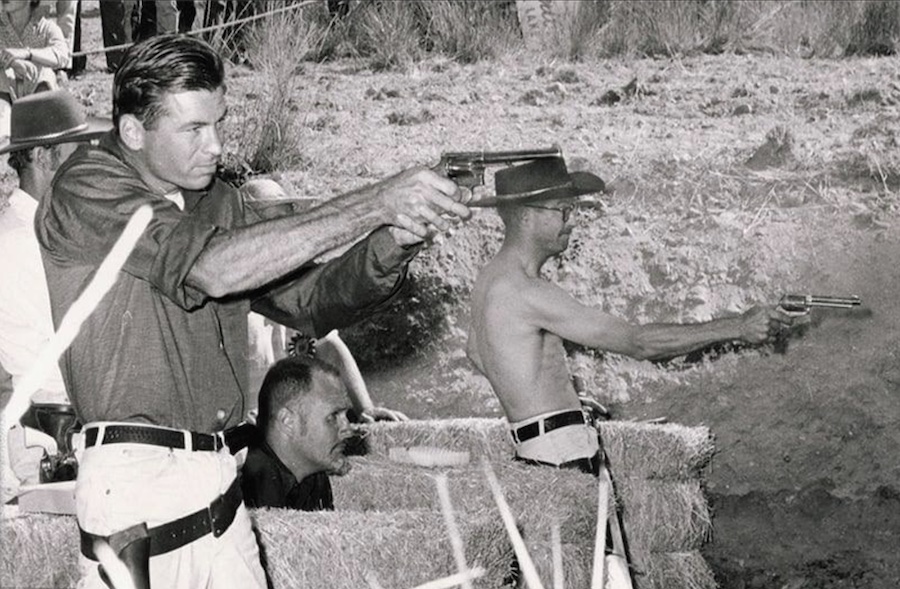
Jack Weaver famously won plaques and cash prizes by standing in the stance that was named after him. The Weaver stance was adopted as doctrine by Col. Jeff Cooper and Gunsite. In other words, if you were a cool kid in 1986, you shot from a Weaver stance.
Naturally, I wanted to be a cool kid. I took the lessons to heart and when I departed the school, I practiced shooting from the Weaver. Back then my vision was clear and my reflexes were sharp. In all modesty, I got pretty darn good at shooting a pistol quickly and accurately from my rock solid Weaver stance.
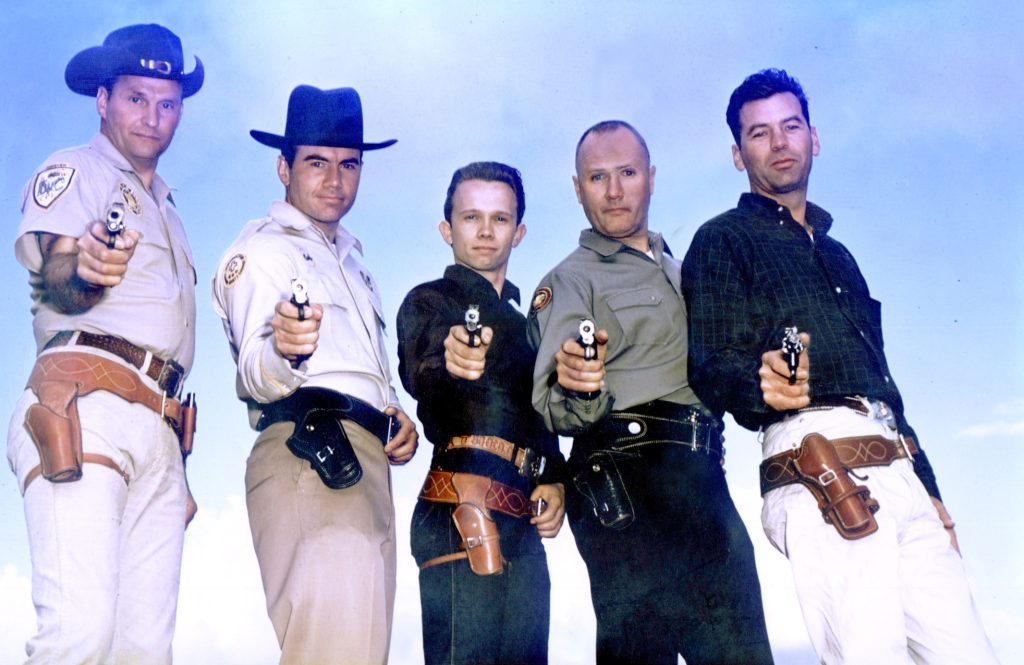
I used the Weaver to shoot “Expert” in Marine Corps pistol qualifications and used it in the police academy a few years later where I ranked at the top of my class on the range.
All was well with the world until around 1994 when I took a firearms training course and the instructor said to me, “We don’t shoot Weaver anymore.” BLASPHEMY!
Things had Changed
Later on that evening, I called my friend and gun writing rabbi, Walt Rauch. I told Walt what the man had said to me, expecting my friend to reply that the guy was full of sh!t. However, Walt’s reply was, “Well, he’s right.” Then my friend, who was very active in firearms training and tactics, went on to explain to me that what had changed people’s minds was the ability to now watch exactly how police officers reacted to deadly attacks thanks to the then-new technology of the Dash Cam.”
What law enforcement firearms instructors were discovering by watching the videos from officer-involved shootings was that, despite learning to shoot from a Weaver stance in the academy, no one did it on the street. What they saw, time and again, was that the moment an officer realised they were in danger, they moved their feet, drawing their handguns simultaneously and kept moving and shooting until they were behind some kind of cover.

Forward thinking trainers had a question to answer. If officers are instinctively moving and shooting until they can get to cover, should trainers spend time teaching them to shoot from some kind of rigid stance? Yes, there was no arguing that Jack Weaver beat the pants off of his competition using his famous shooting stance. Yes, shooters who used Jack’s stance drew fast and scored high on paper and cardboard targets. But, did any of that matter when bullets were flying in two directions?
The top level trainers began to move away from emphasis on “stance” whether isosceles or Weaver. Rather than focus on a rigid stance, they instead focused on balance and movement. At Student of the Gun University our shooting stance lesson is simple; start with your feet pointing in the general direction of the target, maintain your balance, lean forward at the waist, don’t fall down. Where instructors used to spend valuable time correcting foot positioning and stance, we are now more concerned with good balance and the student’s ability to move in any direction when called upon to do so.
Parting Shots
I know there are sports shooters and competitors writhing in agony at my assertion that stance does not matter. To that I would acquiesce, in certain sports, stance does matter. Regardless, using a handgun to fight for your life against a person who is determined to take it, is not a sport.
The primary goal in a gunfight is first to not get shot and secondly to shoot the bad guy. As long as you are not shot, you have options. The moment you get shot, you start running out of options. Moving your feet and getting off of the “X” is far more important than a perfect shooting stance. And, as we have witnessed from innumerable after-action videos, moving away from the threat is hardwired into the human animal. Is there a benefit in working against that instinct or should our training work with it?
Sadly, the man who called ceasefire at the beginning of this story was not a forward thinking firearms trainer. He had been taught one way and that one way was it. Just as every other field of endeavor should evolve and improve over time, firearms training is no different. Jack Weaver has since left us and has gone to his reward. It has not been my intention at all to denigrate his memory. From what I know of the man, he was always willing to experiment and make changes when changes were appropriate.
Paul G. Markel is a combat decorated United States Marine veteran. He is also the founder of Student the Gun University and has been teaching Small Arms & Tactics to military personnel, police officers, and citizens for over three decades.
Good points.
I had a student who stood with his feet almost together and square to the target. He got his hits. I suggested a different stance, but it didn’t work for him. Oh well.
I still question why the “flyer” to the crotch, throat, or triangle on the forehead is never celebrated.