

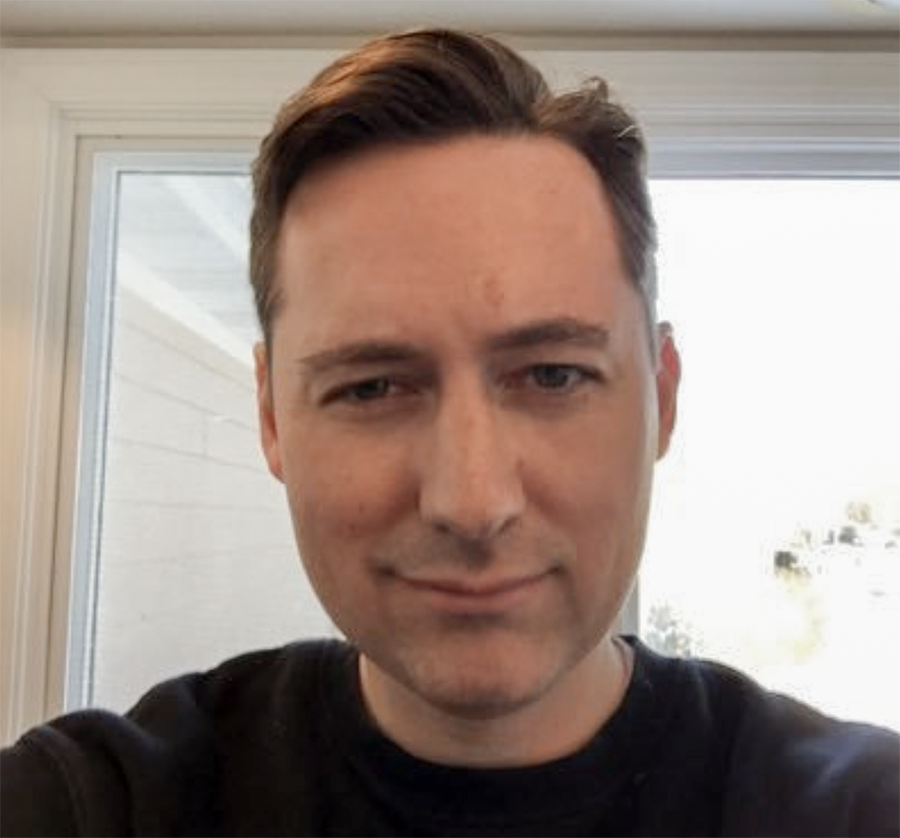
No one who truly values their Second Amendment rights should be worried that University of Michigan psychiatry professor Brian M. Hicks, PhD, is gaining fame and making money by passing off anti-gun propaganda as legitimate research, right? After all, it’s a free country. Professor Hicks can make a dollar and a name for himself however he sees fit, can’t he?
If the good professor twists some questionable data and bizarre opinions together and then calls it all legitimate research, that shouldn’t matter, should it?
Now, if a peer-reviewed medical journal founded in 1883, which is published 48 times a year and read by physicians across the country and around the globe, takes Professor Hicks’ scribbles and calls them actual research without labeling his work as opinion or anti-gun agitprop, that’s not a problem either, is it?
Wrong.
The Journal of the American Medical Association — JAMA for short — has published more than a few of Professor Hicks’ tall tales and has never once labeled them accurately. Rather than calling them opinion pieces, JAMA publishes his work as legitimate research. Obviously, they’ve never investigated the good professor or even looked at his social media to insure fairness and accuracy.
Well, friends, we have.
There’s little doubt that the good professor is publishing anti-gun rubbish, which JAMA then passes off to its readers as legitimate research. That alone is a massive red flag, or at least it should be.
Take a look at Professor Hicks’ latest work, which was published on St. Patrick’s Day: “Prevalence of Thoughts of Shooting Others Among US Adults.” As Hicks wrote . . .
This study’s findings suggest that a small but nontrivial percentage of people in the US think about shooting others.
He used a host of previously published works to form this opinion, which included data from the Centers for Disease Control and Prevention (which has its own anti-gun history).
Hicks, of course, included in his article a call for more gun control laws, as he does in all of his anti-gun writings.
Prevention efforts are needed to address gun violence risk among those with and without access to firearms. … Resolving the risk of gun violence will require understanding nuanced contextual, social, and psychological influences and the difficult work of building bridges across many stakeholders.
Then There’s His Social Media
Even a brief look at Professor Hicks’ X account shows he is very anti-gun. His posts should have been examined by JAMA, at least once.
Our latest article @DrEdelynVerona @callievitro:
Who bought a gun during the COVID-19 pandemic?
Links to political extremism, intimate partner violence, suicide, and mental health problemsPress release: https://t.co/Qk4TXeEVFT
Full paper: https://t.co/6g3D49a44I— Brian M Hicks, PhD (@BrianMHicks1) September 16, 2023
Most COVID gun buyers believed in Q-Anon conspiracies. 76% endorsed the belief that the government, media, and financial worlds in the United States are controlled by a group of Satan-worshiping pedophiles who run a global child sex trafficking operation.
— Brian M Hicks, PhD (@BrianMHicks1) September 16, 2023
But wait…there’s more. Gems like these . . .
“COVID gun buyers reported much more intimate partner violence (IPV). 56% occasionally to frequently punch or hit their partner versus 1.6% of non-gun owners and 3% of pre-pandemic gun owners. IPV is a strong predictor of gun vioelnce (sic).” Posted on X at 8:49 AM · Sep 16, 2023
“So the profile of a COVID gun buyer includes high rates of prior violence and antisocial behavior, suicidal thoughts and self-harm behaviors, many mental health & substance use problems, beliefs in violent conspiracies, and super into guns.” Posted on X at 8:49 AM · Sep 16, 2023
“Pro-gun attitudes were associated with less fear of a school shooting. So pro-gun people are less afraid that a shooting will occur but are more in favor of teachers carrying guns. Some people just like guns.” Posted on X at 9:51 AM · May 27, 2022.
Takeaways
Professor Hicks didn’t return calls or emails seeking his comments for this story.
In my humble opinion, he’s a symptom of a much larger problem: Taxpayer dollars should never be spent on funding anti-gun idiocy because it seems that the greater the idiocy, the more public money they receive.
Still, you’ll likely see far more stories coming from the good professor. According to his bio, the National Institute of Mental Health recently gave him a grant “to expand his research into firearm injury and mortality prevention.”
And so it goes.
He’s a little early for April Fools day.
Notice in how many of these pro-gun-control “research” papers the authors use the term “gun violence” and then never bother to define the term. When I was in college and in medical school, such trashy writing would have gained and “F” and a stiff rebuke from my teachers. Alas, not any more!