

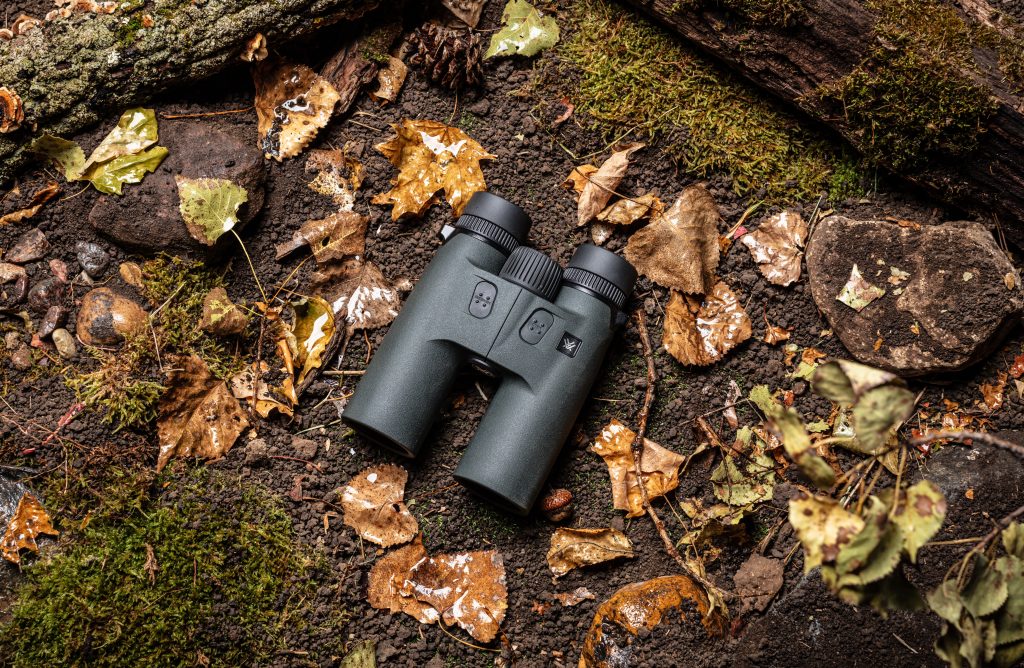
I am a connoisseur of optics. Like horologists or numismatists, I appreciate fine craftsmanship and continually seek the best value to add to my collection. While I might not be a collector of optics in the same way someone collects watches or coins, I appreciate quality and products that deliver great value to the user. To me, Vortex has been one such company that has stood out. What started as a Wild Birds Unlimited transformed into an optics juggernaut. The Hamilton family quickly recognized market gaps and decided to do things better. That better way centers on Vortex’s leading VIP Warranty—an unwavering, customer-first mentality.
So, it’s no surprise that Vortex has a product lineup covering all price ranges and nearly every sporting optics category. As a result, I pay close attention whenever they release a new product. One area they’ve focused on is rangefinding binoculars. While Leica introduced the first rangefinding binocular in 1992, by 2015, there were still relatively few options. The common ones back in 2015 included models from Swarovski Optik, Leica, Bushnell, and Zeiss. Besides Bushnell, the others weren’t widely used by many hunters and shooters. When Vortex launched the Fury line of rangefinding binoculars in 2017, both consumers and other optics brands took notice. Now, in 2025, nearly everyone is making a set.
RANGER HD 3000
To stay competitive in the market, Vortex launched the Ranger HD 3000—a set of rangefinding binoculars made for hunters. Vortex states that the Ranger HD 3000 “redefines readiness. Built for hardworking hunters, its slim design, HD clarity, and precise ranging capability combine to simplify and streamline your gear without compromising performance. In moments where speed and stealth are essential, it’s an essential tool to keep you seconds ahead.”
Sounds nice, right? The optic does this with these key features:
- HD OPTICAL SYSTEM: Optimized with select glass elements to deliver exceptional resolution, cut chromatic aberration, and provide outstanding color fidelity, edge-to-edge sharpness, and light transmission.
- RED OLED DISPLAY: Optimized for low light.
- TREAMLINED DESIGN: Offers a slim form factor, providing better ergonomics for glassing.
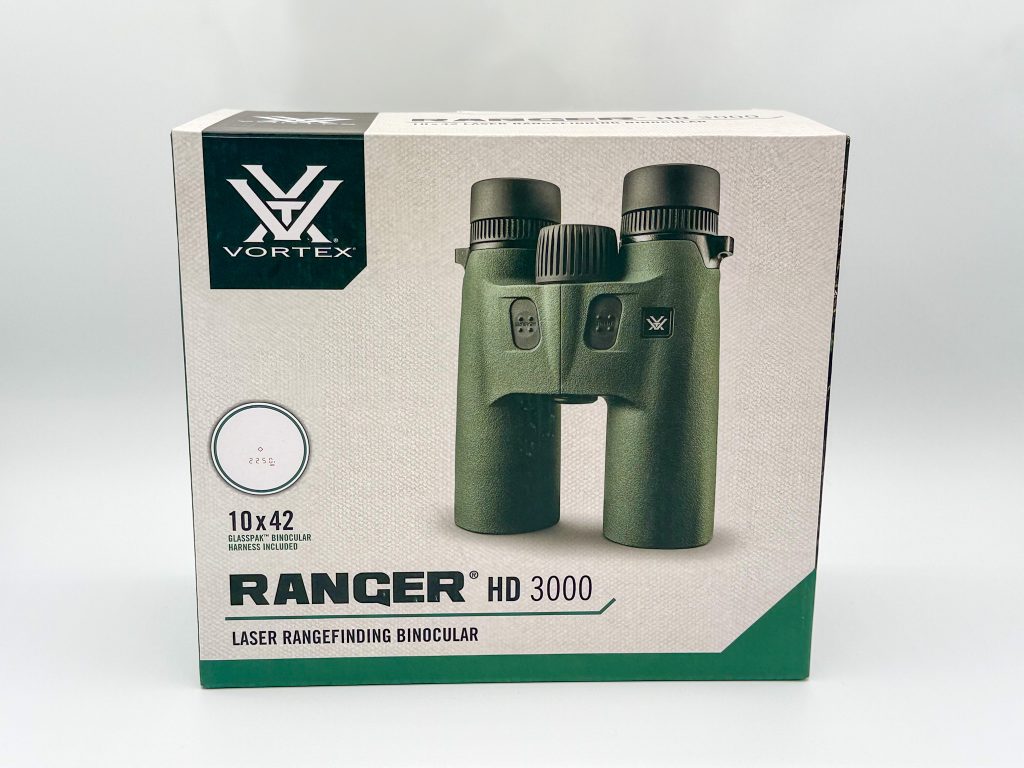
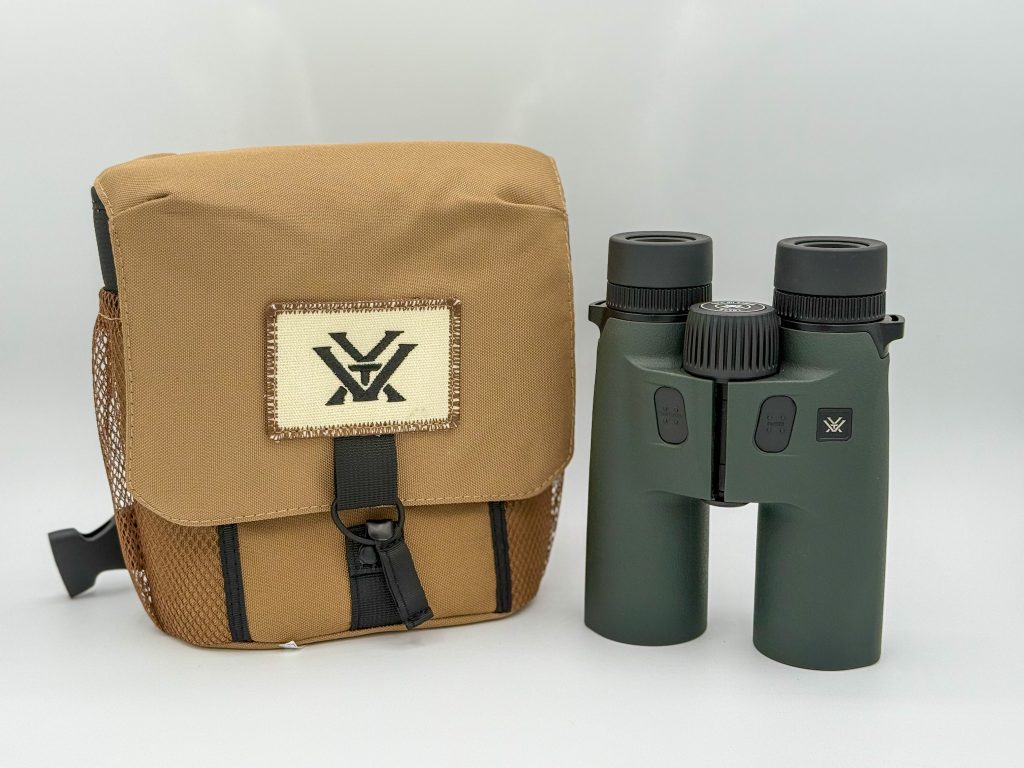
Other features include a longer battery life via a CR123 battery, line-of-sight and slope-angle-compensated ranging, as well as a scan feature. All this combines to create a rangefinding binocular purpose-built for hunting. Oh, and most important, they are 10X42, which I find to be the perfect balance for a wide variety of glassing scenarios. When asked why they made the Ranger HD 3000, Vortex responded with, “Hunters are burdened with the need to carry both binoculars for spotting and a separate rangefinder for precise targeting. This complicates their gear load and, when swapping between tools, risks valuable seconds wasted in hunting’s make-or-break moments.”
First Impressions
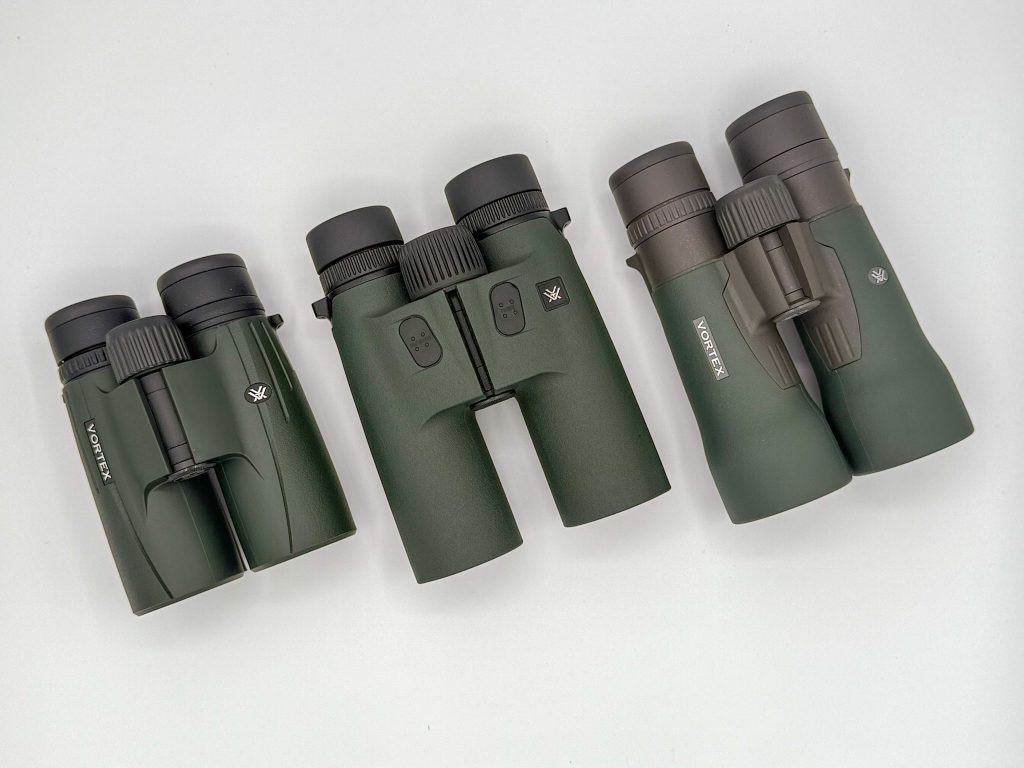
After having it in hand for a few weeks, I have some thoughts. First, it feels like a quality set of binos. While I may not be in the field, my backyard and neighborhood make a perfect proving ground for observing and ranging various structures (and developing my plan for Skynet’s activation). I find that it has good image quality at dusk and dawn, as well as at farther ranges (like the cornfield at the end of my street). However, the edges will blur when you push the optics capabilities. So, as pure binoculars, it is every bit as good as the pair of Viper HDs I have, but not on the same level as the Vortex Razor or Leupold BX-5.
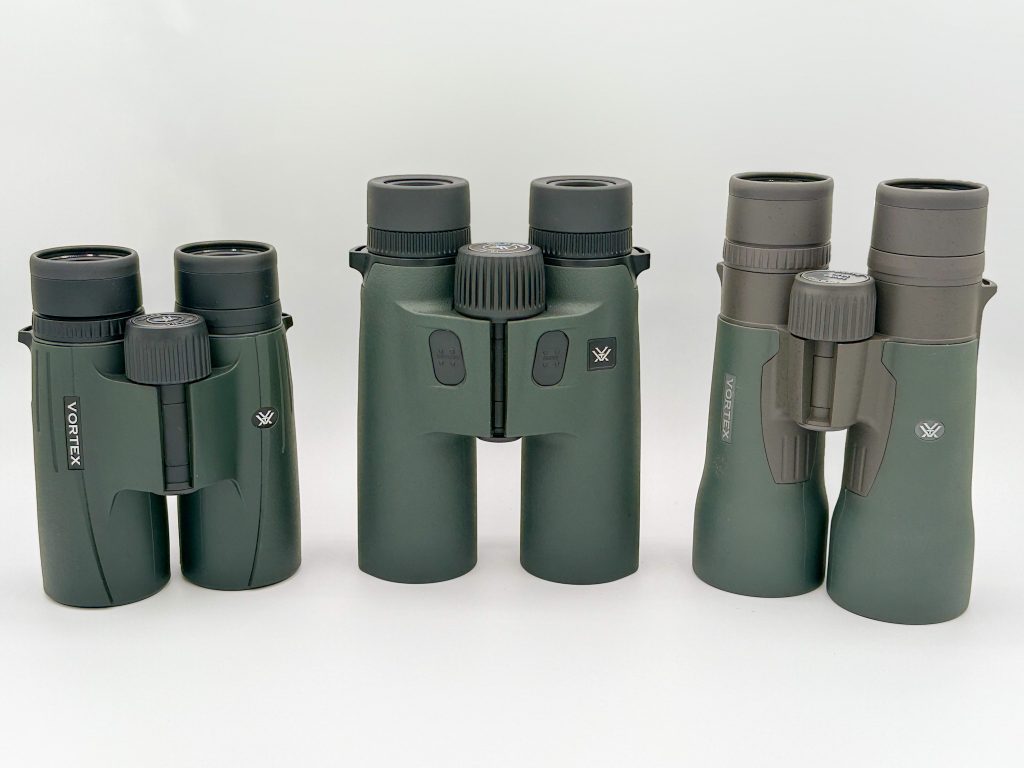
For testing, I ranged a variety of targets in my neighborhood (hopefully, those neighbors don’t think I’m weird…). I used a Vortex Razor 4000 rangefinder as a control and compared the distances to those of the Ranger. The chart below showcases that. Furthermore, I had the Razor mounted to a tripod. When using the Ranger, I rested it on the rangefinder.
| Ranged | Control (Razor HD 4000 RF) | Ranger HD 3000 |
| No Outlet Sign | 77.8 | 77.1 |
| Red SUV | 117.1 | 116.3 |
| Mailbox | 160 | 159.7 |
| Far Stop Sign | 335 | 334.8 |
| Far Retaining Wall | 572 | 572 |
| Barn Roof | 1005 | 1004 |
| Far Electrical Tower | 1097 | 1098 |
| Ranging various objects in my Neighborhood. Ranged off a tripod |
Some thoughts:
- It’s easier to find and identify targets with a pair of 10x binoculars than with a 7x rangefinder. Not to mention, a binocular is easier to focus, and the focus is more defined.
- The Razor rangefinder response was still faster compared to the Ranger. However, I was able to be more precise when ranging with the Ranger.
- The Ranger was easier to range with at distances exceeding 1000 yards. This is partly due to increased magnification.
- I wish I had a tripod mount for the Ranger. That would make the setup perfect for hunting in the Ohio deer woods.
- The menu options were easy to navigate and straightforward. Simplicity is the spice of life.
More Notes and Observations
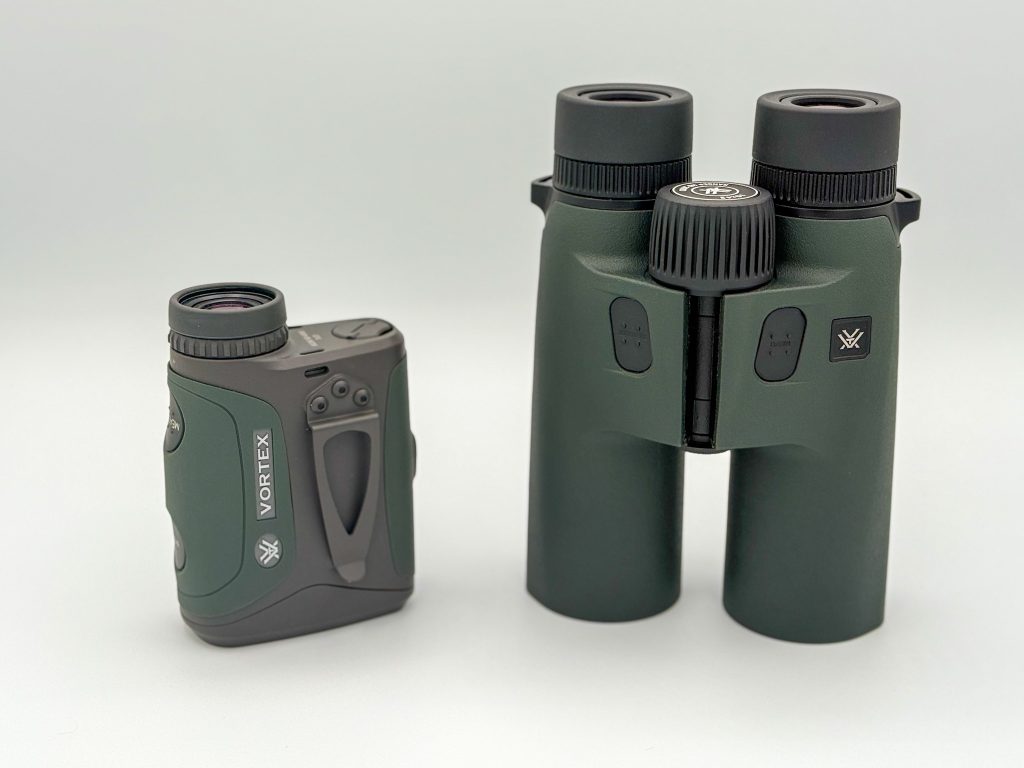
When comparing the Ranger to other options, it is right on par with what else is available—both in terms of price and function. While they are not a ballistic solver like some, they aren’t meant to be (that’s where the Fury HD 5000 AB comes into play). I do find them a bit heavy (but not bulky), which again is to be expected for an optic like this. It weighs 32.4 oz. (or just over 2 pounds).
In comparison, Swarovski El Ranges, which cost nearly four times as much, weigh the same. It’s something to be aware of if you are new to these types of binos. They are also noticeably larger than my Viper HD 10X42s.
The optic ships with Vortex’s GLASSPAK bino harness (which is a nice and welcome touch that most manufacturers do not include), a neck strap, tethered objective lens covers, a rainguard eyepiece cover, a CR123 battery, a lens cloth, and a product manual. This makes for a grab-and-go package that the hunter or shooter can quickly adapt to their gear. \
Final Thoughts
The Ranger HD 3000 functions well as both a rangefinder and a quality set of binoculars. Having a dual function simplifies a hunter or shooter’s life. This results in a more streamlined setup, eliminating the need to switch between two optics. Something that can be problematic when a game animal presents itself. This offering from Vortex continues the company’s strong lineup that provides options for everyone, whether you’re a hunter, casual plinker, or competitive shooter. The price will be $799.99, which aligns it with many of its competitors. Don’t forget that their VIP Warranty backs anything from Vortex—for life. I can’t wait to test these in the whitetail woods of my home state of Ohio this fall.