

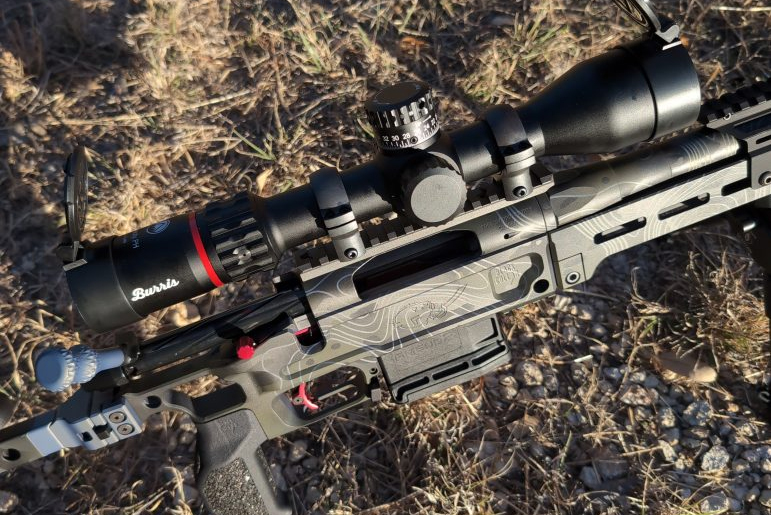
The Burris Veracity PH line of blend a traditional first focal plane optic with cutting-edge digital assistance. The Veracity PH comes in three flavors: 2.5-12×42, 3-15×44, and 4-20×50 priced at an MSRP of between $1,320 to $1,560. I found them for less online (e.g. Brownells here) and if you shop around I’m sure you will, too.
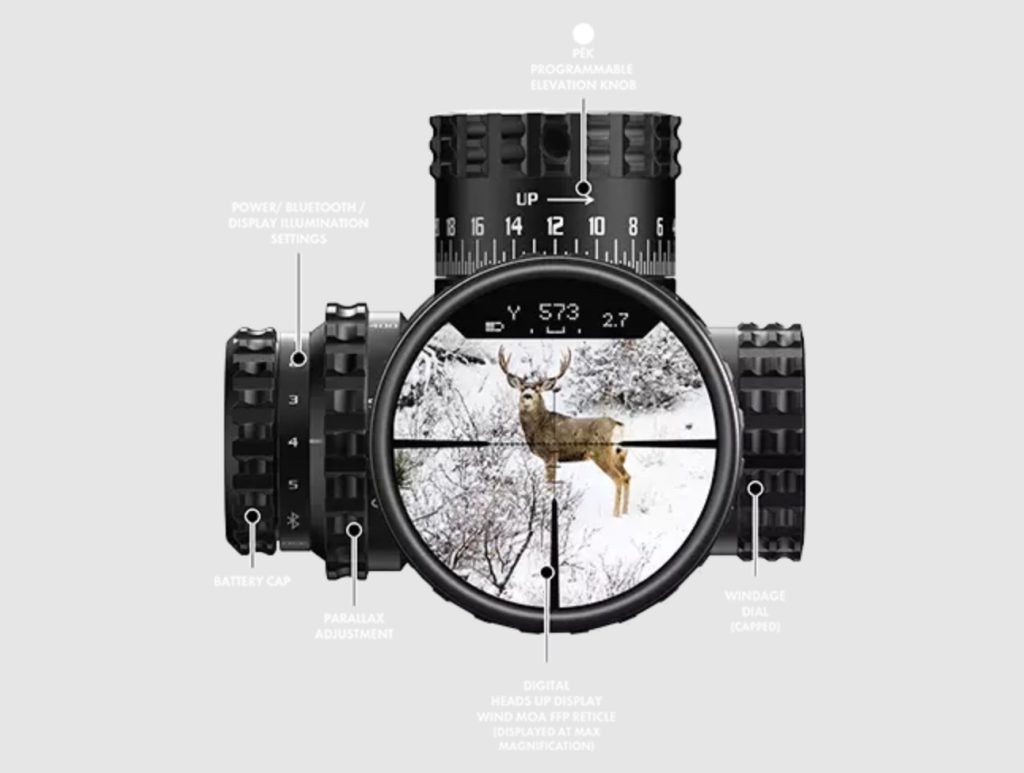
The Veracity PH stands out in a crowded mid-tier optics market by having what Burris calls the Programmable Elevation Knob (PĒK) system – a clickless elevation turret paired with a heads-up display that syncs to the free BurrisConnect app via Bluetooth.
This isn’t just another smart scope, it’s Burris’ attempt to simplify dialing for distance without sacrificing reliability, making it ideal for hunters who want tech smarts, but hate fumbling with apps mid-stalk.
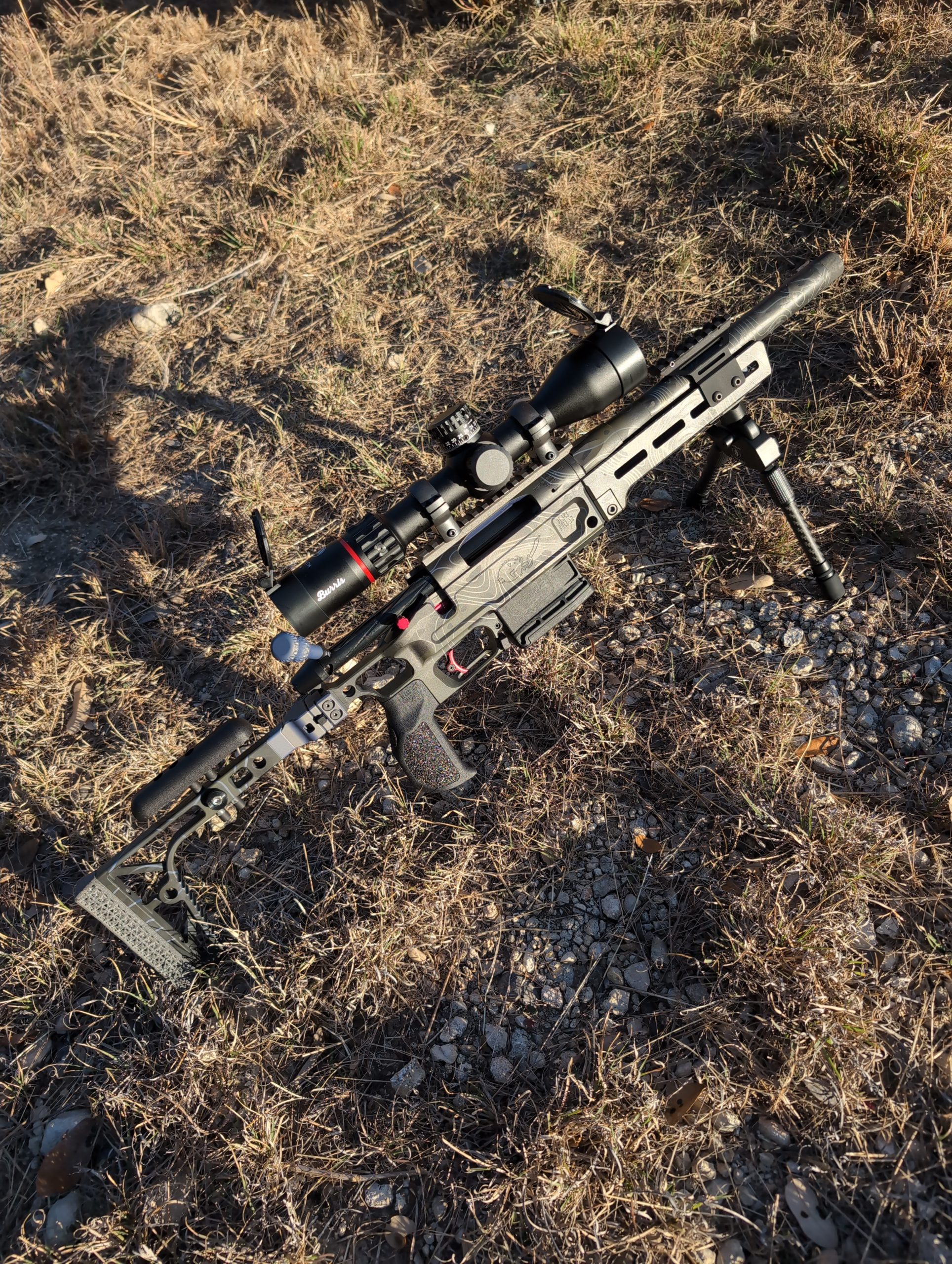
At first glance, the Veracity PH doesn’t scream “gadget.” It looks like a sleek, no-nonsense 30mm tube scope with a matte black finish, a 42 to 50mm objective bell, and a capped windage turret. The elevation knob is smooth and unmarked, hinting at its digital tricks, while the parallax/focus dial and illumination knob feel nice and sturdy, although they also don’t have well-defined detents.

The scopes are decently compact for their power range with a length between 12.5 to 13.8 inches but hefty enough to demand a solid mount (Burris recommends their Signature Zee rings for vibration resistance), weighing between 27.3 and 29 oz. Burris sent a set of their Signature rings with the scope, so I decided to go ahead and use them. While they’re lightweight and employ a unique and interesting self-aligning insert system, they’re perhaps a bit on the light-duty side of the spectrum and my preference would be for a more solid mount or set of rings.
Although the Veracity PH optics are manufactured in the Philippines, the build quality evokes Burris’s American roots in Greeley, Colorado – rugged, nitrogen-purged, and waterproof/fogproof to IPX7 standards, with Burris Optics’ renowned Forever Warranty, which even covers the electronics.
We reviewed the 3-15×44 model and here are its overall specs:
Key Specifications
| Feature | Details |
| Magnification | 3-15x |
| Objective Lens | 44mm |
| Tube Diameter | 30mm |
| Reticle | Illuminated Rapid Cross MOA (FFP, 8-MOA center cross for quick acquisition) |
| Adjustment Range | 100 MOA elevation (1/10 MOA per digital increment) / 60 MOA windage |
| Parallax | Side focus, 25 yards to infinity |
| Field of View | 36 ft @ 3x / 7.5 ft @ 15x (100 yards) |
| Eye Relief | 3.62 – 3.65 inches |
| Length / Weight | 13 inches / 27.3 oz |
| Power Source | 2x CR2450 battery (user-replaceable, auto-off after 1–12 hours) |
| MSRP | $1,440 |
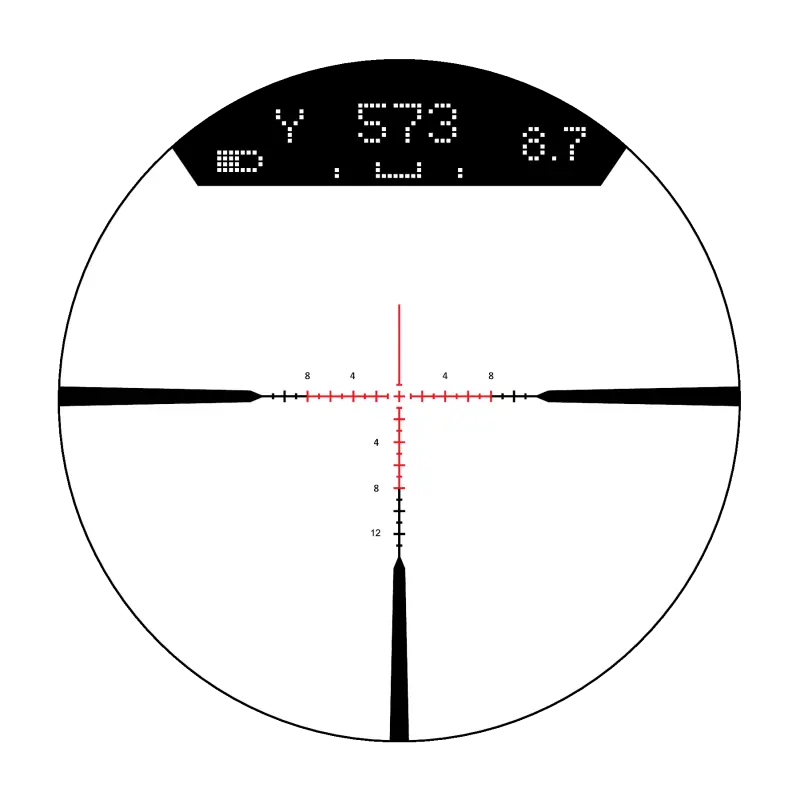
Burris’s illuminated Rapid Cross MOA reticle is a standout: clean, uncluttered MOA hashes for windage and elevation holds, with illumination that’s daylight-bright, yet battery-sipping. The HUD overlays neatly in the upper field of view, displaying dialed distance (in yards or meters), MOA correction, rifle cant via internal level, angle, wind holdover, and battery status – all without obstructing your aim point.
I really dig the reticle and overall layout. The illumination knob is side-mounted for easy access, with four levels plus off, HUD only, and Bluetooth for syncing. Optically, extra-low dispersion glass delivers sharp, color-true images with minimal chromatic aberration, even at 15X…impressive for the price. Low light performance, while not Schmidt & Bender or Nightforce level, is more than adequate for the price point.
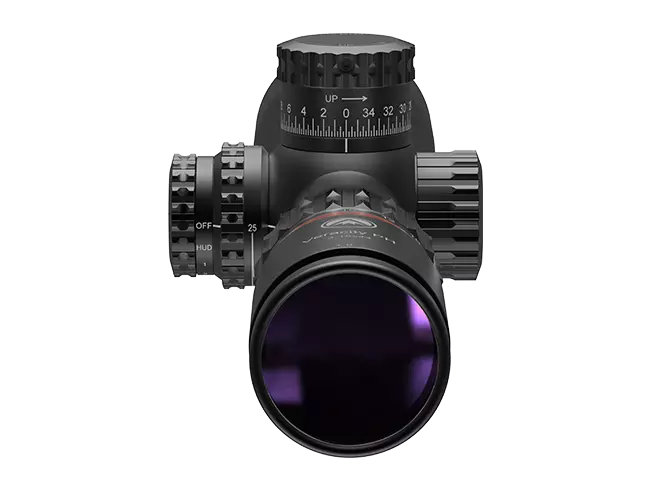
The real magic here is the PĒK system. Unlike traditional clicky turrets, the Veracity PH’s elevation knob rotates smoothly (clickless for silent field use) while a digital sensor tracks position to 0.1 MOA precision. Pair it with the BurrisConnect app, input your rifle and cartridge ballistics – muzzle velocity, BC, zero distance, environmental factors like temp/altitude—and sync it via Bluetooth.
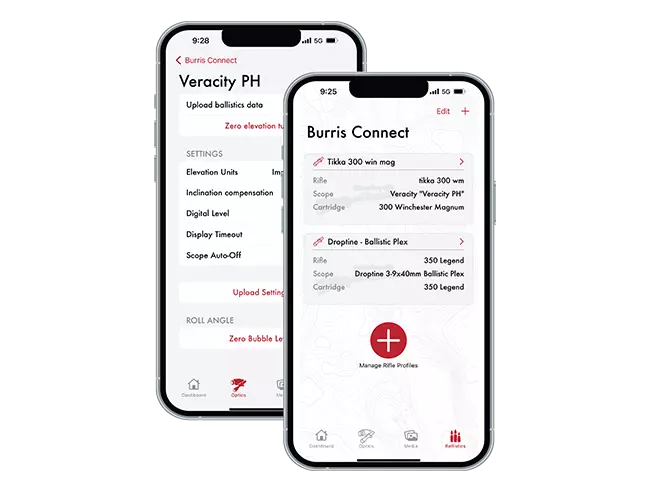
The app generates a custom profile and pushes it to the scope. Once that’s loaded, you can ditch your phone. Range your target, dial the knob until the HUD reading matches the yardage, and use the dead-center of the crosshair as your point of aim. No holds and no guessing. It really is that intuitive. It even factors in uphill/downhill angles via a built-in clinometer.
Manual fallback is seamless. The app spits out a printable dope card for dead battery scenarios, and the scope still zeroes mechanically just like any traditional optic.
Pros:
- Speed and Simplicity: Dial-to-distance is a game-changer for dynamic hunts or helping beginners gain confidence without having to calculate and dial for range or reticle holds. Hits at 600+ yards are effortless after setup. Since you are dialing, there is no integration needed with your rangefinder and you can use whatever rangefinder you prefer, unlike other implementations that require you to pair a rangefinder with your optic (e.g. Sig BDX…and I’m not trashing the Sig BDX by any means as its also a phenomenal system).
- Reliability: Scope holds zero through rough handling, heavy recoil, cold snaps (manufacturer tested down to -20°F with fresh batteries, and we will have to take their word for it as it certainly never reaches that in Central Texas!), and rain. Even if all electronics go down, the scope still functions like any traditional scope would.
- Value-Packed: FFP reticle, generous adjustment range, and app integration at less than half the cost of premium electronic scopes with comparable features.
- Clean Integration: HUD is unobtrusive — no “sci-fi” clutter. Burris claims a long Bluetooth range of up to 100 feet, although I fail to see the relevance of this as the Bluetooth syncing is only necessary on setup of your profile or tweaking of the profile to update environmental factors.
Cons:
- Hefty: At 27.3 ounces, it’s no lightweight; better for stable platforms than ultralight rigs.
- App Dependency for Setup: Initial profiling takes 10 to 15 minutes, cold weather can drain batteries faster (carry a couple of spares).
- Glass Limitations: Excellent clarity, but low-light performance lags behind pricier ED-heavy competitors.
- Legal Limitations: Electronic aids are banned in some states for hunting big game — check the regs for whatever locale you’re hunting.
Performance Notes
The Burris Veracity PH shines on medium to long distance cartridges like 6.5 Creedmoor and 7 PRC, delivering consistent 0.5 to 1 MOA groups out to 600+ yards provided the rifle and shooter are capable. The HUD’s wind holdover (based on app inputs) is accurate within 1 to 2 MOA at 500 yards, but always verify with real world DOPE and never trust the velocity numbers on the ammo box.
The scope feels well built and durable which, given its weight, it should be. Battery life is stated to exceed 200 hours on medium illumination, with swaps achieved quickly via the “coin slot” capped port.
Final Verdict
The Burris Veracity PH earns a solid 4.5 to 5 stars. It’s a thoughtful evolution for tech-curious hunters who prioritize smart, easy-to-use features over minimalism.
If you’re tired of mental math regardless of the scenario you’re shooting in or want a scope that grows with your ballistics tweaks, this is a no-brainer upgrade from basic turrets. Skip it if you crave a featherweight optic, ultra expensive top-tier glass, or if you shun batteries altogether.
In Burris’ words, the Veracity PH “does the math so you don’t have to.”
In a world of optics that span the range from sci-fi overcomplication to ultra simplicity, Burris aimed for the Goldilocks middle ground and hit the mark. I was highly considering picking one of these up prior to getting the chance to review this unit, and after spending a few months with it I’m even more likely to purchase one, likely the 4-20×50 flavor. Unfortunately I haven’t yet had the chance to take this one out on a hunt, but as soon as I do with either this model or the one I eventually call my own I will report back.