

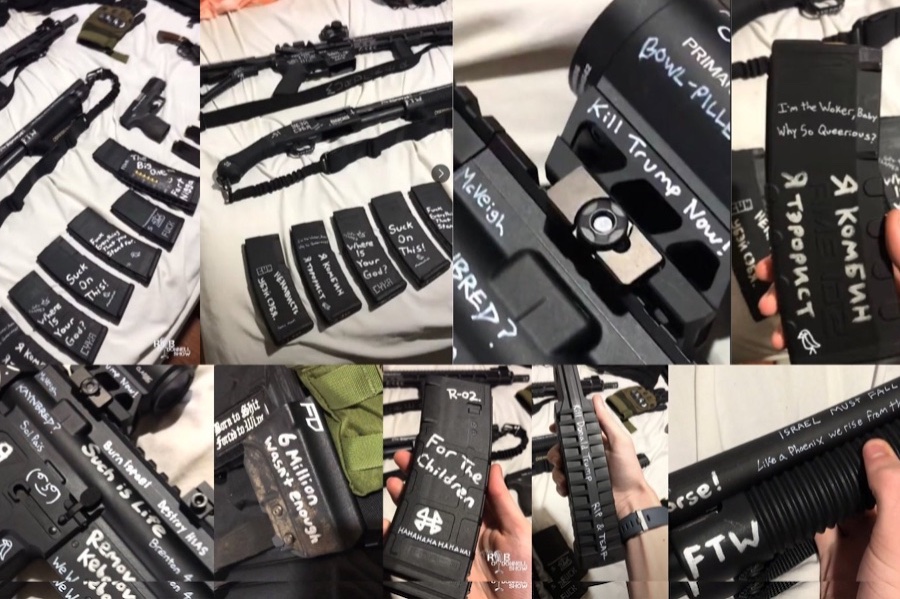
Last August, a 23-year-old fired through the windows of Annunciation Catholic Church in Minneapolis during Mass. She killed two children and wounded more than 20 others. The inscriptions on her weapons told the story of the online community of which she had been a part: There was a quotation attributed to the Columbine shooters and Cyrillic text apparently copied from the shirt of a school shooter in Crimea. There was also an online journal, shown on a YouTube channel with a video calling the attack her “masterpiece.”
This is characteristic of the performative turn in mass violence. The shooter becomes the main character in a story that the true crime community has been writing together for years, and the attack is the climax — both the culmination of nihilism (nothing matters) and, somehow, its imagined overcoming through violence (this matters). The violence is not a means to an end. It is the end. The shooters are not trying to change the world. They are trying to be seen in it, one last time, on terms they control.
There have long been copycat killers, but this is a whole other level — copycat killing fueled by the viral power of meme culture. The 15-year-old shooter in Madison in 2024, for example, quickly became a true crime community icon: A 17-year-old boy who committed a school shooting in Nashville in 2025 and who appears to have been an online associate of the Madison shooter referred to her online before his attack. Likewise, the Minneapolis shooter in 2025 wrote the name of the Madison shooter on her rifle.
The internet was once simply a place you visited to learn things. Now it learns you. If you’re a teenager in crisis, you don’t need to seek out dark material; the algorithms study what you linger on and serve you more content like it. A found-footage mockumentary about the Columbine shooting might lead to a related Reddit thread that might lead to a related Tumblr fan edit that might lead to a Telegram channel where a user posts blueprints of a local school (“just interesting architecture”). Everyone laughs. It’s ironic. Until it isn’t.
There isn’t just one policy solution to mass shootings. It’s a complex problem that requires better resources for school counselors and threat-assessment teams and better firearm-seizure practices during mental health crises. But online platforms also need to be more vigilant. Before the shooting in Tumbler Ridge, the shooter had conversations with ChatGPT that were flagged by OpenAI’s automated systems for describing scenarios involving gun violence. According to reports, about a dozen employees debated whether to alert law enforcement. They decided not to. The account was banned, but nobody called the police.
If companies like TikTok can identify a trending sound or a trending image in seconds, they can presumably build systems to better flag the glorification of violence, slow the resharing of attack footage and quash known violent content so it can’t resurface. They are already good at monitoring content in this way for potential copyright violations.
In an attention economy, what we look at and what we encourage others to look at are unavoidably consequential acts. Every time we draw attention to shooters, we help complete their performance. Somewhere, right now, a teenager is sitting alone, scrolling through a feed that has learned exactly what he or she is looking for. The algorithm knows. The question is whether the rest of us will act on what we know, too.
— James Densley and We Study Mass Shooters. Something Terrifying Is Happening Online.
None of these actors were surprises that came out of nowhere.
Everybody wants to “do something” about crazy people until they find an actual crazy person then a barrage of excuses to not “do something” wrapped in a veneer of “compassion” and “tolerance” stalls for time until the crazy person actually goes out and does something.
How about we stop ignoring, nay, enabling, protecting and excusing, crazy fucking people? Oh, it’s just a phase. Oh, it’s just autism. Oh, he’s just sad because he can’t get laid. Actually the drugs are helping, not hurting. Oh, they wouldn’t ever act out on it. Until they do. And nobody is surprised as a trickle of a decades worth of truly insane past history drips out all over the Internet.
Of course this is from the New York Times…so there are some ‘pronoun’ games being played, for example:
“Last August, a 23-year-old fired through the windows of Annunciation Catholic Church in Minneapolis during Mass. She killed two children and wounded more than 20 others. The inscriptions on her weapons told the story of the online community of which she had been a part: There was a quotation attributed to the Columbine shooters and Cyrillic text apparently copied from the shirt of a school shooter in Crimea. There was also an online journal, shown on a YouTube channel with a video calling the attack her ‘masterpiece.’ ”
Left wing violent Trans. This was in reality a biological male so the reality is not a ‘she/her’ but a ‘he/him’.