

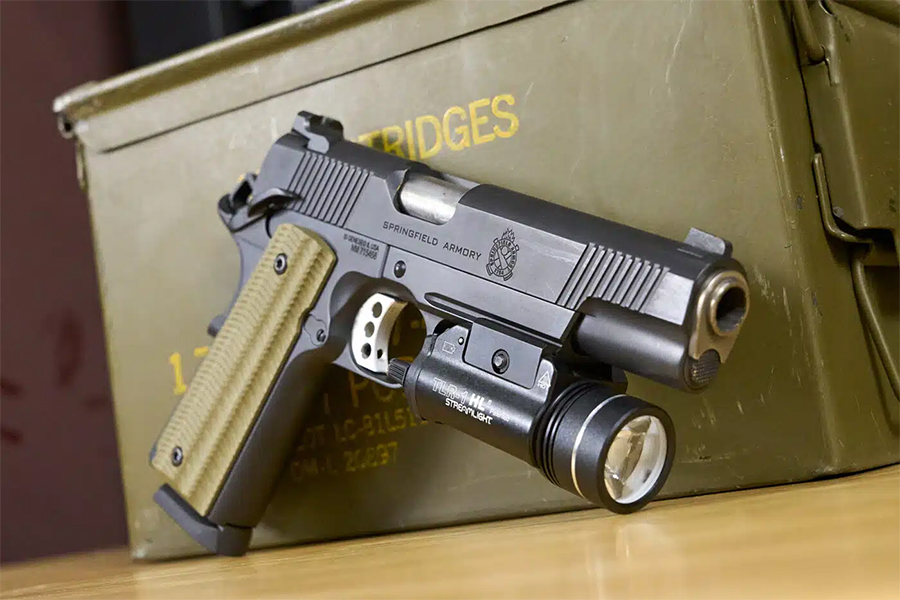
I always seem to be outside the mainstream. Back in the day, when agencies and officers were stampeding to plastic striker-fired guns, I was carrying — per department edict — a ‘traditional’ double-action semi-auto pistol. I also suffered through our guys training with them.
When I finally made the move to the modern, lower-cost, easily maintained, reliable and long-lasting guns, I was uncomfortable with the (partly) cocked striker and no real countermeasures. I got past that somewhat, but the feeling never really left.
At one point I campe to own a SIG P226 that someone had rendered double-action only for some reason. When I realized I was never going to shoot it well – not because of the trigger, but because of the fit — I tried to sell it. No takers. I finally bought the necessary parts and returned it to its original DA/SA format and liked the gun a lot more.
When the Striker Control Device came along, I didn’t adopt it. I thought it was one more thing to go wrong.
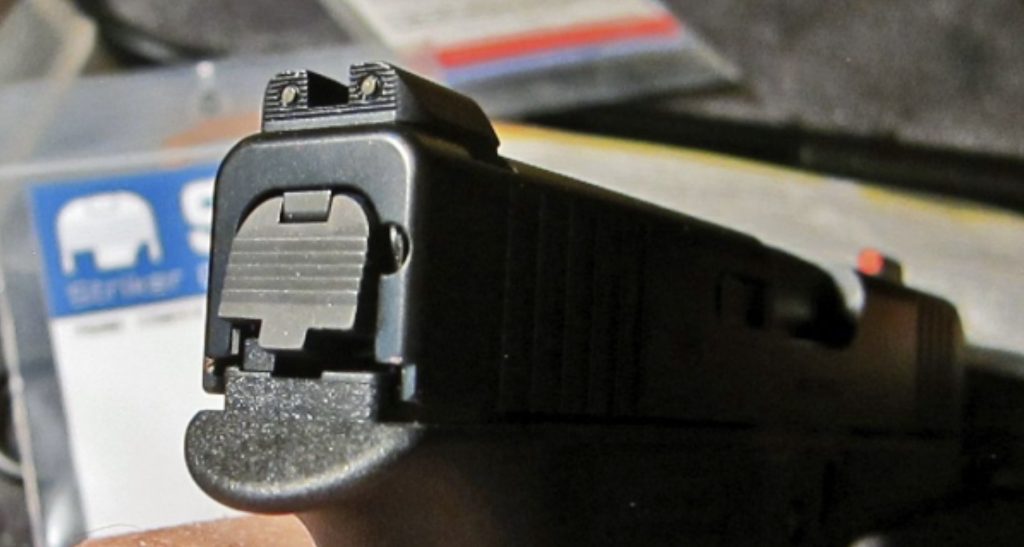
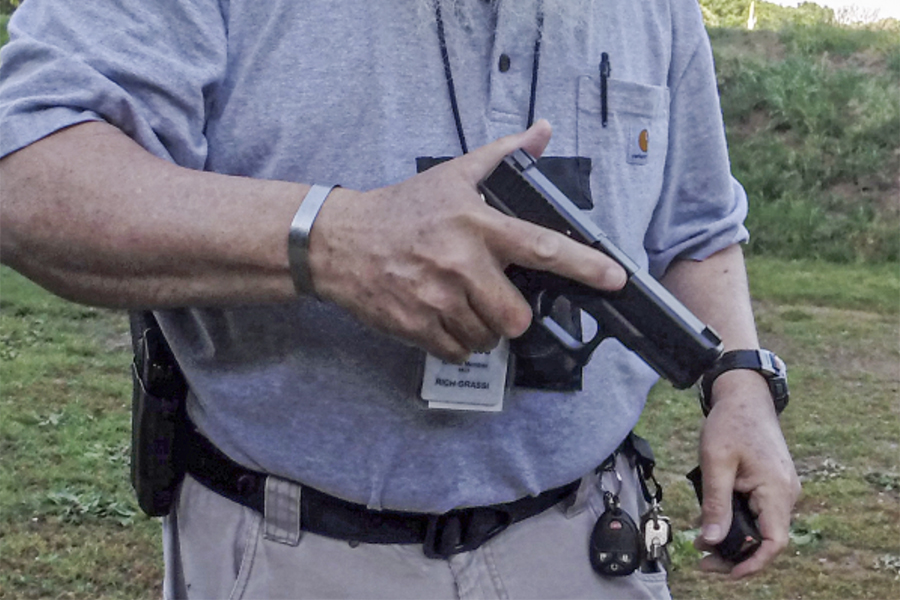
When you holster your pistol, just press the striker cover plate down with your thumb. That eliminates the possibility that the striker can be moved back into firing position.
Years later, Chuck Haggard came out with a version of the SCD to fit the GLOCK 43X/G48 Slimline pistols Now my regularly carried GLOCKs all have Striker Control Devices fitted, the last few purchased from Langdon Tactical.
I got one to see if it would fit the new Ruger RXM slide, but no joy. I could try to have a ‘smith fit one up or I could put a GLOCK upper on the RXM/Magpul frame, but that somewhat defeats the purpose.
(Note: Perusing the Langdon Tactical site, I see the Striker Control Device page indicates “LTT SCD – Hellcat (Coming soon!)” – I’m looking forward to that.)
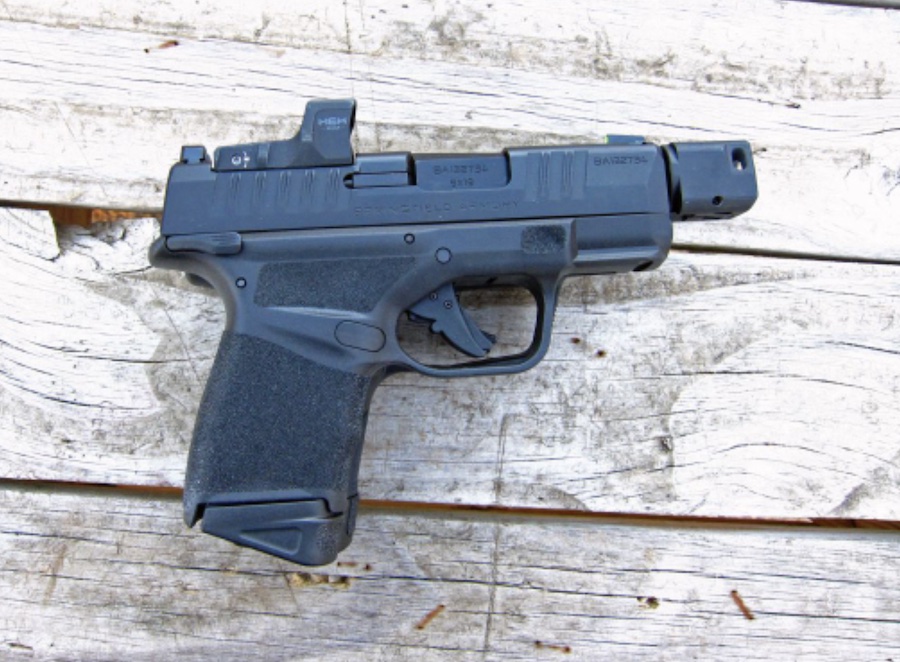
More recently, I saw a video from Massad Ayoob in which he talked about a gun that the internet had tried to cancel: the Smith & Wesson CSX.
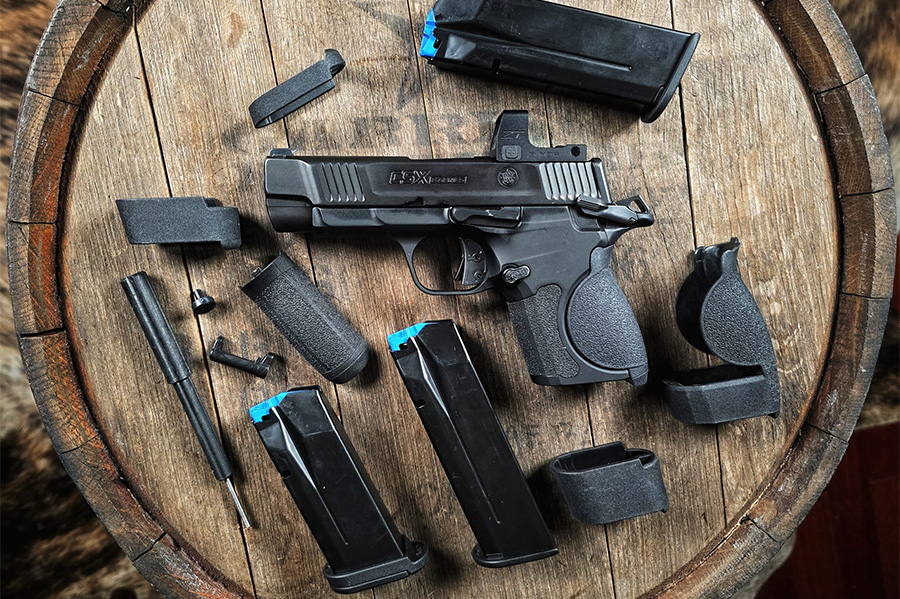
I didn’t get involved in that gun at all when it came out as I was already well-invested in the Shield line and having a Shield Plus, and I didn’t see the advantages for me. That has since changed.
The CSX’s metal frame is only part of it. There’s also the fact that it’s hammer-fired, single-action only. Being able to change backstraps is also good, and the CSX has the weight of the old Colt Detective Special. Then there’s the decent form factor for possible pocket carry (with the 3.1-inch barrel version of the gun).
I also like the ambidextrous safety levers. That all makes a lot of sense to me. They’re slim enough to be out of the way, and still unlikely to get knocked off of safe. It seemed like a nicely rendered piece.
Sadly, because a number of people heard and felt the click of the firing pin safety plunger rendered the gun “safe” as they rode on the trigger after shooting, they considered that a “false reset” and wound up with a dead trigger. That clidk was actually positive reassurance that the gun is functioning as designed.
Now, the new CSX E-Series “enhanced” version has that tactile safety reminder deleted…along with addition of optics compatibility, a must in the current gun-buying environment.
If I were starting out again with small 9mm pistols, I’d be looking hard at the CSX. I think it’s likely the thinking user’s concealed carry pistol for a lot of reasons.
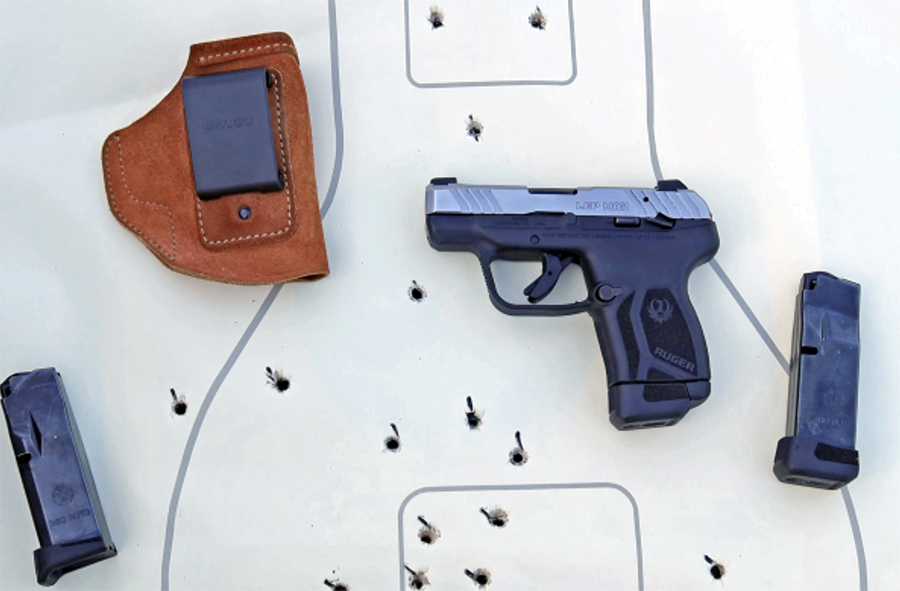
I can here it now: “What if you forget to take the safety off?” The more important question is, “What if you forget to take your finger off the trigger, or clear obstructions from the mouth of the holster, when you’re putting the gun away?”
You’ve trained yourself out of that, didn’t you? You can train yourself out of forgetting to engage the safety lever.
test
Shield
Plus
trigger
PC
The Shield Plus PC has a b-e-t-t-e-r* trigger
and longer sight radius than the CSX.
Full comment:
The Shield Plus PC has a b-e-t-t-e-r* trigger and longer sight radius than the CSX. They’re basically the same size and weight. I haven’t heard much about the trigger being improved on the new CSX. It was more than just a “false reset.” A commenter on that other site said he worked on the trigger himself and made it pretty nice. The CSX does have a b-e-t-t-e-r* manual safety.
*WTH Dan? I can’t say that word?
I think “better” was added to the no-no list because of the huge volume of online casino spam comments we get. I think I fixed it. It’s a never-ending battle.
Thanks
I wasted over six minutes figuring out how to leave a comment that this site wouldn’t send to the WP trashcan. It wouldn’t even go to moderation.
I made a comment explaining this mess, and IT WENT TO MODERATION!! GEEZ!
Sig Sauer lawyers added this to some handgun descriptions on their site:
This firearm is not available with a manual safety. A manual safety – when engaged – is designed to mechanically prevent the firearm from discharging when the trigger is pressed, either intentionally or unintentionally. You should consider whether a manual safety on a handgun is right for you based on your experience level and intended use, keeping in mind best practices for safe firearms handling. It is possible for the trigger to be unintentionally pressed even under normal handling circumstances.
A manual safety is designed to augment, not replace, safe firearm handling practices. You are responsible to protect against unintentional trigger movement while carrying any firearm. Even if you elect to purchase a pistol equipped with a manual safety, you must ensure that the trigger is not contacted in any circumstance other than when you intend to fire the pistol, particularly if you elect to carry your pistol with a round in the chamber. If you have a round in the chamber and the trigger is pressed to the rear, the pistol will fire, absent an engaged manual safety.
They made that last sentence bold.
the csx e will get alongside the cz compact. i don’t ride sears but would like an optic on one carry gun. and the alloy slide should be noticeably lighter.