
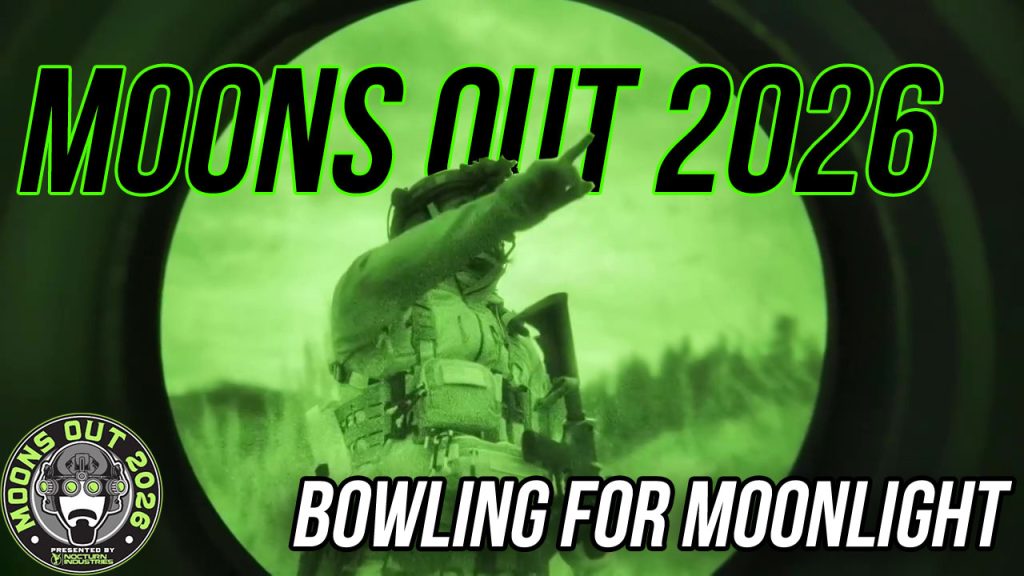
It was barely a month ago that I stepped off the line at Echo Valley Training Center with mud on my boots, a rifle still warm from running ten stages under NODs, and the kind of tired that only comes from pushing hard in the dark, all while being sleep‑deprived.
Moons Out 2026, presented by Forgotten Weapons and title‑sponsored by Nocturn Industries, wrapped up its latest run as one of the premier night‑vision rifle matches in the country. Rifle only. No white light. The woods of West Virginia were reduced to a rolling, cluttered maze of silhouettes and reticules, all under the glow of whatever optics you brought with you—passive night vision, active IR, or thermal.
What Is Moons Out?
Moons Out is a rifle‑only night‑vision match with about 10 challenging stages run over two nights. Shooters run, crawl, negotiate obstacles, apply medical tasks, and shoot under low‑light conditions, all while wearing weight‑bearing gear that mimics Finnish‑style tactical (TST) standards.
Rules and Gear Basics
The match bans white light outright. Everything is shot with night‑vision or thermal optics, and 9×19 mm is the minimum caliber, with 5.56 mm, 7.62×39 mm, and .300 Blackout supersonic as the upper limits. There are different divisions (such as passive vs. active sighting systems and armored TST), and competitors have to bring their own NODs or thermal setups, making it a serious test of both kit and endurance.
My Loadout
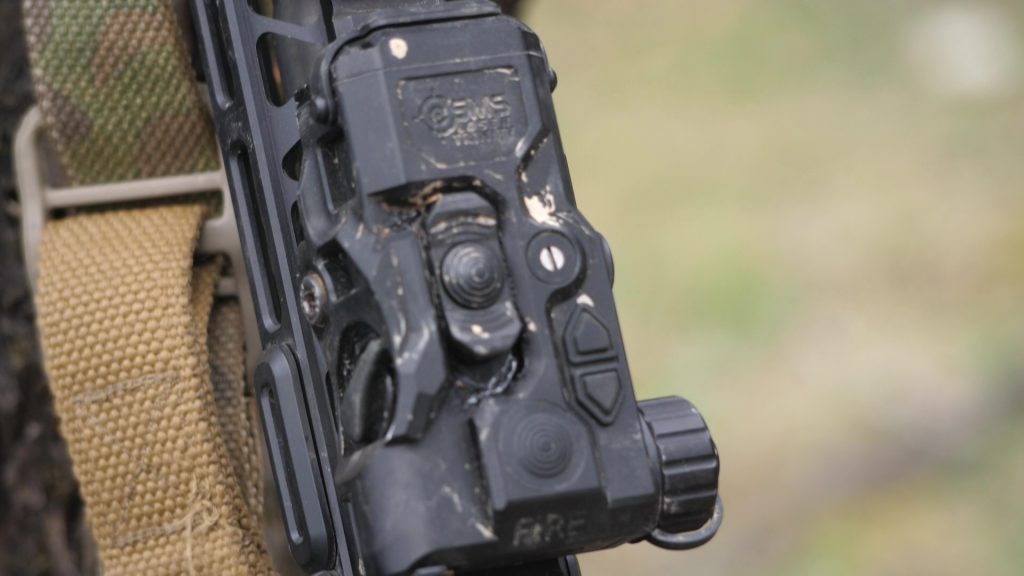
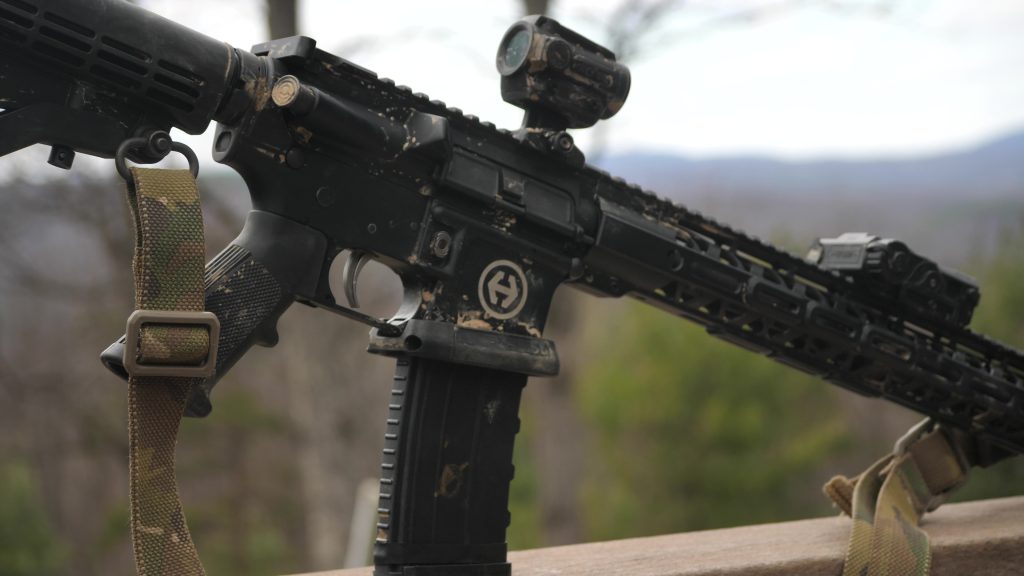
Every time I go to one of these competitions, I like to use gear that I’m currently reviewing, especially if it has some novelty to it. This year I was able to run a few review items including my Combat Defense Industries Bighorn Level IIIA Ballistic Helmet, Hi-Point’s new dirt-cheap HP-15 16″ Carbine, and to round out the package for my choice of the active IR (you’re aiming with a laser device) division, an SMSLaser Trinity laser aiming module.
At about $350 the Trinity is one of the most affordable ways to get decent down range performance out of even mediocre tubes. Although I didn’t need it, a Holosun ARO was there as a passive backup just in case. To keep it short, all of my gear was able to last through the match, stayed zeroed and functioning despite some pretty wet and muddy weather.
Most competitors, including myself, chose to bring a range belt complete with mag and dump pouches, as reloads are frequent and sometimes a required part of the stage designs at a Moons Out match. While I ran my typical Blue Alpha Belts Battle Belt Lite for the match, I also chose to add an Agilite Tactical Reaper Chest Rig to the mix so I could carry more gear without the need for a backpack.
In total, my core gear (the gear required for the match) was about $4,000 in value. If you factor in a simple $3,250 PVS-14 single tube, the remainder of my gear, including the rifle, was only about $1,250. The ammo for this type of match will typically cost you around $250, and you can expect to shoot around 500 rounds between the two nights of the match.
What It’s Like At the Match
This isn’t just a casual get-together with a few friends, but it can often feel like it after you’ve spent two nights with the same dozen guys in your squad. Moons Out in its current form features almost 200 shooters, and as mentioned before, 10 stages.
The 10 stages are often complex, requiring shooters to move to multiple locations in their full kit, carry heavy or awkward objects through other obstacles, avoid setting off simulated trip mines, and even fumble through getting their gear on and off…all while using the only real superpower you can buy — analog night vision. This is all to supplement the healthy amount of actual shooting you’ll be doing under night vision, which often includes full-auto stage guns, flash bangs, and all sorts of other fun tasks you can and need to accomplish with a gun in your hands.
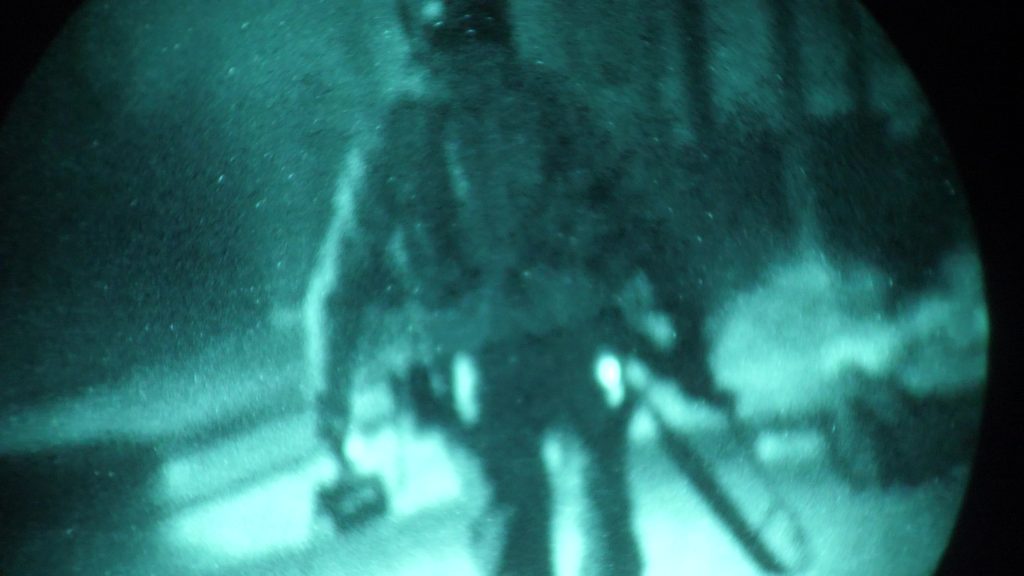
While a lot of people are there just to have fun, for some, it was a serious, action-oriented test of gear and shooter under realistic low-light conditions. Ian McCollum and the Forgotten Weapons crew have built something special here over the years — this is my second year participating in a Moons Out match — and pairing with Nocturn Industries as the main sponsor felt like a natural fit.
Nocturn makes serious night vision mounts and accessories that working professionals and serious enthusiasts actually use. Their support, which included putting up several thousand dollars worth of prize product on the random draw prize table, is just one additional reason I think the $300 match fee is well worth the price, even though it’s just the cherry on top of the Moons Out sundae.
I’ve been around the industry and shooting competitively long enough to remember when night vision matches were mostly informal range nights with a few shooters, and typically on a weekend when the shooting club didn’t have anything else going on. Moons Out has grown far beyond that simple grass-roots concept into something that continues to improve on the concept year over year.
This year, stages mixed close-quarters shoot houses, longer engagements in the tree line, and movement under varying ambient light. One stage had a notorious “Fed Finder” trap that punished poor scanning. Another felt like a trench raid straight out of a modern conflict footage reel.
The match rewards shooters who can move efficiently, maintain situational awareness, and run their rifle without flipping on a light and giving away their position. If you’re completely out of shape, you can still have fun at this match, but you’re liable to time out on a lot of stages, and as a result, you don’t get to do as much shooting, which isn’t much fun in my opinion.
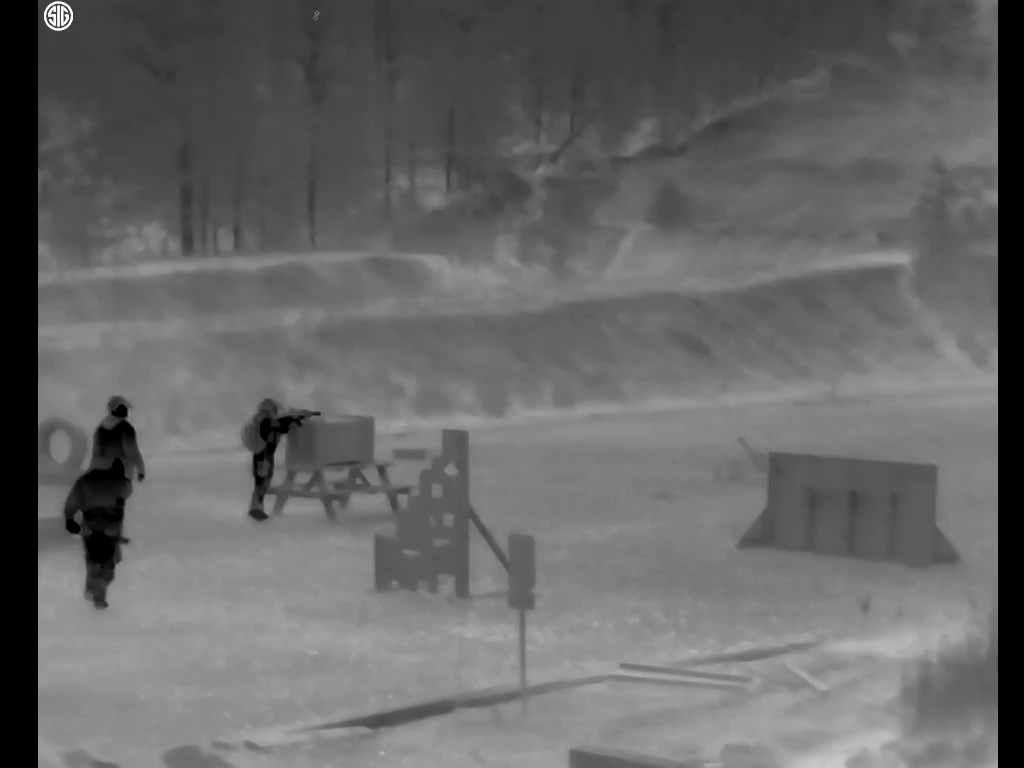
What struck me most was how the gear selection and the competitor attendance have matured. Even before the match, competitors are talking about mount ergonomics, counterweight balance, passive aiming techniques, and even hybrid thermal/night vision setups they have or are aspiring to add to their kit.
Ian himself ran a pretty interesting hybrid setup with a pair of analog night vision tubes for running around, but a thermal scope mounted to his FN F2000 bullpup. You’ll find that most of the “media squad” at this event tends to run goofy setups rather than serious “competitive” equipment. That being said, you don’t need anything fancy to actually be competitive, and if you’re not out here to have fun while earning bragging rights with your friends, then what are you doing at a night vision match to begin with?
Lessons Learned Under the Moon
From my own time on the line and talking with other competitors, a few realities stood out. First, quality head-borne real estate matters more than ever. Loose mounts or poor counterweight setups turn a long night into a neck-cramping slog. I chose to run a ballistic helmet, which, while it was a great test of the helmet in the field for about 16 hours, my neck was screaming at me even after the first night. I’d recommend something lighter, like an Ops-Core Bump, to anyone else going to one of these matches.
Second, whether it was the Thermal, Passive, or Active IR shooting divisions, what separated the top performers from the rest of the pack was consistency, accuracy, and speed. The best runs I saw came from shooters who trusted their tubes, kept movement deliberate and fast, all while maintaining their accuracy.
Unfortunately for me, I like to shoot and run fast at the same time, and my behavior at the match, while not the worst I’ve ever done, only netted me 43rd place overall.
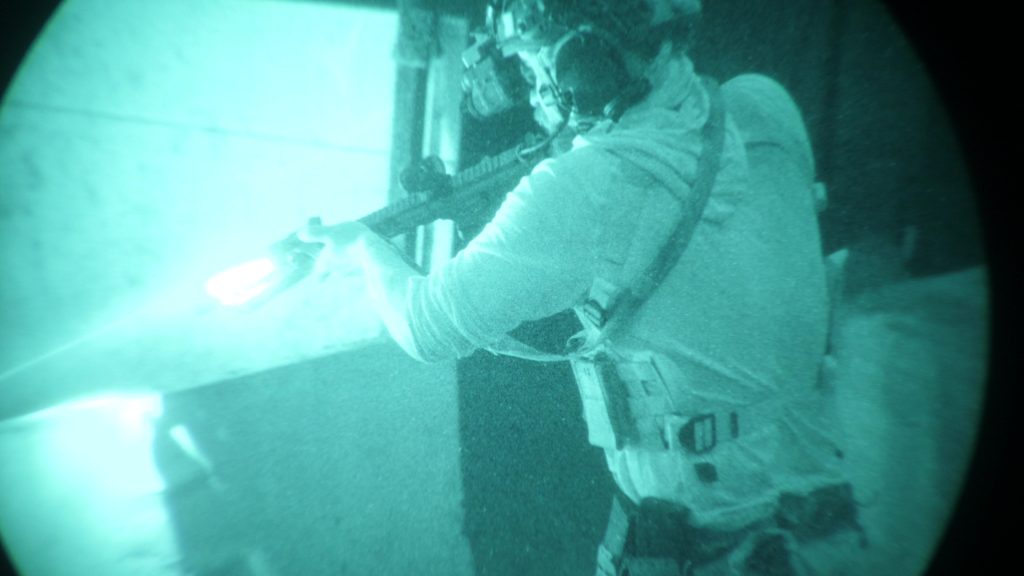
The match also highlighted an evolving truth that’s become apparent in the last couple of years, especially in the shooting world: night vision is no longer exotic military surplus gear. It’s becoming a mainstream capability for serious civilians who want it, whether just for fun or for more serious preparedness.
Whether you’re a home defender thinking about low-light scenarios, a competition shooter expanding your skill set, or someone who simply wants to understand the tools that can often define modern conflict, events like Moons Out give you a pressure-tested proving ground where you get a rare chance to test this gear for yourself firsthand. You learn quickly what works when the lights go out, and the timer starts.
Moons Out 2027 Coming Soon
For shooters reading this, my takeaway is straightforward. If you’ve got some basic experience in night vision, or if you have been sitting on the fence about night vision training, stop waiting for the perfect setup. Get what you can afford, train with it under realistic conditions, and look for opportunities like Moons Out or similar local low-light events to attend to test your skills – they are starting to pop up all over the place. You can certainly start off with basic gear and improve it over time, as most analog night vision devices tend to hold their value about as well as firearms do.
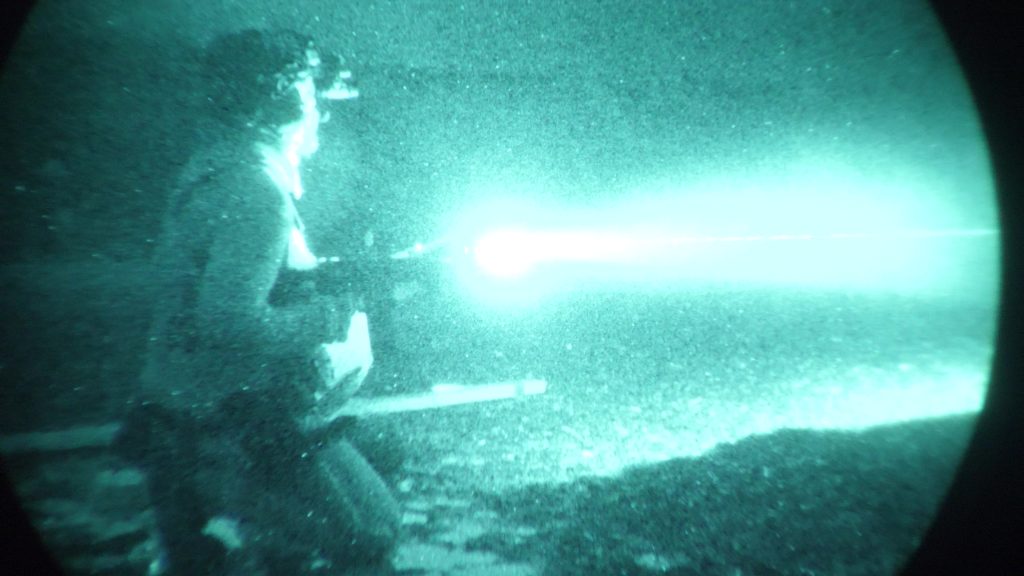
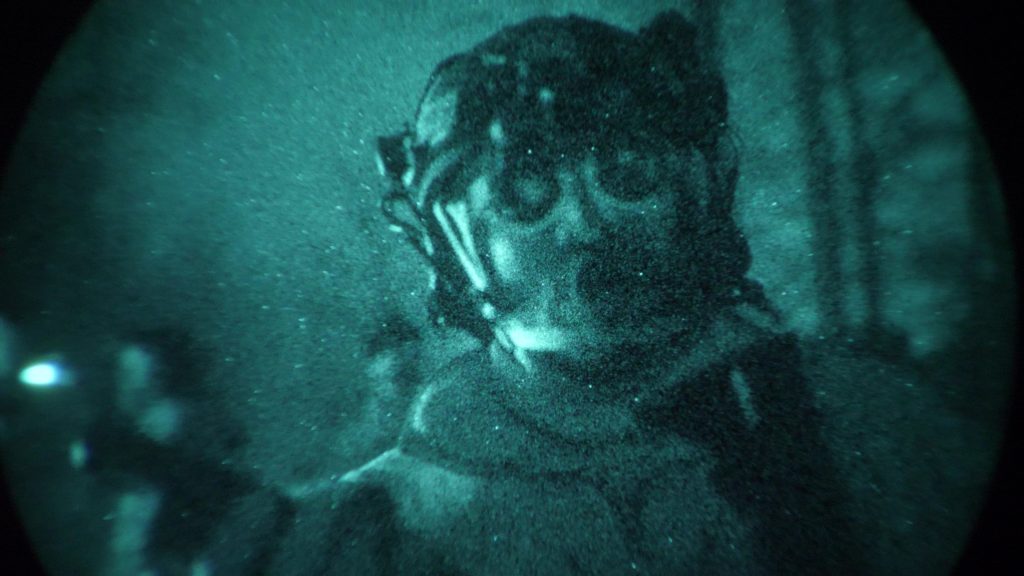
The moon wasn’t particularly cooperative this year (hence the relatively dark videos and photos), but that’s part of the fun, and thanks to people like Les Winner and his team of Range Officers and Stage planners, the match still delivered.
In addition to that, if I haven’t said it enough, the atmosphere is one of the best in the world and unlike anything else you’ve ever experienced in the competitive firearms world. That mix is what makes it valuable. You don’t get to pick the conditions in a real scenario either, so once again, this is a refreshing real-world test that goes on whether the sky is clear or filling your boots full of muddy water.
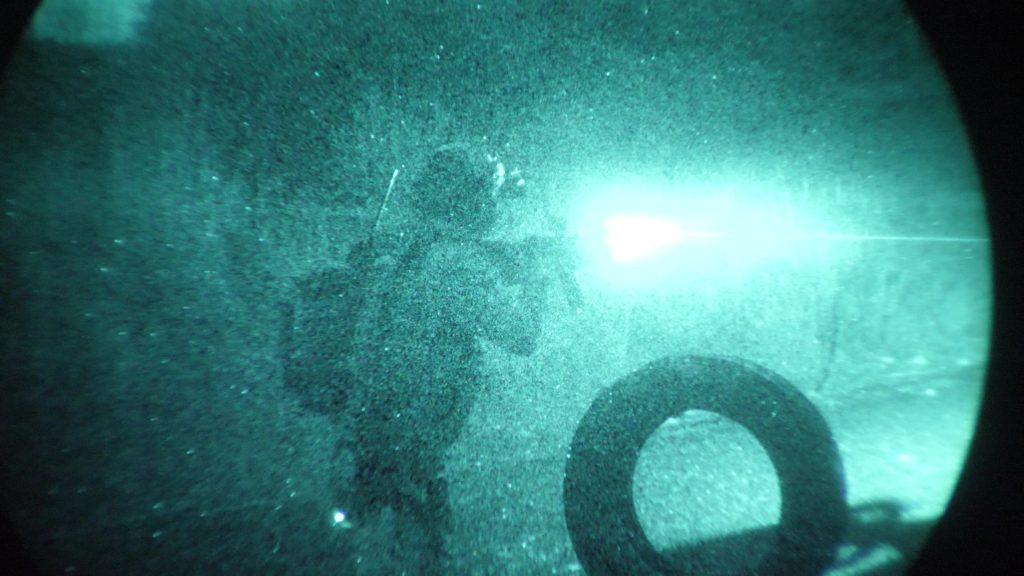
In the end, Moons Out 2026 reminded me why I stay in this industry and why I spend a lot of my paychecks on this kind of stuff. It’s not just about the latest gadget or the biggest stage. It’s about building real capability that holds up when things get serious, and the lights go out, and learning and sharing that experience with your friends and fellow Americans.
The Forgotten Weapons crew, Nocturn Industries, the sponsors, the match staff, and every shooter who showed up put on a first-class event that is only going to get better from here on out. If you are serious about shooting, make time for the night. The community is better for it, and so are you. If you’re interested in attending a Moons Out Match at some point in the future, be sure to check out the official Match Page here and stay tuned to the Forgotten Weapons YouTube page for announcements about upcoming matches. You can also check out my full match coverage in the YouTube video below.