

In a perfect world, Bryan Malinowski would be alive today and substantially richer after suing the ATF for violating his Second, Fourth, and Fifth Amendment rights. Unfortunately, ATF has yet to be held accountable for shooting and killing Malinowski in his own home just 16 months ago.
The ATF doesn’t want to talk about the killing. Calls to ATF’s Little Rock field office, which conducted the raid, weren’t returned. The lone ATF agent who answered the phone said he wasn’t even sure who the office’s Resident Agent in Charge — known as a RAC — is.
“I’ve only been here a year. I’m not sure,” the agent said.
He didn’t give his name, but his admission makes perfect sense. ATF agents assigned to its Little Rock field office are 100% responsible for Malinowski’s wrongful death, from their flawed investigation to their incompetent handling of the service of a search warrant, but most importantly, for ATF Agent Tyler Cowart’s tragic use of deadly force on March 19, 2024.
Maer Malinowski, Bryan’s widow, recently filed a federal wrongful death lawsuit against ATF and every agent who was at her home. The massive document clearly lays out a host of serious errors ATF agents made, all of which contributed to her husband’s death.
The saddest part is that if ATF agents hadn’t committed just one or two of a long list of substantial errors, Bryan Malinowski would likely be alive today. Here’s what they did wrong.
Malinowski didn’t violate any federal law
Malinowski thoroughly enjoyed collecting firearms. His father passed on his collection to him too. Malinowski liked buying, selling and trading firearms and other collectibles at local gun shows. He certainly didn’t need the money. Malinowski made more than $260,000 per year as the Executive Director of Little Rock’s airport, which was named for Bill and Hillary Clinton.
Federal law was also on his side. The Biden Administration did not close its so-called “gun show loophole” until a month after Malinowski was shot and killed by ATF.
Prior to its passage, the law was vague, “exempting people who occasionally sold guns as a hobby but not spelling out how many sales was too many,” the lawsuit states.
“In the months preceding his death, even though ATF’s new regulation intended to tighten the definition of a person ‘engaged in the business of selling firearms’ had not yet gone into effect, the ATF concluded Bryan Malinowski had crossed the ambiguously defined line and violated federal law by not holding an FFL,” the lawsuit states. “They decided his suspected infraction was serious enough to warrant a pre-dawn dynamic raid at his home while they knew he and his family would be sleeping.”
Charging Malinowski with violating the law at the time would certainly have led to a serious and lengthy legal argument.
ATF knew Malinowski wasn’t a threat
“Nothing in the Operations Plan indicated Bryan posed a danger to himself or others, or that he was not expected to comply with law enforcement if he knew they were at his door,” the lawsuit states.
This claim is buttressed by numerous agent admissions.
Special Agent Shannon Hicks told investigators Malinowski was “the last person I would have imagined that we would have been in an armed confrontation with.”
Special Agent Tyler Cowart, who shot and killed Malinowski, said “We thought this would be an easy search warrant and we’d be out of there pretty quick. And he would cooperate and everything, and it was supposed to be easy.”
Most telling, neither Malinowski nor Maer had any criminal history. They had never been arrested or broken any law.
Therefore, the methods that ATF chose to serve its search warrant were far more dangerous than what was actually needed.
ATF uses high-risk dynamic entry anyway
ATF agents chose to execute an early-morning high-risk dynamic entry, despite the fact they all admitted later they knew that Malinowski was not a threat.
This was the ATF’s most significant mistake, as it is the main reason why Malinowski was shot to death.
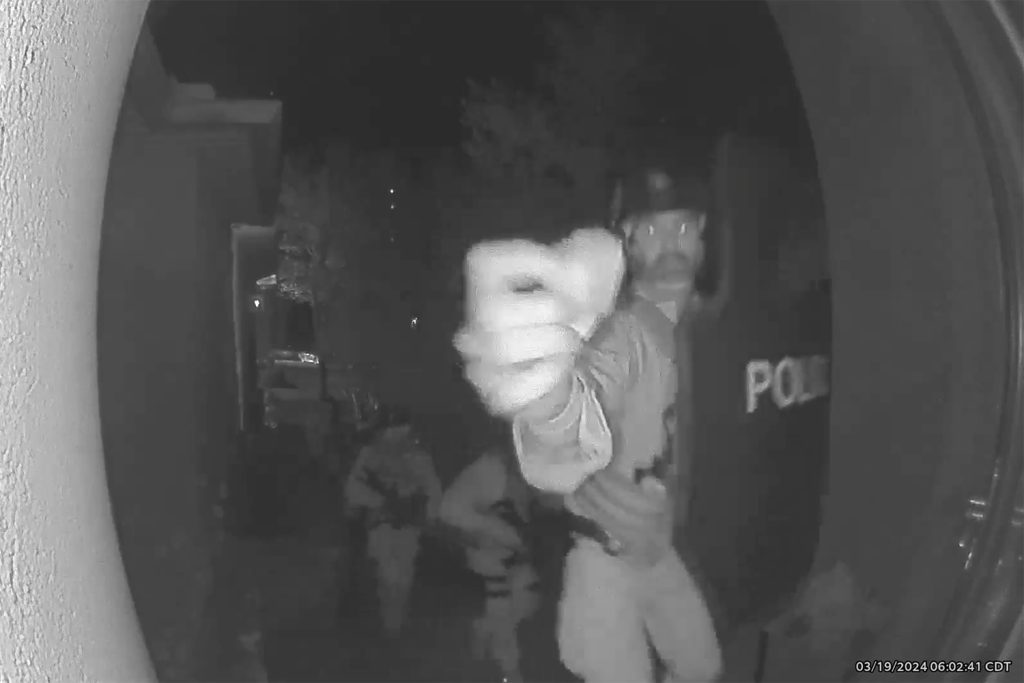
There is a long list of safer ways agents could have entered Malinowski’s home.
- Agents could have visited him at work. Malinowski’s office was inside the airport’s gun-free zone. They could have sat down in his office and shown him their search warrant and then taken him home.
- Agents could have stopped his vehicle, shown him their paperwork and taken him directly home.
- Agents could have knocked on his front door during daylight hours, shown him the warrant and ordered him to comply.
- Agents could have surrounded his home and called him on the phone, ordering him and his wife to come outside to meet them.
- Agents could have entered Malinowski’s residence when he wasn’t home. Uniformed Little Rock police officers, who were also present during the raid, could have met him outside when he arrived.
Instead, agents chose the most dangerous method of serving their search warrant. It should be noted they had no arrest warrant for either Malinowski or his wife, just a search warrant for their home.
Search warrants that need an early morning high-risk dynamic entry are designed to get inside quickly before the suspects can destroy evidence, most often drugs, which can be flushed in a toilet. They are meant to be used against suspects who are armed and likely hostile toward law enforcement. Malinowski had no way to rid himself of any firearms, and neither he nor his wife had ever been hostile toward law enforcement.
The biggest problem with these types of high-speed warrants is whether the homeowner knows the agents are law enforcement and not criminals, as Malinowski suspected.
This is why Malinowski falsely believed that criminals had broken into his home:
“On the morning of March 19, 2024, the ATF agents and TFOs on the entry team were all similarly dressed. They wore dark blue long-sleeved shirts, and any law enforcement insignia or identification on the front and back of their shirts were mostly or completely covered by their bullet proof vests,” the complaint states. “Any markings on the front of agents’ vests that could have identified them as law enforcement were obscured by equipment strung across the chest and by the agents’ arms and rifles, which were held in front of their bodies.”
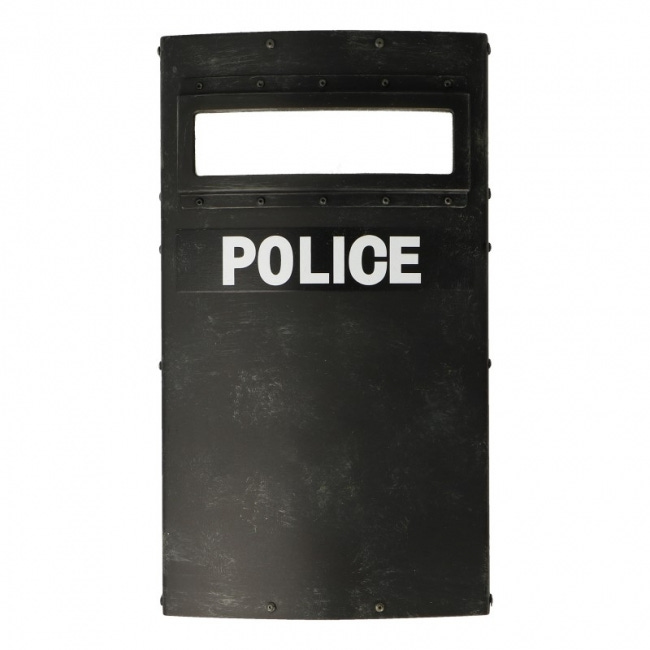
The agents’ Body Bunker, a ballistic shield that was marked “POLICE,” was left outside. ATF agents entered Malinowski’s home completely unidentifiable as law enforcement officers.
“The agents’ clothing and equipment failed to present any identifying words, emblems, or markings on their shoulders or sides,” the complaint states. “Any identification, if it was not otherwise obscured, was not visible to any person standing to the left or right of the agents.”
Agents did not use other methods to properly identify themselves:
- Local police “chirped” one of their squad car’s sirens prior to the entry. However, even task force members who were outside the home testified they hadn’t heard the siren.
- Agents only knocked on Malinowski’s front door for 19 seconds, which was not enough time for him or his wife to awake, respond and answer the door.
- ATF Agent Adam Bass covered a video camera lens, part of a video doorbell system located outside the home’s front door, with tape prior to the raid. The Malinowskis could have seen the agents on their monitor, which was in their bedroom.
- ATF agents never called Malinowski’s phone to identify themselves prior to entry.
- Once inside, the agents never yelled that they were law enforcement.
Instead of yelling “POLICE” or “SEARCH WARRANT,” agents were flustered by the home’s two sets of front doors.
“I think we were unprepared for the French doors,” ATF Agent Matthew Sprinkles told investigators later.
The agents’ mistakes continued after Malinowski was shot
Bryan and Maer’s bedroom was located in the back of their 2,700-square foot home.

Hearing the pounding on his front doors, Malinowski armed himself with a handgun and went to investigate. He mistakenly believed the ATF agents were criminals.
“Bryan had no reason to believe that the people who breached his front door were part of a team of federal agents. He had no idea that federal agents had been following him, investigating his firearms sales, or looking into his paperwork and transactions much less that they had secured a warrant or would be executing it at his home more than an hour before sunrise,” the complaint states. “Believing they were intruders, Bryan fired his gun at the floor and hit one of the agents in the boot sole.”
Agent Cowart shot Malinowski in the head with his AR-15 just 48 seconds after agents approached the home’s front door.
Not a single agent rendered any aid to Malinowski, who could be heard struggling to breathe while lying on his side.
Malinowski died in the hospital two days later.
The ATF has taken no action against any of the agents involved in his killing.
The Second Amendment Foundation’s Investigative Journalism Project wouldn’t be possible without you. Click here to make a tax deductible donation to support pro-gun stories like this.
This story is part of the Second Amendment Foundation’s Investigative Journalism Project and is published here with their permission.
One of the things about using a firearm in self defense that’s applied to gun owners is that you may not create the situation under which you are prompted to use deadly force. If you do and the person you shoot dies – its a murder charge for you. That doesn’t just apply to civilians, it applies to law enforcement too only law enforcement can claim ‘qualified immunity’ if it was genuinely in the line of duty
The ATF thugs entry and presence looked just like a criminal home invasion in the dark. You can call it ‘mistakes’ they made, that’s being kind – but they had always planned to do such an entry and did, and screwed it up so badly – they never should have planned for that and had plenty of other opportunity without it – Joe Biden had already raised law abiding gun owners to the level of criminals in his false and lying rhetoric and I have no doubt a lot of the ATF thought the same thing …. and without any identification markings at all showing and not even yelling out they were law enforcement in some manner – they entered in the dark and it looked exactly like a criminal home invasion, they created the condition that caused Byran to come to defense of his wife and himself and the ATF shot him. They created the condition under which they were prompted to use deadly force. The only reason they are not being tried for murder is they can claim ‘qualified immunity’ as it was in the line of this very wrong and thuggish tyranny ‘soviet era KGB looking’ tactic confused and poorly planned and executed ‘duty’.
They murdered Bryan Malinowski, an innocent man who had not committed any crime.