

Bryan Keith Malinowski excelled at business deals and brought millions of dollars in upgrades to Little Rock’s Clinton National Airport, according to his obituary. ATF Agent Tyler Cowart shot Malinowski in the head last year. He died two days later. Malinowski was 53 years old.
His widow, Maer Malinowski, recently filed a wrongful death lawsuit against the ATF and its agents. The suit is damning, almost beyond belief. None of the Justice Department officials involved were willing to discuss it. Assistant U.S. Attorney Lindsey Mitcham Lorence, who is defending the ATF in the lawsuit, was unwilling to talk Wednesday morning.
“I am sorry. I’m not able to discuss that case,” she said. “I’m not authorized to give any comment.” She referred questions to her boss, Jonathan D. Ross, United States Attorney for the Eastern District of Arkansas. Ross, too, declined to comment.
“If you asked to talk to me about any case, my answer is going to be the same: I can’t talk about ongoing litigation, generally,” Ross said. “We don’t comment on pending litigation.”
Assistant U.S. Attorney Anna-Drake Stephens, from the Justice Department’s constitutional and specialized torts division in Washington D.C., represents all of the individual defendants—ATF Agents and their task force officers. Stephens, too, was not willing to discuss the case when contacted Wednesday morning. “Can I call you back later?” Stephens asked. “Now’s not really a good time.”
She did not call back.
Author’s note: What follows is a more readable version of Maer Malinowski’s complaint, which has been scrubbed of the legalese. It tells the story of Malinowski’s killing by ATF agents far better than any other document. It also shows the numerous and deadly mistakes committed by the ATF—none of whom were ever charged with a crime.
Click here to view the original, unredacted complaint.

Malinowski v. USA et al.
Bryan Malinowski was a lifelong collector. As a child he started collecting coins, a hobby he carried into his adulthood. Several years ago, his father handed him down his gun collection, which sparked Bryan’s interest in firearms. He became a gun collector and hobbyist. In March, 2024, federal regulations did not require an individual seller to hold a federal firearms license as a dealer in firearms unless that individual’s principal objective in selling firearms was livelihood and profit.
At the time of his death, Bryan Malinowski was the highest paid city employee in Little Rock as the Executive Director of the Little Rock Airport, where he earned an annual salary of more than $260,000.
Malinowki did not believe that by selling at gun shows he was engaging in conduct “with the principal objective of livelihood and profit,” and therefore did not believe he needed an FFL to sell firearms at gun shows.
In December, 2023, the ATF opened an investigation and began following Malinowki to and from work and on the weekends, placing a tracker on his car and surveilling his daily activities. During the investigation, at least two agents acting undercover interacted with Bryan at a gun show in Arkansas. Bryan answered one of the undercover agent’s inquiries by noting that he was a private seller, meaning he believed he did not need an FFL.
During their investigation, ATF learned a lot about Malinowki. They knew he worked in a secure environment at the airport, where guns were not allowed. They knew he had lived a law-abiding life with no criminal history, that he lived at home with his wife and two dogs, and that they kept a very regular schedule.
Malinowki had no reason to believe that he was under investigation for violating the law. He never received a letter of inquiry, audit, a personal visit, or a request for information from the ATF, nor did he ever receive a target or subject letter from the DOJ notifying him that he was under investigation.
On March 6, 2024, ATF Special Agent Troy Dillard obtained two federal search warrants, which authorized federal agents to search the Malinowski home and Bryan’s vehicle for firearms, ammunition, electronics, sales records, and correspondence. Importantly, it was not an arrest warrant. Nor did it set forth any facts that would lead any person to believe Mr. Malinowski would evade law enforcement, fail to cooperate, be dangerous, or pose a threat or risk of destroying evidence.
New regulations were not in effect
On April 11, 2024, less than a month after the ATF raid that killed Bryan, the ATF announced a new rule to “close the gun show loophole,” and expand the definition of what it meant to be “engaged in the business” of selling firearms, newly requiring anyone who sells guns at a profit to register as a federally licensed firearms dealer.
Specifically, the new rule revised 27 C.F.R. § 478.11 to change the definition of “engaged in the business” to remove the word “livelihood,” thus reading “with the principal objective of profit.” The law at the time had been “vague, exempting people who occasionally sold guns as a hobby but not spelling out how many sales was too many.”
The new administrative rule aimed to “close the gun show loophole,” a move touted by the then-administration as the most significant increase in U.S. gun regulation in decades. Meanwhile, the change worried law-abiding gun owners nationwide about how the revision would target them as responsible gun owners. The New York Times called the new regulation, which did not go into effect for another month until May 2024, “the broadest expansion of federal background checks in decades” and “likely to face legal challenges.”
In the months preceding his death, even though ATF’s new regulation intended to tighten the definition of a person “engaged in the business of selling firearms” had not yet gone into effect, ATF concluded that Bryan Malinowski had crossed the ambiguously defined line and violated federal law by not holding an FFL.
They decided his suspected infraction was serious enough to warrant a pre-dawn dynamic raid at his home while they knew he and his family would be sleeping.
ATF Develops its Plan, Recognizing Bryan Was Not Dangerous
According to Special Agent Timothy Boles, the Arkansas ATF office is a small one, and “anytime anybody’s running an investigation, the other people know what’s going on.” As lead investigator, Special Agent Troy Dillard drafted and submitted the ATF pperations plan for the execution of the search warrant at the Malinowski home.
The operations plan was approved and signed by Special Agent in Charge (SAC) Clayton Merrill. Nothing in the operations plan indicated Bryan posed a danger to himself or others, or that he was not expected to comply with law enforcement if he knew they were at his door.
The ATF agents, including Agent Boles, knew that Malinowski didn’t pose a threat to their safety or the safety of others during the anticipated execution of the search warrant. Specifically, ATF investigative officers learned during their months-long investigation leading up to Malinowski’s death that he didn’t pose an immediate threat to their safety or the safety of others during the search, that he had no criminal history or history of violence, that Bryan had never threatened law enforcement officers, and that Malinowski’s wife and dogs lived with him and would be present during a pre-dawn search warrant execution at the home.
The agents never observed any person or event, and received no information that would change the circumstances as they understood them at the time Agent Dillard created, and SAC Merrill approved, the operations plan.
According to Special Agent Shannon Hicks, Malinowski was “the last person I would have imagined that we would have been in an armed confrontation with.” According to Special Agent Tyler Cowart, “[w]e thought this would be an easy search warrant and we’d be out of there pretty quick. And [Mr. Malinowski] would cooperate and everything, and it was supposed to be easy.”
There was no indication or belief at any time that evidence would be, or was being, destroyed.
Agents knew Malinowski’s history
Special Agent Dillard documented in the operations plan, and the agents and task force officers were aware, that:
- Bryan Malinowski was the director of the Bill and Hillary Clinton National Airport in Little Rock, Arkansas
- He had no criminal history and no history of violence
- He lived at home with his wife and possibly a small-sized dog
- There were no other known occupants of the home
- Based on data obtained from OPS tracking device that ATF placed on his vehicle, Bryan was not expected to leave for work until approximately 9:00 to 10:00 a.m.
- That Bryan worked in a gun-free zone, an airport
- That Bryan’s home was situated on a 0.6 acre lot located at the end of a cul-de-sac
Based on county records, Malinowski’s home was a large, single-story home, approximately 2,780 square feet with four bedrooms, three full bathrooms, and two half bathrooms. According to Special Agent Adam Bass, it was “a big house.”
There was no indication or belief by law enforcement prior to or during the forced entry that Mr. Malinowski or his wife were a danger to any person or that they would not comply with the agents’ requests or would in any way inhibit the agents’ ability to execute the search warrant.
ATF Plans and Preps for a High-Risk Dynamic Entry
According to Agent Hicks, the vast majority of the search warrants executed by the Arkansas ATF team are dynamic entries. When ATF makes a dynamic entry into a home, they’re usually “dealing with violent armed career criminals and drug dealers … [that’s] the bulk of the types of cases that we work.”
According to the operations plan, if a “reasonable time” passed with no response, the entry team leader would give the command for the team to conduct a “limited penetration.” A “limited penetration” is a type of dynamic entry where an ATF agent carrying the shield enters first. The agent with the shield then stops a foot or two inside the threshold of the door, followed by additional agents visually securing each part of the home visible from the front door threshold. Agents then call out to the occupants.
In the wake of the chaos of ATF’s 1993 raid of the Branch Davidian compound in Waco, Texas, the agency came under significant public criticism and congressional scrutiny for using excessive force in carrying out their enforcement responsibilities. The resulting federal review of ATF’s use of force and operations concluded that a “dynamic entry, which relies on speed and surprise and may involve forced entry, is a preferred tactic during high-risk operations—those where ATF believes that suspects pose a threat of violence or in operations where evidence can be easily destroyed,” and that “a dynamic entry could be planned only after all other tactical options had been considered.”
Additionally, “through the use of dynamic entries in certain high-risk situations, law enforcement agents hope to act so quickly that the suspects do not have time to respond or, at a minimum, give agents the advantage by forcing suspects to react to agent actions rather than the reverse.”
The GAO use-of-force report noted dynamic entries are meant to reduce “the potential for suspects to react to notification of warrant service.”
Additionally, the GAO’s Use of Force report identified several scenarios exemplary of ATF’s dynamic entry when executing a search warrant in “high-risk” scenarios, including the following: An ATF agent knocks and announces ATF’s identify and purpose. If there is no response after a reasonable period and the door is locked or fortified, one or two agents breach the door using a ram or other tool to gain entry to the premise. Teams carrying body bunkers then quickly enter and search the premise to locate suspects and clear the premise of any danger.
This description matches the Arkansas ATF field office’s operations plan for a “limited penetration” in executing its warrant at the Malinowski home. Despite knowing that Bryan did not pose a danger to them and believing that he would cooperate, ATF agents planned for a dynamic entry anyway, approaching the Malinowski home wearing tactical gear, including ballistic vests and tactical helmets.
Most were armed with semi-automatic M4 carbine rifles. They also had 9mm handguns. One agent carried a battering ram, another carried a ballistic shield, and another had a Halligan pry tool.
The agents and TFOs decided to approach the home stealthily and under cover of darkness and planned to cover the home’s video doorbell to obscure their presence. The agents chose to prepare for and execute a dynamic entry despite the Malinowski search warrant execution not posing a threat of violence or evidence destruction.
Agents Call Off March 12, 2024 Raid When Malinowski is Out of Town
Agents had originally prepared to execute the search warrant on March 12, 2024, a week prior to the actual execution and raid on the Malinowski home. Agents, TFOs, and LRPD officers assembled in the pre-dawn hours in the parking lot of a Walmart located at 19301 Cantrell Rd., approximately 1.5 miles from the Malinowski home. They used the Walmart parking lot as a staging congregate before executing the search warrant.
However, a law enforcement officer who was surveilling the Malinowski home notified the search warrant team that he had observed Malinowski leave his home prior to 6:00 a.m., so they didn’t execute the warrant. Malinowski had left his home early that morning to take a flight to Washington, D.C. for work.
Nothing prevented the agents from executing the search warrant that day because Malinowski wasn’t at home when the agents first intended to execute the search warrant, but they aborted. Agents Dillard, Boles, and Merrill decided to delay the execution of the search warrant until they could be assured Malinowski would be present.
The ‘Team’ Assembles and Divides Responsibilities for the Warrant
On March 19, 2024, the team, consisting of a total of thirteen agents, task force officers, and LRPD officers, reassembled in the Walmart parking lot in preparation for executing the search warrant on the Malinowski home.
Special Agent Merrill was the Resident Agent in Charge (RAC) of the Little Rock Field Office. He was responsible for supervising all criminal investigations at the Little Rock field office and he supervised Agent Dillard’s investigation of Malinowski. On the morning of March 19, 2024, Agent Merrill served as the on-scene commander, and he formed part of the front perimeter with LRPD Officer Steve Woodall.
Special Agent Timothy Boles was the entry team leader responsible for deciding when to initiate the knock-and-announce procedure, for ensuring that it would be conducted lawfully in compliance with the Constitution and applicable statutes, and for assigning roles and responsibilities for the team of agents forcing entry into the Malinowski home. Agent Boles ordered the initiation of the knock procedures, ordered the entry team to break the doors to the home, and ordered his agents to enter the home after they hesitated.
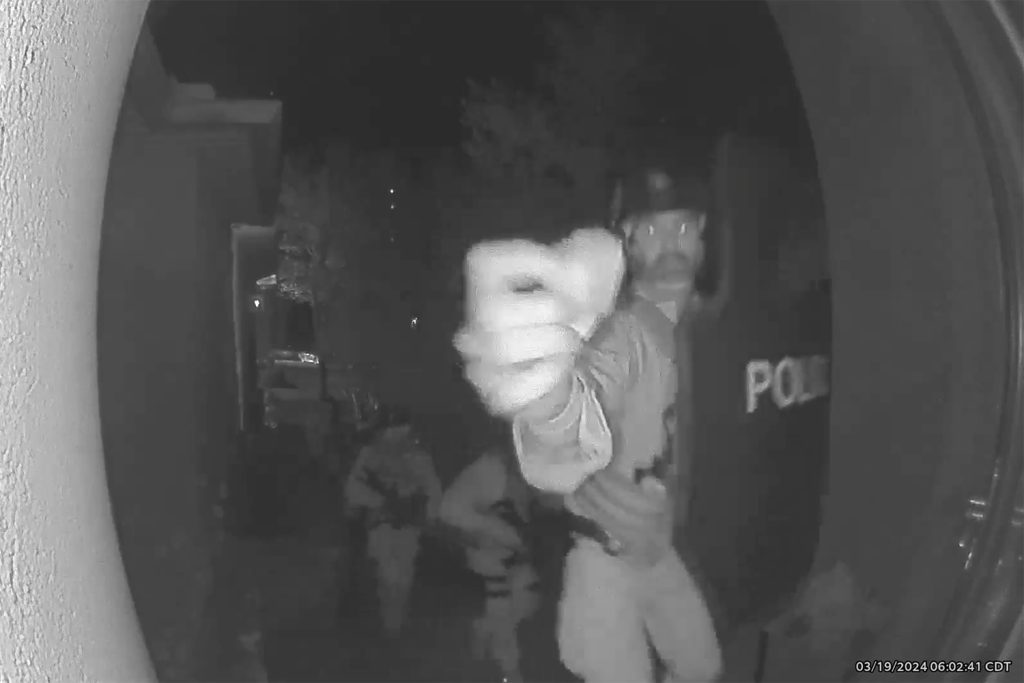
ATF Agent Adam Bass was the first agent in the entry team “stack” as it approached the Malinowski front porch. He placed tape over the video doorbell at the front door of the home, preventing any occupant from observing their presence—a practice commonly used in high-risk, dynamic entries where surprise and concealment are the goal.
Bass was the agent who carried the ballistic shield and discarded it on the front porch of the home before the agents breached the front doors. In the event of a forced entry, he was supposed to be first in the home, leading the team with his shield emblazoned with “POLICE” across the front. Agent Bass and the shield never made it into the home before agents shot and killed Malinowski.
ATF Agent Matthew Sprinkles was responsible for conducting the knock-and-announce procedure. Based on the operations plan, Sprinkles was supposed to be the second agent to enter the home, which would have placed him behind Bass with the shield. Instead, he entered first amid the disorganization and hesitation pursuant to Agent Boles’ order.
Agent Tyler Cowart was a member of the entry team, and in the event of a forced entry, he was responsible for using a Halligan pry tool to force open the French-style glass storm doors protecting the main wooden doors on the front porch. Cowart expected to be approximately the fourth agent to enter the home during a forced entry, but unexpectedly found himself as the second agent to enter.
Task Force Officer Michael Gibbons was assigned to carry the ram, which, in the event of a forced entry, would be used to break down the front, wooden doors of the home. Agent Troy Dillard, who was the agent in charge of the investigation, was also a member of the entry team. He was positioned near the back of the “stack” as it approached the Malinowski home. Task Force Officer Chris Griggs was the final member of the seven man entry team. Agents Shannon Hicks and Amy Ness walked around to the back of the home and formed the rear perimeter.
Several Little Rock Police Department officers assisted the ATF. Officer Steve Woodall was originally assigned to be on the entry team, but based on the recommendation of his supervisor at LRPD, was taken off the entry team and stood with RAC Merrill as part of the front perimeter.
LRPD Officer Olen Lakey parked in front of the home, facing a neighbor’s house. Upon Agent Boles’ command to initiate, Officer Lakey turned on his flashing lights and bumped his car’s siren for approximately 1.5 seconds. LRPD Officer Clint Williams parked his vehicle at the top of the cul-de-sac and was responsible for keeping any non-law enforcement personnel from entering the area.
According to the operations plan, all agents, TFOs, and LRPD officers had the authority to abort the warrant execution.
None of the Agents, TFOs, or LRPD Officers Wore or Activated Their Body Cameras
None of the agents wore body cameras, despite a three-year-old policy initiated by the prior administration that mandated ATF agents wear and activate body-worn cameras when executing search warrants. None of the officers on the scene who were equipped with body cameras activated theirs either, despite a 2022 policy that called for all TFOs detailed to the ATF to wear body-worn cameras when engaged in federal law enforcement operations.
None of the LRPD uniformed officers manually activated their body cameras, despite LRPD’s General Order 316, dated December 27, 2022, that LRPD officers “must activate his or her MVR [mobile video recording]/BWC [body worn camera]” during “the execution of search warrants … [and] forced entries … ” and continue recording until the event has concluded.
Despite the lack of video, an audio record exists. When LRPD Officer Lakey initiated his lights and bumped his siren, his MVR and the audio from his BWC-by design-automatically started recording.
The Agents’ and TFOs’ Clothing Didn’t Identify Them From the Side
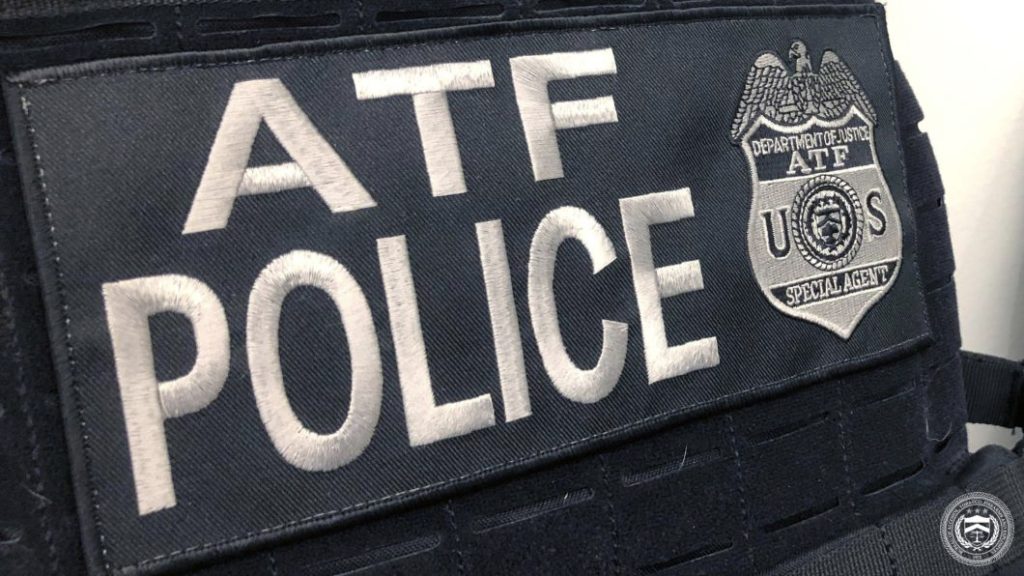
On the morning of the raid, the ATF agents and TFOs on the entry team were all similarly dressed. They wore dark blue long-sleeved shirts, and any law enforcement insignia or identification on the front and back of their shirts were mostly or completely covered by their bulletproof vests. Any markings on the front of agents’ vests that could have identified them as law enforcement were obscured by equipment strung across the chest and by the agents’ arms and rifles, which were held in front of their bodies.
Two agents wore tactical helmets without identifying insignias. The shield that Agent Bass carried was the largest, most obvious, and only unobscured method of identifying the agents as law enforcement because of the large “POLICE” lettering on its front. Additionally, the ballistic shield, in and of itself, is an indication of law enforcement presence because, due to its size and weight, it’s impractical and uncommon for private citizens to possess one.
However, as noted in the Complaint, the entry team fell into disarray and the shield never made it into the home before Malinowski was shot in the head. The agents’ clothing and equipment failed to present any identifying words, emblems, or markings on their shoulders or sides. Any identification, if it wasn’t otherwise obscured, was not visible to any person standing to the left or right of the agents.
The Agents Arrived in Darkness to a Quiet Home
When the agents arrived at the Malinowski home before sunrise on March 19, 2024, their ten-vehicle caravan occupied the entirety of the cul-de-sac on Durance Court. It was still completely dark outside when agents arrived before 6:00 a.m.
Agents, TFOs, and officers didn’t encounter any person or observe any indication that someone was alerted to their presence. Nothing occurred prior to or during the officers’ presence outside the home that presented a danger to agents or caused alarm. There was no cause for the entry team to deviate from the constitutional and statutory requirement to knock and announce their identity and purpose and to wait a reasonable amount of time so they could be granted entry.
While staged in the cul-de-sac before approaching the home, the agents formed a line or “stack” consisting of seven agents and task force officers. The agents maintained their stacked formation as they traversed the cobblestoned pathway from the cul-de-sac to the eight steps leading to the front entry landing and front doors of the home.
The Malinowski front entry consisted of two sets of doors; a set of French-style, glass stone doors and the two large wooden main doors behind them. As they did every night, the Malinowskis had locked the doors before they went to bed the prior evening and set the security system. Both sets of doors remained locked at 6:00 a.m. on the morning of the raid.
The Agents Hurriedly Knock and Failed to Clearly Announce
The entry team was aware, or at least expected, that the Malinowski home had a video doorbell at the front door. As agents approached the front door of the home, the first agent in the stack, Agent Bass, placed a piece of painter’s tape over the video doorbell camera, which was positioned just to the right of the front doors. This action disabled the camera and concealed the presence and identity of the armed team on the front porch.
When all agents were in place and the video doorbell taped, Agent Boles gave the command to initiate the knock and announce procedure. The agents never rang the doorbell. Despite having Malinowski’s phone number and noting it in their operations plan, no one called to notify him of their presence. No officer or agent attempted to announce their presence by using an electronic public announcement system, though the operations plan provided that a PA system would be used to announce their presence.
Agents Fail to Wait a Reasonable Time Before Breaching the Door and Fatally Shooting Malinowski
At 6:02:58 a.m. on March 19, 2024, Agent Boles gave the command to “initiate.” Little Rock Officer Lakey activated his vehicle’s lights and sirens and then shut off the siren after one and a half (1.5) seconds. According to ATF Agent Matt Sprinkles, the LRPD officer simply “chirped the siren a few times.” According to Special Agent Hicks, Officer Lakey performed this task “exactly like we asked him to do.”
After the siren was silenced, the blue flashing lights remained active, but neither the Malinowskis nor any neighbors in the Durance Court cul-de-sac saw the lights or heard the brief bump of the siren. In the subsequent investigation by the Arkansas State Police, special agents Justin Harmon and Jimmy Collins contacted residents of two homes on the cul-de-sac, and all stated that, although home in the pre-dawn hours, they did not hear any sirens or see the police lights. They slept through it. Arkansas State Police Major Stacie Rhoads also testified to this fact in front of an Arkansas Senate Judiciary Committee on September 30, 2024.
After the command to “initiate” from Commander Boles, Agent Sprinkles began shouting and knocking on the glass of the Malinowski’s outer storm doors. Agent Amy Ness, posted in the backyard of the home, later reported to the Arkansas State Police investigator that she could not hear any knocking or announcing from the backyard.
Agent Sprinkles then paused his knocking for four seconds, before knocking on the glass outer doors a final time. In total, the knocking on the Malinowskis’ outer glass doors lasted approximately nineteen seconds, from 6:02:58 a.m. to 6:03:17 a.m. It was still dark outside, approximately an hour and ten minutes before sunrise. At this point, the entry team ceased its knocking and shouting.
After 28 Seconds, Agents Began Forcing Their Way into the Malinowski Home
Entry team leader Agent Boles stated in his interview with the Arkansas State Police that while he could see through the angled plantation shutters into the home, he didn’t see any lights turn on and didn’t observe any movement or hear any noises or voices coming from inside the home. Boles told the Arkansas State Police that “I’ve got a clock in my head. It’s like we’re out here; we’re exposed. Um, so I told them, go ahead and breach the door.”
Boles did not check his watch or keep track of the time on a watch or other device to measure how many seconds or minutes elapsed between the end of Agent Sprinkles’ knocking and his decision to breach the home. Despite no objective indication that the entry team, as they stood on the front porch, was in any danger, and despite no belief that the evidence inside to be seized through the warrant was being disposed of, or any other exigency, Agent Boles ordered the team to breach the home.
In less than twenty-eight seconds from the time that Officer Lakey initiated the siren bump, Boles ordered his agents to break the glass doors, breach the wooden doors, and enter the Malinowski home by force. Boles claimed that once he gave the command, “it was not a quick process” because “they had to get the Halligan out,” the pry tool they used to break open the glass storm doors.
After Agent Cowart breached the glass storm doors, TFO Gibbons used a ram to batter the wooden front doors of the Malinowski home, causing them to burst open with a loud bang after a single strike. This strike breaching the main doors occurred at 6:03:35 a.m., followed by the clatter of the ram as TFO Gibbons dropped it onto the porch.
The Entry Team Falls into Disarray
When forced entry is made and doors are rammed open, it’s protocol at the Arkansas ATF office that agents automatically enter the home and execute a “limited penetration.” When executing a limited penetration, the person carrying the shield enters first. But in the process of breaking both sets of doors, the entry team became disorganized. According to Agent Sprinkles, “I think we were unprepared for the French doors.”
When the main wooden doors were rammed open by TFO Gibbons, Agent Sprinkles unexpectedly found himself at the front of the entry stack. As Agent Sprinkles recalled to investigators, “I wasn’t supposed to be the first entry.” Agent Sprinkles stood still waiting for Agent Bass, who carried the shield, to enter the home first.
As previously stated, while the operations plan had called for Agent Bass to enter first utilizing the shield with large letters identifying the agents as POLICE, Bass discarded the shield near the front doors and never entered with it. Later, Agent Amy Ness told Arkansas State Police investigators that after the raid, the shield was blocking the entryway of the house, and that she “cleared the doorway of the shield for medics to come in” the house, moving it out of the way so no one tripped on it.
Entry team leader Boles failed to heed the signs that his team had fallen into disarray. According to Agent Boles, “There was a brief hesitation [when the door opened], which I was surprised because with our package, once the door comes open, you go in. It was a split second, like that. And I said, ‘go.’ And then I don’t know, you know. All I can see is black ATF agent stuff in front of me.”
Two Agents Enter the Home with Guns Drawn
Upon the “Go” command from Agent Boles, Agent Sprinkles entered the home with his semi-automatic rifle drawn. Sprinkles had ceased knocking and shouting twenty seconds earlier at 6:03:17 a.m., yet as the agents pried open the glass doors and rammed into the wooden doors to breach the home, they were silent. No one announced their identity or purpose once the doors burst open. As Agent Cowart, the second one through the door, recounted, there were no voice commands given as agents breached the door into the Malinowskis’ entryway.
“I didn’t say anything,” Cowart recalled to state police investigators, and all he recalled Agent Sprinkles (the first agent in) saying once inside was “Oh shit.” Bryan Malinowski stood approximately thirty feet from the front main doors, directly to Agent Sprinkles’ left.
The ATF and TFO agents, including Agent Sprinkles and Cowart, were dressed in dark tactical gear with no lettering, insignia, or badge on the shoulder or sides of their clothing to identify themselves from the side. Neither the POLICE shield nor Agent Bass made it into the home before Agent Cowart shot Bryan Malinowski in the head.
Bryan Malinowski Heard the Sound of Intruders and Acted to Defend Himself and His Wife
Malinowski and his wife Maer, in bed in their room at the back of the house, never heard the police siren or any voices at their door. Upon hearing loud banging at their front door and someone trying to get inside, he scrambled out of bed. Their bedroom sat in the northwest corner of the house, down a hallway, past his home office, and a considerable distance from the home’s entryway.
Malinowski quickly grabbed a handgun from the top drawer of his bedside table and went into the closet to retrieve a magazine. Mindful of his wife’s safety, he motioned for his wife to stay back, pushing her down and out of the doorway.
Malinowski left the bedroom and moved approximately six to seven feet down a short side hallway to gain a view of the intruders coming through his front doors. Unbeknownst to him, Maer refused to stay in the bedroom and followed him down the short hallway.
Malinowski believed intruders were breaking into his home, and he was going to defend himself, his wife, and his home from the intruders. From his vantage point about thirty feet away down the dark hallway, there was no clothing or gear on the intruder that would have identified him as a law enforcement officer. Malinowski had no reason to believe that the people who breached his front door were part of a team of federal agents. He had no idea that agents had been following him, investigating his firearms sales, or looking into his paperwork and transactions much less that they had secured a warrant or would be executing it at his home more than an hour before sunrise.
Believing they were intruders, Malinowski fired his gun at the floor and hit one of the agents in the boot sole. Agent Cowart, who entered second in the stack directly behind Agent Sprinkle, returned fire, pointing his rifle at Malinowski’s head and pulling the trigger several times.
At 6:03:43 a.m., just 48 seconds after agents first approached his door to cover his doorbell, Bryan Malinowski lay bleeding on the floor of his hallway, shot in the head. Several ATF agents and task force officers who subsequently entered the Malinowski home noted that although Malinowski l on the floor with a gunshot wound to the head, they could hear him struggling to breathe, yet offered no medical assistance because of the nature and extent of the bullet wound.
The Arkansas State Police were notified about the officer-involved shooting and responded to the Malinowski home to conduct their investigation. Agent Bass noted in his subsequent interview to State Police investigators that it takes “a while” to wake people up at that hour, telling investigators that after Malinowski was shot and killed, it took some time for State Police to arrive, such that they all “stood around outside for quite a while” because “it is 6:00, 6:30 in the morning at that point, so it takes a while to get everybody woke up.”
Agents, TFOs, and Officers Detain Maer Malinowski in a Patrol Vehicle as She Begs to be Released
Maer Malinowski, who had not followed her husband’s directive to stay back in their bedroom, had instead followed him into the hallway. She watched helplessly as her husband was shot in the head just inches from her. She stood by his body, screaming and crying, horrified to be covered with his blood. Frozen in horror after and realizing the intruders had fatally wounded her husband, Maer saw several dark figures at the entryway.
The men pointed their rifles at her and yelled at her to show them her hands. It was only then that she realized they were law enforcement agents. The agents then ordered Maer to step over her husband’s limp body and allow them to secure her. They then escorted her to the back of an LRPD cruiser, where she was held for the next several hours with no updates on her husband’s condition.
ATF agents placed Maer in the back of the LRPD patrol vehicle at approximately 6:07 a.m. She sat cold in the vehicle (the temperature in Little Rock, Arkansas was approximately thirty-four degrees) without any covering until she was provided a blanket at approximately 6:51 a.m. Even after receiving the blanket, she was still cold.
Maer repeatedly told the officers that she needed her clothes and medicine and to check on her dogs, and that she needed to use the bathroom. LRPD Officer Lakey and ATF agents denied Maer’s requests to ride to the hospital in the ambulance with her husband.
The audio from Officer Lakey’s dash camera revealed Maer’s desperation during those first few frantic moments. Less than ten minutes after the shooting, LRPD audio captured Maer recounting to the officers detaining her, what had happened:
This is … This is a movie. It’s a movie. We didn’t do anything wrong. We don’t, we don’t- you got…you got the wrong house. Oh, you guys got the wrong house. We don’t do anything wrong. We’re honest people? Oh my God. Oh my God. Oh my God. Oh my god! Oh! Oh! Oh, no. This is no time for God. This is a nightmare. When they shot my husband, I opened the door from the bedroom because he closed it. We thought it was an intruder. So, I opened the door, he closed it, and then I opened it again. That’s when they- he got shot.
Nearly an hour later, Maer continued begging to be released, but officers ignored her hysterical cries and denied her requests to be let out of the squad car:
Hear me out. Let me out! Let me out! Please hear me out. Don’t. I need; I need to go [unintelligible]. I need to … Oh my love, oh my love. Oh Bryan. Oh Bryan. You need to come [unintelligible]. You need to come. I don’t know … l don’t know what to do without him. God, I don’t know what to do. Guide me, God. Guide me, God. Guide me. Guide me, God, please. I don’t know what to do. I don’t know what to do, God. I don’t know what to do. Oh God. I don’t know what to do, God. I can’t- I don’t know what to do. Help me! Help me!
They denied her requests for clothes. They denied her requests for medicine. They denied her requests to go check on her dogs, assuring her that they were in the house and accounted for. (Later, she spotted one of her dogs who had escaped and was lost nearly a mile away roaming in the neighborhood near a busy four-lane road.) They denied her requests to use the bathroom at her neighbor’s home.
They held her for hours while she cried hysterically, repeatedly asking for an explanation. At approximately 7:20 am., ATF relented to her requests to use the bathroom. Agents and officers decided that Maer could use the restroom at a nearby fire station. However, they kept her in custody.
Officer Harris with LRPD arrived at the Malinowski home around 7:20am. She was equipped with a body camera and dash camera, and she activated both. Officer Harris drove Maer to a nearby Little Rock Fire Department station nearly three miles from her home.
At the fire station, Officer Harris left Maer in the back seat of the police patrol vehicle while she first contacted a firefighter at the front door. Officer Harris notified the firefighter that she had “a prisoner” that needed to use the restroom because “her whole house is a crime scene.”
Maer Malinowski was still bare-footed and clad only in a tank top and boxers. Maer pulled the blanket over her shoulders to cover her body and legs as she entered the fire station. Officer Harris told one of the firefighters that Maer “barely had any clothes on.” When Maer walked into the fire station, one man held the door for her and Officer Harris. Three other men and a woman stood near the bathroom staring at Maer as she walked through the front door and into the bathroom.
When Maer entered the bathroom, Officer Harris entered with her, exclaiming, “I have to go in there with you.” Officer Harris did not disable her body camera while Maer used the restroom in front of her, and her body-worn camera captured the audio of Maer using the bathroom. That audio was later produced as part of the body camera footage in response to a FOIA request.
Officer Harris then escorted Maer to the back seat of the patrol vehicle and drove her back to her cul-de-sac, where Maer remained in custody until after she provided an interview to the State Police.
For more than three hours after her husband was shot, Maer Malinowski was held in custody by LRPD officers at the direction of ATF agents. At approximately 9:15 a.m., agents turned Maer over to the Arkansas State Police so that they could interview her.
For several hours after Bryan was shot, the Malinowski home was secured, but not searched. During this time, ATF decided the Arkansas ATF team involved in that morning’s raid would not conduct the search warrant. SAC Merrill contacted the ATF office in Mississippi, which sent its agents to Little Rock to search the Malinowski home.
Additionally, the Arkansas State Police obtained a search warrant for the home as part of their officer-involved shooting investigation. The State Police didn’t turn over the Malinowski home to the ATF and RAC Merrill until 1:53 p.m. on March 19, 2024. ATF agents didn’t begin to search the Malinowski home pursuant to the original warrant until after it was turned over to them that afternoon.
Bryan Malinowski Succumbs to His Wound and is Pronounced Dead on March 21, 2024
Bryan Malinowski was taken to Baptist Medical Center in Little Rock, Arkansas. Maer Malinowski, finally released by officers several hours later, arrived at the hospital to find her husband in such dire condition that her family friend and neighbor told her not to go in the room to see him. He received Last Rites by the family’s priest at Maer’s request.
Despite medical efforts, Malinowski succumbed to his injuries two days later and was officially pronounced dead on March 21, 2024. He was 53. In accordance with his wishes, five of his organs, including his liver and lungs, were retrieved and donated to save the lives of others.
Maer Malinowski has been in continuous counseling since the event.
The Second Amendment Foundation’s Investigative Journalism Project wouldn’t be possible without you. Click here to make a tax deductible donation to support pro-gun stories like this.
This story is part of the Second Amendment Foundation’s Investigative Journalism Project and is published here with their permission.
They could’ve avoided the madness of French doors if they just had a local cop pull him over on his way to work in the AM.
Somehow that was too dangerous, difficult or extreme so they went with the more measured and responsible approach that we see here.
Cuts are not enough. This circus of gun-toting chimps has gone on far too long and needs to end.
They had always wanted to do that entry, they never planned otherwise – they were always intending to use a deadly force entry – guns drawn, busting though a door, and being ready to shoot and never planned for other than this horror show murderous entry. They had plenty of chances to serve this ‘fishing expedition’ search warrant without resorting to such.
Nothing prevented the agents from executing the search warrant that day because Malinowski wasn’t at home when the agents first intended to execute the search warrant, but they aborted.
Obviously, they were after Bryan. All their actions that day were intended to provoke an armed self-defense response from him so they could justify executing him. I am 83 years old and this is no longer the United States of America that I grew up in.
This raid is so sick and incompetent that it makes one wonder why these criminals are not incarcerated. Forget qualified immunity, they all need prison sentences, especially the leader, who must get life behind bars. The treatment of the widow defies imagination.
Authors definition of botched differs greatly from mine and Websters.
Not botched, exactly as planned. Persecute and execute a citizen to set an example for the other peasants.
It looked exactly like a criminal home invasion by criminal thugs. No identifying marking seen, none of this ‘Police ! Police!” type yelling identifications upon entry.
I have a person I know on the Little Rock PD. He was there, he said he never heard any announcement of being law enforcement when ATF entered. He told me there was just this confused ‘criminal thug home invasion’ type entry rhen shots. They created the condition forcing Bryan to act in defense against what looked exactly like and was a ‘criminal thug home invasion’. One of the very things the law requires is that we as firearm owners can not do something that creates the condition under which we use deadly force, if we do then its a murder charge for us if the person dies. That same law apples to law enforcement even if federal, but they have an advantage and can claim Qualified Immunity no matter how screwed up their approach to a situation is because they were acting in the line of duty so for the ATF here its ‘justified use of force’.
Its murder.
The ATF murdered an innocent law abiding man, had not committed any crime, and they brutally terrorized his wife after murdering her husband.
It’s even worse than I thought. Remember all the energy Miner put in to defend the ATF when this happened?
Oh yeah, Miner49er put a lot of energy into defending the ATF in this.
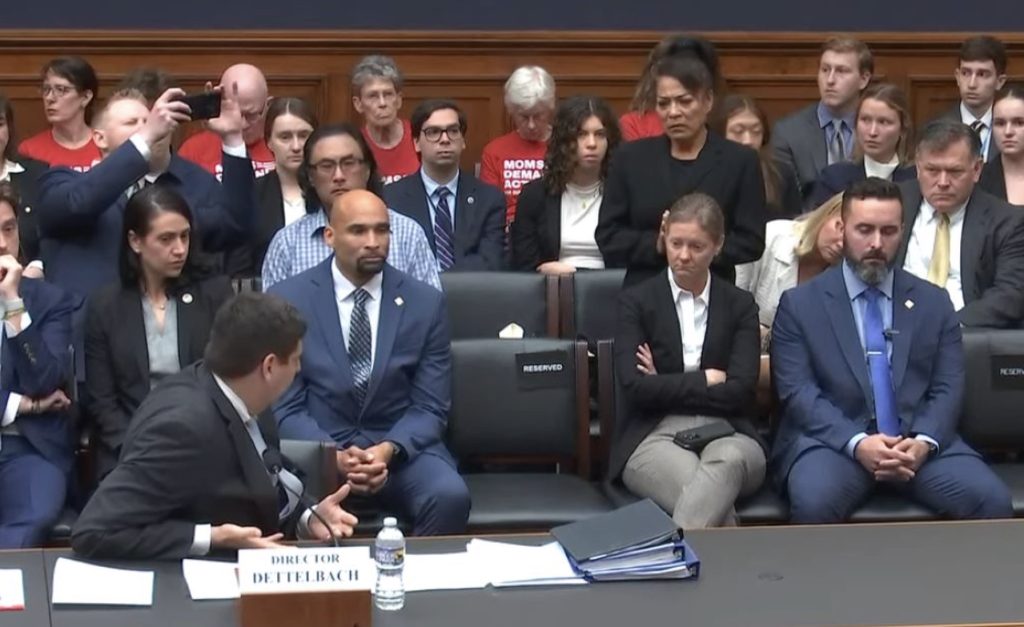
“Former ATF Director Steve Dettelbach apologizes to Bryan Malinowski’s widow during a congressional hearing. ”
She’s standing, and the best me can do is twist around in his seat to mutter at her in that Dettelbach almost-stutter voice with a ‘oh yeah, well too bad but lets get this over quick’ attitude for an ‘apology’. At a minimum that man needed to be on his knees begging her for forgiveness, then end his own life. Hes a monster. He was there testifying after this happened … he knew how screwed up this raid was, he knew it wasn’t necessary, he knew this happened because ATF created their own ‘defacto law’ by self-interpretation to use in that, he knew there was no probable cause, he knew it was wrong, he knew they had killed an innocent man …he knew yet he does his usual Dettelbach shuffle trying to defend the ATF.
She knew that he knew – she was there, she knew what happened and she knew he did too. I can’t begin to imagine the rage and anger she felt at that moment.
Had that been my wife and he did that she would have been all over him trying her best to actually rip his body organs out, and at the very minimum he would have spent the rest of his life in a bed drooling to never walk or speak again.
correction for “She’s standing, and the best me can do…”
should have been…
She’s standing, and the best he can do…
(wish we had an edit function here)
Why are action demanding moms there? In support of the ATF?
Part of the left wing death cult.
They have never condemned the very obvious abuse of power and tyranny in the actions of the ATF for this.
They scream their false stuff about how ‘gun violence’ is the fault of legal and responsible gun owners – yet here is a Biden admin agency blatantly grating its self power, making up their own de-facto law by self-interpretation and rule making with not one bit of it being in a law passed by congress, using abusive and terrorizing deadly force to serve a ‘fishing expedition’ warrant with an unauthorized procedure and violating their own ‘policy’s’ – using ‘gun violence’ to kill an innocent man.
So what are they doing there? They are there to (metaphorically) ‘dance in the blood of the innocent’ once again to show support for the very tyranny they supported and helped being about.
correction for: “…helped being about”
should have been
… helped bring about
And… while Joe Biden was intentionally circumventing congress authority and violating immigration law thus a ‘millions count’ criminal himself, invading the country with millions of illegal aliens that were actually criminals because they violated law to enter – among these illegal aliens were murderers and rapist and terrorists and child predators and drug dealers and gun runners and thieves and violent gang members that continued their criminal ways and put their monstrous heinous skills to work here in the U.S. their new hunting grounds for prey – that Joe Biden turned a blind eye to and even had his ATF ignore their illegal gun possessions and gun running operations ’cause a spelling error on an form at an FFL was the most dangerous thing in the world that deserved zero tolerance’, and while Joe Biden was (metaphorically) ‘finger banging’ Moms Demand Action and the other gun control groups to make them feel good with his threatening to use the military against innocent America gun owners and basically giving them their own little ‘office of tyranny’ called the ‘white house office of gun violence prevention’ they were so much in charge of and visited so much that they should have changed their HQ mailing address to ‘1600 Pennsylvania Ave’, and diverting American tax payer money through his USAID money laundering operation and by bills to fund the gun control groups attacks on innocent American gun owners, Joe Biden decided ‘hmmmm lets wage more war on innocent American citizens gun owners’ and let the ATF create defacto law and kill and terrorize innocent American citizens and the ATF started terrorizing and killing or threatening to kill innocent American citizens with basically a ’cause we say so’ and Moms Demand Action and the other gun control groups had (metaphorical) orgasms and cried for more.
That’s what Moms Demand Action is doing there, feeling good and justified in supporting the monster horror show tyranny they helped create.
BIG NEWS: Appropriations Bill SHREDS ATF & Addresses Reciprocity, Brace Rule, & MORE!
https://www.youtube.com/watch?v=JhpmzX0YtBE
MAJOR BREAKING DECISION: FEDERAL APPEALS COURT RULES ON 2A RIGHTS FOR ILLEGAL ALIENS.
The United States Court of Appeals for the 7th Circuit has ruled that illegal aliens do not have 2nd Amendment Rights. Mark Smith, Four Boxes Diner, discusses.
https://www.youtube.com/watch?v=A6tCEak0D1U
Nuclear Air Force Base Invaded By Squirrels.
Minot Air Force Base houses are being attacked by guerrilla squirrels.
https://www.youtube.com/watch?v=qFCN_f4i18M
Anti-ICE Antifa Gunman Fugitive Captured.
https://pjmedia.com/catherinesalgado/2025/07/16/anti-ice-antifa-gunman-fugitive-captured-n4941809
California Dreamin’ …. of a California without Newsom and left wing and communism: California Bill Passes to Grab Palisades Land as Trump Envoy Speaks Out.
https://pjmedia.com/catherinesalgado/2025/07/17/newsom-lied-california-bill-passes-to-grab-palisades-land-as-trump-envoy-speaks-out-n4941845
White House Reveals How Many Illegal Aliens Have Self Deported.
”
…
MAJOR UPDATE: Stephen Miller CONFIRMS that there have been 1 MILLION self-deportations so far.
…”
https://townhall.com/tipsheet/katiepavlich/2025/07/17/white-house-reveals-how-many-illegal-aliens-have-self-deported-n2660509
Left wing trans stupid – again: This Person Thought He Would Burn Down a Local GOP Headquarters – It Didn’t Go As Planned
https://townhall.com/tipsheet/jeff-charles/2025/07/17/man-arrested-for-trying-to-burn-down-local-gop-office-n2660492
‘He’s An Idiot’: New Yorkers Asked About Mamdani, and Their Answers Speak Volumes.
https://redstate.com/katie-jerkovich/2025/07/16/hes-an-idiot-new-yorkers-asked-about-mamdani-and-their-answers-speak-volumes-n2191728
Pediatric sex-change therapies – defunded: HHS To End Medicare/Medicaid Funding for Providers of Pediatric Sex Changes
https://hotair.com/ed-morrissey/2025/07/17/boom-hhs-ends-medicaremedicaid-funding-for-hospitals-performing-pediatric-sex-change-n3804875
Last I remember the warrants were only to be served during daylight hours.
Body cams were mandatory for all involved.
Those facts alone should be cause for them all to loose any form of immunity.
Looks like a home invasion/murder under color of law from where I’m standing.
The ATF needs to be abolished. Trump said he was going to but that will never happen, more bs.
There is a petition circulating asking that the Clinton name be struck from the Little Rock Airport name. I suggest that the airport be renamed for Bryan Malinowski.