

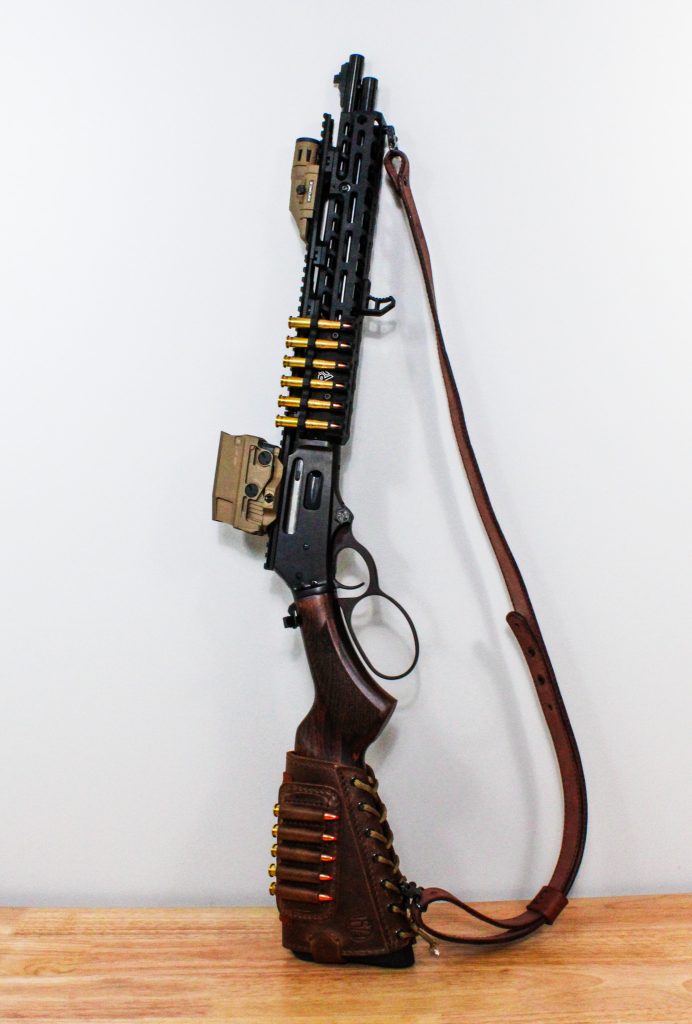
I love lever-action rifles. They are among my favorite types of rifles. And no, I did not grow up during the golden age of Westerns. The images of Steve McQueen, John Wayne, and Henry Fonda were not part of my childhood. Having been born in the early 1990s, I grew up in the waning days of Western films. Regardless, the history and significance of lever-action rifles in our nation’s history have had a profound impact on me. That’s why I’ve always pursued them. However, much has changed since the days of westward expansion. These rifles have taken on a whole new image as they stay popular. Thanks to companies like Rossi, Ranger Point Precision, and 1791 Leatherworks, we can modernize the legendary lever-action rifle to meet today’s needs.
Background
Lever-action rifles have graced the gun cases, passenger seats, and scabbards of hunters, ranchers, and homesteaders for generations. They are uniquely intrinsic to the fabric of our nation, which is why, in 2025, they remain popular today. We are in an era where Winchester is no longer the leading manufacturer of this type of rifle. Instead, names like Henry Repeating Arms, Marlin (now owned by Ruger), and Rossi lead the pack. These companies produce a range of rifles in various calibers and configurations that cater to a broad audience. Often, their use can be easily replaced by more modern rifles—but modern arms don’t carry the history and feel of the past. The lever-action rifle is America’s rifle.
In 2025, the rifle’s comeback is closely tied to the enhanced aftermarket support from companies like Ranger Point Precision and 1791 Gun Leather, among others. Today’s lever gun enthusiast deviates from the past to a more modern—dare I say—tactical approach to the genre. Personally, I find something warming about leather, wood, and blued steel, but today’s modern approach gives the lever gun greater utility. And for those that live in restricted states, a “kitted” out lever-action rifle might be the best defensive arm available. In fact, I argue, the lever-action is still as practical today, either as a hunting or defensive arm, as it was at the fin-de-siècle. And that’s where this article begins, taking a run-of-the-mill rifle and making it into a capable tool.
The Rifle
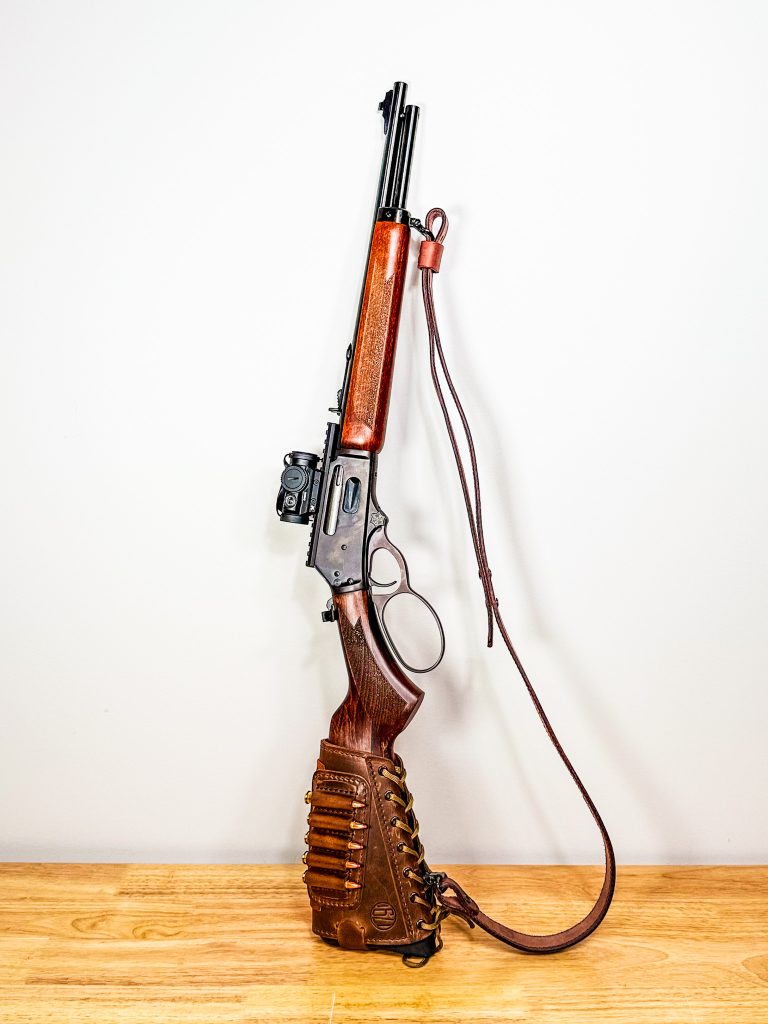
I’ve been a longtime collector of lever-action rifles—especially JM-stamped Marlins and early Winchesters. But for a modern “resto-mod”, I chose the relatively new Rossi R95. In simple terms, the R95 is a reproduction of the widely used Marlin 1895. Based on the earlier 1893 model, the Marlin Model 1895 is a lever-action rifle introduced by Marlin Firearms in (you guessed it) 1895, designed for big-game hunting with large-caliber cartridges. The original Marlin was known for its strength, reliability, and smooth action, especially when compared to competitors like the Winchester 1886. The rifle has been chambered in many calibers, but its most common offerings are .45-70 Govt and 30/30 Winchester. Modern Marlins are produced by Ruger, which acquired Marlin a few years back.
For this R95, I chose the 30/30 because of its pedigree and capabilities. A 45-70 might have made more sense, since I live in Ohio and can’t hunt with a 30/30 (trust me, it doesn’t make sense to anyone). However, I love the 30/30 cartridge, so that’s what I opted for. Specifically, I selected a trapper variant with a 16.5″ barrel. I wanted something a bit more handy and lighter to handle. From there, I focused on maximizing its potential while opting to keep some of its traditional lines (hence, “resto-mod”).
The Build
First, I was impressed with the fit and finish of the Rossi—especially considering its price. For those unaware, Rossi is part of Taurus and is manufactured in Brazil. However, don’t let that deter you from taking a look. New Winchesters and Marlins are expensive—even the new Smith & Wesson 1854 (another Marlin clone) costs about a thousand dollars. So, there aren’t many affordable options on the market. But this is one I’d recommend.
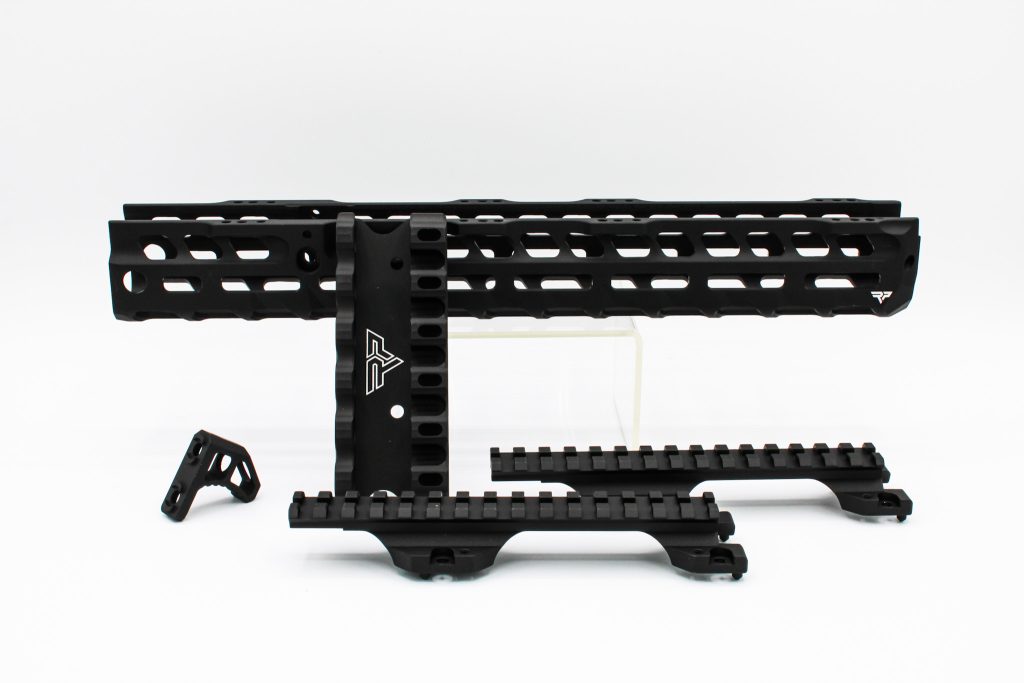
As for the buildout, my goal was to add more functionality while maintaining a classic feel. After browsing the internet and forums, this is what I came up with.
- Ranger Point Precision Extended Hammer: This design facilitates easier manipulation of the hammer, particularly when using a magnified optic. I like how the extension is shaped to fit your thumb, and the knurling provides a nice tactile feel.
- Ranger Point Precision 30-30 Lever Takedown Screw: More of an aesthetic touch than anything. Also, it denotes that the rifle is chambered in 30/30.
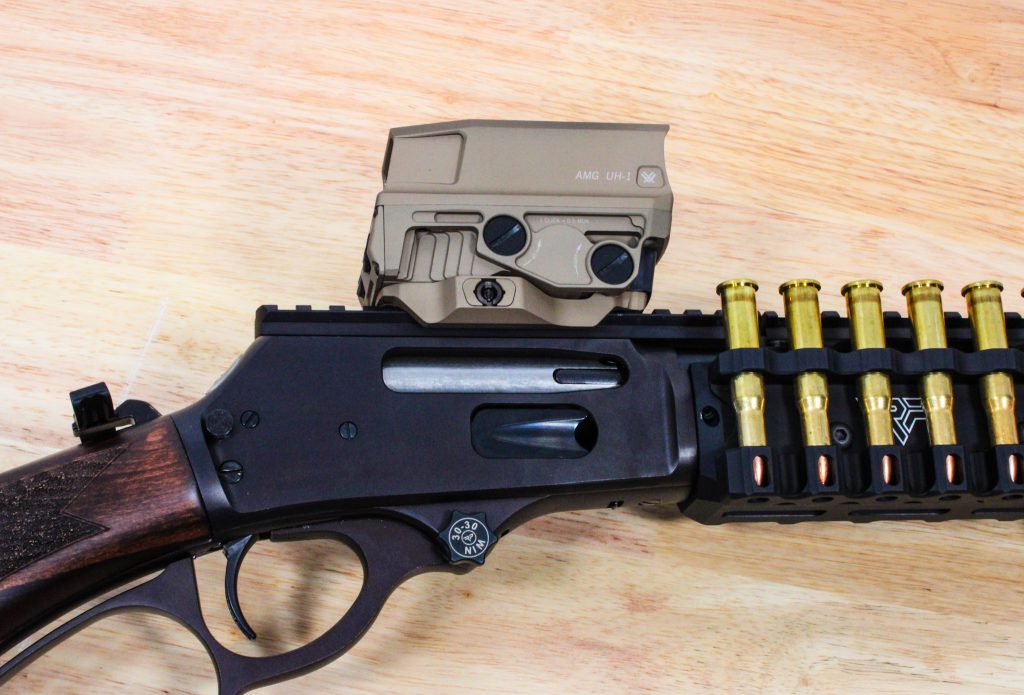
- Costa Marlin 1895 336 Rifle Receiver Rail: This is an extended receiver designed to work with the Costa rail. This pic rail allows for easy mounting of optics and red dots.
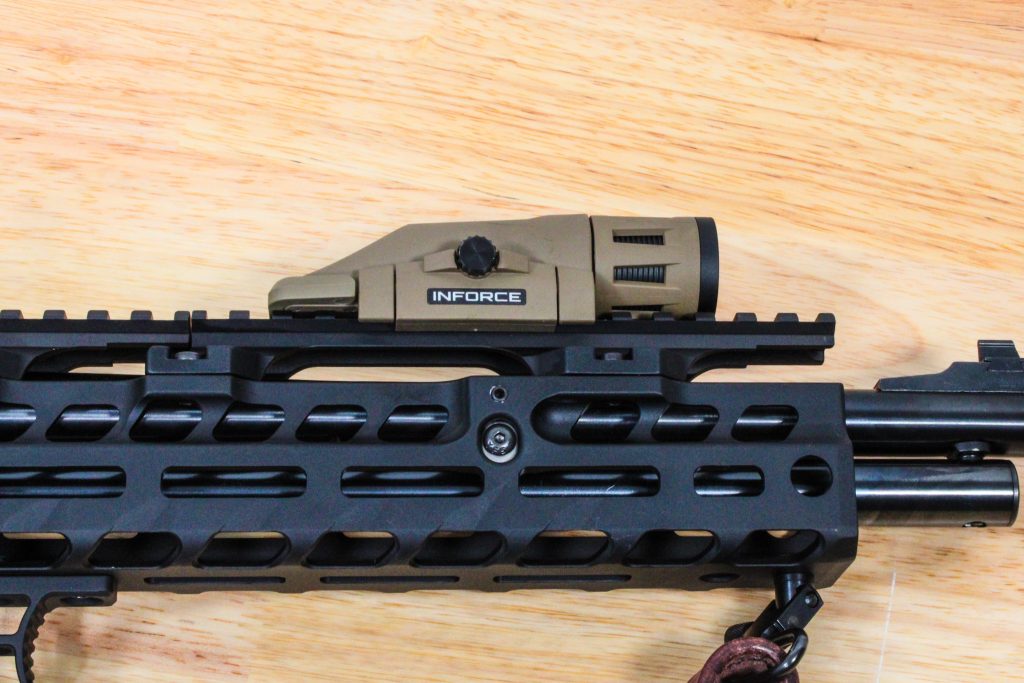
- Ranger Point Precision Costa Rail: Where modern modularity meets the classic lever gun. Designed in collaboration with Cota Ludas—a well-known and respected instructor of the contemporary lever-action rifle—this allows the end user to add accessories and modern accoutrements that were previously impossible on the classic model. Rails, like this one, are paramount to the spike in the rifle’s popularity.
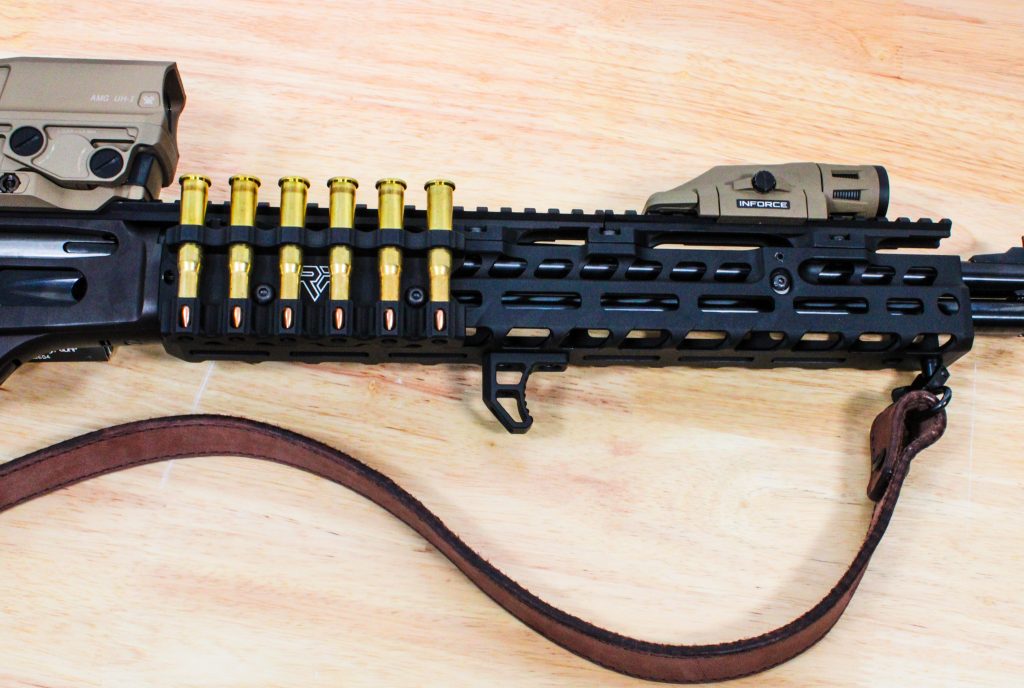
- Ranger Point Precision Quiver: Ammunition capacity is the most significant limiting factor of a lever-action rifle. Much like a shotgun side saddle, the quiver adds readily available ammunition to the side of the Costa rail.
- Ranger Point Precision Marlin Mag Tube Follower: Improves reliability, and it is self-cleaning.
- 1791 Gun Leather HUNT Butt Cuff Ammo Holder: Impressive leather craft and stitching. All the lines are sharp. But most importantly, it provides a more comfortable cheek weld and holds five extra rounds of 30/30. This, coupled with the quiver, gives me an additional 11 rounds at my immediate disposal.
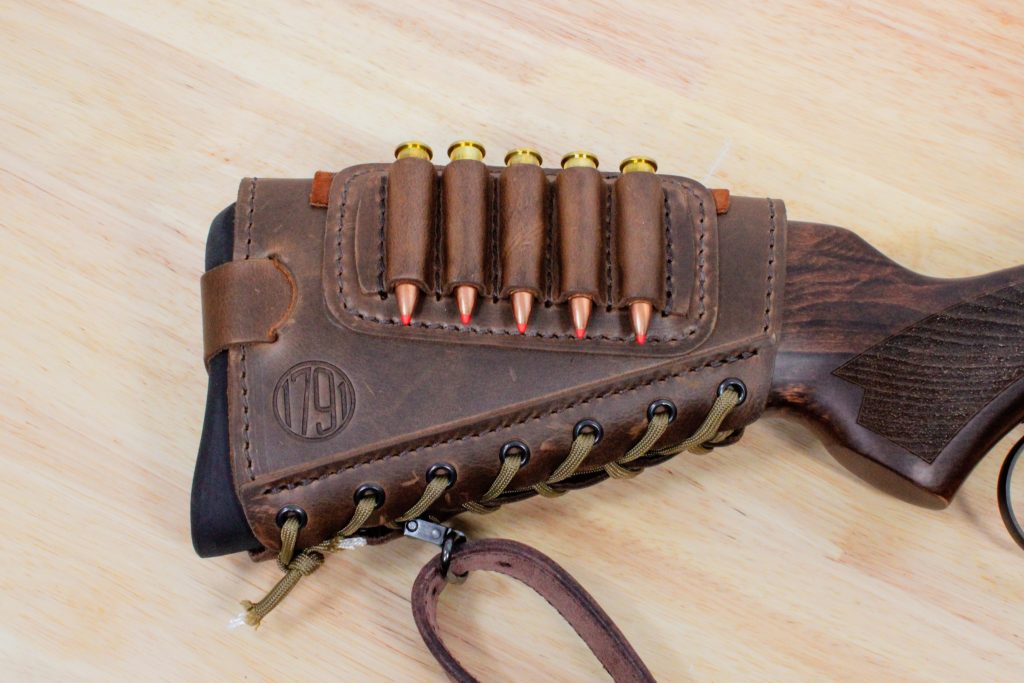
- 1791 Gun Leather Simple Strap Sling: Simple and classic. Every rifle needs a sling. But a lever gun needs a leather sling.
- 1791 Industries Hand Stop: Constructed of magnesium, this hand stop is minimalist yet functional. For operation, I use a C-grip. This gives me the leverage needed to manipulate the weapon.
- Vortex UH-1 AMG: A quality optic is needed for any “tactical” application. The Vortex UH-1 is my favorite when it comes to holographic sights. While Eotech is more popular, the UH-1 is built for Vortex by the original owner of Eotech and in the original facility. This sight offers quick sight and target acquisition through the easy-to-use circle dot reticle.
- Inforce WML: a weapon-mounted light is another must for a modern rifle. The Inforce WML’s unique design lends itself well to riding on the top rail of the gun. With a C-grip, I can easily actuate the light’s rear toggle.
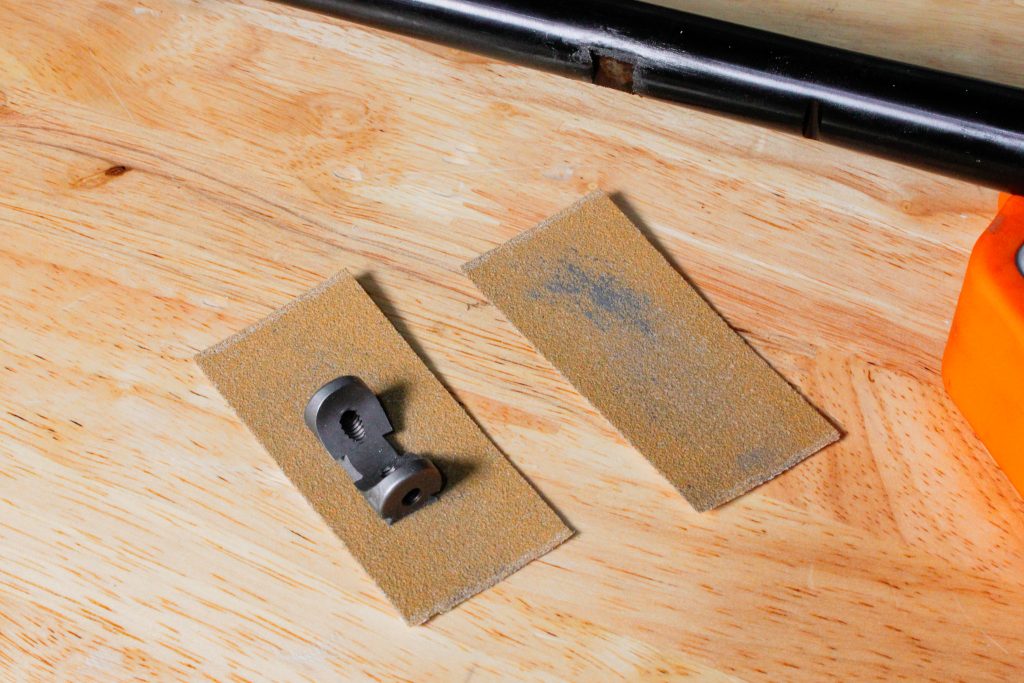
After some time and patience, the complete rifle turned out exactly as I envisioned — the perfect blend of old and new. It was relatively easy to assemble. The most important advice I can offer is to be patient and follow the instructional videos provided by Ranger Point Precision. I’d call this “light” gunsmithing, as you must tear down the base rifle to install the new parts. If you are handy with tools, you are good to go. If you think building Ikea furniture is relatively complex, you may want to phone a friend.
Parting Shots
This build reminds me of classic westerns but with modern features — a resto-mod. It’s a mix of vintage and contemporary design. By keeping the wood stock and adding leather accents, the build combines the best of both worlds. The rifle is well-balanced and easy to handle. With this setup, I’d be more than comfortable taking the game out to 150 yards or defending my property or home from any threat. All that said, I like lever-action rifles. I’m partial to them and have centered much of my collection around them. Thanks to companies like Ranger Point Precision, the lever-action rifle has undergone significant evolution. Modern accessories enhance the rifle’s performance, but it remains a design that’s over a century old. Yet, they are widely popular today.

Ultimate, and it’s not threaded?
And, aren’t spire-points and centerfire ammo a no-no in tubular magazine firearms???
If they have a polymer tip they are ok. I have never seen a pointy .30-30 round myself. Don’t know if anyone makes such a thing. I assume that the shell holder just makes them look like spritzers. I own a Marlin 1895 carbine with the gold trigger. Love it. My concern with this build is taking a light handy carbine and adding a bunch of weight to it.
There should always been room for the “modernization”, the “updated”, the new and “improved”.
You still use an iron forge. If you want to. To make a gun. And cut the tree yourself.
And then hand carve the stock.
Or you can use all the technology in the 21st to make a gun.
“…lever-action rifles… are among my favorite types…”
that doesn’t really narrow it down much. especially if you like them all.
my big one came with a rail. looks horrible; leavin’ it on there for a burris 3x.
the little one has a skinner peep.
they both could use a leather butt cuff.
nah to the rest,