

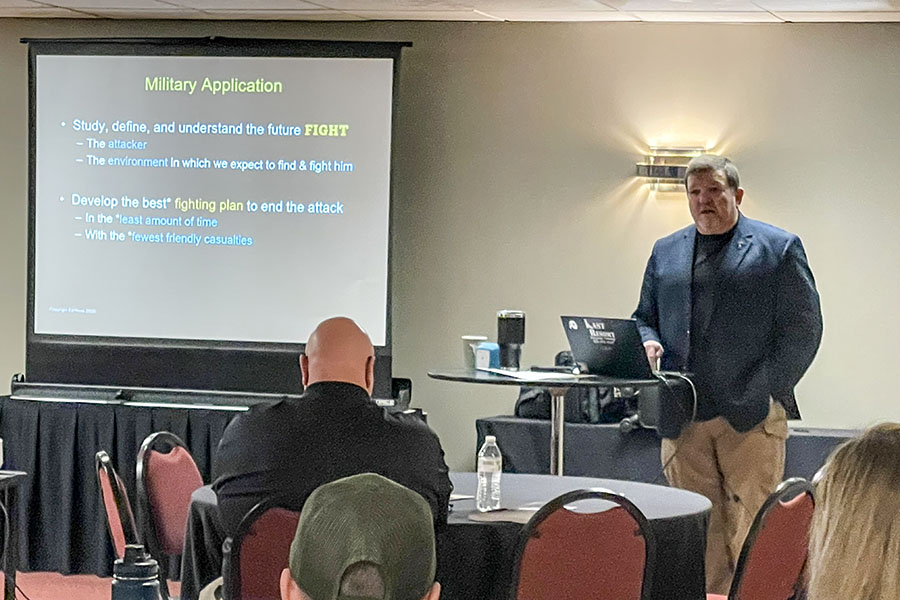
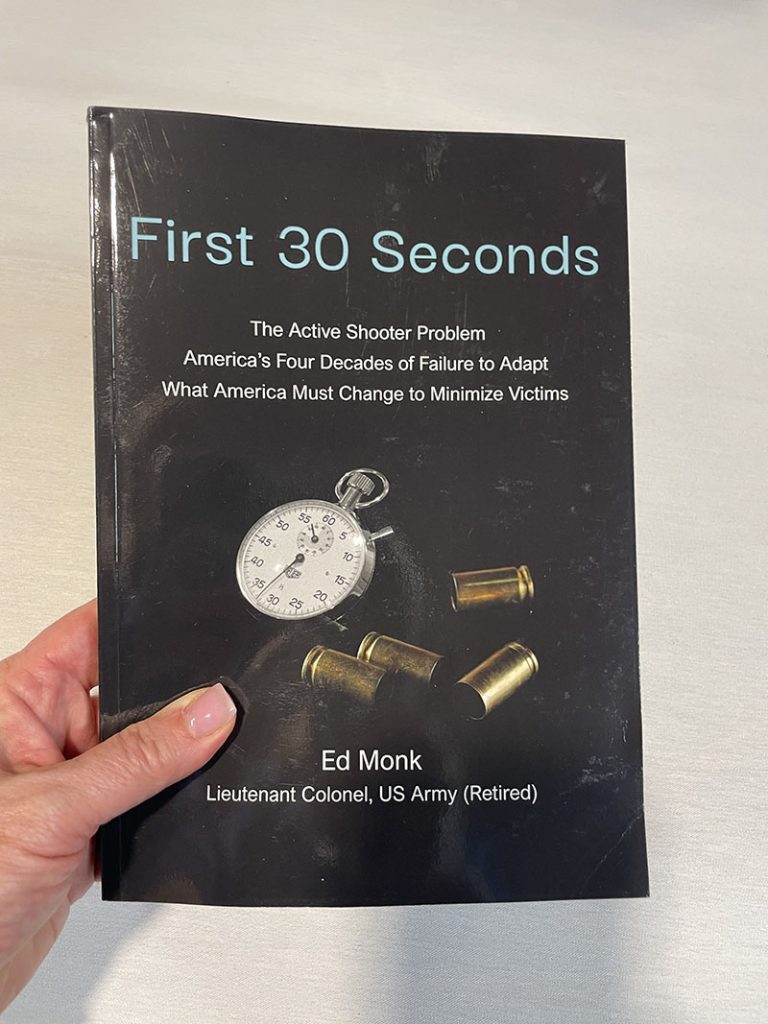
I recently spent some time with Ed Monk, author of First 30 Seconds when FASTER Saves Lives (with which I am involved) brought him to Ohio for three speaking engagements. I’ve done my own research in the past, reading books, articles and attending seminars. When I first read Ed’s book, I knew it was something very different,
Ed Monk has studied the active shooter threat since 2007. His background includes positions as a law enforcement officer, an Army officer, a high school teacher and a firearms trainer. His formal education includes a BS in US History from West Point, an MS in Adult Education from Kansas State University and a graduate of the US Army’s Command & General Staff College. Monk runs Last Resort Firearms Training and has now added “author” to his resume.
The book “First 30 Seconds” is straightforward and data-driven. A few pages into reading it, I went up to my office to grab a highlighter, tabs and a red pen. You can’t argue the facts Monk shares, and that’s what you need to communicate with people who think a lockdown is the answer when an active shooter enters a school.
Monk began each seminar with facts about a number of school shootings. The who, when, how and where, as well as the timelines of 911 calls, police arrival and why the shooters stopped. Then he shared a graphic showing a timeline of the number of casualties and the time it usually took for the cops to arrive.
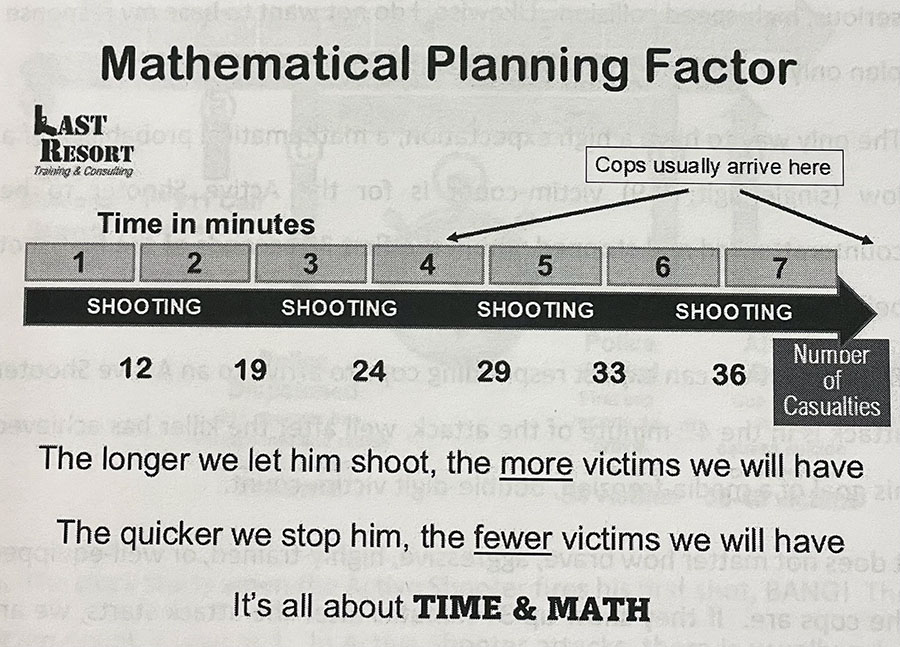
On average, new victims shot during the first three minutes of an active shooter event look like this:
- 12 victims shot by the end of the first minute
- 19 victims shot by the end of the second minute
- 24 victims shot by the end of the third minute
Now the difficult part. Near the beginning of each talk, after he’s shared the above information, Monk asked one very specific question: “What is the maximum number of people shot you find acceptable after the attack is over?”
For those who want that number to be anything less than 10, stopping the shooter within the first 30 seconds is the only option. Thus his book title, First 30 Seconds. According to Monk, stopping a shooter from causing more casualties all comes down to time and math.
The seminars continue with him discussing school (or church) shootings and showing how many of the safety plans we continue to use have failed. He invites attendees to choose the outcome they want and then create a safety plan that supports that goal.
I can go on about the information Monk presented. However, I suggest you read his book, First 30 Seconds, yourself (with your highlighter and page tabs ready). Hearing him speak reinforces the book, through videos, photos and graphics.
Here are some items I starred in my notes from the event:
- Before the first shot, it was a school. After that shot, it’s a one-way combat zone until someone intervenes.
- Fighting back (armed or unarmed) is the best option HISTORICALLY for a lower victim count.
- If you can’t or don’t want to fight the shooter, have a plan to flee.
- Stopping a shooter allows us to begin evacuating and providing emergency trauma care.
- Even people who hate guns need to understand what a reload (or malfunction) sounds and looks like. That is your chance to act. During the Sandy Hook massacre, one child did recognize this and helped classmates escape. Perhaps SROs could teach this through videos?
Although these seminars were specific to school and church events, the options (and plans) apply to any active-shooter event. Not everyone has what it takes to fight back. We must accept what we are capable of doing and have a plan.
It’s all about TIME & MATH. Stopping a killer faster results in fewer people killed. What amount of casualties are you willing to accept?